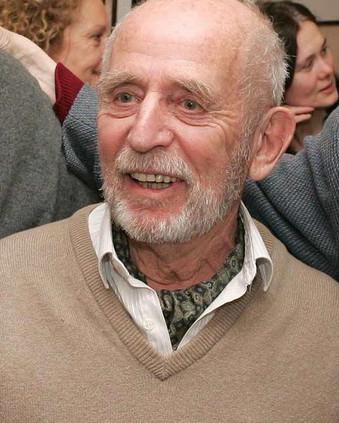
LIVED
8 March 1918, Montpellier – 27 November 2009, Antony
Jacques Baratier was a bank inspector’s son, a would-be painter who came to cinema at twenty-eight by carrying reels of film across the Sahara. He filmed Saint-Germain-des-Prés in its wild years, gave Omar Sharif his first leading role outside Egypt in the first feature of independent Tunisia, and cast a female impersonator as the heroine of a political farce by his friend Jacques Audiberti.
Ten years older than the New Wave and never part of it, he was praised by Cocteau and dismissed by Cahiers du cinéma. He produced his own films, went bankrupt more than once, and said cinema had always been for him an adventure rather than a profession. His one fixed point was Désordre, a short about Saint-Germain that he remade, recut and extended for sixty years and left unfinished at his death.
SIMILAR FILMMAKERS
René Clair
Georges Franju
Philippe Garrel
Ado Kyrou
Jean Rouch
Jacques Rozier
START WITH
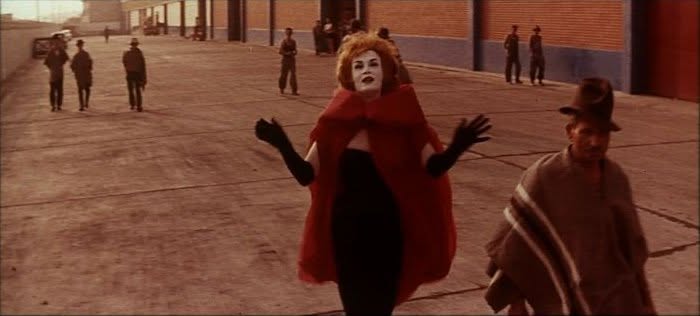
La Poupée (1962)
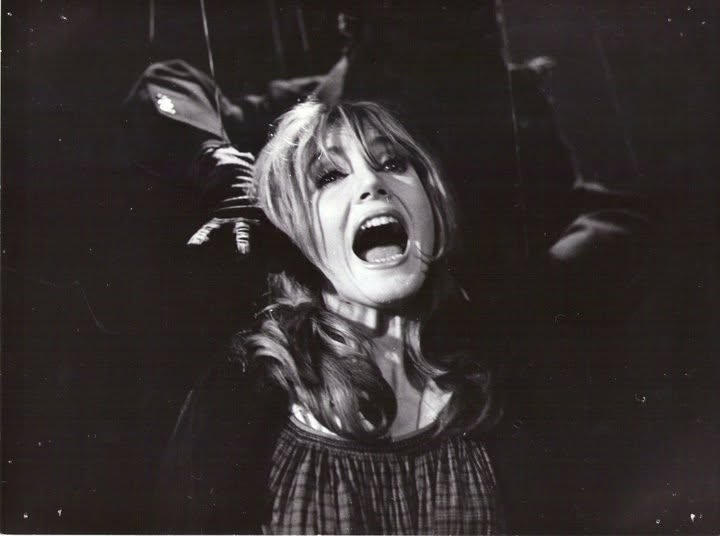
Piège (1970)
Biography
1. A banker’s son · 2. Short films and Goha · 3. La Poupée and Dragées au poivre · 4. Piège · 5. The countryside
1. A banker’s son, 1918–1951
Jacques Albert Marie Jean Baratier was born on 8 March 1918 in Montpellier, where his parents, who lived in the seventh arrondissement of Paris, were sitting out the last year of the war. His father, Léonce Baratier, was an inspector at the Société Générale; his mother was Charlotte Wenger.
Before the Second World War, he did his military service in Morocco, the beginning of a lifelong attachment to North Africa, and became secretary to Jean-Jacques Brousson, writing articles for Les Nouvelles littéraires and interviewing, among others, Saint-Exupéry. During the war, he lived in Paris, where he met Jacques Audiberti, Luc Dietrich and G. I. Gurdjieff; it was Gurdjieff who inspired him during the liberation of Paris to take charge of his life.
This led to several years of post-war wandering about the South of France trying to become a painter, and then attempting to cross Africa from north to south. During this trip, he was hired by René Chanas, who was shooting L’Escadron blanc, to carry reels of film to Algiers, and eventually he became Chanas’s assistant on the film. Afterwards, he went on to Morocco and filmed Berber tribes near Ouarzazate for a short to be called Les Châteaux de sable; a sandstorm scratched three-quarters of the negative, and what was left became Les Filles du soleil (1948).
On his return to Paris, he continued his filmmaking career, assisting René Sti and Henri Lepage. He also fell in with the Saint-Germain-des-Prés crowd, befriending Olivier Larronde, Boris Vian, Jacques Besse and Gabriel Pomerand. With Pomerand, he shot Désordre, first titled Paris, ton décor fout le camp, produced by his brother Gilles. Baratier shot the film on and off over the next three years, often with a silent camera and whenever its subjects were free. It featured the Miss Vice show at Le Tabou, Jean Genet on his way out of a urinal and Jean Cocteau chalking a star on a wall. Pomerand wrote the commentary, but it was cut when the film was sold for distribution and published on its own.
Désordre was edited by Madeleine Bernadet, who’d become known as Néna Baratier. She and Baratier married on 19 May 1951, and she would go on to edit nearly all of his films, as well as films by Jean-Daniel Pollet and Rouch and Morin’s Chronique d’un été, before directing her own. She also signed the Manifesto of the 343. They had children together, among them the cinematographer Diane Baratier.
2. Short films and Goha, 1951–1958
Despite interest in Désordre, no producers approached Baratier, so he decided to enlist as a cameraman for the war in Indochina. The army asked for proof that he could film something, so, on the advice of Diane Deriaz, a trapeze artist he had once been in love with, he took a camera to the Cité du Midi, a gymnasium for circus acrobats in Pigalle, with Michel Simon as narrator. By the time the film was finished, he had forgotten about Indochina. La Cité du Midi was followed by portraits of the dancer Jean Babilée (Le Métier de danseur, 1953), of Maurice Chevalier in the streets of his childhood (Chevalier de Ménilmontant, 1953) and of the cellist Pablo Casals.
Eventually, he shot Paris la nuit with Jean Valère, a city symphony shot on latensified film, an American process never tried in Europe that let the camera work at night without lights. Ten or twelve nights were planned; it took forty. It was produced by Anatole Dauman’s Argos Films, and Dauman would become his producer and friend for the next twenty years. It was cut by Léonide Azar, who had worked with Eisenstein and who became Baratier’s teacher in editing, and it won the Golden Bear for short film at Berlin in 1956. Cocteau wrote that you would have to be blind not to see its blinding beauties.
Next came Goha (1958), based on the wise fool of Arab folk tales, through Albert Adès and Albert Josipovici’s novel Le Livre de Goha le simple. He arrived in Tunis to make his film on the day the country proclaimed its independence, and the new government agreed to back the film the same day. The Lebanese poet Georges Schehadé wrote the script, his only one; the painter Georges Koskas devised the colours, Jean Bourgoin shot it, and Maurice Ohana wrote the score. For Goha, he cast a young Egyptian, Omar Sharif; he also cast a schoolgirl, Claudia Cardinale, in a minor role as a maid. The film was shot in 1957 in Kairouan, Monastir and Hammamet, in Arabic and French versions. Goha was the first Franco-Tunisian co-production, and in May 1958 Tunisia took it to Cannes, where it shared the jury prize with Bernard Taisant’s Visages de bronze. Bourgoin paid for its publicity out of his own pocket. Truffaut called it a half-success; Godard said it was like Baudelaire’s albatross. It never found its audience.
3. La Poupée and Dragées au poivre, 1959–1963
After Goha, he turned down offers from America and set up his own production company to film Audiberti’s novel La Poupée, about a South American revolutionary who takes the place of the dictator he overthrows and becomes him. It took two and a half years; every producer said no. The resulting movie, La Poupée (1962), could be mistaken for a French New Wave film. It was shot by Raoul Coutard, made on odds and ends (Néna made the costumes out of scraps of cloth, the revolutionaries were Algerian workers from the Nanterre shantytown) and filmed in a coal cellar in Saint-Denis and a rented Montparnasse cabaret. The Polish star Zbigniew Cybulski played both the dictator and the rebel.
The doll was Sonne Teal, an American female impersonator from the Carrousel. There is an urban legend that Baratier hired her without knowing she was a man, but on set in 1961, Baratier said he cast her on Leonor Fini’s advice because the height of femininity was someone who creates herself a woman. Despite Cocteau and Chabrol defending La Poupée on TV, audiences stayed away.
Next came Dragées au poivre (1963), produced by Pierre Kalfon. The film was built around sketches Guy Bedos had played at the cabaret Milord l’Arsouille, mocking cinéma-vérité, the New Wave and every other fashion of the day. Belmondo, Signoret, Anna Karina, Monica Vitti and a dozen more worked on credit, while Audiberti rewrote Bedos’s scenes uncredited. It was the only commercial success of Baratier’s life. In general, Baratier spent his life close to bankruptcy, working to get his movies made, and living in an inherited fifteen-room apartment off the avenue Victor-Hugo, the key left in the door for anyone to come in. Audiberti wrote Pomme Pomme Pomme, a 1962 play, as a portrait à clef of Jacques and Néna Baratier, a couple of penniless bohemians from an aristocratic family, perpetually inventing grandiose, doomed schemes to make art without capital.
4. Piège, 1964–1975
Despite the success of Dragées au poivre (1963), Baratier’s fortunes didn’t substantially change. His next film, L’Or du duc (1965), with Claude Rich as an impoverished duke living with his ten children in a bus, flopped. He also made shorts such as Ève futures (1964), about a mannequin factory he had found while looking for dummies to replace extras.
After working on Agnès Varda‘s Les Créatures as an assistant director, Baratier returned to his first film and recut and reshot it into Le Désordre à vingt ans (1967), comparing footage of his old friends in the cellars against the same world of 1967, where Gréco, now dressed by Chanel, crossed the store built on the site of the ruin where she had sung. Then he went to Kathmandu to film young Westerners spending Christmas at the end of the world in Eden Miseria (1967). Two years later came a portrait of René Clair for the television series Cinéastes de notre temps and Les Indiens du Brésil (1969), a film of the first contact with the Cinta Larga.
Around this time, Baratier fell in with the much younger Zanzibar group, including Philippe Garrel, who lived partially at his Victor-Hugo apartment. During May 1968, he and Barbet Schroeder got Jackie Raynal out of a police station. He then made what is arguably his best film, the Dauman-produced Piège (1970), budgeted at 105,000 francs for two weeks’ shooting in a condemned villa in Neuilly. When the shoot overran, Baratier asked the crew to defer their pay; nobody would, and Dauman gave him a few days. It starred Bernadette Lafont and Bulle Ogier, who played two delinquent girls let loose in a house full of traps. Dauman claimed the script was written with help from Jacques Tati.
Baratier then made La Décharge (1970) for television, starring Bernadette Lafont and written with Christiane Rochefort, about young scrap dealers who raced old cars in the wastelands of Créteil; it was among the last films Léonide Azar edited. The ORTF refused to show it, finding it too bleak a picture of the site of the new town, and he later reshot scenes with his friends, the journalist Lucien Bodard and the musique concrète pioneer Pierre Schaeffer, and turned it into La Ville-bidon (1976), a critique of urban planning, which inspired Claude Nougaro’s song “La Ville bidon”. The film received mixed reviews, with praise for its critique of real estate speculation and criticism for its hybrid of documentary and fiction. Between La Décharge and La Ville-bidon, he shot the uneven erotic Vous intéressez-vous à la chose ? (1974) on commission, assisted Néna in making her film Le Berceau de l’humanité (1973) and made a critical follow-up to Les Indiens du Brésil, Opération séduction (1975).
5. The countryside, 1975–2009
In February 1974 he and Néna divorced, though she went on cutting his films. On 30 April 1975 he married Catherine Thouard, twenty-four years his junior. He stopped working and, a father again in his late fifties, retreated to the countryside, while trying to become his own producer and going bankrupt several times. His next film was L’Araignée de satin (1986), which he produced himself with his company, Baraka. He shot the film in five weeks, partly at his house on the Seine, with Ingrid Caven singing a song by Jacques Besse, Roland Topor as the psychiatrist, Daniel Mesguich as the priest, and Diane Deriaz as a grand lady in a Delage. It opened in February 1986 and lasted a few weeks.
The rest of his career ambled on. He made several short documentaries, among them two on the Réunion poet Jean Albany. His last feature, Rien, voilà l’ordre (2003), was based on his old friend Jacques Besse, a poet and musician who’d spent nearly forty years at the La Borde clinic. Baratier co-wrote the script with Jean-Claude Carrière, largely from scenes by Besse himself. It took him almost twenty years to get an advance on receipts; the film was made on that and the goodwill of his friends. It was shot on video in a psychiatric hospital with Claude Rich, Laurent Terzieff, Amira Casar, Jean-Claude Dreyfus and James Thierrée. Its title came from an anagram Olivier Larronde had made of his own name; its other title, Nourrir la lune, from Gurdjieff: men’s involuntary sufferings serve only to feed the moon.
He spent his last ten years recutting Désordre as Le Beau désordre, in fifteen versions, every shot noted by heart on scraps of paper. “You never finish films.” In 2009 his daughter Diane, Éric Rohmer‘s cinematographer, filmed him at work for Cinéma de notre temps and found that he would answer none of her questions. He died at Antony on 27 November 2009, aged ninety-one, having made her promise to finish the edit. Diane showed it at the Cinémathèque française in February 2011, during the first retrospective ever to bring his films together, and wondered in print whether she really wanted to finish it.
Sources
Jacques Baratier in his own words
- Interview, Boris Vian, du jazz à l’opéra : le cinéma, France Culture, 29 June 1979
- “Lettre à Luc Dietrich”, Le Quotidien de Paris, 30 December 1981, as cited in Walter J. Driscoll, Gurdjieff: An Annotated Bibliography (1985)
- Interview with Guy Allombert, La Revue du cinéma, February 1986
- “Jacques Baratier : le braconnier du cinéma”, Le Journal du Centre, 29 September 1986
- Interview with Bady Ben Naceur, La Presse (Tunis), 24 October 1986
- Interview with Martine Pesez, Rencontres cinématographiques de la Toussaint, November 1986; “L’innocente perversité de Jacques Baratier”, Midi Libre, 17 November 1986
- Le Bon Plaisir d’Anatole Dauman, France Culture, 3 February 1996
- Interview with François Forestier, TéléCinéObs, c. 2003
- Synopsis and press book for Rien, voilà l’ordre; interview in Fabrice Gaignault, Égéries sixties (2006)
Memoirs and firsthand accounts
- Diane Baratier, interview with Sylvain Maestraggi, Images de la culture no. 25 (CNC, December 2010)
- Diane Baratier, “Nourrir la lune”, Positif no. 600 (February 2011)
- Diane Baratier, presentation of the retrospective, and accounts by Néna Baratier and Jackie Raynal, Association Jacques Baratier (2011); interview in La Provence, 9 February 2014
- Anatole Dauman, Argos Films : souvenir-écran (1989)
- Jacques Audiberti, “Mes premiers pas dans l’usine à rêves”, Cahiers du cinéma no. 100 (October 1959); Dimanche m’attend (1965); “Pomme Pomme Pomme” (1962)
- Diane Deriaz, La Tête à l’envers : souvenirs d’une trapéziste chez les poètes (1988)
- Bernadette Lafont, Le Roman de ma vie (1997)
- Claudia Cardinale, Moi Claudia, toi Claudia (1995) and Mes étoiles (2005)
- Frank Tenaille, Bedos : histoire d’un rire (1990)
- Hermine Demoriane, The Tightrope Walker; Zouzou, Jusqu’à l’aube; Beate Klarsfeld, Mémoires (2016)
- Pierre Clastres, letter to Jacques Baratier, c. 1975
- Michèle Manceaux, “Une poupée pas comme les autres”, L’Express, 10 August 1961
Studies
- Frédéric Hardouin, “Le Paris de Jacques Baratier”, Forum des images (2004)
- Claire Clouzot, Le Cinéma français depuis la Nouvelle Vague (1972)
- Noël Simsolo, Dictionnaire de la Nouvelle Vague (Flammarion, 2013)
- Olaf Möller, “Nonstop Cabaret”, Film Comment, September–October 2010
- Olivier Fournier, “La double vision d’Audiberti”, Positif no. 751 (September 2023)
- Antoine de Baecque, Chabrol; Antoine de Baecque and Noël Herpe, Éric Rohmer: A Biography (2014)
- Bertrand Dicale, Juliette Gréco (2001)
- Andrew Hussey, Speaking East: The Strange and Enchanted Life of Isidore Isou (2021)
- Avery Willard, Female Impersonation (1971)
Period criticism and press
- “Désordre”, Cinémonde, 1 May 1950
- François Truffaut, review of Goha, Cahiers du cinéma no. 84 (1958)
- “Jacques Baratier”, Sight and Sound, July 1959
- Films and Filming, February 1963; The New Yorker, 7 September 1963
- Roger Régent, Revue des Deux Mondes, October 1963
- Les Fiches de Monsieur Cinéma: La Poupée, Dragées au poivre, L’Araignée de satin
- Obituaries: Le Figaro, November 2009; Mehrez Karoui, 2 February 2010
Reference and records
- Birth certificate, Montpellier, 1918, act no. 184, with marginal notes of marriage (Ossun, 1951), divorce (1974), remarriage (Paris 14e, 1975) and death
- INSEE, Fichier des personnes décédées, 2009: Baratier, Jacques Albert Marie Jean, Antony, act no. 655
- Le Figaro, 27 June 1947; Dernières Nouvelles d’Alsace, 30 May 1951 (family notices)
- Festival de Cannes, awards 1958; Berlinale, awards 1956
Filmography
| Year | Title | English title | Length |
|---|---|---|---|
| 1948 | Les Filles du soleil | Short | |
| 1950 | Désordre | Disorder | Short |
| 1951 | La Cité du Midi | Short | |
| 1953 | Le Métier de danseur | Short | |
| 1953 | Chevalier de Ménilmontant | Short | |
| 1955 | Pablo Casals | Short | |
| 1956 | Paris la nuit (with Jean Valère) | Paris by Night | Short |
| 1958 | Goha | Feature | |
| 1962 | La Poupée | The Doll | Feature |
| 1963 | Dragées au poivre | Sweet and Sour | Feature |
| 1964 | Ève futures | Short | |
| 1965 | L’Or du duc | Feature | |
| 1967 | Le Désordre à vingt ans | Disorder Is 20 Years Old | Documentary |
| 1967 | Eden Miseria | Short | |
| 1969 | Piège | Medium-length | |
| 1969 | René Clair (Cinéastes de notre temps) | Television | |
| 1969 | Les Indiens du Brésil | Short | |
| 1970 | La Décharge | Feature | |
| 1971 | Le Berceau de l’humanité (with Néna Baratier) | Television | |
| 1974 | Vous intéressez-vous à la chose ? | First Time with Feeling | Feature |
| 1974 | La Ville-bidon | Feature | |
| 1975 | Opération séduction | Short | |
| 1976 | Enfance africaine (with Néna Baratier) | Television | |
| 1986 | L’Araignée de satin | The Satin Spider | Feature |
| 1989 | L’Ami abusif | Television | |
| 2003 | Rien, voilà l’ordre | Feature | |
| 2011 | Le Beau désordre (completed by Diane Baratier) | Documentary |

