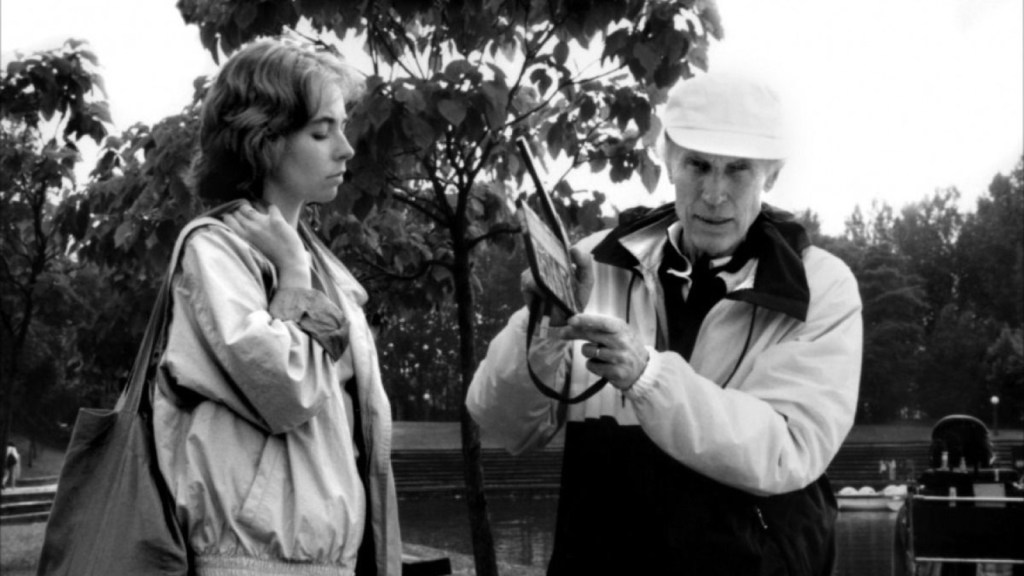
Éric Rohmer spent decades being underestimated, partly by design. He made films about people talking in sunlit apartments or provincial towns about love and whether they were making the right choices. He made them so modestly, so consistently, that it could be easy to mistake the form as a limitation. It wasn’t. He was doing something quite precise and quite difficult, and the forty years of work he left behind are as coherent and as personal as any body of films in French cinema.
He came through Cahiers du Cinéma, edited the magazine for years, and was the last of the core group to make his name as a director. His relationship to the New Wave was always slightly sideways. He never used jump cuts or political arguments or much in the way of formal pyrotechnics. He just put the camera at a sensible distance from people and pointed it at them while they talked.
The Moral Tales, six films made between 1963 and 1972, established the template: a man in a relationship or about to be in one, tempted by another woman, and an exploration of the gap between what he tells himself about his choices and what is actually happening. My Night at Maud’s is the fullest statement, a Christmas Eve conversation in Clermont-Ferrand about Pascal’s wager and Catholic faith and desire, with Jean-Louis Trintignant doing the most elegant piece of self-deception in French cinema. The Comedies and Proverbs and Tales of Four Seasons that followed shifted the focus to women, who turned out to be considerably more interesting subjects.
He knew what he was doing, and he did it for fifty years and then stopped. The pseudonym was maintained so carefully that some colleagues reportedly never knew his real name. The discretion was characteristic.
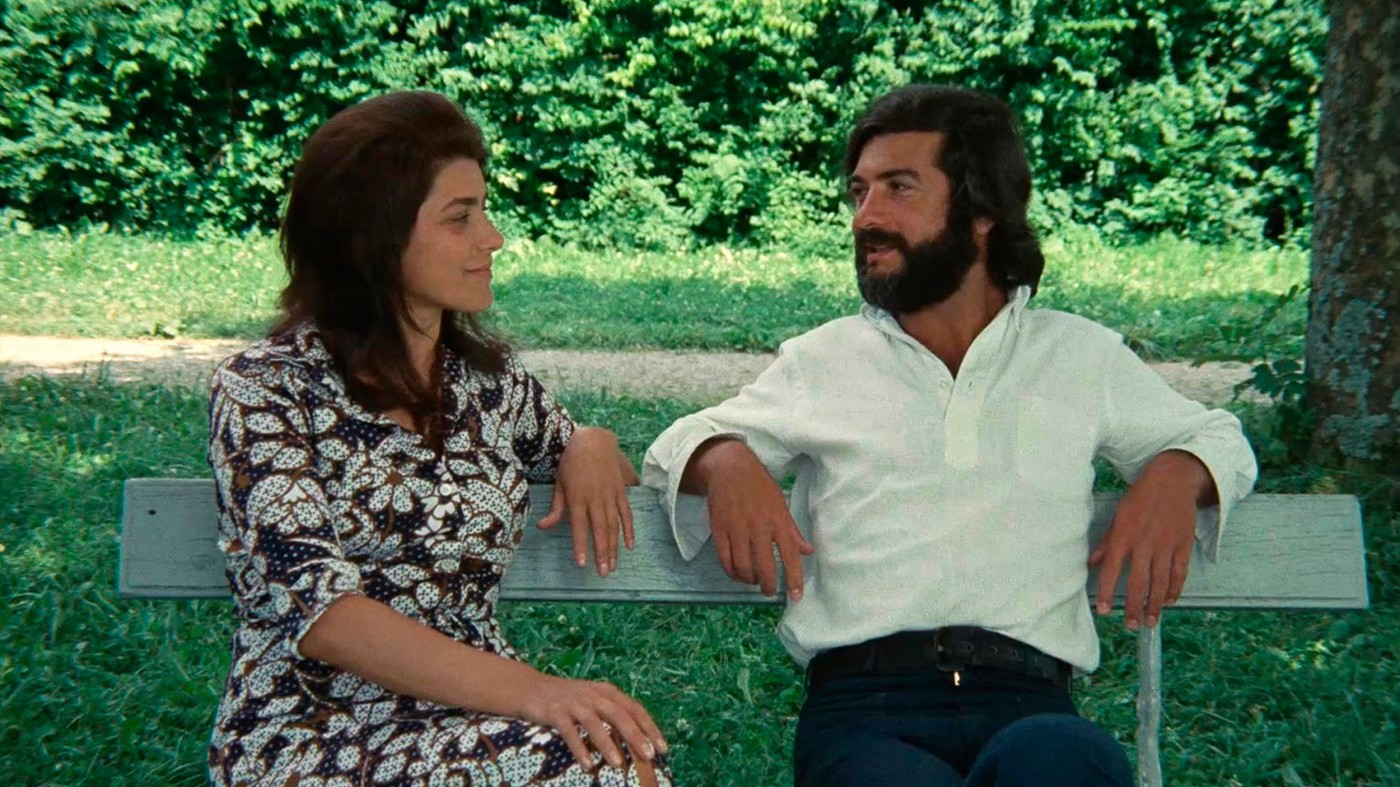
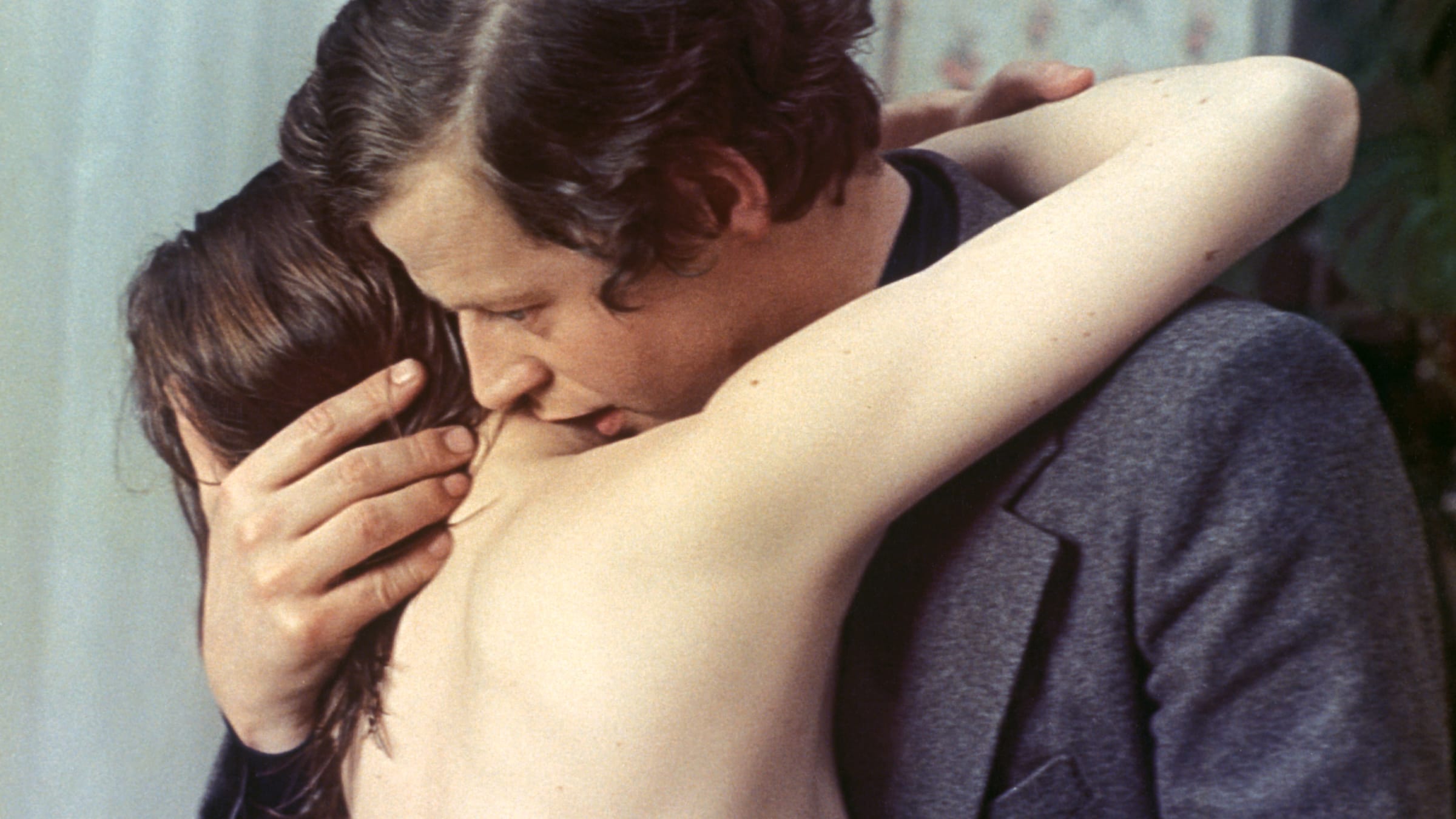
Éric Rohmer (1920 – 2010)
- 1951 – Présentation ou Charlotte et son steak
- 1959 – Le Signe du lion
- 1963 – La Boulangère de Monceau
- 1963 – Suzanne’s Career
- 1964 – Nadja à Paris
- 1965 – Paris vu par…
- 1966 – A Modern Coed
- 1967 – ● La Collectionneuse
- 1968 – Louis Lumière [TV]
- 1969 – ★ My Night at Maud’s
- 1970 – ★ Claire’s Knee
- 1972 – ● Love in the Afternoon
- 1976 – ● The Marquise of O
- 1978 – Perceval
- 1981 – ● The Aviator’s Wife
- 1982 – Le Beau mariage
- 1983 – Pauline at the Beach
- 1984 – ● Full Moon in Paris
- 1986 – Four Adventures of Reinette and Mirabelle
- 1986 – The Green Ray
- 1987 – Boyfriends and Girlfriends
- 1989 – A Tale of Springtime
- 1992 – A Winter’s Tale
- 1993 – The Tree, the Mayor and the Mediatheque
- 1995 – Rendez-vous in Paris
- 1996 – A Summer’s Tale
- 1998 – An Autumn Tale
- 2001 – The Lady & the Duke
- 2004 – Triple Agent
- 2007 – The Romance of Astrea and Celadon
- The Gap Between What We Say and What We Mean: Rohmer’s characters narrate their own lives with great fluency and are almost always wrong about their motivations. The Moral Tales are built on this; men who explain to themselves and to us exactly why they are behaving virtuously while behaving otherwise. It’s a comic vision of self-deception that never tips into cruelty.
- Moral Choice as the Central Drama: The plot of a Rohmer film is usually a moral situation rather than a sequence of events. The drama is internal, and the action is almost entirely verbal, which is why the films reward attention to exactly what is being said and how.
- Seasonal and Natural Rhythm: A Rohmer film seems to exist in its own seasonal rhythms. Summer reflects desire, autumn is regret. This is most clear in his The Tales of Four Seasons, but it’s there across the filmography. The Green Ray is a whole film about the quality of light at a particular moment of day.
- Dialogue as Action: His films have very little plot in the conventional sense because the conversations are the events. What people say to each other, how they say it, what they don’t say; this is where everything happens. The camera’s job is simply to be present for it without intrusion.
- The Bourgeois World: Rohmer’s characters are educated, comfortable, articulate, and frequently somewhat ridiculous in their romantic self-importance. Yet, Rohmer watches them with an affectionate tolerance.
Biography
Éric Rohmer, born Jean-Marie Maurice Schérer on March 21, 1920, in Tulle, France, was a pivotal figure in French cinema and the interpretation of the medium as an art form. His films, often characterised by their intellectual rigour and moral dilemmas, have left an indelible mark on cinema. But who was the man behind the pseudonym, and how did he become one of the most influential directors of his time?
The etymology of Rohmer’s pseudonym is a delightful blend of art and literature. He borrowed ‘Éric’ from the Danish director Carl Theodor Dreyer’s film Mikael, based on Herman Bang’s novel. ‘Rohmer’ was inspired by the famed adventure novelist Sax Rohmer, best known for his series on the villainous Dr. Fu Manchu.
In his early years, Rohmer was deeply influenced by the writings of André Bazin, the renowned film critic and theorist. Bazin’s emphasis on realism and his disdain for montage editing resonated with Rohmer’s beliefs about cinema. This connection led Rohmer to join the influential film magazine editorial team headed by Bazin, Cahiers du Cinéma, in the 1950s. Here, he rubbed shoulders with fellow cinephiles like François Truffaut, Jean-Luc Godard, and Jacques Rivette. Together, they championed the “auteur theory,” which posited that the director was the primary creative force behind a film.
Another significant influence on Rohmer was Henri Langlois, the co-founder of the Cinémathèque Française. Langlois’ commitment to preserving films and his screenings of classic cinema provided Rohmer and his contemporaries a rich education in film history. This exposure would later inform the stylistic choices and narrative structures of the French New Wave.
From 1950 to 1962, Rohmer directed a series of short films and features that showcased his evolving style. These early works, like Charlotte and Her Steak and The Sign of Leo, were marked by their narrative simplicity and deep philosophical undertones. They weren’t much to look at, but in retrospect, they hint at his talents and preoccupations.
The French New Wave, which emerged in the late 1950s, was a revolutionary movement that sought to break away from the conventions of classical cinema. While Rohmer was an integral part of this movement, his relationship with it was complex.
Unlike Godard or Truffaut, who often embraced radical stylistic and narrative experimentation, Rohmer’s films were more restrained. They were talky, introspective, and usually focused on the moral quandaries of his characters. This made him somewhat of an outlier within the New Wave and gave his films a unique voice.
This voice found its most profound expression in the “Six Moral Tales,” a series of films Rohmer made between 1963 and 1972. The earlier entries in this series, like The Bakery Girl of Monceau and Suzanne’s Career, are concise studies of human behaviour, morality, and temptation.
La Collectionneuse, the fourth entry in the series, is a prime example of Rohmer’s style. Set in a sun-drenched villa on the French Riviera, the film delves into the dynamics between a trio of characters and their conflicting desires. It’s a film that’s as much about what’s left unsaid as what’s spoken, a hallmark of Rohmer’s cinema.
My Night at Maud’s is arguably the best film of the Moral Tales series and Rohmer’s filmography. Set in the picturesque town of Clermont-Ferrand during Christmas, the film is a masterclass in dialogue-driven cinema. It revolves around the intellectual and moral dance between Jean-Louis, a devout Catholic engineer, and Maud, a free-spirited divorcee.
Their night-long conversation, filled with discussions on Pascal’s Wager, love, and fate, shows that cinema could be as intellectually stimulating as it is emotionally resonant. The film’s critical and commercial success marked a turning point in Rohmer’s career, earning him international acclaim.
Following My Night at Maud’s, Rohmer directed Claire’s Knee, another jewel in the “Six Moral Tales” crown. Set against Lake Annecy’s shimmering waters, the film explores Jerome’s obsession with the knee of Claire, a young woman he encounters during his vacation. This might sound like a peculiar premise, but in Rohmer’s hands, it becomes a profound exploration of desire, morality, and the fleeting nature of attraction.
Love in the Afternoon, originally titled “Chloe in the Afternoon,” concluded the “Six Moral Tales” series. It’s a contemplative piece on fidelity and temptation, following Frederic, a happily married man drawn to Chloe, an ex-lover. The film’s Parisian setting, combined with its exploration of daydreams and reality, makes it a fitting end to a series that consistently blurs the lines between thought and action.
After completing the “Six Moral Tales,” Rohmer took a surprising detour. Between 1976 and 1978, he directed a series of historical films, a departure from his contemporary, dialogue-heavy dramas.
The Marquise of O was the first of these historical ventures. Based on a novella by Heinrich von Kleist, the film is set during the Napoleonic Wars and tells the story of a young widow who finds herself mysteriously pregnant. Rohmer’s meticulous attention to period detail and signature introspective style make the film a unique blend of historical drama and personal exploration.
Perceval le Gallois followed, a visually striking adaptation of Chrétien de Troyes’ 12th-century Arthurian romance. The film’s stylised sets, reminiscent of medieval tapestries, and its lyrical narrative structure showcased that Rohmer could, if he wanted, make more visually arresting works.
The 1980s were marked by the “Comedies and Proverbs” series, a collection of six films that delved into the intricacies of love, longing, and the often-complex dance of human relationships.
The series kicked off with The Aviator’s Wife. Set in the heart of Paris, this film is a delicate exploration of jealousy and miscommunication. The story revolves around François, who suspects his girlfriend is having an affair with an older aviator. A day-long odyssey follows with chance encounters, misunderstandings, and reflective conversations.
True to Rohmer’s style, the film is less about dramatic confrontations and more about the internal dilemmas faced by its characters. The Parisian backdrop, with its cafes and parks, becomes a silent observer of the unfolding drama, adding a layer of melancholy to the narrative.
The Green Ray, also known as “Summer,” is the most celebrated film of the series. It’s a poignant tale of Delphine, a young woman grappling with loneliness and the existential angst of modern life. Her summer vacations are filled with missed connections and introspective moments, culminating in witnessing the rare ‘green ray’ phenomenon at sunset. This natural occurrence becomes a metaphor for hope and self-realisation. The film’s raw style and deep emotional resonance earned it the Golden Lion at the Venice Film Festival.
1987’s Boyfriends and Girlfriends, the penultimate film in the series, is a delightful exploration of the romantic entanglements of two young women, Blanche and Lea, in the Parisian suburb of Cergy-Pontoise. With its pastel hues and breezy narrative, the film is lighter than some of Rohmer’s earlier works.
Yet, beneath its playful exterior lies a sharp commentary on modern relationships and the transient nature of love. The film’s suburban setting, geometric architecture and open spaces mirror its protagonists’ structured yet chaotic lives.
Films like The Good Marriage and Four Adventures of Reinette and Mirabelle were other 80s highlights. While the former is a tale of a young woman’s quest for an ideal marriage, the latter is a series of vignettes exploring the contrasting worlds of two young women – one from the countryside and the other from the city.
The 1990s marked a period of introspection and maturity for Rohmer; this decade was dominated by the “Tales of the Four Seasons” series, a collection of films that explored the various phases and facets of human relationships.
A Summer’s Tale is a standout in this series. Set in the coastal town of Dinard, the film follows Gaspard, a young musician, as he navigates the complexities of love and friendship during a summer vacation. With its sunlit beaches and breezy soundtrack, the film captures the languid pace of summer. Yet, beneath its serene exterior, Rohmer delves deep into the dilemmas of youth, indecision, and the transient nature of relationships.
Autumn Tale, the final instalment in the series, explores love in the autumn years of life. Set in the vineyards of the Rhône Valley, the film revolves around Magali, a widowed winegrower, and her friend Isabelle’s attempts to find her a companion. With its golden hues and mature protagonists, the film reflects Rohmer’s belief that love and longing are not confined to youth. It’s a gentle reminder that new beginnings are possible at any age.
Outside the “Tales of the Four Seasons,” Rohmer’s other ventures in the 1990s, like The Tree, the Mayor and the Mediatheque, showcased his ability to stretch outside his comfort zone, this time blending social commentary with personal narratives.
The new millennium saw Rohmer returning to historical dramas. Between 2001 and 2007, he directed films like The Lady and the Duke and Triple Agent. These films, set against significant historical events, showcased Rohmer’s meticulous attention to period detail and his ability to weave personal stories within larger historical narratives. The Lady and the Duke, set during the French Revolution, is as much a tale of political upheaval as a story of a tumultuous relationship.
Rohmer’s journey ended with his passing on January 11, 2010. Rohmer’s films, emphasising dialogue and character development, have inspired a generation of filmmakers to prioritise storytelling over spectacle. Directors like Richard Linklater, whose “Before” trilogy echoes the introspective, dialogue-driven style of Rohmer, are a testament to his lasting impact.
Further Readings
- Éric Rohmer: A Biography by Antoine de Baecque and Noël Herpe – A comprehensive biography that delves deep into the life and career of Rohmer.
- Éric Rohmer: Film as Theology by Keith Tester – A book that explores the theological and philosophical underpinnings in Rohmer’s cinema.
- Eric Rohmer: Blueprints for a Brilliant Oeuvre by Ginette Vincendeau, Criterion
- Notebook Primer: Éric Rohmer by Jeremy Carr, MUBI
- Looking Behind Éric Rohmer’s Cinematic Style by Richard Brody, The New Yorker
- Eric Rohmer at “Arts”: A Cinema Writer by Antoine de Baecque, Film Criticism
- Rohmer, Eric by Tamara Tracz, Senses of Cinema
- Truth, Beauty and Goodness: Freedom and the Platonic Triad in Eric Rohmer’s Film Theory by Hanne Schelstraete, Film-Philosophy

