
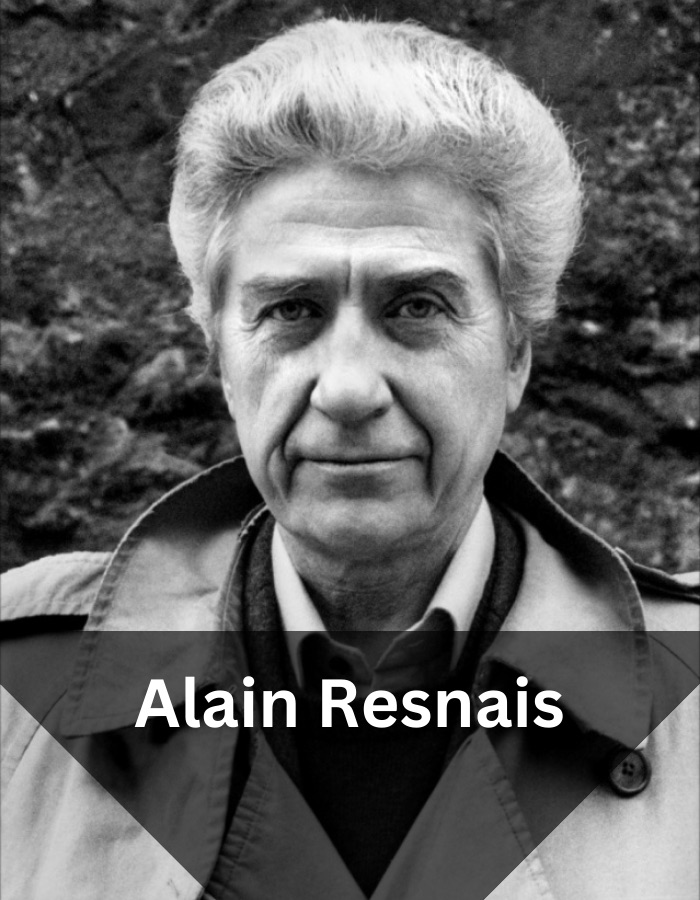
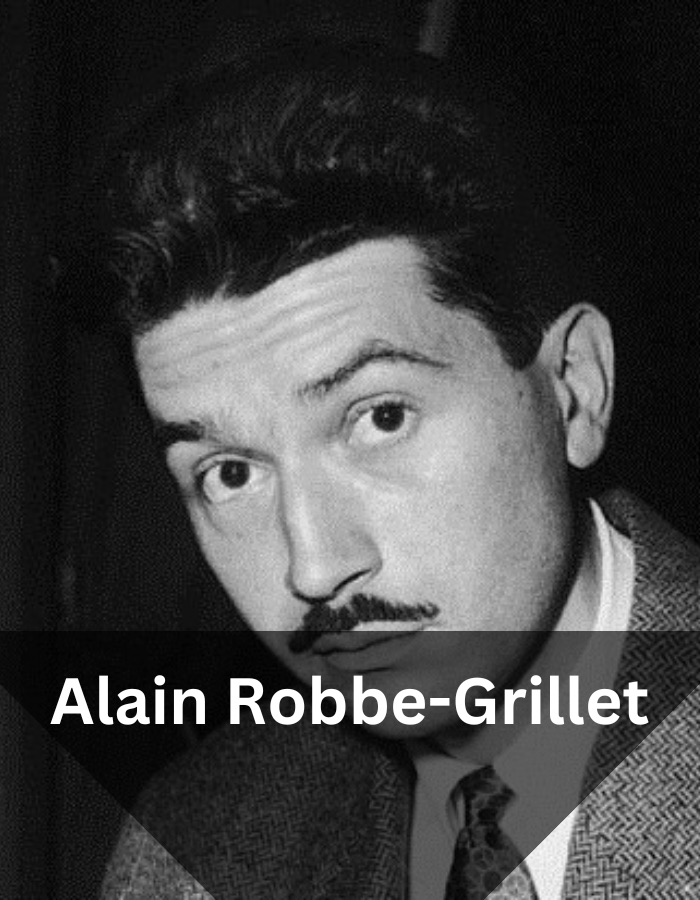
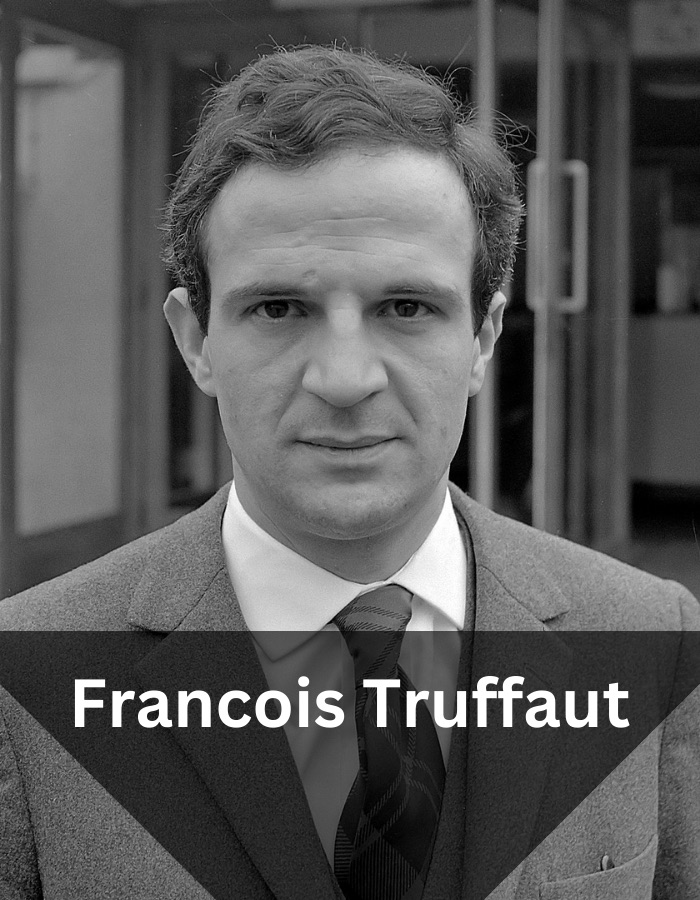
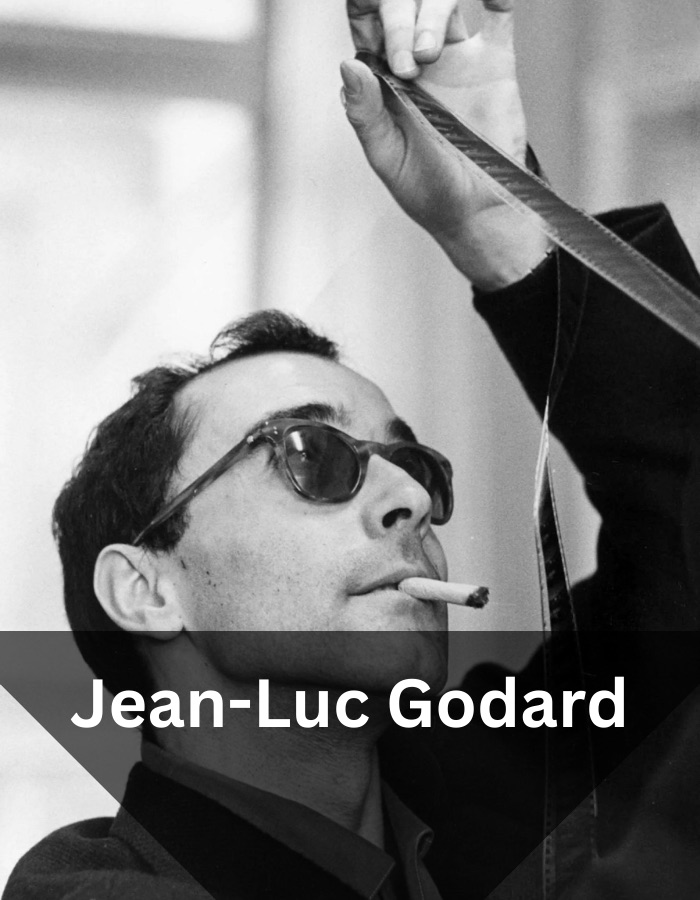
Below are some of the best French directors ever. Click on their pictures to discover more about them.






A Brief History of the Nouvelle Vague
The French New Wave, or “Nouvelle Vague,” was a cinematic movement that emerged in France during the late 1950s and 1960s. It marked a radical break from the traditional filmmaking conventions of its time. This movement was largely influenced by Italian Neorealism and classical Hollywood cinema. It was also a reflection of the social and political upheaval in post-war France. The French New Wave was characterised by its rejection of the established narrative and visual norms, including the use of location shooting, natural lighting, and direct sound recording.
Among the most notable directors of the French New Wave was Jean-Luc Godard, whose 1960 film “À bout de souffle” (“Breathless”) is often cited as a landmark of the movement. Godard’s work was known for its stylistic innovations, including jump cuts and the use of handheld cameras, which gave his films a sense of immediacy and realism. Another key figure was François Truffaut, whose 1959 film “Les Quatre Cents Coups” (“The 400 Blows”) was a critical and commercial success. Truffaut’s films often focused on personal stories, exploring themes of childhood, love, and the struggles of artistic creation.
Claude Chabrol, often considered the first of the New Wave directors, made a significant impact with his film “Le Beau Serge”. His works are known for their psychological depth and complex character studies. Eric Rohmer, another prominent figure, was celebrated for his low-key, conversational films that often explored moral and philosophical themes. His “Six Moral Tales” series is a testament to his unique narrative style.
Agnès Varda, the lone woman among the movement’s leaders, brought a distinctly feminist perspective to her films. Her work, including “Cléo from 5 to 7”, blended documentary realism with a poetic sensibility, focusing on the inner lives of her characters. Jacques Rivette, known for his experimental approach, often blurred the lines between fiction and reality, as seen in his film “Paris nous appartient”.
The influence of the French New Wave extended far beyond France, inspiring filmmakers around the world. Its emphasis on personal storytelling, experimental techniques, and the rejection of traditional filmmaking norms not only revolutionised French cinema but also had a lasting impact on global cinema.
 Bronze Screen Dream