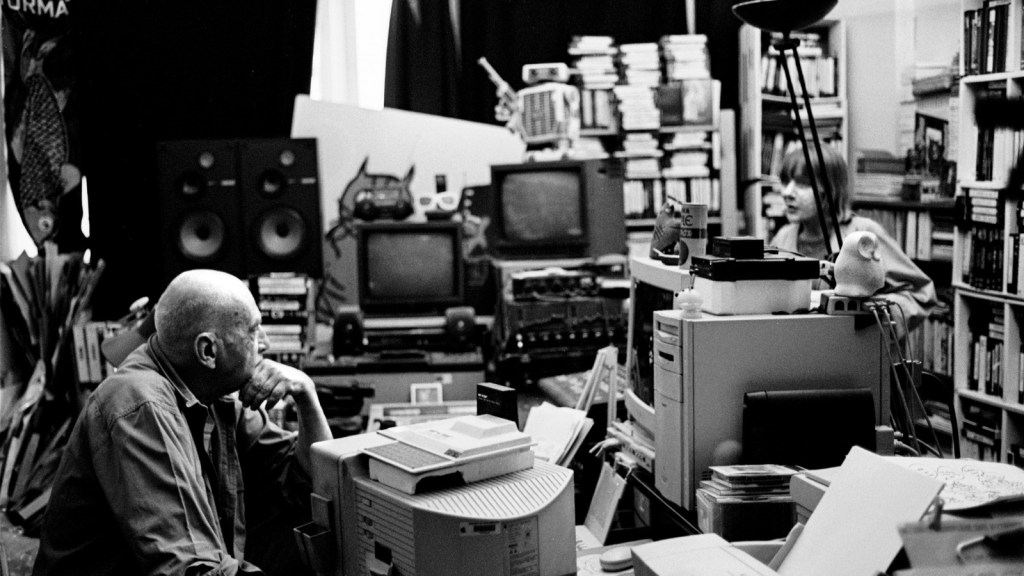
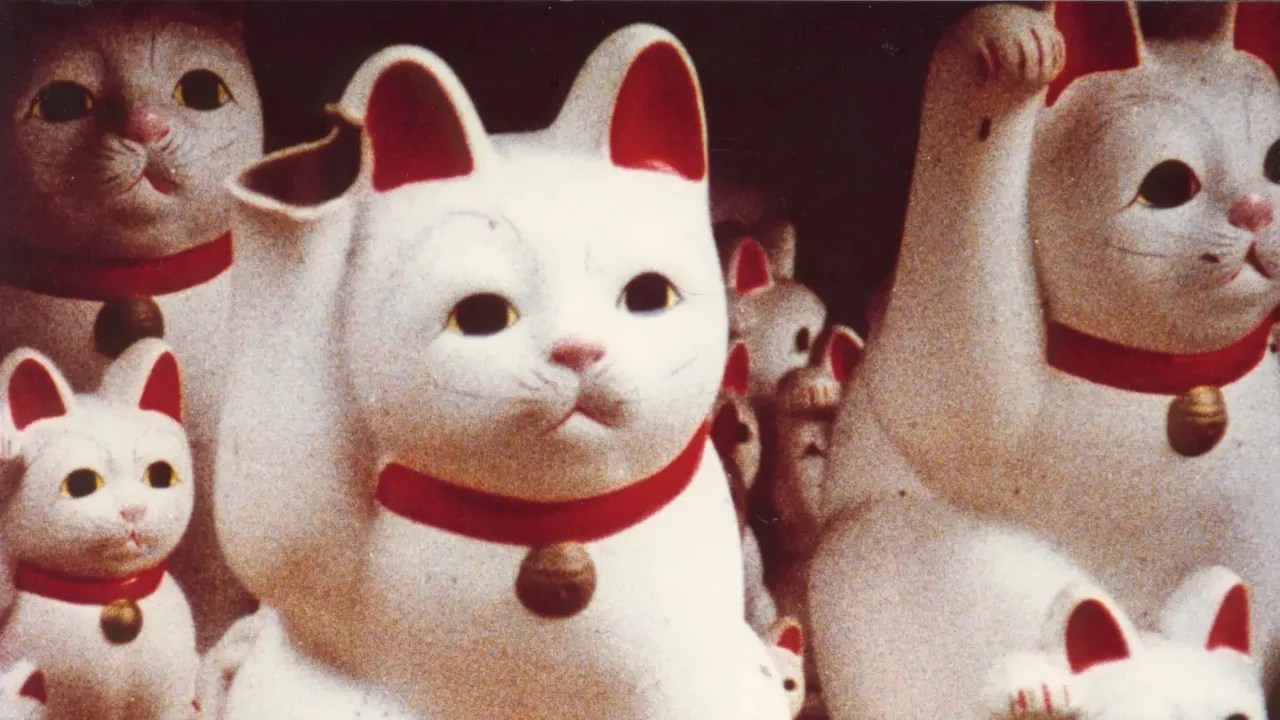
Chris Marker was a ghost in French cinema. He refused public appearances, he gave almost no interviews, and when he had to use an avatar, he used a cat. Yet, he went everywhere: Suberia, Japan, Guinea-Bissau, Cuba, Chile, always asking the same questions from different angles about what images do to time and what time does to memory.
Marker’s touch was careful yet definitive. The essay film existed before Letter from Siberia, but it was Marker who made it something special. His tone: Digressive, playful yet politically serious, thought in images and words and was suspicious of both. His greatest film is Sans Soleil. That’s where his form found its fullest expression: a film that arrives as a series of letters from a cameraman in Japan and Guinea-Bissau, processed through an unseen woman, folded through Marker’s own obsessions about what it means to film something and whether the act of recording preserves or destroys. It is one of the genuinely inexhaustible films.
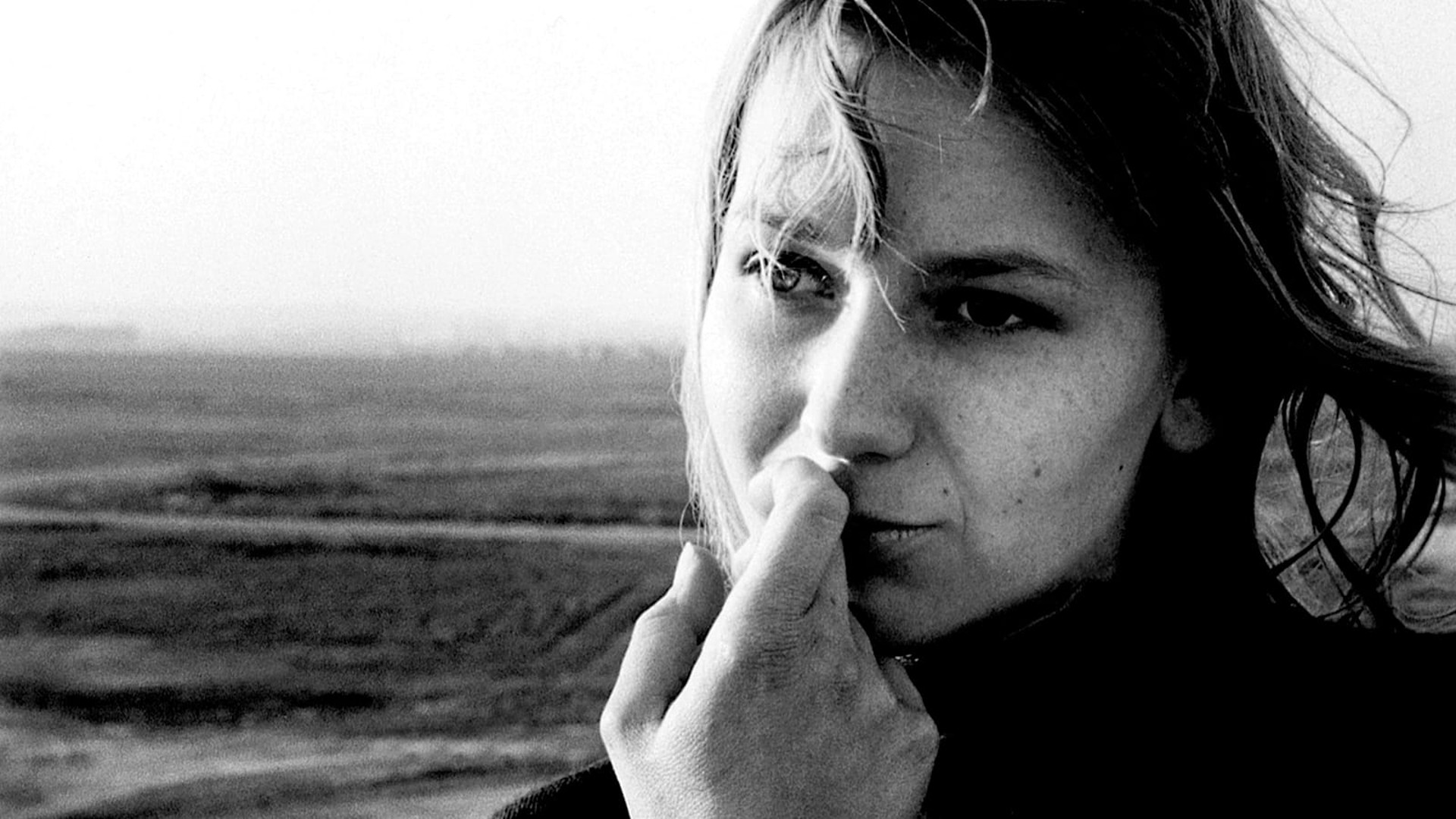
Then, on the other hand, he made La Jetee. A film that accidentally birthed a Sci-Fi classic made entirely of still photographs. It’s a weird, unique, brilliant film that centres around a single childhood memory of a woman’s face at an airport. Marker never stopped, never slowed, never got boring or angsty or lecturous. He made films in Second Life in the 21st century and somehow made people take the form seriously.
He died in 2012, still making work, still adapting, still essentially unknowable.
Chris Marker (1921 – 2012)
- 1952 – Olympia 52
- 1953 – Statues Also Die
- 1956 – Sunday in Peking
- 1957 – Letter from Siberia
- 1959 – Les Astronautes
- 1960 – Description of a Struggle
- 1961 – ¡Cuba Sí!
- 1962 – La Jetée
- 1963 – Le Joli Mai
- 1965 – The Koumiko Mystery
- 1966 – If I Had Four Camels
- 1967 – Far from Vietnam
- 1968 – The Sixth Side of the Pentagon
- 1971 – The Train Rolls On
- 1974 – La Solitude du chanteur de fond
- 1977 – A Grin Without a Cat
- 1983 – Sans Soleil
- 1985 – A.K.
- 1989 – Heritage of the Owl
- 1993 – The Last Bolshevik
- 1997 – Level Five
- 2000 – One Day in the Life of Andrei Arsenevich
- 2001 – Remembrance of Things to Come
- 2004 – The Case of the Grinning Cat
- 2011 – Stopover in Dubai
- Memory as the Central Problem: Marker’s films don’t just depict memory — they interrogate its mechanisms. What does it mean to remember? What does recording preserve and what does it destroy? La Jetée is built on this, Sans Soleil circles it obsessively, and the digital work of the later career takes it into new territory with the question of whether screens remember differently than minds do.
- The Political Image: From Statues Also Die (banned in France for its examination of colonialism’s relationship to African art) through the SLON collective and A Grin Without a Cat, Marker consistently treats the image as a political object. Who takes the picture, who is in it, who distributes it, what it’s used for — these are never neutral questions.
- The Essay Film: Marker didn’t just make essay films; he defined what the term meant. The digressive fire-person, the willingness to let arguments unspool, the voice-over that over-thinks. Nowadays, you’ll see the form all over. Online filmmakers, essayists, and film festival favourites. Many of them won’t know it came from Chris Marker.
- Travel and the Encounter with Otherness: Marker was constitutionally restless, and yet the films are never tourist documents. The encounter with another culture is always an opportunity to ask questions about representation, about what it means to film people who are not yourself, about what survives the translation into image.
- Technology as Medium and Subject: Marker was unusual among his generation in genuinely embracing new technology rather than mourning the loss of older forms. Video, digital, CD-ROM, multimedia installation — each transition was an opportunity to ask new questions about how images and memory interact. Level Five and Immemory show a filmmaker who understood that the medium changes what the work can say.
- Agnes Varda
- Alain Resnais
- Dziga Vertov
- Harun Farocki
- Jean Rouch
- Jean-Luc Godard
- Joris Ivens
- Patrick Keiller
- Peter Watkins
- Thom Andersen
Biography
There has rarely been a director as enigmatic as Chris Marker. He fits into so many categories: Documentarian, New Wave, Left Banke, Cinema Verite, etc., yet he doesn’t sit easy in any of them. From his first celluloid moments to his last digital captures, he explored the medium in an iconoclastic way, never stopping to smell the roses or buying into his image.
Although much of Marker’s personal life is shrouded in mystery, we know he was born Christian François Bouche-Villeneuve in 1921 in Neuilly-sur-Seine, France. Marker came of age in the intellectual interwar years and the Second World War. During this time, the young Marker absorbed the literature of French intellectuals like Jean-Paul Sartre and Simone de Beauvoir and was involved in radical politics.
Marker was a part of the lesser-known Left Bank movement, often overshadowed by the coexisting French New Wave. The movement was named because its members preferred the bohemian Left Bank of Paris; this movement was defined by its intellectual rigour, documentary-like approach, and exploration of the intersection between fiction and reality.
One of the Left Bank members was Alain Resnais, who would help Marker take his first steps into cinema. Resnais shared Marker’s fascination with memory, time, and montage. Together, they worked on several short films, including Night and Fog, which are important milestones in film history.
However, Marker was much too much an iconoclast to happily play second fiddle, so he went out on his own with films like Sunday in Peking, where he blended an observational style with philosophical ruminations, crafting an intimate and expansive narrative which he would go on to perfect. With its meandering shots and poetic voiceover, the film isn’t just about Beijing—it’s a meditation on history, modernity, and the poetics of space.
Letter from Siberia was groundbreaking, blending documentary footage with staged sequences, political commentary, and personal musings. It showcased Marker’s dexterity in manipulating the visual medium, turning the cold landscapes of Siberia into a canvas on which larger questions about communism, progress, and humanity were painted.
As France became increasingly prominent in world cinema, Marker accidentally became a notable name of the Nouvelle Vague, creating his classic film La Jetée. A 28-minute science fiction short, it is composed almost entirely of still photographs. Yet, its emotional resonance, thematically dense narrative, and hauntingly beautiful imagery elevate the imagery. Centering on the notion of memory and time, Marker postulates a post-apocalyptic world where the key to humanity’s salvation lies in accessing a singular poignant memory. It reflects on the nature of images, memories, and the inexorable march of time. Many, including director Terry Gilliam with his feature 12 Monkeys, have drawn inspiration from this film.
The Parisian spring of 1962, just months after the Algerian War’s denouement, offered a city on the cusp of metamorphosis. And in this transitional phase, Marker brought forth Le Joli Mai. Crafting what can be described as a cinematographic mosaic, Marker roamed the streets of Paris, interviewing a tapestry of its denizens. The film, part documentary and part philosophical inquiry, pierced through the veil of the every day, revealing the hopes, dreams, fears, and regrets of ordinary Parisians. By foregrounding their narratives, Marker showcased the essence of a city that had survived wars and was grappling with the new age’s dreams and disappointments.
During the tumultuous 1960s, Marker, the cinematic voyager, continued pushing boundaries. His work ventured from the furthest reaches of Tokyo in The Koumiko Mystery to the ruminative poetic expressions of The Sixth Side of the Pentagon, which detailed the massive anti-Vietnam War protest march on the Pentagon. Slowly, Marker refined his new form of essayistic documentaries.
Amidst the backdrop of political fervour and social unrest in the late 60s, Marker co-founded SLON (Société pour le Lancement des Oeuvres Nouvelles) – a film collective dedicated to a unique mode of production and distribution. The ethos of SLON was rooted in socialism, emphasising collaborative filmmaking and championing the voices of workers, students, and those marginalised by mainstream media.
May 1968, a month with intense student protests and general strikes in France, further fueled Marker’s commitment to political cinema. His engagement was not merely as a passive observer; he was an active participant, capturing the street’s raw energy and the nascent hopes of a generation daring to imagine a different world. Through SLON, he facilitated the production of direct, unfiltered, and unabashedly political films, placing power and means of cinema in the hands of workers and activists. Post-May 1968, Marker turned more towards SLON and away from more traditional filmmaking.
The early ’70s continued this approach. Delving into diverse subjects, Marker’s films from this era exhibit a polyphonic tapestry of voices and perspectives. The Train Rolls On was one such film, in which Marker interspersed moments of life aboard the Trans-Siberian Railway with the historical and social contexts of the landscapes it traversed.
In 1977, Marker released A Grin Without a Cat, which many consider among his most ambitious works. A sprawling meditation on the global political upheavals of the 1960s and ’70s, the film traverses the continents, from Cuba to Vietnam to Chile, capturing the zeitgeist of revolutionary fervour. With a meticulous collage of archival footage interspersed with Marker’s incisive commentary, it reflected the successes, failures, and enduring legacy of global leftist movements.
Transitioning from the socio-political tumult of the 1970s into the burgeoning technological era of the 1980s and beyond, Marker’s oeuvre reflected a synthesis of the past with a contemplative gaze upon the future. Marker’s fascination with memory persisted throughout the decade, showcased in films like A.K., an intimate behind-the-scenes portrait of Akira Kurosawa.
Perhaps no film better exemplifies Marker’s prowess in blending memory, time, and technology than the 1983 masterpiece Sans Soleil. Here, Marker crafts a cinematic letter, a journey spanning from Japan to Guinea-Bissau, all while intertwining musings on memory, culture, and the transient nature of life. Marker’s eloquent narrative, laden with evocative imagery, questions the nature of reality and our attempts to capture it, either through the lens of a camera or the corridors of our memories.
As film turned increasingly digital and directors his age lost their touch, Marker went the other way; he dived into the new era, embracing it with zeal. Level Five stands out, blending narrative cinema with digital artistry. Delving into the Battle of Okinawa’s haunting memories during WWII, the film marries historical footage with futuristic computer interfaces, pondering the nature of memory in the digital age and the ethical dimensions of recreating the past.
Marker’s foray away from traditional film continued into multimedia art installations and CD-ROM projects like Immemory, an interactive exploration of his memories and thoughts. It’s worth noting that of all his old colleagues, Marker was the one who most embraced the modern era.
Yet, despite his keen sense of modernity, Marker remained an enigma. Renowned for guarding his privacy, he rarely gave interviews and shied away from public appearances. This reclusiveness added layers to his mythos, making him akin to a spectral presence whose essence could be felt in every frame of his films but remained elusive in person.
2004’s The Case of the Grinning Cat saw Marker returning to the Parisian streets, chronicling the city’s socio-political landscape post-9/11. In classic Marker style, he finds profound meaning in the seemingly mundane, as graffiti cats become symbols of resistance and introspection in a world grappling with unprecedented changes.
Marker passed away in 2012, still making movies, embracing change, and exploring his classic themes. It feels like, in the years since his death, he has only become more relevant. The essay-film genre he pioneered has found new life in online media. His ruminations on memory, time and technology inspire modern generations, and so many of the greatest directors have cited his importance.
But how do you sum up an artist like Chris Marker? He was an oracle, a beacon, an explorer, and a conquistador. Whose films feel just as new today as they did half a century ago.
Further Reading
- Chris Marker: Memories of the Future by Catherine Lupton – This is one of the most comprehensive books on Marker, providing insight into his vast body of work and the themes he explored.
- Staring Back by Chris Marker – A photo book that collects over fifty years of Marker’s photographs, capturing candid moments of historical figures, street scenes, and personal memories, presented as a visual commentary on the 20th century.
- Chris Marker: Memory’s Apostle by Catherine Lupton, Criterion
- ‘Thrilling and Prophetic’: Why Film-Maker Chris Marker’s Radical Images Influenced So Many Artists by Sukhdev Sandhu, The Guardian
- Chris Marker: Eyesight by Chris Darke, Film Comment
- The Equality of the Gaze: The Animal Stares Back in Chris Marker’s Films by Kierran Argent Horner, Film-Philosophy
- The Owl’s Legacy: In Memory of Chris Marker by Catherine Lupton, Sight and Sound
- The Cats in the Hats Come Back; or “At Least They’ll See the Cats”: Pussycat Poetics and the Work of Chris Marker by Adrian Danks, Senses of Cinema
 Bronze Screen Dream