
Alain Robbe-Grillet isn’t a film director. Well, he is. But it’s wrong to approach him with that notion. To understand Robbe-Grillet, you must understand that before he ever picked up a camera, he was one of the most important authors in France. He was the central theorist of the Nouveau Roman, the literary movement that wanted to strip fiction of its psychological crutches and its sentimental causality and look instead at surfaces, objects, the precise geometry of things in space. He would bring this focus into film, and the results were strange.
His entry into film came laterally, by writing for Alain Resnais the script of Last Year at Marienbad. Which is both arguably Resnais’s hardest film for accessibility, and oddly, Robbe-Grillet’s most accessible. His own films are odd. They range from the playful to the transgressively erotic. His 60s work is more formally radical, his 70s work is harder to define aesthetically but is consistent theoretically: desire as a narrative mechanism, the voyeur as a structural position rather than a character.
His films are limited at times by Robbe-Grillet’s disinterest in making ‘movies.’ He sometimes feels more like a polemicist than a filmmaker, which sometimes makes them needlessly complex, but also makes them genuinely distinctive works.
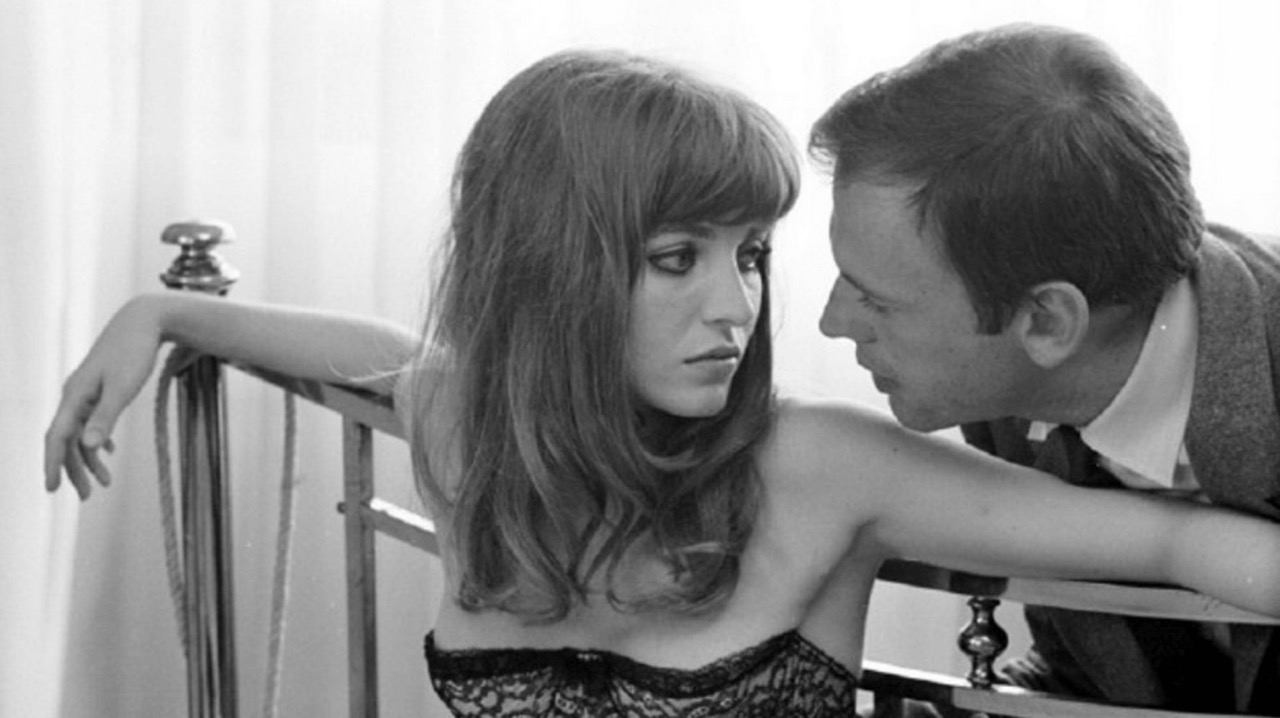

Alain Robbe-Grillet (1922 – 2008)
- 1963 – The Immortal
- 1966 – Trans-Europ-Express
- 1968 – The Man Who Lies
- 1970 – Eden and After
- 1971 – N. Took the dice
- 1974 – Successive Slidings of Pleasure
- 1976 – Playing with Fire
- 1983 – The Beautiful Captive
- The Unreliable Image: Robbe-Grillet’s central argument, carried from the novels into the films, is that images, like sentences, don’t transparently convey reality.
- Desire as Mechanism: The erotic content in his films isn’t decoration. It’s the engine of the narrative logic. Desire is what drives the voyeur, what generates the story, what the camera enacts in its relationship to its subjects. The sadistic and voyeuristic elements of the later films are consistent with a theoretical position about how looking works.
- Transgression: Many of Robbe-Grillet’s films push the boundaries of the taboo. These are erotic, violent and provocative works, unashamed of the fact.
- Self-Reflexive Storytelling: The story that knows it’s a story; the characters are aware they’re being watched. Robbe-Grillet consistently folded the narration into narrative, making the construction visible.
- Repetition as Disorientation: Scenes repeat with variations, gestures recur in different contexts, and the same line of dialogue appears with different implications. Put together, this undermines the viewer’s ability to establish a stable version of events. Time becomes unreliable, and that unreliability is the subject.
Biography
Coming soon
 Bronze Screen Dream