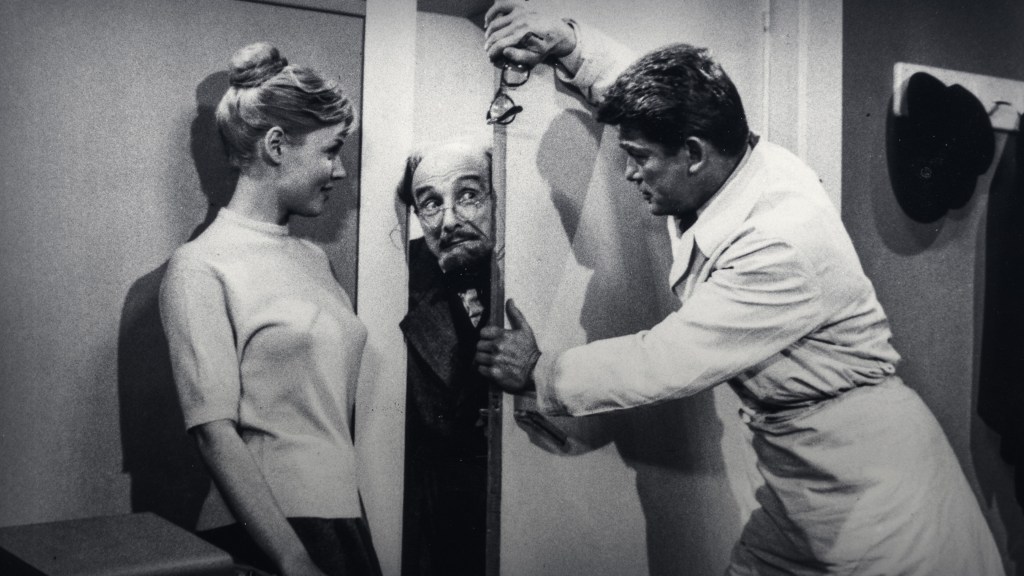
Pierre Kast is one of the more genuinely interesting figures in the New Wave orbit who never quite received the attention he deserved. He was a Resistance activist, a surrealist fellow traveller, a science fiction enthusiast, a Cahiers critic, an architecture documentarian and a novelist, and the films contain all of these things in varying proportions.
He began his career as an assistant at the Cinematheque, then as Jean Grémillon’s assistant, all while writing criticism for Cahiers du Cinema alongside the group that would become the New Wave. He maintained friendly relations with the group but never quite fit in with it. He was more interested in ideas and wit than confession or arguments. Kast described himself with characteristic precision as an intellectual dandy and nobody’s accomplice. The phrase is revealing; he maintained a deliberate distance from easy affiliation even when surrounded by people defining movements.
The shorts and documentaries he made through the 1950s are where his sensibility is clearest; Images pour Baudelaire shows a filmmaker who thinks in cultural references rather than despite them. The features that followed (Le Bel Âge, La Morte-Saison des Amours, Vacances Portugaises) are elegant, ironic comedies of bourgeois romantic entanglement, more Lubitsch than Godard in their knowing manipulation of genre convention, but with an underlying seriousness about desire and freedom that gives them weight.
Les Soleils de l’Île de Pâques, in 1972, is the strangest and most ambitious work. A science fiction film about a group of intellectuals on Easter Island awaiting contact with extraterrestrials, genuinely odd and genuinely serious about the ideas it’s playing with. That a film this eccentric exists at all is the measure of the man.

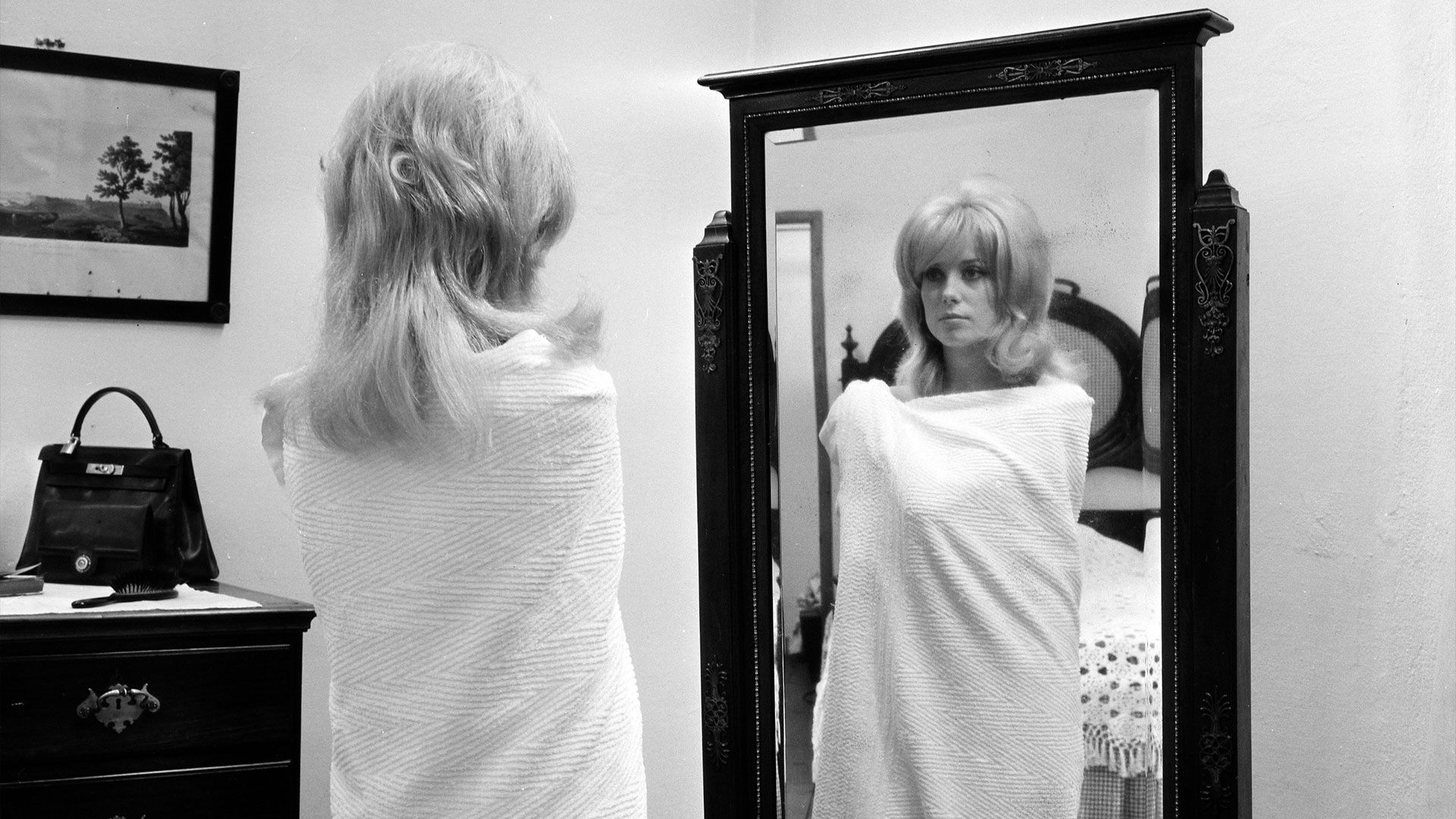
Pierre Kast (1920 – 1984)
- 1957 – Un Amour de Poche
- 1960 – Le Bel Age
- 1961 – The Season for Love
- 1963 – Thank You, Natercia
- 1963 – Vacances Portugaises
- 1964 – Le Grain de Salbe
- 1968 – Bandeira Branca de Oxalá
- 1968 – Drôle de jeu
- 1972 – Les Soleils de l’Île de Pâques
- 1976 – A Nudez de Alexandra
- 1980 – Le Soleil en face
- 1982 – La Guerillera
- 1985 – L’Herbe Rouge
- The Intellectual as Protagonist: Kast’s films are populated by writers, critics, architects and thinkers. People for whom ideas are the primary currency of existence, and whose romantic and social lives are entangled with their intellectual positions. The comedy often emerges from the gap between how they think about their lives and how they actually live them.
- Desire and Freedom as Philosophical Problems: The romantic comedies are never purely romantic; beneath the elegant surface is a consistent concern with what freedom means in the context of desire and bourgeois social obligation. La Morte-Saison des Amours is about this as explicitly as any French film of the period without ever becoming a thesis.
- Architecture and Space as Intellectual Interest: Kast’s early shorts feature documentaries on Ledoux and Le Corbusier, and this isn’t peripheral to his work. They reveal a mind that thinks about how built spaces embody ideas, and this runs into the features, where interiors and locations are always chosen with a precision that goes beyond atmosphere.
- Science Fiction as Serious Speculation: Kast’s interest in science fiction surfaces directly in La Brûlure de Mille Soleils and Les Soleils de l’Île de Pâques, and distinguishes him from virtually every other French filmmaker of his generation.
- The Dandy’s Irony: Kast’s self-description as an intellectual dandy is a formal position as much as a personal one; a refusal of earnestness, a preference for wit over sincerity, an elegance that is also a kind of detachment. The films are warm but never sentimental, funny but never frivolous. The irony is the thinking person’s defence against the world, deployed with considerable skill.
- Chris Marker
- Emmanuel Mouret
- Eric Rohmer
- Jacques Doniol-Valcroze
- Jean-Charles Tacchella
- Jean-Daniel Pollet
- Michel Deville
- Paulo Rocha
- Valerio Zurlini
- William Klein
Biography
Coming soon
 Bronze Screen Dream