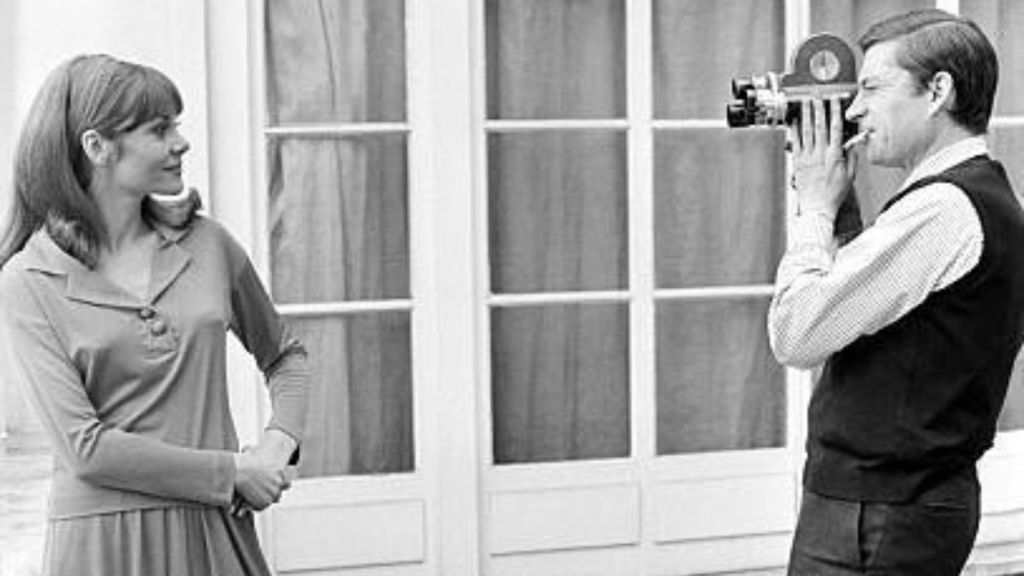
Jacques Doniol-Valcroze is one of those figures whom everyone acknowledges as important to cinema history, but his films remain underexplored. This is mostly due to the fact that his role as co-founder of Cahiers du Cinema overshadows everything else, but also because his own films were too classical to fit in with the New Wave directors he’d influenced.
He was there first. He’d worked under Jean Georges Auriol at Revue du Cinema, he’d helped found Objectif 49 cine-club, he’d been the man who’d pushed to found Cahiers with Bazin and Lo Duca in 1951, and he’d edited it until 1957. Bazin gets a lot of credit for this, rightfully, but Doniol-Valcroze’s role has been somewhat minamalised. He was the figure who tied the magazine to the art society (He acted in films by Cocteau and Robbe-Grillet), and he was the man behind the famous roundtable discussions at Cahiers.
The issue is that his own films have only become more and more underappreciated as time has gone by. Many of his contemporaries have been rediscovered; Doniol-Valcroze hasn’t been lost enough for that (He is forever the co-founder after all), but look at his features. He made seven, he worked with Bernadette Lafont, Bibi Andersson, Jean-Louis Trintignant and Serge Gainsbourg; they’re not slumming it for anyone. He clearly had acclaim and respect at the time, but that’s disappeared into something more vague nowadays.
This might be because he was so willing to be a negotiator rather than a leader. He stepped back from Cahiers and let Rohmer edit it. He supported Langlois quietly during the Langlois Affair. He co-founded the Quinzaine des Réalisateurs at Cannes, then stepped back into TV work.
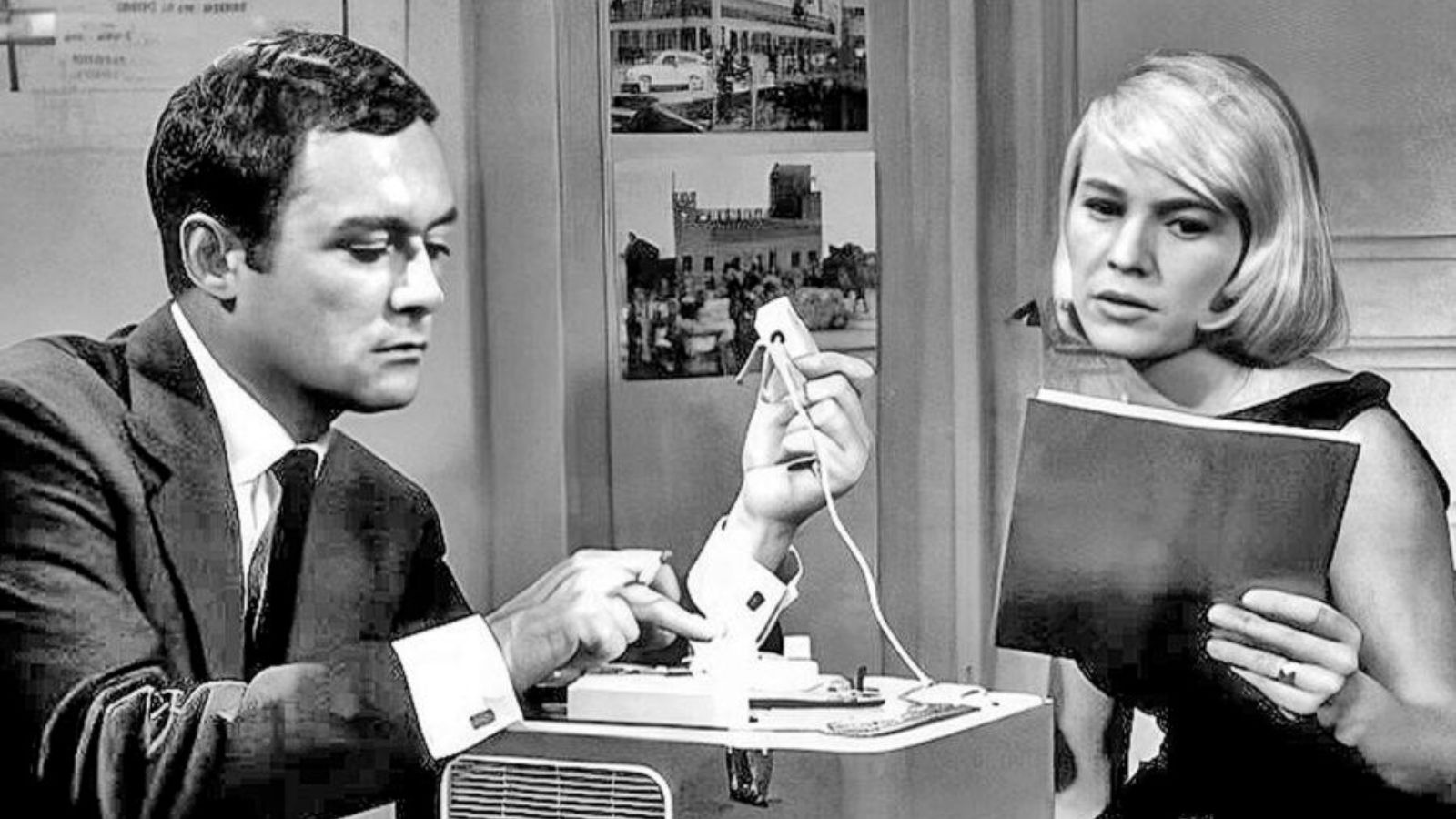
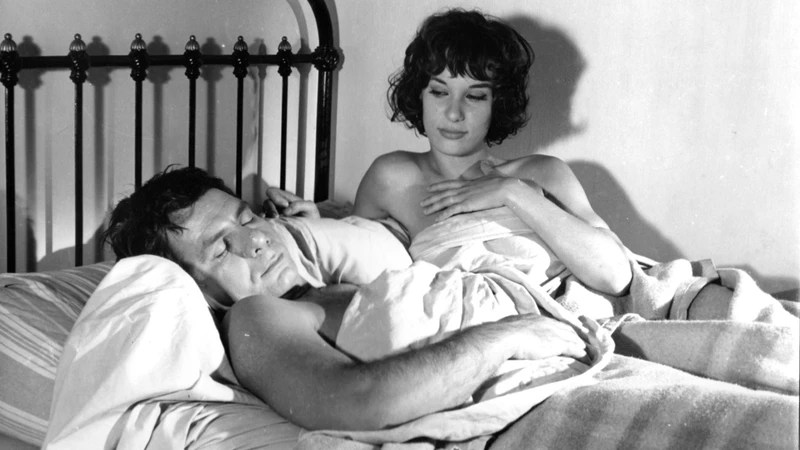
Jacques Doniol-Valcroze (1920 – 1989)
- 1958 – The Overworked
- 1960 – A Game for Six Lovers
- 1960 – The French Game
- 1962 – La Dénonciation
- 1967 – Le Viol
- 1970 – The House of the Bories
- 1972 – Man with the Transplanted Brain
- 1974 – Une femme fatale
- 1982 – Venise en hiver
- 1989 – La vie en couleurs
- Elegant Bourgeois Settings as Psychological Enclosures: Doniol-Valcroze anchors his films in high-society environments that function as both social mirrors and emotional traps. The luxury of L’Eau à la bouche‘s Pyrenean château is also its insularity; the architecture of affluence becomes the architecture of psychological constraint, the formal beauty of the setting reflecting the formal beauty of manners behind which desire operates.
- Seduction as Theatrical Sport: Romance in his films is rarely straightforward. It’s a game, played with calculation and nonchalance in equal measure. His characters pursue and evade each other with self-awareness; desire is treated as something to be analysed, and morality is fluid.
- Classical Restraint Within the New Wave: While Doniol-Valcroze was a co-founder of Cahiers du Cinema, his films don’t quite fit the New Wave label they’re sometimes given. They’re more formally conservative: Smooth tracking shots, deliberate pacing, deep-focus composition. It’s more classical than the formal chaos of Godard.
- Literary Texture and Hyper-Articulate Discourse: His characters intellectualise their emotional crises constantly. They’re witty, erudite and intellectual films that perform their interior crisis. In line with his classical style, this means he constantly uses narration, letter-reading scenes, and self-aware monologues.
- The Erotic Beneath the Civilised Surface: Beneath Doniol-Valcroze’s polished social films runs a current of repressed (Or barely repressed) desire. In the early films, this produces comedy; in Le Viol, it produces something darker, the formal game of seduction giving way to captivity and psychological violence.
- Alain Robbe-Grillet
- Alexandre Astruc
- Eric Rohmer
- Jean-Daniel Pollet
- Jörn Donner
- Mauro Bolognini
- Max Ophuls
- Michel Deville
- Pierre Kast
- Valerio Zurlini
Biography
Coming soon

