Argos Films
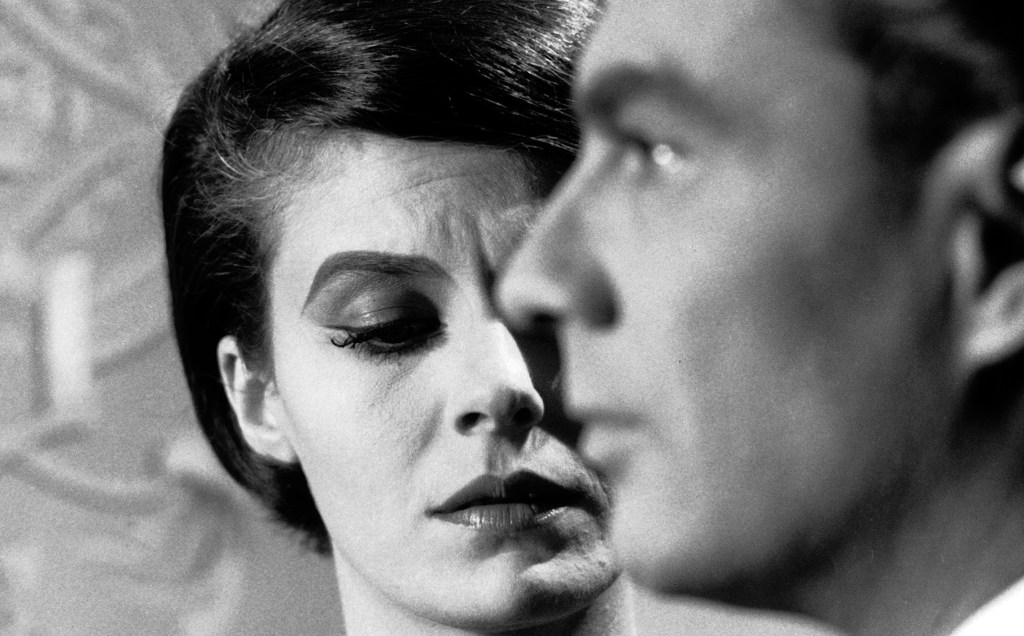
Anatole Dauman arrived in Paris at six months old, a Warsaw-born child of a Russian Jewish family who grew up entirely French, and whose wartime years were defined not by exile but by the Resistance. He distinguished himself fighting in the French Resistance during WWII before turning, in his mid-twenties, to film production, founding Argos Films with Philippe Lifchitz, initially to make short documentaries about art, inspired by the work of Italian filmmaker Luciano Emmer. The ambition expanded quickly. Within a few years, Dauman had developed a method that would define the company for the next four decades: use French government quality subsidies to back work that no commercial producer would touch, and let the resulting prestige attract the next project. Henri Langlois, founder of the Cinémathèque Française, observed in 1970 that for two decades “the history of independent French cinema has been written in the wake of Argos Films.”
Argos would be the motor of the Left Bank filmmakers who’d distinguish themselves against the Cahiers du Cinéma circle. Dauman produced the films of Resnais, Marker, Varda, Rouch, Franju, Astruc and more. And the movement’s collective ambition (memory, time, trauma, the politics of the image) reflects a consistent curatorial intelligence rather than a scattershot portfolio.
By the 1970s, Dauman had turned his attention outward, finding international auteurs who needed exactly what Argos had always offered: a French co-production structure that provided financing, freedom, and, where necessary, legal shelter in the case of In the Realm of the Senses. The approach was consistent with how Dauman had always worked: identify the film that couldn’t get made any other way, and find the mechanism to make it. The Tin Drum, Paris, Texas, The Sacrifice, Wings of Desire — across one extraordinary decade, the Argos catalogue accumulated what amounts to a private canon of late-20th-century art cinema. Dauman died in April 1998, and his final production under the Argos banner was Chris Marker’s Level Five, closing a forty-plus-year association with the filmmaker whose career he’d enabled.

