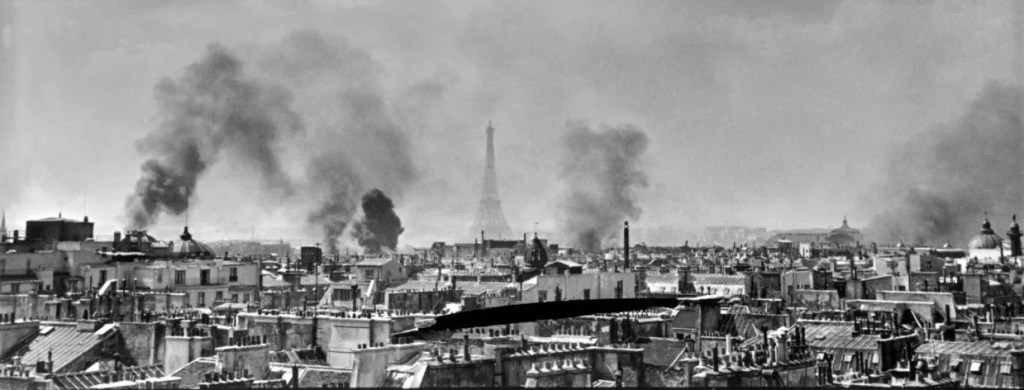
In the 1930s, you could argue that French Cinema was the best cinema on earth. Sure, Hollywood had the money, but France had Jean Renoir and Julien Duvivier. It had René Clair and his whimsy. It even had genius foreign emigres like Max Ophuls. It was the birthplace of cinema’s avant-garde, with the likes of Germaine Dulac. It was the birthplace of the medium itself with the Lumières and Georges Méliès, and even Fantomas.
In 1945, not a single name on that list was in France. Renoir, Clair, Duvivier, and Ophuls had fled. The rest had simply died. And yet, French Cinema hadn’t died. No, not at all. Emerging from German Occupation was a film industry that had been dominated by Continental Films, a German-capitalised production company established by Joseph Goebbels and run by Alfred Greven.
While Continental had allowed French filmmakers a considerable degree of technical freedom (Look at the films of Jean Gremillon, Robert Bresson or Henri-Georges Clouzot), it was an instrument of an occupying force. And while so many did it that it wasn’t enough to blacklist you, it would be a quiet mark of shame for most.
In 1945, Continental was liquidated and its assets seized by the state. The provisional government started the groundwork for what would become the CNC (Centre National de la Cinématographie). The goal was simple: To protect French cinema from foreign dominance. But this time, they weren’t looking at Germany; they were looking at Hollywood. The French public had been starved of American films and were swarming to see movies like The Great Dictator (1940), Citizen Kane (1941), or To Have and Have Not (1944) that they’d never been able to see before. The gritty, shadowy crime films found their name ‘Film Noir’ from these French critics (Specifically Nino Frank) who’d missed the development of the genre from 1940-44.
Suddenly, Pandora’s Box was opened, and this would, in a decade, lead to the clear split between older, more Hollywood-hesitant film fans and the Hitchcock-Hawksians who’d lambast them. Regardless, producers were terrified.
Additionally, the CNC was looking to rebuild bombed studios and ruined equipment. And behind them stood the Comité de libération du cinéma français (CLCF), which had operated clandestinely during the war but now was out in the open, exerting massive influence over cinema, who got to work on them and what kind of stories deserved to be told.
French Cinema Collaborators
And who doesn’t deserve to be told? Well, there were certainly a fair few big names in credits who found themselves judged for what they’d done in the past few years. Sacha Guitry, one of France’s most brilliant playwrights and the director of Confessions of a Cheat, was arrested and spent months in prison under suspicion of collaboration, and though released, his reputation was forever tarnished.
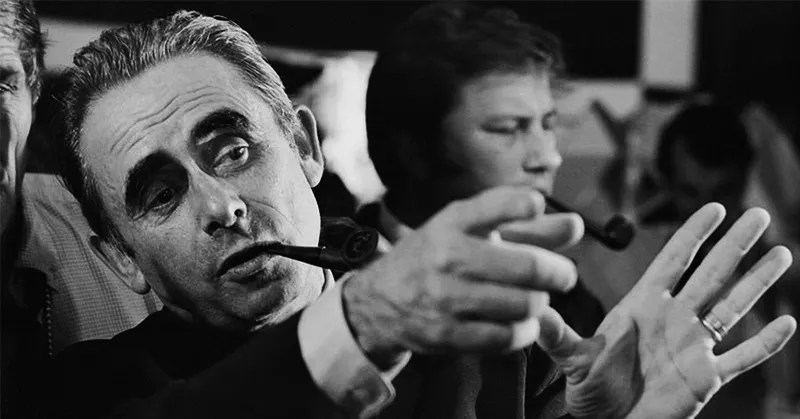
Henri-Georges Clouzot directed the brilliant but bleak Le Corbeau (1943) and, for his efforts, was handed a lifetime filmmaking ban (Though later shortened thanks, in part, to protests from the likes of Jean-Paul Sartre, who argued Clouzot was a cynic, not a Nazi) because the film was viewed as anti-French propaganda used by the Germans.
Then there’s the actors: Robert Le Vigan, best known for Le Quai des Brumes (1938), who didn’t just work to survive but was openly, fanatically fascist. He joined the PPF, and he broadcast virulent anti-semitic propaganda. Though put on trial and into forced labour, his career would never recover, and he’d flee to Argentina. Arletty is perhaps the best-known actor collaborator, France’s most beloved star, the archetypal femme fatale, and the woman who had a very public affair with a Luftwaffe officer and famously declared, “My heart is French, but my ass is international.” She would be banned from working for three years, and while her career did restart, it never regained its height.
Then there’s the film critics. Jean Luchaire and Robert Brasillach were both executed by firing squad for their writings. The more important historically of the two was Brasillach, who was genuinely influential. He’d written the first serious chronicle of world cinema, Histoire du Cinema (1935), been the first major Western champion of Japanese Cinema (Especially Yasujiro Ozu and Kenji Mizoguchi), and he’d also been a virulent Fascist who denounced resistance and called for executions. Despite a campaign to grant him a pardon led by the likes of Francois Mauriac, Albert Camus, Paul Valery, and Jean Cocteau, De Gaulle would famously refuse, stating, “In literature, as in everything, talent confers responsibility.”
On the other hand, directors like René Clément, Jacques Becker, Jean Painlevé, and actor Pierre Blanchar all distinguished themselves. Leading the CLCF and leading cleansing committees.
Quality & Aesthetics of 1945 French Films
If you were sitting in a theatre in 1945, you could tell France was broke. Film stock was scarce, and directors didn’t have the luxury of doing fifteen takes, so every shot looked sloppy. There were constant power grid failures daily, so even if a take was perfect, it might not work as the equipment failed, and even if everything went perfectly, a viewer in the cinema couldn’t guarantee they’d reach the end without the power going out. This made everything more erratic.
The sets suffered too. Wood, plaster and textiles were heavily rationed for rebuilding actual homes, so instead filmmakers were forced to either recycle sets from older productions or film sparsely, thus pushing a degree of accidental realism.
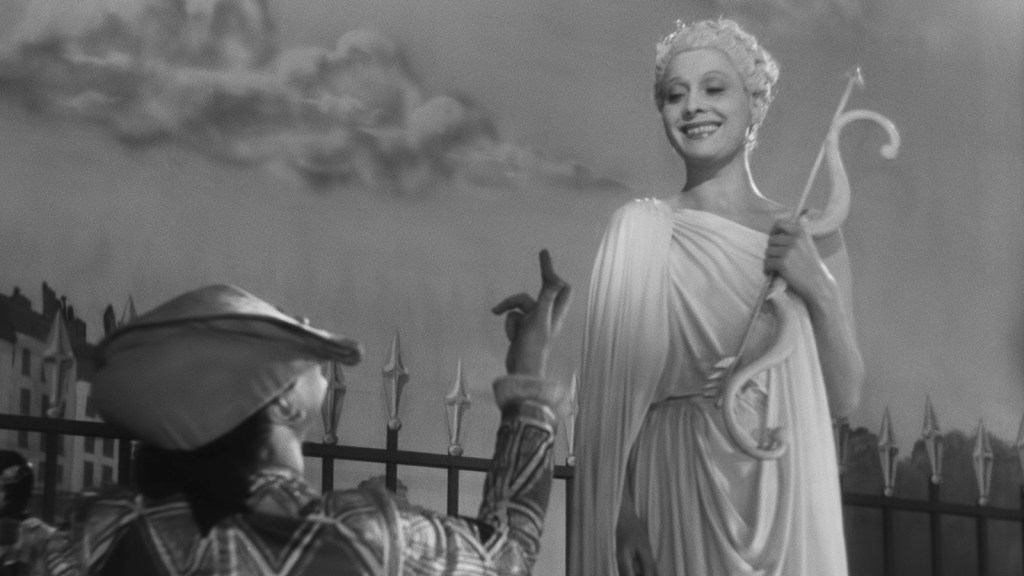
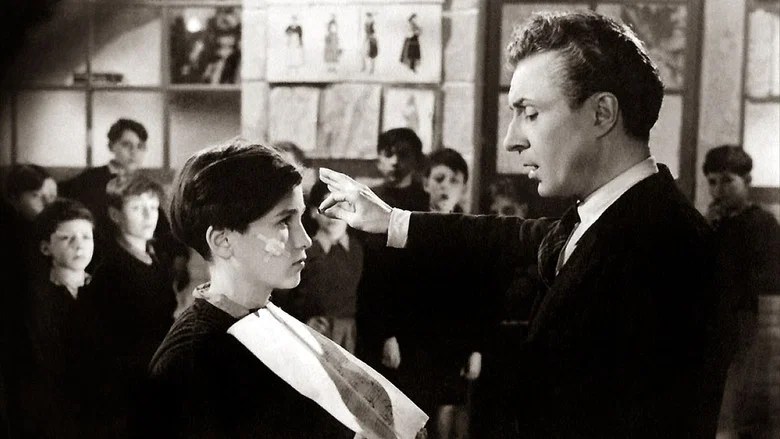
And if you were able to watch the films, then many of the films you could see were bland, same-old types. The major films of the year were: A Cage of Nightingales (1945), a juvenile rehabilitation film directed by Jean Dreville, and the adventure film Carmen (1945) directed by Christian-Jaque. The only major box-office hit that really stands out in retrospect is Les Enfants du Paradis (1945) by Marcel Carné. A massive box office success filmed under near-impossible wartime conditions (Jewish crew, starvation rations).
Coming Soon: French Cinema in 1950
References/Further Reading
- The Classic French Cinema, 1930-1960, Colin Crisp, 1993
- The Splendid Shark: French Cinema of the Occupation, Evelyn Ehrlich, 1985
- French National Cinema, Susan Hayward, 1993
- French Cinema: From Its Origins to the Present, Remi Fournier Lanzoni, 2002
- The Fascist Ego: A Political Biography of Robert Brasillach, William R. Tucker, 1975

