
René Clément is one of post-war French cinema’s most frustrating cases. A director of genuine achievement whose reputation sits awkwardly between the generation he came from and the one that superseded him. The New Wave critics were largely dismissive, seeing him as exactly the kind of polished, literary, technically accomplished filmmaker they were rebelling against. The charge isn’t entirely unfair but it obscures what he was actually good at.
He came from documentary, La Bataille du rail in 1946, made with actual railway workers reconstructing their own Resistance activities, is a remarkable piece of work that sits somewhere between neorealism and docudrama and predates both as established categories. The authenticity was earned rather than stylistic, and it gave the film a texture that his later, more conventional productions occasionally miss.
Jeux interdits in 1952 is the film that fixed his international reputation and remains genuinely extraordinary: Two children in wartime France developing a private ritual of death and burial as a way of processing what they can’t understand, the film observing them with a patience that never tips into sentimentality. It’s one of the great films about childhood, which is a different thing from being a children’s film.
Plein Soleil in 1960, Purple Noon in English, is his other undeniable achievement, and arguably Alain Delon’s defining performance: an adaptation of Patricia Highsmith’s Ripley that has a sun-drenched menace Minghella’s later version couldn’t match. That the New Wave was happening around him while he made it, and that he was considered the wrong kind of filmmaker by its critics, is one of those critical ironies that time tends to correct.
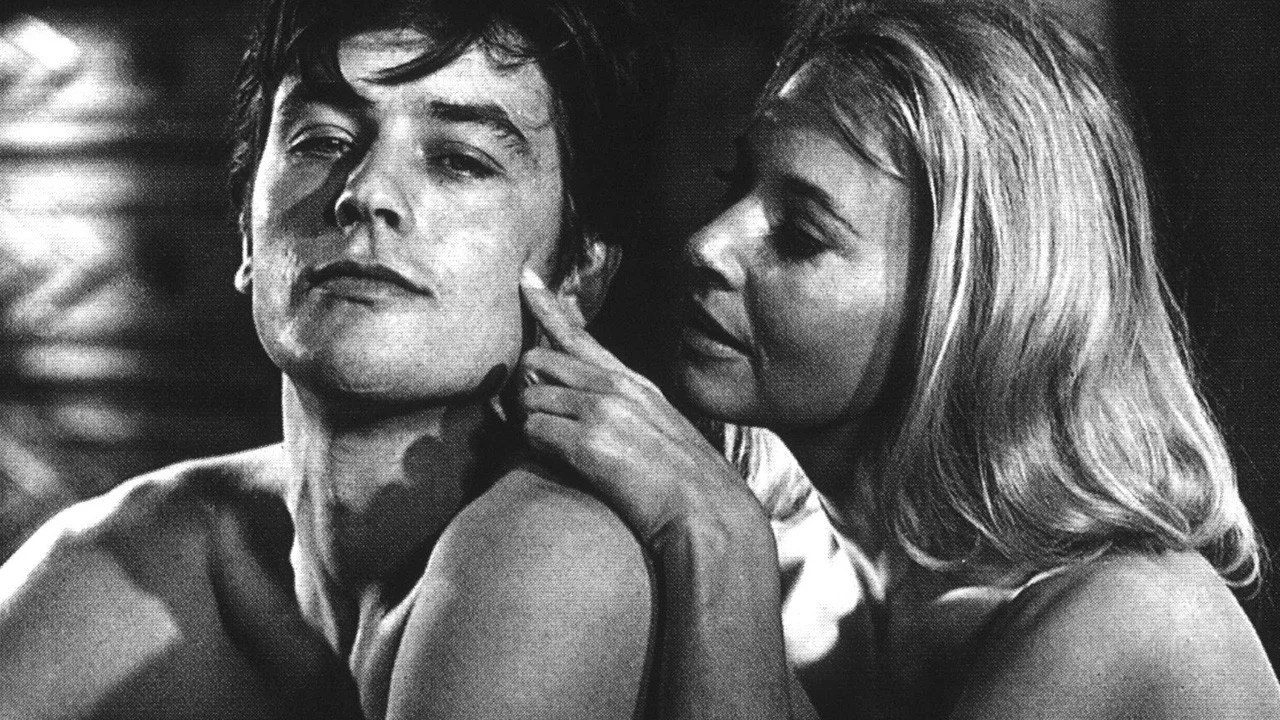

Rene Clement (1913 – 1996)
- 1946 – Battle of the Rails
- 1946 – Mr Orchid
- 1947 – Les Maudits
- 1949 – Au-delà des grilles
- 1950 – Glass Castle
- 1952 – Forbidden Games
- 1954 – Knave of Hearts
- 1956 – Gervaise
- 1957 – This Angry Age
- 1960 – Plein soleil
- 1961 – Quelle joie de vivre
- 1963 – Le jour et l’Heure
- 1964 – Joy House
- 1966 – Is Paris Burning?
- 1969 – Le Passager de la pluie
- 1971 – La maison sous les arbres
- 1972 – La Course du lièvre à travers les champs
- 1975 – La Baby-Sitter
- War as Moral Laboratory: Clément returns repeatedly to the Second World War not for spectacle but for what it does to ordinary people’s ethical frameworks. La Bataille du rail, Forbidden Games, Is Paris Burning? all treat the war as a situation that reveals character under pressure, the resistance worker, the bereaved child, the occupied city, rather than as a backdrop.
- Childhood as Witness: Forbidden Games established a recurring preoccupation with children navigating adult catastrophe without adult comprehension. Clément observes childhood not sentimentally but with a rigorous attention to how children actually process what they can’t name, through play, ritual, and imitation of the incomprehensible.
- The Documentary Foundation: His training in non-fiction filmmaking never left him. Even in conventional genre work, the instinct toward authentic location, natural behaviour, and unbeautified detail persists; it’s what separates his wartime films from studio-bound equivalents and gives Purple Noon‘s Mediterranean surfaces their particular quality.
- Psychological Realism in Genre: Purple Noon is the clearest example. A thriller that works as tension but is really about identity, performance, and the sociopath’s relationship to consequence. Clément was drawn to genre as a vehicle for character study, which is why his best work holds up better than straightforward genre exercises of the same period.
- The Transitional Position: Clément sits at the precise hinge between poetic realism and the New Wave without belonging fully to either; too realistic and humanist for the former’s romanticism, too polished and literary for the latter’s spontaneity. That awkward position marginalised him critically, but it also means his best films draw on both traditions simultaneously.
- Claude Chabrol
- Henri Decoin
- Henri-Georges Clouzot
- Jacques Becker
- Jean-Pierre Melville
- Jean Renoir
- Louis Malle
- Marcel Carne
- Pierre Granier-Deferre
- Robert Enrico
Biography
Coming soon

