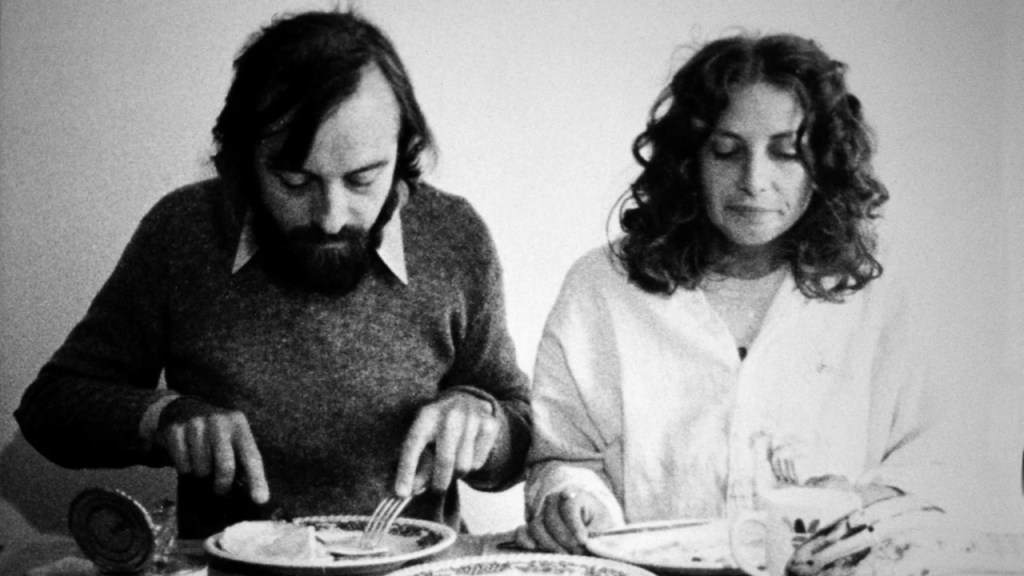
Luc Moullet started writing for Cahiers du Cinéma at eighteen, which puts him alongside Godard, Truffaut, Rivette and Rohmer in the room where the auteur theory was being argued into existence. He was there for all of it, wrote about Fuller, Lang and Buñuel with the same passionate conviction as his more celebrated colleagues, and then made films that the critical establishment spent decades not quite knowing what to do with. The New Wave got famous; Moullet got interesting.
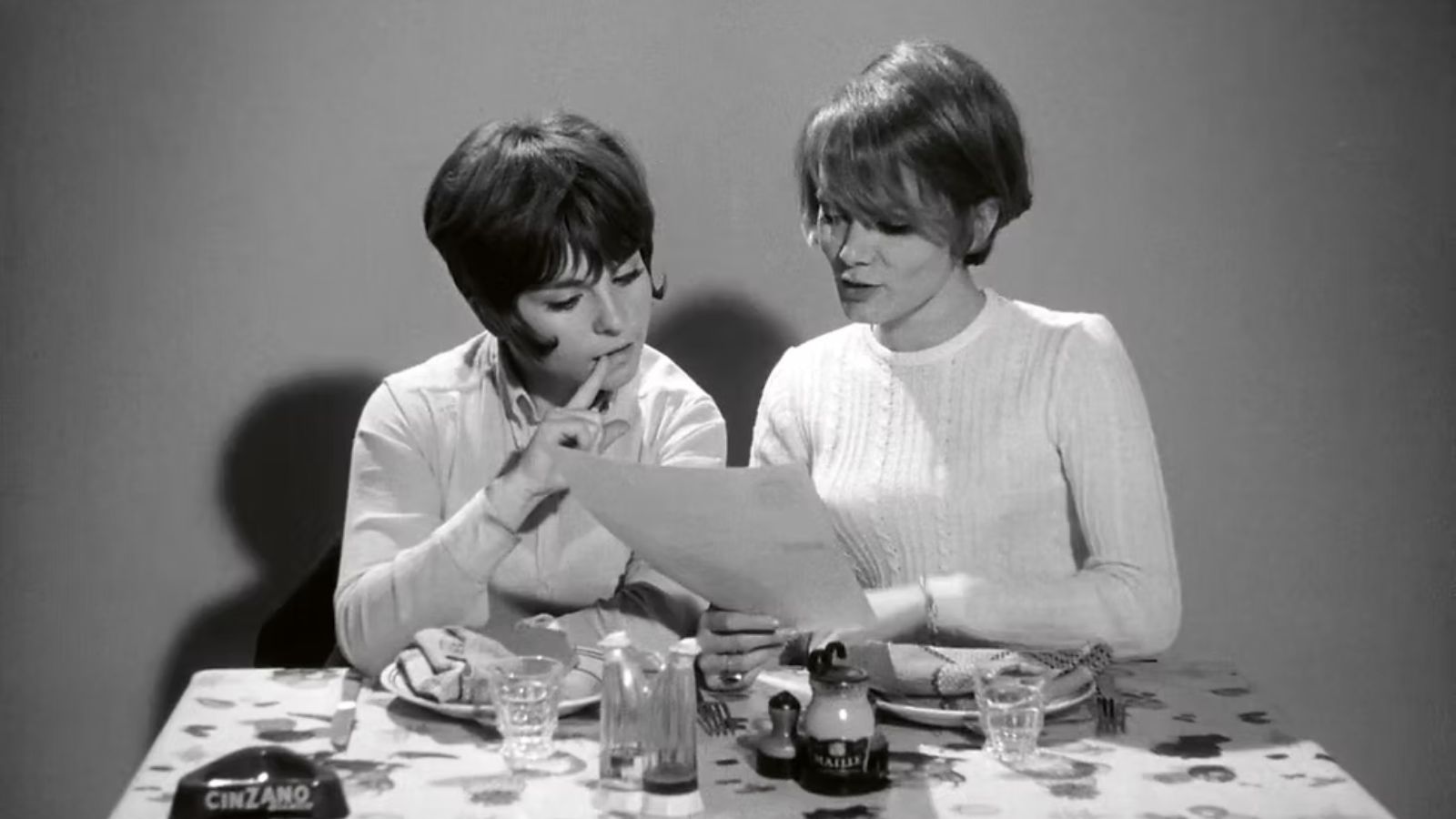
The problem, if it is one, is that he was funnier and cheaper than anyone around him, and French cinema has always had a complicated relationship with both qualities. His debut feature, Brigitte et Brigitte in 1966, was about two girls with the same name who become Paris roommates and navigate university life with cheerful absurdism, featuring cameos from Chabrol, Rohmer and a young Téchiné, alongside Samuel Fuller — the American B-movie director Moullet had championed in print with an enthusiasm that bordered on the theological. Godard called it revolutionary. It was also extremely cheap, which was the point.
He came from a family with its own complications; his father was condemned to death as a Nazi collaborator after the Liberation, then acquitted, and Moullet has never been shy about mentioning it. He became a cinéphile at nine when he saw Dreyer’s Day of Wrath, and something clicked permanently, not a taste for austere spiritualism but for the absurdity underneath all human arrangements, which Dreyer had not put there but Moullet found anyway.
The career that followed across features, shorts, documentaries and formats that resist categorisation is defined by extreme economy and extreme invention in roughly equal measure. The Alps appear constantly. The self-deprecating screen persona, in which Moullet casts himself as a hapless, petty, neurotic protagonist, is one of the more genuinely original comic constructions in French cinema. He produced films by Eustache and Duras when nobody else would. He is still working in his late eighties, still finding the inherent absurdity of opening a Coca-Cola bottle sufficient material for a short film.
Luc Moullet (1937–)
- 1960 – Un steak trop cuit
- 1966 – Brigitte et Brigitte
- 1967 – Les Contrebandières
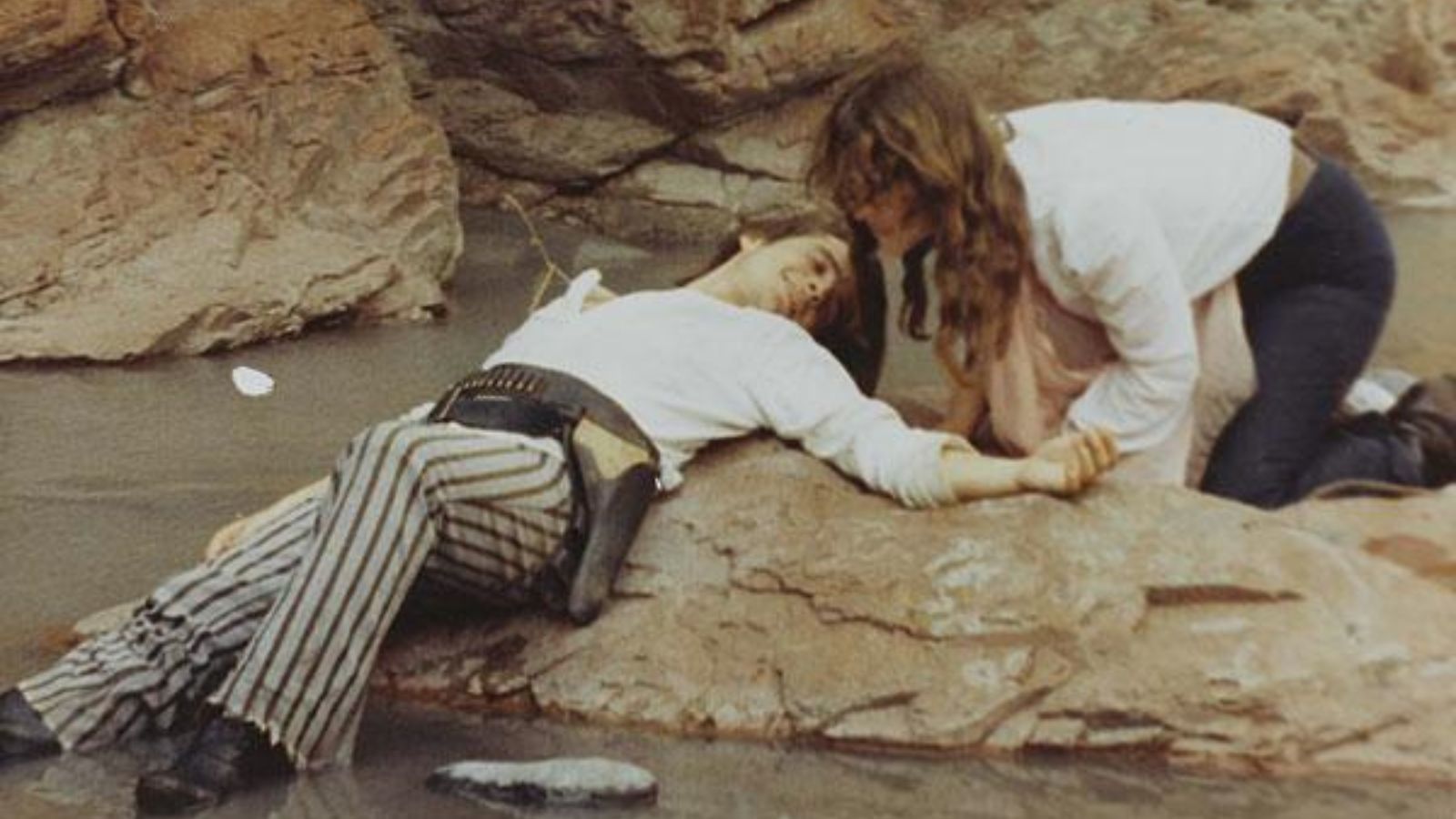
- 1971 – A Girl is a Gun
- 1976 – Anatomie d’un rapport
- 1984 – Barres
- 1987 – La Comédie du travail
- 1988 – Essai d’ouverture
- 1989 – Les Sièges de l’Alcázar
- 1993 – Parpaillon
- 2002 – Les Naufrages de la D17
- 2006 – Le Prestige de la mort
- Deadpan Burlesque and the Comic Absurd: Moullet is the New Wave’s funniest director, which the critical establishment has always found slightly suspicious. Drawing from Keaton’s spatial comedy, Buñuel’s social satire and Tati’s meticulous observation of human absurdity, his films chain together visual gags and deadpan quips that expose the inherent ridiculousness of everyday existence; from a fifteen-minute short spent watching a man fail to open a Coca-Cola bottle to a feature-length self-portrait as a neurotic, hapless filmmaker who can’t earn a living or please his wife.
- The Advantages of Poverty: Moullet actively theorised the virtues of extreme low-budget filmmaking, arguing that financial constraint forces genuine creative responsibility. The resulting aesthetic (jagged ellipses, flat performances from unknown actors, the deliberate rejection of production polish) is not merely the product of circumstance but a stated position. A Girl Is a Gun overdubs Léaud’s Billy the Kid with a comically mismatched deep voice as a loving homage to badly translated American B-movies; the roughness is the joke and the argument simultaneously.
- Mountains, Plateaus and the Geography of the South: Where most New Wave cinema is Parisian, Moullet is Alpine. The mountains, valleys and landscapes of the Southern Alps appear constantly, functioning as characters as much as settings. He famously inverted Lubitsch’s advice about filming actors, believing you first had to know how to film mountains. The characters wander, trek and backpack through empty geographic spaces that dictate the pacing and atmosphere, transforming landscape into a comedic and political subject.
- Microscopic Economics and Bureaucratic Satire: Grand ideological statements are not Moullet’s method; he goes after the maddening mundane instead. La Comédie du travail targets welfare bureaucracy through professional freeloaders; Genèse d’un repas dissects the global food supply chain step by step; Brigitte et Brigitte uses two provincial girls arriving in Paris to expose the structural absurdity of social expectations. Capitalism is examined through petty transactions, institutional red tape and financial ledgers rather than through manifestos.
- Hollywood Genre Subverted from Below: Moullet’s Cahiers criticism championed Fuller and Ulmer, the American B-movie directors who made something genuine from nothing. His films enact the same principle in a French context. Traditional genre structures get mapped onto utterly incongruous narratives: Les Contrebandières grafts action-thriller mechanics onto a sociological mountain smuggling operation run by two women; Anatomie d’un rapport is a relationship drama that simultaneously deconstructs relationship dramas. The genre is always the vehicle for something it wasn’t designed to carry.
- Adolfo Arrieta
- Aki Kaurismäki
- Edgar G. Ulmer
- Jacques Tati
- Jacques Rozier
- Jean-Charles Fitoussi
- Jean-Pierre Mocky
- Nanni Moretti
- Paul Vecchiali
- Samuel Fuller
Biography
Coming soon

