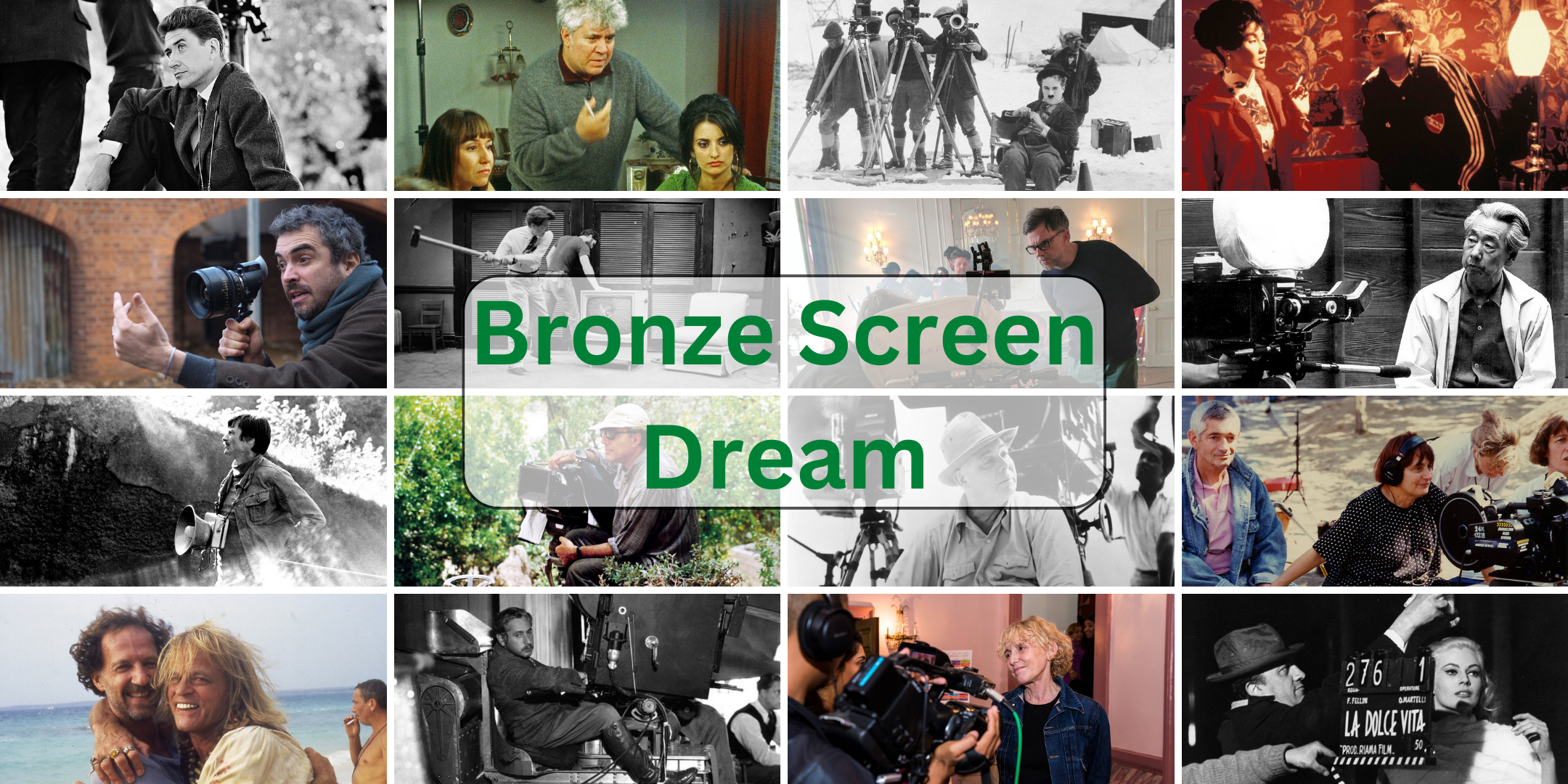
Below are some of the best French directors ever. Click on their pictures to discover more about them.



A Brief History of Poetic Realism
Poetic Realism, a film movement that emerged in France during the 1930s, is renowned for its blending of lyrical visual style with narratives rooted in the everyday lives of the lower and middle classes. This genre, distinct from both the glamour of Hollywood and the starkness of Soviet montage, emerged as a response to the sociopolitical turmoil of the era, including the Great Depression and the rising tensions leading to World War II.
Poetic Realism films are characterised by their focus on characters rather than plot, often depicting doomed love affairs and a sense of melancholy or fatalism. This style, while steeped in realism, also employs poetic and sometimes theatrical elements, creating a unique, evocative atmosphere.
Jean Renoir
One of the most notable directors of Poetic Realism was Jean Renoir, the son of the famous impressionist painter Pierre-Auguste Renoir. Jean Renoir’s contributions to the movement are significant, with classics such as “La Grande Illusion” and “The Rules of the Game”. These films are known for their deep humanism and complex portrayal of characters set against the backdrop of larger social and political issues. Renoir’s work is characterised by its fluid camera movement and the use of deep focus, techniques that influenced many future filmmakers.
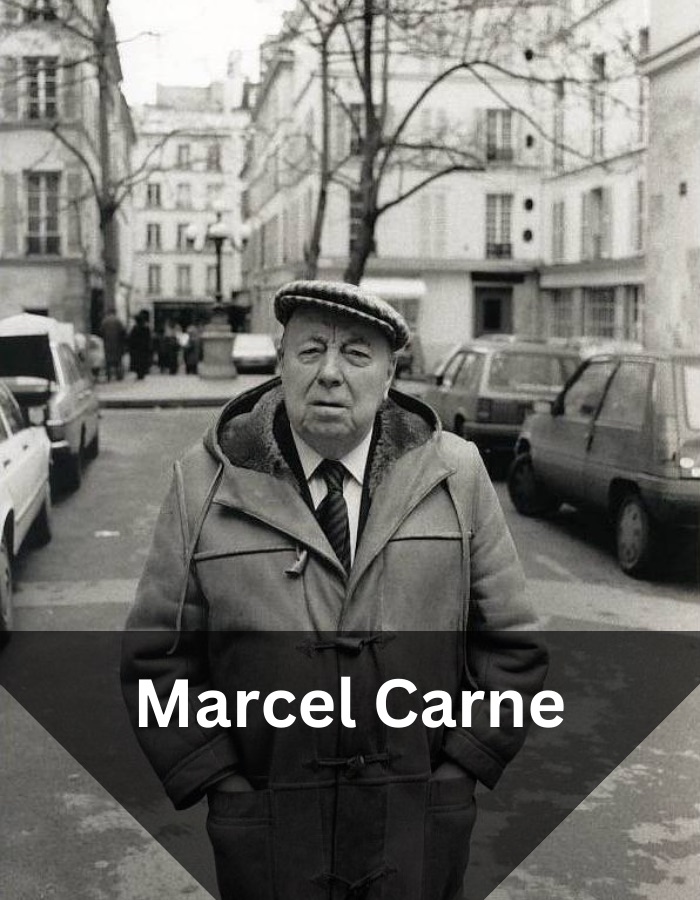
Marcel Carne
Another seminal figure was Marcel Carné, who, in collaboration with the writer Jacques Prévert, created several masterpieces of Poetic Realism. Films like “Port of Shadows” and “Le jour se lève” are archetypal examples of the genre, featuring moody, atmospheric cinematography and stories of love and despair in the lower echelons of society. Carné’s films are marked by a sense of fatalism and a focus on characters trapped by circumstances, often portrayed by leading actors of the time, such as Jean Gabin.
Julien Duvivier
Julien Duvivier is another director whose work significantly contributed to Poetic Realism. His film “Pépé le Moko” is a standout, starring Jean Gabin as a charismatic criminal. Duvivier’s films often explore themes of fate and destiny, with a strong emphasis on character psychology and moody, expressive cinematography.
Jean Vigo
Lastly, Jean Vigo, though he produced a small body of work, left a lasting impact on Poetic Realism and cinema as a whole. His film “L’Atalante” is particularly celebrated for its innovative narrative and visual style. Vigo’s unique approach to storytelling, which combined lyrical realism with a touch of surrealism, helped lay the groundwork for future cinematic movements, such as the French New Wave.
 Bronze Screen Dream