
Alain Robbe-Grillet was a French filmmaker and novelist best known for his pioneering role in the Nouveau Roman literary movement and for his avant-garde approach to cinema. His films are often marked by their non-linear narratives, deconstruction of traditional storytelling, and a cold, detached visual style that challenges the viewer’s expectations. Rather than focusing on character development or emotional arcs, Robbe-Grillet’s works emphasise the mechanics of storytelling itself, with ambiguous plotlines and recurring motifs of memory, voyeurism, and obsession. His collaboration with director Alain Resnais on Last Year at Marienbad brought him widespread recognition, introducing his signature blending of unreliable narratives and fragmented realities.
Throughout his filmmaking career, Robbe-Grillet explored themes of desire, control, and the manipulation of perception. Films like L’Immortelle and The Man Who Lies present characters trapped in labyrinthine, often nightmarish scenarios where time, identity, and truth are fluid and constantly shifting. His narratives resist easy interpretation, leaving viewers disoriented as if caught within the characters’ psychological delusions. Robbe-Grillet’s work is often concerned with the interplay between observer and observed, and his films feature voyeuristic elements that underline the artificiality of both cinema and reality. This self-reflexive aspect of his filmmaking is accentuated by his use of repetitive, ritualistic sequences that blur the line between fantasy and reality, often to unsettling effect.
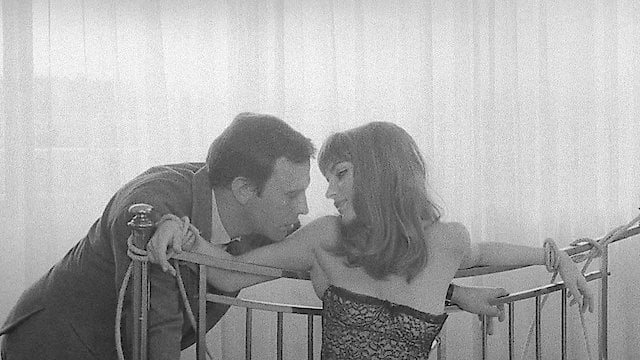
Visually, Robbe-Grillet’s films are meticulously composed, favouring stark, clinical aesthetics that mirror his detached narrative style. He employs long takes, symmetrical framing, and precise attention to architecture and landscape, creating environments that feel simultaneously real and artificial. These visual choices enhance the sense of alienation that pervades his films. In Trans-Europ-Express, for instance, the film within a film structure and deliberate use of eroticism showcase his fascination with narrative manipulation and human desire. Robbe-Grillet’s unique approach to filmmaking, blending experimental storytelling with visual formalism, positions him as a central figure in post-war French cinema, particularly for his ability to challenge the conventions of both narrative and cinematic form.
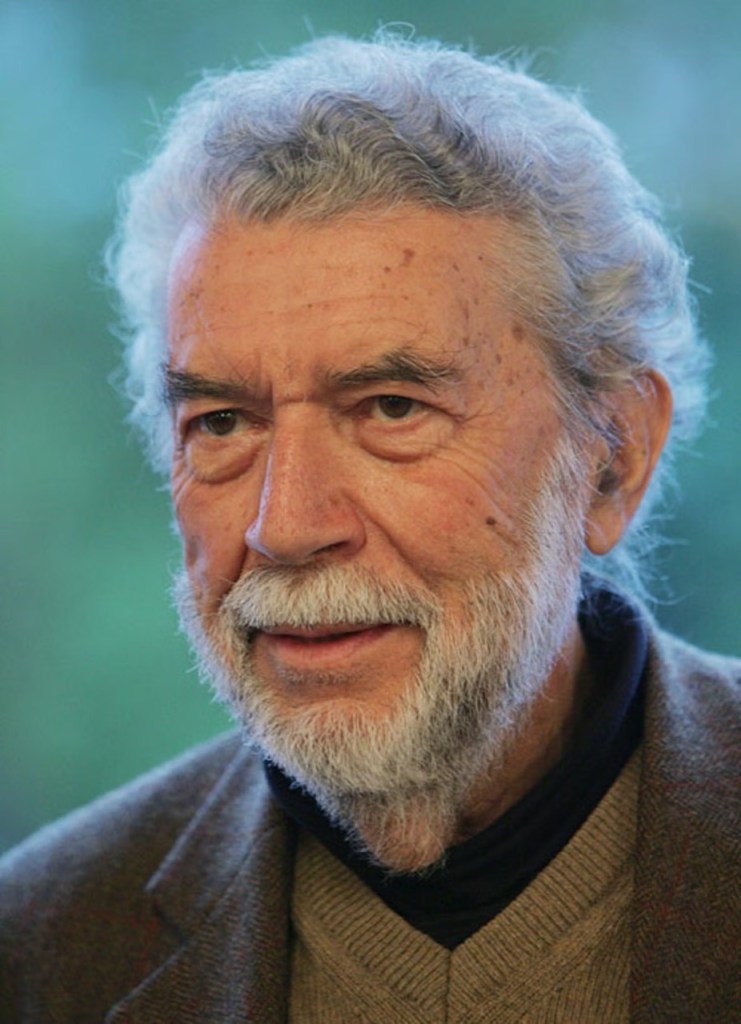
Alain Robbe-Grillet (1922 -2008)
Calculated Films:
- NA
Similar Filmmakers
- Agnes Varda
- Alain Resnais
- Carmelo Bene
- Chris Marker
- Federico Fellini
- Hiroshi Teshigahara
- Jacques Doniol-Valcroze
- Jacques Rivette
- Jean-Daniel Pollet
- Jean-Luc Godard
- Jean-Marie Straub and Daniele Huillet
- Luc Moullet
- Luis Bunuel
- Marguerite Duras
- Michelangelo Antonioni
- Paul Vecchiali
- Pierre Kast
- Raul Ruiz

Alain Robbe-Grillet’s Top 5 Films Ranked
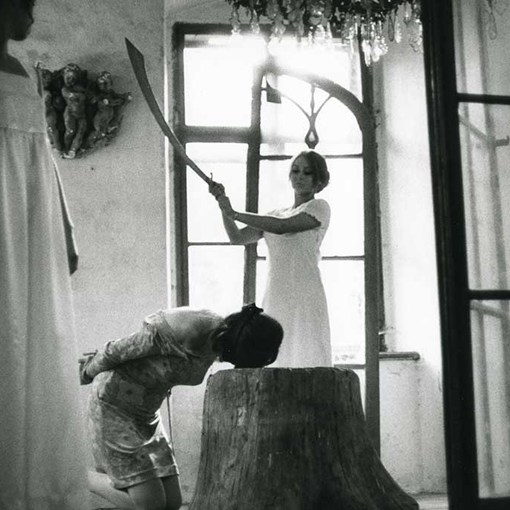
1. L’Immortelle (1963)
Genre: Mystery, Surrealism, Drama

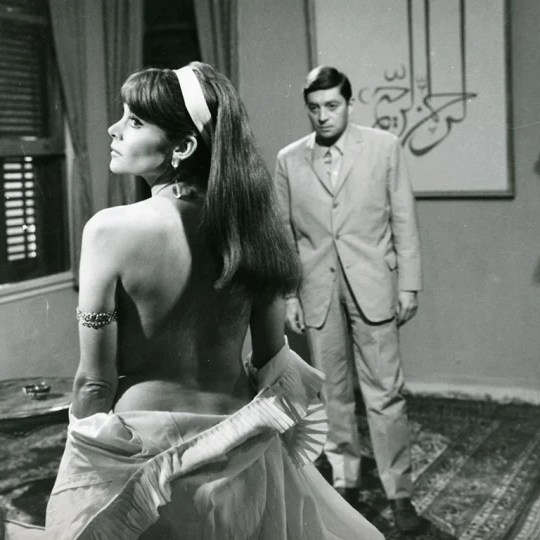
2. Trans-Europ-Express (1966)
Genre: Neo-Noir, Satire, Postmodernism, Train Movie

3. Successive Slidings of Pleasure (1974)
Genre: Surrealism, Erotica, Mystery

4. The Man Who Lies (1968)
Genre: Surrealism, Mystery, Psychological Drama

5. Eden and After (1970)
Genre: Surrealism, Psychological Drama

Alain Robbe-Grillet: Themes and Style
Themes:
- Subjectivity: Robbe-Grillet’s films explore the subjective nature of reality, blurring the lines between truth and perception. Characters often have differing accounts of events, leaving the audience to question what is real.
- Eroticism: Many of his films, such as L’Immortelle and Trans-Europ-Express, feature strong erotic themes and explore the complexities of desire, obsession, and power dynamics within sexual relationships.
- Identity: Characters in Robbe-Grillet’s films frequently struggle with their sense of self, often leading to a fragmentation or disintegration of identity. This theme is particularly evident in films like L’Homme qui ment and La Belle Captive.
- Memory: The fallibility and malleability of memory is a recurring theme in Robbe-Grillet’s work. His films often present multiple contradictory versions of past events, suggesting that memory is subjective and unreliable.
- Time: Robbe-Grillet’s films often experiment with non-linear narratives and temporal distortions. Films like L’Année dernière à Marienbad and L’Eden et après challenge traditional notions of chronology and causality.
Styles:
- Fragmented narratives: Robbe-Grillet’s films often eschew conventional storytelling in favour of fragmented, non-linear narratives that challenge the audience to piece together the story.
- Visual precision: His films are known for their meticulously composed shots and attention to visual detail. Robbe-Grillet often uses repetition, symmetry, and geometric patterns to create a sense of order and control.
- Ambiguity: Robbe-Grillet’s films are often intentionally ambiguous, leaving room for multiple interpretations. He avoids providing clear answers or resolutions, instead inviting the audience to draw their own conclusions.
- Experimental soundscapes: Sound design plays a crucial role in Robbe-Grillet’s films, with experimental soundscapes that often blur the line between diegetic and non-diegetic sound. He uses sound to create atmosphere, tension, and disorientation.
- Intertextuality: Robbe-Grillet’s films often reference or draw inspiration from other works of art, literature, and film. He incorporates elements of mythology, folklore, and popular culture into his narratives, creating a rich tapestry of intertextual connections.
Directorial Signature:
- Authorial control: As both a writer and director, Robbe-Grillet exerts a high degree of control over his films. His works are highly personal and idiosyncratic, reflecting his unique vision and philosophical preoccupations.
- Formalism: Robbe-Grillet’s directorial style is characterised by a strong emphasis on form over content. He prioritises visual composition, structure, and style over traditional narrative concerns.
- Collaboration: Throughout his career, Robbe-Grillet collaborated with a number of notable cinematographers, including Raoul Coutard and Willy Kurant, to achieve his distinct visual style.
- Intellectual engagement: Robbe-Grillet’s films are often intellectually challenging, requiring active engagement from the audience. He encourages viewers to question their assumptions and interpret the film’s meanings for themselves.
- Transgression: Many of Robbe-Grillet’s films push the boundaries of what is considered acceptable or taboo, particularly in terms of sexual content and violence. He often uses transgression as a means of provocation and social commentary.
Alain Robbe-Grillet – Great Director



 Bronze Screen Dream