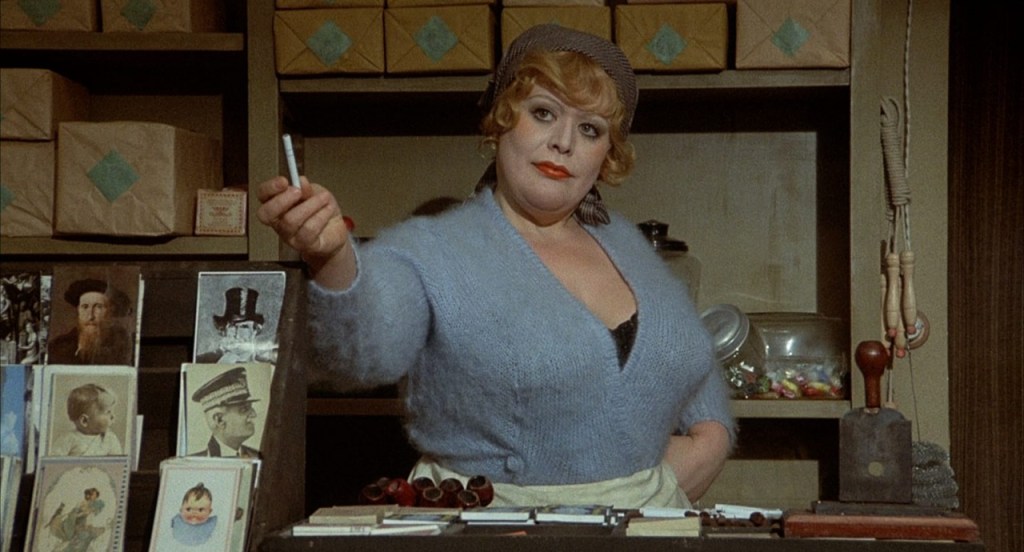
Federico Fellini
There’s a moment in 8½ where Marcello Mastroianni, playing a director who can’t make his film, watches a parade of women from his past circle him in a dream sequence. It’s absurd, autobiographical, deeply funny and genuinely moving all at once. That’s Fellini in a nutshell — a filmmaker who turned his own neuroses, memories and obsessions into a visual language so distinctive it became an adjective.
He came up through neorealism, co-writing Rome, Open City for Rossellini, but he shed that movement’s rigour fairly quickly. What replaced it was something harder to categorise — a cinema of memory and carnival, of the sacred and the grotesque sitting companionably together. La Strada and Nights of Cabiria still have neorealist bones underneath them. By La Dolce Vita, he was doing something else entirely, and by 8½ he’d essentially invented a new grammar for what a film about artistic crisis could be.
The latter work — Satyricon, Casanova, And the Ship Sails On — divides people, and reasonably so. The surrealism tips into excess in places. But even at his most indulgent, there’s a warmth to Fellini that keeps him from being merely mannered; he loves his grotesques, you never feel he’s sneering at them.
His collaboration with Nino Rota is one of cinema’s great partnerships — the scores don’t just accompany the films, they’re inseparable from them.

Federico Fellini (1920 – 1993)
Born on January 20, 1920, in the Adriatic coastal town of Rimini, Federico Fellini would redefine cinema, but first, like his plots, Fellini’s early life was a tableau of seemingly unconnected experiences that, in retrospect, form a cohesive narrative. He was always drawn to the arts, as if prefiguring his later films’ carnivalesque sensibilities, he was deeply fascinated by circus performers, vaudeville shows, and itinerant players who populated his hometown.
Like many of his generation, Fellini’s youth was disrupted by Benito Mussolini’s Fascist regime, but his first achievement was a reaction to it by co-writing Roberto Rossellini’s Rome, Open City, the birthplace of Italian neorealism. In time, Fellini would start directing his earliest works, which show him already trying to break free from Neorealism: Variety Lights, The White Sheik, but it’s I Vitelloni, with its social inertia and youthful aimlessness, that broke him as a major director. He followed this with La Strada.
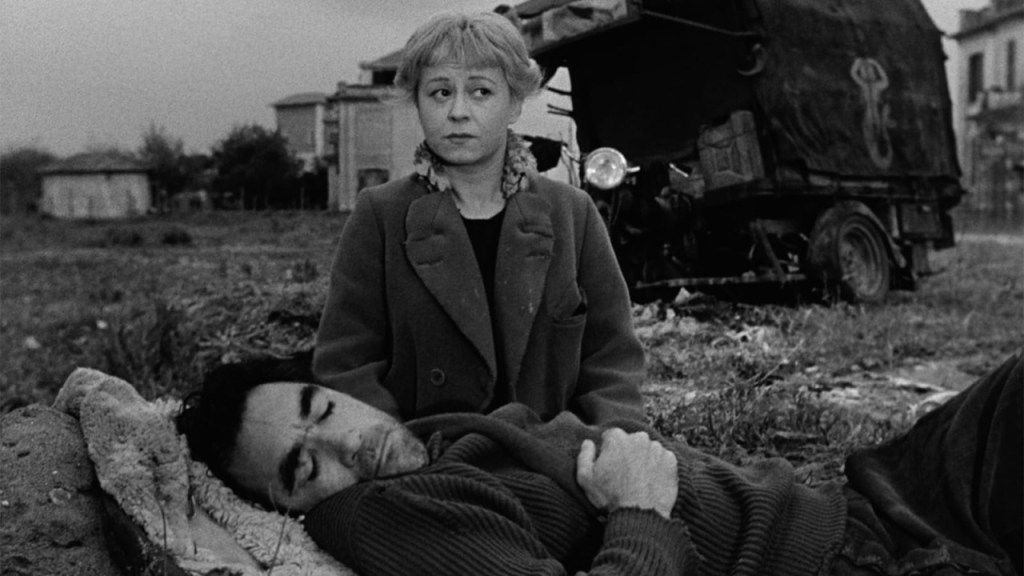
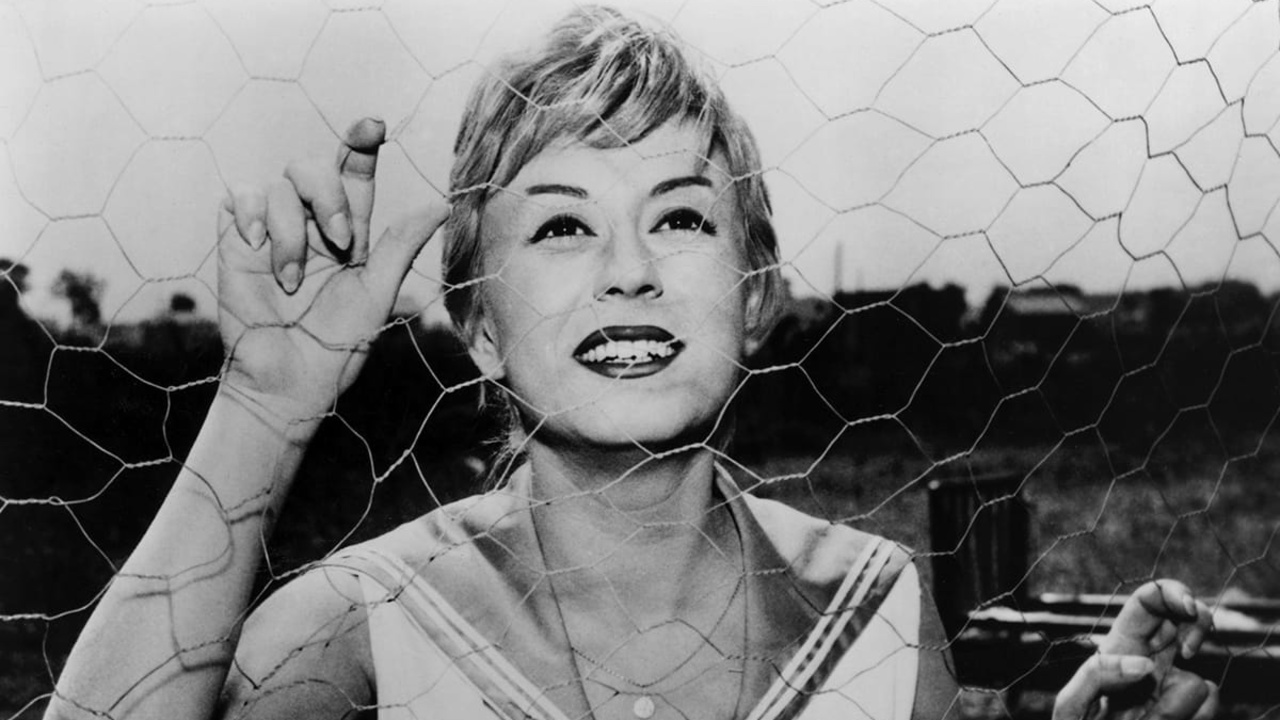
It was also during this time that his collaboration with Giulietta Masina, his wife, began with La Strada and peaked with Nights of Cabiria. Masina’s portrayal of a wide-eyed yet resilient prostitute searching for love in the streets of Rome captured the imaginations and hearts of viewers globally. Like its predecessor, the film utilised Neorealist elements but blended them with Fellini’s growing interest in individual psychologies and dreamlike sequences.
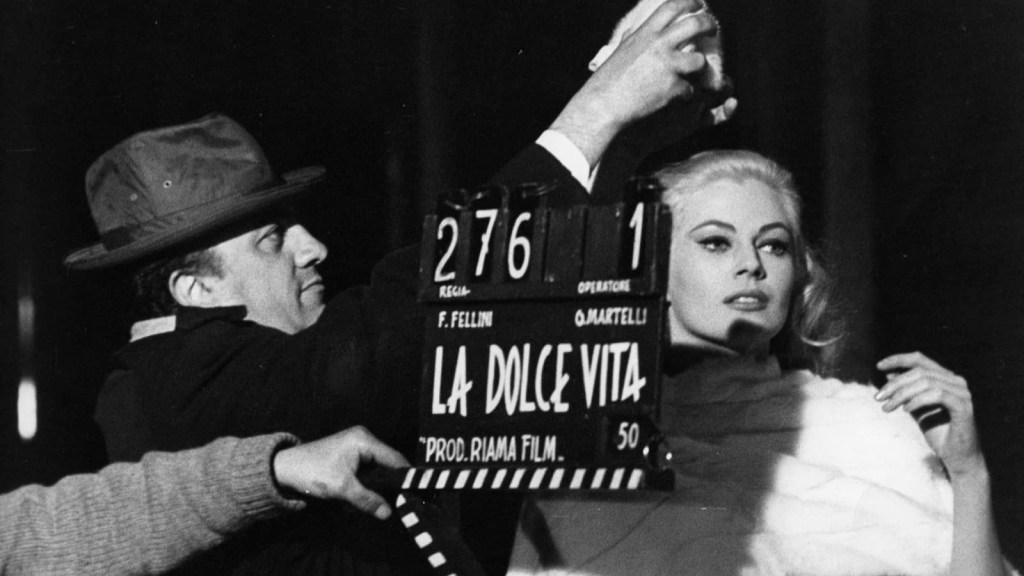
However, it was with La Dolce Vita that Fellini truly shattered the vestiges of Neorealism. The film, a sprawling narrative following Marcello Rubini, a journalist meandering through the hedonistic and superficial world of Rome’s elite, became an instant cultural phenomenon. Its episodic structure, reflecting the seven deadly sins, and the iconic imagery, most notably the Trevi Fountain scene with Anita Ekberg, made it a watershed moment in film history. Yet, the film’s reception was polarised. While many lauded Fellini’s audacious critique of modern decadence, the Vatican condemned it for its perceived amorality. Still, its international success was undeniable. “Felliniesque” had now become a term, signifying a blend of the fantastical and the real, of satire and deep sentiment.
With success came introspection. With introspection came a Jungian influence on his work, evident in his portrayal of dreams and his self-reflective masterpiece 8 1/2. Named for the number of films he’d made, 8 1/2 remains arguably the greatest film about making art made. By now, Fellini was international, with an enraptured audience and increasing budgets, he made Juliet of the Spirits, Satyricon, Roma, Amarcord and his late masterpiece, And The Ship Sails On.
Federico Fellini (1920 – 1993)
- 1950 – Variety Lights
- 1952 – The White Sheik
- 1953 – Love in the City
- 1953 – I Vitelloni
- 1954 – La Strada
- 1955 – Il Bidone
- 1957 – Nights of Cabiria
- 1960 – La Dolce Vita
- 1962 – Boccaccio ’70
- 1963 – 8½
- 1965 – Juliet of the Spirits
- 1968 – Spirits of the Dead
- 1969 – Fellini Satyricon
- 1969 – Fellini: A Director’s Notebook [TV]
- 1970 – The Clowns [TV]
- 1972 – Fellini’s Roma
- 1973 – Amarcord
- 1976 – Fellini’s Casanova
- 1978 – Orchestra Rehearsal
- 1980 – City of Women
- 1983 – And the Ship Sails On
- 1986 – Ginger & Fred
- 1987 – Intervista
- 1990 – The Voice of the Moon
- The Circus and the Carnival: Fellini’s early life in Rimini, surrounded by travelling performers and circus acts, deeply influenced his cinematic themes. The idea of life as a carnival, filled with strange, delightful, and sometimes grotesque events, recurs throughout his films.
- Autobiographical Elements: Many of Fellini’s works, such as 8½ and Amarcord, reflect his own experiences, desires, and anxieties.
- The Clash of Old vs. New: Fellini often depicted the tension between tradition and modernity, especially in films like La Dolce Vita, where the ancient city of Rome contrasts with its modern, hedonistic counterparts.
- Spirituality and Religion: Having grown up in Catholic Italy, Fellini frequently addressed religious themes, often mixing reverence with scepticism.
- Femininity and Women: Fellini’s films often feature strong, complex female characters, reflecting both his adoration and fear of femininity.
- Dreams and the Subconscious: Influenced by Carl Jung, Fellini saw dreams as the bridge between personal experiences and universal truths. This is evident in films like Juliet of the Spirits.
- Blurring Reality and Fantasy: Fellini loved intertwining the real with the surreal, creating dreamlike sequences that challenge the viewer’s perception of reality.
- Episodic Structure: Many of his films, rather than following a linear narrative, are composed of loosely connected episodes or vignettes.
- Rich Visual Language: From the grotesque to the sublime, Fellini’s films are visually opulent, using elaborate sets, costumes, and makeup.
- Collaborative Efforts: Fellini frequently collaborated with the same group of professionals, including composer Nino Rota, whose music became synonymous with his films.
- The “Felliniesque”: This term has come to describe any work that mimics Fellini’s unique blend of the fantastical with the real. His films often depict bizarre characters, dreamlike sequences, and a mix of satire and sentiment.
- Character Close-Ups: Fellini had a penchant for tight close-ups of his characters, especially during pivotal emotional moments, making viewers feel intimately connected.
- Rich Soundscapes: Beyond just dialogue and music, Fellini paid close attention to the ambient sounds in his films, creating an immersive experience.
- Meta-cinema: Fellini often made films about filmmaking, incorporating his personal struggles and insights into the cinematic process, as seen in 8½.
- Fluid Camera Movement: Fellini was known for his fluid, roaming camera movements.
Read More About Federico Fellini
- Fellini on Fellini by Federico Fellini – An autobiography offering a personal insight into the filmmaker’s thoughts and processes.
- I, Fellini by Charlotte Chandler – A collection of interviews with Fellini.
- Fellini: The Sixties by Manoah Bowman – A visual dive into Fellini’s works during the 1960s.
- Federico Fellini: His Life and Work by Tullio Kezich – An authoritative biography on the director.
- A Hundred Years of Fellini by Anthony Lane, The New Yorker
- The Many Faces of Federico Fellini by Phillip Kemp, Sight and Sound
- Il Maestro by Martin Scorsese, Harper’s Magazine
- Federico Fellini: Wizard of Film by Eugene Walter, The Atlantic
- Fellini, Federico by Antonia Shanahan, Senses of Cinema
- Fellini: I’m a Born Liar (2002) – A documentary offering insights into Fellini’s life and creative process.
- How Strange to Be Named Federico (2013), directed by Ettore Scola