LIVED
19 April 1916, Linguizzetta – 20 January 1981, Paris
Jean Domarchi was a Corsican economist who wrote one of the first French theses on Keynes and taught law and political economy at Dijon for more than thirty years. In his spare hours he was a founder of the Tabou, the Saint-Germain jazz cellar, and from 1952 one of the most combative critics at Cahiers du cinéma. There he championed Minnelli, the musical and American comedy, and wrote the review’s only openly Marxist essay of the 1950s.
Besides his Cahiers credentials, he can be seen in Rohmer and Godard’s first films. He appears at the start of À bout de souffle as the man Belmondo knocks out in a café toilet. His biggest impact on the New Wave is behind the scenes, as he was the man who sent Jean-Pierre Léaud to Truffaut.
ASSOCIATED FIGURES
André Bazin
Jacques Doniol-Valcroze
Jean Douchet
Jean-Luc Godard
Pierre Kast
Éric Rohmer
START WITH
“Le Fer dans la plaie” (Cahiers du cinéma, 1956)
À bout de souffle (1960)
Biography
Louis Jean Domarchi was born on 19 April 1916 in Linguizzetta, on the eastern plain of Corsica. He meant to be a historian. By his own later account, it was the loss of Marc Bloch that turned him to law and political economy instead. He studied at the Paris law faculty under François Perroux and Gaëtan Pirou. In 1942, at twenty-six, he contributed to Communauté et économie, a collective volume led by Perroux.
During the war, he belonged to Jean Bénard’s group of young economists. In December 1943, he defended his thesis, La Pensée économique de John-Maynard Keynes et son influence en Angleterre. After the Liberation, he published L’Avenir du franc (1945) and in that same year co-translated with Henry Laufenburger the first French edition of William Beveridge’s Full Employment in a Free Society. He then became an agrégé de droit and took a post at the law faculty in Dijon, commuting to Paris for the rest of his career.
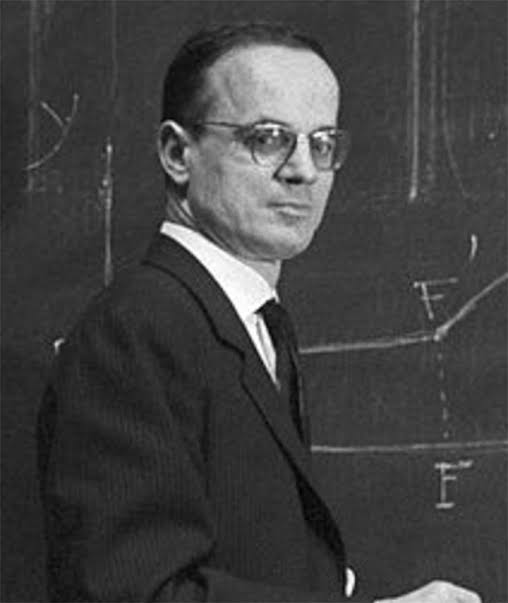
In Paris, after the Liberation, he became a central part of the Saint-Germain-des-Prés scene. He was one of the co-founders, alongside Roger Vailland and Frédéric Chauvelot, of the famous Club du Tabou on 11 April 1947, where he befriended Boris Vian, who wrote about him in his Manuel de Saint-Germain-des-Prés as a man of medium height, with big glasses, a domed forehead and smooth black hair, and as a member “of the governing committee of all the cellars”. He loved jazz as much as cinema, and counted Jean Genet among his friends. He was also a friend of Sartre and wrote economics for Les Temps modernes, where he and Pierre Uri led the postwar debates on Keynes and attacked the Marshall Plan in 1948. His 1946 article reading Marx’s Capital as a work of phenomenology appeared alongside one by Tran Duc Thao, his regular partner in philosophical argument. It was later cited by the Czech philosopher Karel Kosík.
He came to cinephilia late, between 1947 and 1949, in the front rows of Henri Langlois’s Cinémathèque. By 1950 he was writing for Éric Rohmer‘s Gazette du cinéma, alongside Jacques Rivette, Jean Douchet and Jean-Luc Godard. Despite being a generation older than them, he shared their love of Hollywood and Rossellini. He wrote for Cahiers du cinéma from 1952 until 1963. Known as “Dom-Dom” in the office, he specialised in American comedy and musicals, especially those directed by Vincente Minnelli and George Cukor. His defence of Lust for Life provoked André Bazin’s famous essay on the excesses of the politique des auteurs. In October 1956 he published “Le Fer dans la plaie”, an attack on French Communist intellectuals who had failed to break with Stalin after the Khrushchev report. In it he argued that Hollywood offered a Marxist more to think about than Soviet cinema did. It was the only openly political essay Cahiers printed in those years.
Initially, Domarchi was a supporter of the New Wave. He recommended Jean-Pierre Leaud to Truffaut, having known his mother, Jacqueline Pierreux. He even appeared in Rohmer’s Le Signe du lion, and in À bout de souffle. By March 1960, he wrote “Peines d’amour perdues”, which set À bout de souffle beside Kast‘s Le Bel Âge and Doniol-Valcroze‘s L’Eau à la bouche as films of modern love. An article Noël Simsolo later called the first theoretical platform of the New Wave.
Yet, Domarchi grew apart from them. He talked of directing a film, Les Paresseuses, but never shot it. According to Luc Moullet, private humiliation played a part in his distance from the New Wave; he proposed to Stéphane Audran, who recorded the proposal and played it to Chabrol. Whatever the cause, when he and Douchet took over the film page of the weekly Arts in July 1960, he attacked the new French cinema, sparing only Truffaut. He aligned himself with Rohmer and Douchet in Cahiers against Rivette’s modernism. He eventually left the magazine in 1963 when Rohmer was forced out of the editorship.
Despite leaving Cahiers, he continued writing about film. He published George Cukor (1965), defended Jerry Lewis to the New York Times (1966) and appeared on a TV programme on Murnau’s Le Dernier des hommes, directed by Jean Eustache (1968). He wrote for Écran in the mid-1970s, and in 1979 co-edited a dossier on contemporary American cinema. He took one more small role, in Gérard Blain’s Le Pélican (1973), and was still close to Truffaut, who in 1976 wrote to reassure him about the ending of L’Homme qui aimait les femmes.
Alongside all of this, he continued to be a professor in Dijon, his most ambitious book perhaps being Marx et l’Histoire (1972). It was the fruit of thirty years’ return to Hegel, and it made death, rather than labour, the governing category of history. He died in Paris on 20 January 1981, aged sixty-four. In his Positif obituary for Domarchi, Jean-Loup Bourget summed him up as “a solitary being, but free”.
Sources
Jean Domarchi in his own words
- “Le Fer dans la plaie”, Cahiers du cinéma 63 (October 1956); trans. Diana Matias as “Knife in the Wound”, in Jim Hillier (ed.), Cahiers du Cinéma: The 1950s (1985)
- Marx et l’Histoire (L’Herne, 1972)
Memoirs and firsthand accounts
- Jean Douchet, L’Homme cinéma (with Joël Magny)
- Luc Moullet, Mémoires d’une savonnette indocile
- Boris Vian, Manuel de Saint-Germain-des-Prés
- Alexandre Astruc and Noël Simsolo, Le Plaisir en toutes choses
- François Truffaut, Correspondence 1945–1984 (1989)
- André Bazin, “Eroticism in the Cinema”, What Is Cinema? vol. II
Studies
- Antoine de Baecque, Les Cahiers du cinéma: histoire d’une revue, t. 1 (1991); La Cinéphilie; Godard; Chabrol
- Antoine de Baecque and Noël Herpe, Éric Rohmer
- Antoine de Baecque and Serge Toubiana, Truffaut
- Philip Nord, France’s New Deal (2010)
- Marc Dambre, Génération Hussards; Dambre and Marco Grosoli, Film Criticism 39:1 (2014)
- Bertrand Dicale, Juliette Gréco (2001)
- Thomas Nemeth, “Capital and Phenomenology”, Studies in Soviet Thought 16 (1976)
- Noël Simsolo, Dictionnaire de la Nouvelle Vague
Period criticism and press
- Claude Ponsard, “Jean Domarchi ou le marxisme impossible”, Revue d’économie politique 84:6 (1974)
- Kenneth Cornell, Yale French Studies 16 (1955)
- Hollis Alpert, New York Times Magazine (1966), via Frank Krutnik, Inventing Jerry Lewis (2000)
- Cahiers du cinéma 305 (November 1979)
- Jean-Loup Bourget, “L’homme de partout”, Positif 240 (March 1981)
Reference and records
- INSEE, Fichier des personnes décédées, 1981: Domarchi, Louis Jean, Paris 16e, act no. 136
- BnF catalogue; Calindex

