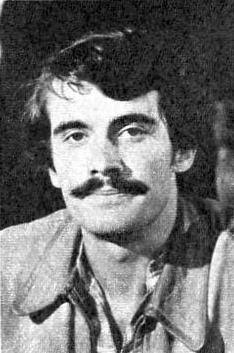
LIVED
6 December 1927, Ancenis – 22 September 2023, Courbevoie
Bernard Toublanc-Michel was Jacques Demy’s oldest friend in Paris, the witness at his wedding to Agnès Varda, and for a decade one of the most trusted assistants of the New Wave, working for Demy, Varda and Godard. As a director he made a handful of features between 1964 and 1975, the best remembered of which is Le Petit Bougnat, Isabelle Adjani’s first film.
He spent the rest of his career in television, where he gave Fanny Ardant her first role, and the last forty years of his life tracking down the work of a forgotten painter from his home town.
SIMILAR FILMMAKERS
Jacques Baratier
Charles L. Bitsch
Jacques Demy
Pierre Kast
START WITH
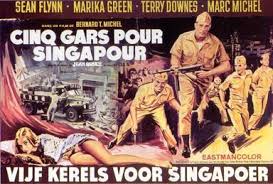
Cinq gars pour Singapour (1967)
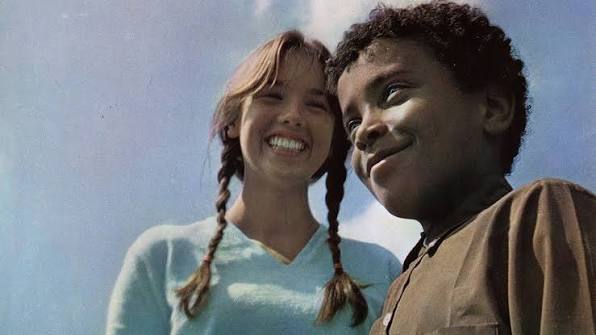
Le Petit Bougnat (1970)
Biography
Bernard Toublanc-Michel was born on 6 December 1927 at 10 rue de Charost in Ancenis, in the house of his grandfather Auguste Michel, the town doctor. He grew up in Cholet and then Nantes, and, because his parents wanted him to have a serious career rather than a life in cinema, he studied architecture at the Beaux-Arts in Nantes.
He moved to Paris to prepare for IDHEC and stayed there for the rest of his life. Through Jacqueline Moreau, a costume designer who was also from Ancenis, he met Jacques Demy, and the two became inseparable. With Moreau and the designer Bernard Évein, they formed a group that would go on to make Demy’s early films. Toublanc was the first of them to find work in real cinema, as an intern on Jacques Becker‘s Édouard et Caroline (1951). In 1953 he and Demy spent a week of nights as extras, dressed as Vendée peasants, on Les Révoltés de Lomanach at La Baule, paid double for the night shoots.
In 1953 he was second assistant on André Hunebelle’s Les Trois Mousquetaires, and over the next six years he worked his way up as an assistant to Hunebelle, Georges Rouquier, Pierre Foucaud, Jacqueline Audry and Pierre Kast, on whose Amour de poche (1957) he worked. On a set in these years he also met Louis de Funès, then a supporting actor living modestly in the ninth arrondissement, who became a lifelong friend.
He became a key part of the early new wave films by being Demy’s assistant on Ars (1959) and Lola (1961), then on Varda’s Cléo de 5 à 7 (1962) and Jacques Baratier‘s L’Or du duc (1965). He was particularly close to the couple and was witness to their wedding in January 1962. It was with Godard, however, that he had the longest working relationship. He assisted on Vivre sa Vie (1962), Pierrot Le Fou (1965) and Masculin féminin (1966), and was the man who helped link Serge Rezvani and Godard together.
Meanwhile, Toublanc-Michel was among the young hopefuls for their debuts in the New Wave. He’d made two shorts in 1955, Âmes d’argile and Le Champ du possible, but neither had given him a breakthrough. His big chance came from Godard, Demy and Varda’s producer, Georges de Beauregard, who used the sketch film Les Baisers (1964) to try out new directors: Bertrand Tavernier, Charles L. Bitsch, Claude Berri, Jean-François Hauduroy and Toublanc-Michel. Toublanc-Michel shot his segment Baiser d’été, with Raoul Coutard as cinematographer and Marie-France Boyer starring.
This led to his first feature, La Difficulté d’être infidèle (1964), a bedroom farce from an idea by Marc Camoletti, with dialogue by René de Obaldia, shot by Raoul Coutard and produced by Pierre Braunberger, and it was entered at the Berlin festival.
His first success was Cinq gars pour Singapour (1967), produced by Pierre Kalfon from a novel in Jean Bruce’s OSS 117 series; the rights to the character were unavailable, so the hero became Art Smith. Toublanc-Michel insisted on shooting entirely on location, and in the autumn of 1966 he filmed across Singapore with two handheld cameras, sending his actors, among them Sean Flynn in his last film role, out of taxis into crowds that had no idea a film was being made.
The film’s success led to him being able to make his pet project, Adolphe ou l’âge tendre (1968), about a young man from Ancenis trying to film Benjamin Constant’s novel, who falls into the same passion as its hero. Rather than film Constant directly, he looked for what he called “contemporary equivalents” to the novel’s situations. It was shot in the autumn of 1967 in and around Ancenis, and in Germany and Poland, with Ulla Jacobsson, Philippe Noiret and a newcomer, Jean-Claude Dauphin. It came out in July 1968, in the wake of May, and after a dispute with the producer, he called it his film maudit.
For Beauregard, he then made Le Petit Bougnat (1970), about two children at a summer camp. He saw three hundred girls for the lead and chose Isabelle Adjani, thirteen and a half, after two screen tests, the second on a scene he gave her the night before. After shooting, she told him she meant to give up acting to become a children’s judge; he talked her out of it and found her an agent. He returned to his native Loire-Atlantique for the wartime Resistance drama Le Franc-tireur (1972), before making his final theatrical feature, Le Malin Plaisir (1975), a thriller about a ghostwriter trapped in a country house by five women, starring Jacques Weber, Claude Jade, and Anny Duperey.
From 1973 onward he worked primarily for television: serials such as Le Provocateur (1973) and Anne, jour après jour (1976), a fifty-five-part daily series; Le Mutant (1978), a rare prime-time French science-fiction serial in which Fanny Ardant made her screen debut; and literary adaptations including La Grotte aux loups (1980), reuniting him with Claude Jade in the winter snow of the Jura, and Vincente (1985), about a young woman who falls in love with a German soldier at the Liberation. While casting Les Moyens du bord (1979), he discovered English actress Catriona MacColl in a dance class; when Demy, preparing Lady Oscar, mentioned over dinner that he desperately needed a blonde, English-speaking twenty-year-old who could ride and fence, Toublanc-Michel sent her to him the next morning. His final television credit was an episode of Les Cinq Dernières Minutes in 1992, and in 1998 he directed Marthe Mercadier on stage in Sacrée Sophie.
In 1974 he came across the name of Henry Ottmann, a painter born in Ancenis whom nobody there, in Nantes or at the Beaux-Arts, had ever mentioned to him. He spent the next forty-six years tracking down Ottmann’s work in sales and private collections, made a television film about him, Ottmann, connais pas (1980), and in November 2020, at ninety-two, published a catalogue raisonné. He died at Courbevoie on 22 September 2023, aged ninety-five, and was buried in Ancenis.
Sources
Bernard Toublanc-Michel in his own words
- Interviews in Jean-Pierre Berthomé, Jacques Demy et les racines du rêve (2014)
- Interview with Raphaël Millet, 1 June 2018, in “Five Ashore in Singapore: A European Spy Film”, BiblioAsia, October 2018
- Interview with Angélique Cambon, Ouest-France, 12 August 2014
- Une vie, une œuvre: Jacques Demy, France Culture, 18 May 2019
- Interviews on Le Petit Bougnat and La Grotte aux loups (INA)
Memoirs and firsthand accounts
- Kelley Conway Rickey, A Complicated Passion: The Life and Work of Agnès Varda (2024)
- Noël Simsolo, Bertrand Tavernier: le cinéma dans le sang (2011)
Studies
- Antoine de Baecque, Godard (2023) and Marin Karmitz, une autre histoire du cinéma (2024)
- Richard Brody, Everything Is Cinema: The Working Life of Jean-Luc Godard (2008)
- Erwan Chuberre, La Légende Adjani (2010)
- Dominique Maillet, Philippe Noiret (1989)
- François Truffaut, Correspondance avec des cinéastes (2025), editorial notes
Period criticism and press
- Le Monde, 19 August 2025 (Isabelle Adjani)
- Obituary, Ouest-France, 26 September 2023
Reference and records
- INSEE, Fichier des personnes décédées, 2023: Toublanc, Bernard Louis Marie Joseph Eugène, Courbevoie, act no. 449
Filmography
| Year | Title | English title | Length |
|---|---|---|---|
| 1955 | Âmes d’argile | Short | |
| 1955 | Le Champ du possible | Short | |
| 1964 | Les Baisers (episode “Baiser d’été”) | Feature (sketch film) | |
| 1964 | La Difficulté d’être infidèle | Feature | |
| 1967 | Cinq gars pour Singapour | Five Ashore in Singapore | Feature |
| 1968 | Adolphe ou l’âge tendre | The Tender Age | Feature |
| 1970 | Le Petit Bougnat | Feature | |
| 1973 | Le Provocateur | Television | |
| 1974 | Étranger, d’où viens-tu ? | Television | |
| 1975 | Le Malin Plaisir | Feature | |
| 1976 | Anne, jour après jour | Television | |
| 1978 | Le Mutant | Television | |
| 1979 | Les Moyens du bord | Television | |
| 1980 | La Grotte aux loups | Television | |
| 1980 | Ottmann, connais pas | Television | |
| 1981 | Martine Verdier | Television | |
| 1982 | Allons voir si la rose | Television | |
| 1985 | Vincente | Television |

