Godard was one of the greatest filmmakers. Like all the greats, he was really several filmmakers stitched into one coat, and Godard had more linings than most. He was a militant, a critic, a romantic, an essayist, and an absurdist. The men below sat at the same cafés as Godard, read the same proofs, shared the same restraints, and each wore one part of that Godardian coat very well.
JEAN EUSTACHE
For those who wish Godard had finished grieving.
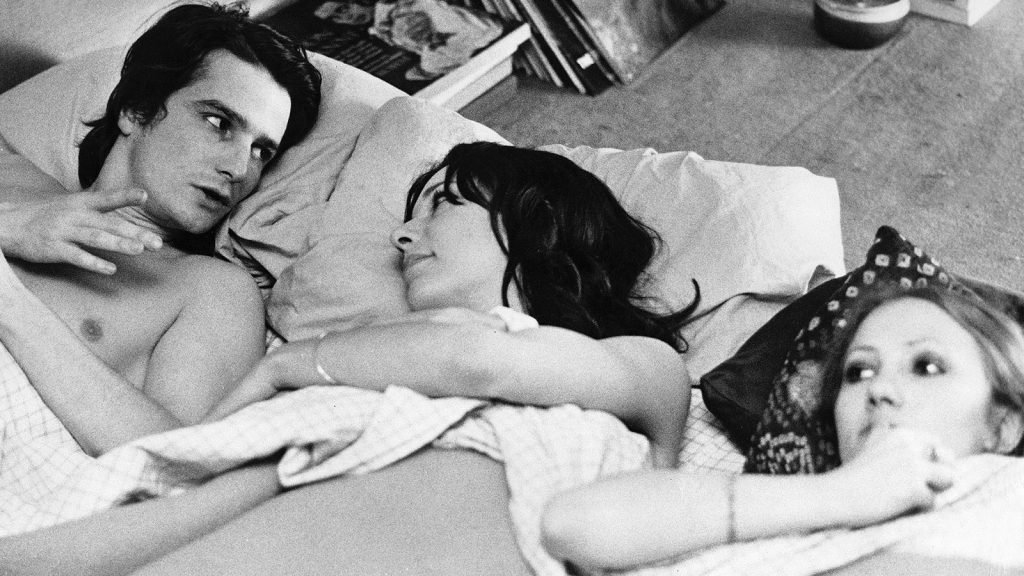
Jean-Pierre Leaud, Bernadette Lafont and Françoise Lebrun
Mother and the whorE – 1973
Eustache made one film that consumed his entire life: La Maman et la Putain. He made other films, yes, some experimental, some surprisingly soft, but not many, and they are all overshadowed by Maman. On paper, it is three and a half hours of Jean-Pierre Léaud talking his way into Parisian bedrooms, his bad faith clouded in cigarette smoke. In reality, it is the most nakedly autobiographical film of the period.
Eustache’s ex-girlfriend, Catherine Garnier, worked as the film’s costume designer while watching her own breakup turn into Bernadette Lafont’s character. She took her life shortly after the Cannes premiere in 1973, leaving a note to Eustache that called the film sublime and asked him to leave it exactly as it was. Eustache himself died by suicide in 1981. Where Godard turned heartbreak into theory, Eustache left the wound open and bled out.
LUC MOULLET
For those who wish Godard had a sense of humour about himself.
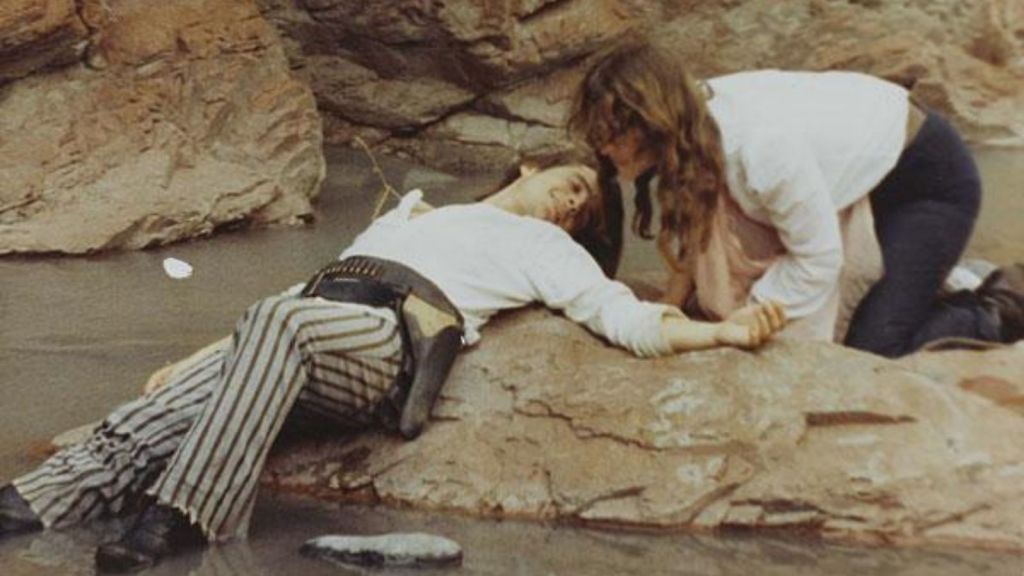
Jean-Pierre Leaud, Rachel Kesterber
A Girl is a Gun – 1971
Moullet started, like Godard, at Cahiers du Cinéma, writing some of the most ornery criticism of the era. He is the one usually credited with the line about Samuel Fuller and morality being a question of tracking shots, the kind of gnomic provocation Godard spent a career quoting without admitting whose joke it was.
Then he started making films for no money whatsoever, often starring himself as a hapless, faintly sinister everyman, shot in the Alps, where he actually grew up, rather than Paris. His films are never radical in the way Godard’s are; they are just deadpan absurdism: Brigitte et Brigitte, Anatomie d’un rapport, and Genèse d’un repas. Where Godard’s jokes are usually a cover for an argument, Moullet’s films are both a joke and an argument, and they are much funnier. Godard suspected cinema was a con; Moullet knew it was and laughed.
JACQUES ROZIER
For those who wish Godard would just relax for one summer.
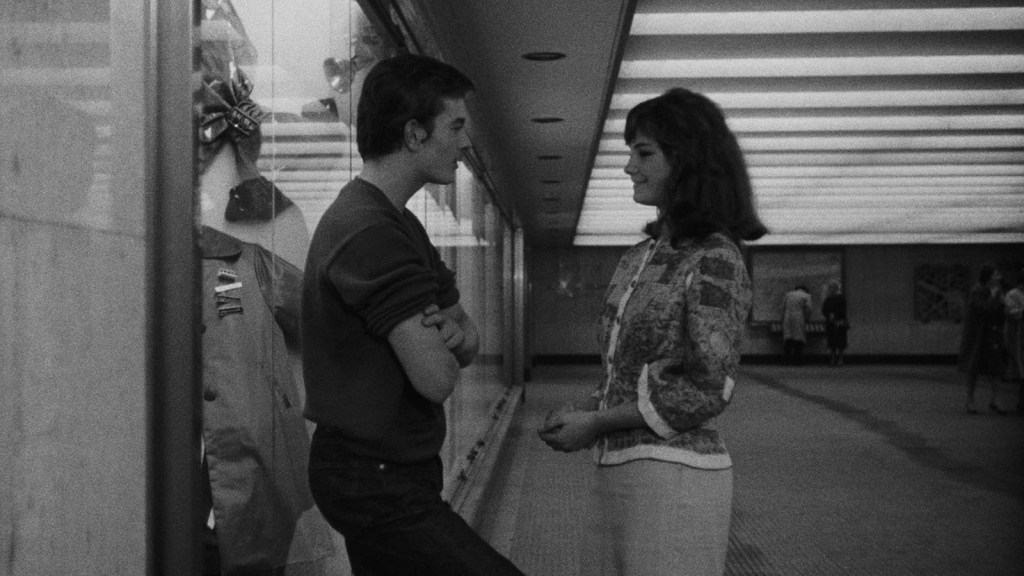
Jean-Claude Aimini
Adieu Philippine – 1962
Rozier made Adieu Philippine in 1962, and both Godard and Truffaut praised it to the high heavens. It was simply about two young men on military leave and a girl deciding between them. Where Godard made films that felt like a dare, Rozier filmed people at the beach and waited for something to happen.
Du côté d’Orouët is two-plus hours of three women, one unwanted man, weather, flirtation, boredom, and the specific cruelty of groups on holiday; there is almost no plot, it was shot fast and cheap, and it uses no stars. It is looser than anything Godard would have let himself make. Godard was prolific and brilliant; Rozier made only a handful of films, and everyone who watches him agrees he deserved more.
JEAN-DANIEL POLLET
For those who wish Godard would stop arguing and just look at something.
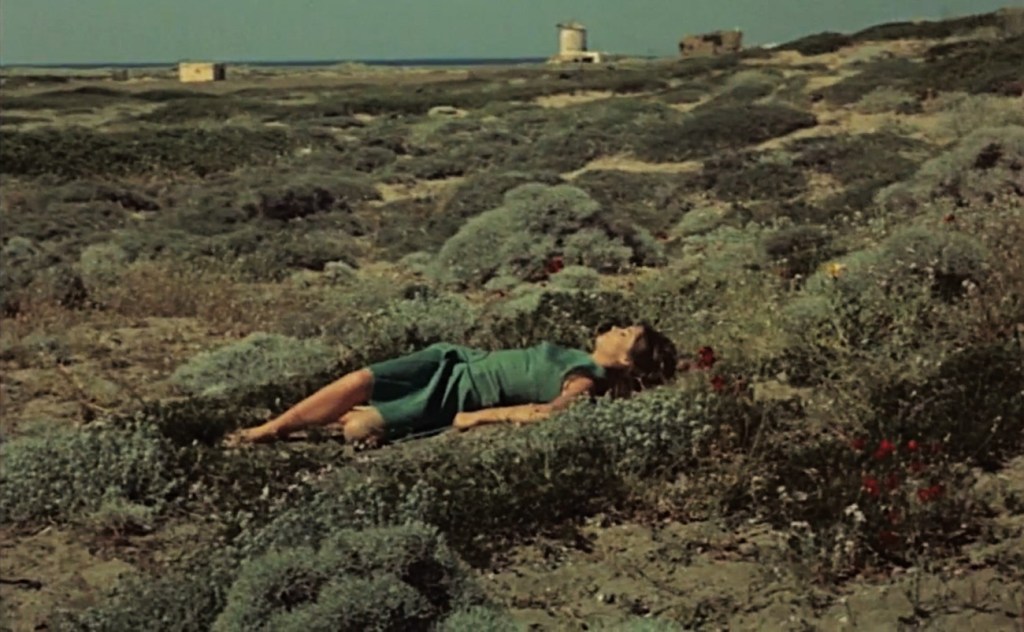
Francoise Hardy
Bullet Through the Heart – 1965
Pollet started in comedy with a run of cheap, deadpan slapstick shorts in the late 1950s starring the hangdog Claude Melki. Then came Méditerranée, forty-five minutes of unexplained, hypnotic images set to a fractured narration written by Philippe Sollers that refuses to explain any of it. Godard called it one of the only French films of the decade that mattered. From Godard, this reads either as the highest compliment available or as one man recognising someone else doing, more purely, the thing he kept theorising about and rarely let himself do without a slogan attached.
Pollet spent the rest of his career making essay-films that trust the image over the argument. They are slow, sad, and not very interested in being clever. He worked until he physically could not, and he died largely forgotten. If Godard’s camera always seemed to be making a point, Pollet’s seemed to be making peace.
WILLIAM KLEIN
For those who wish Godard had shot fashion and got pissed.
John Abbey
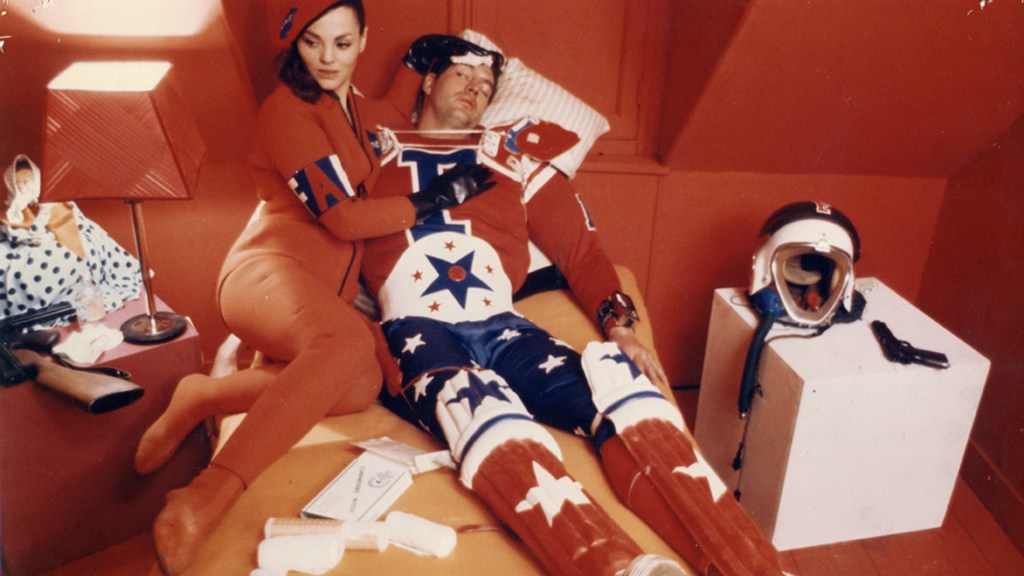
Mr Freedom – 1968
Klein was not French. Klein was not even originally a filmmaker. He was an American who shot for Vogue, got bored, and turned the camera to satirise the fashion industry with Qui êtes-vous, Polly Maggoo?. It was shot with the speed and contempt that only someone who knows the industry back to front can muster. Mr Freedom is louder still—a pop-art cartoon of American imperialism in a superhero costume, about as subtle as a brick and about as effective as one.
Klein and Godard worked together on the Vietnam War portmanteau film Loin du Vietnam before each went their separate political ways. Godard vanished into the Dziga Vertov Group and years of deliberately unwatchable Maoist cinema; Klein kept his sense of humour and his eye for a strong image, even at his most furious.


Leave a Reply