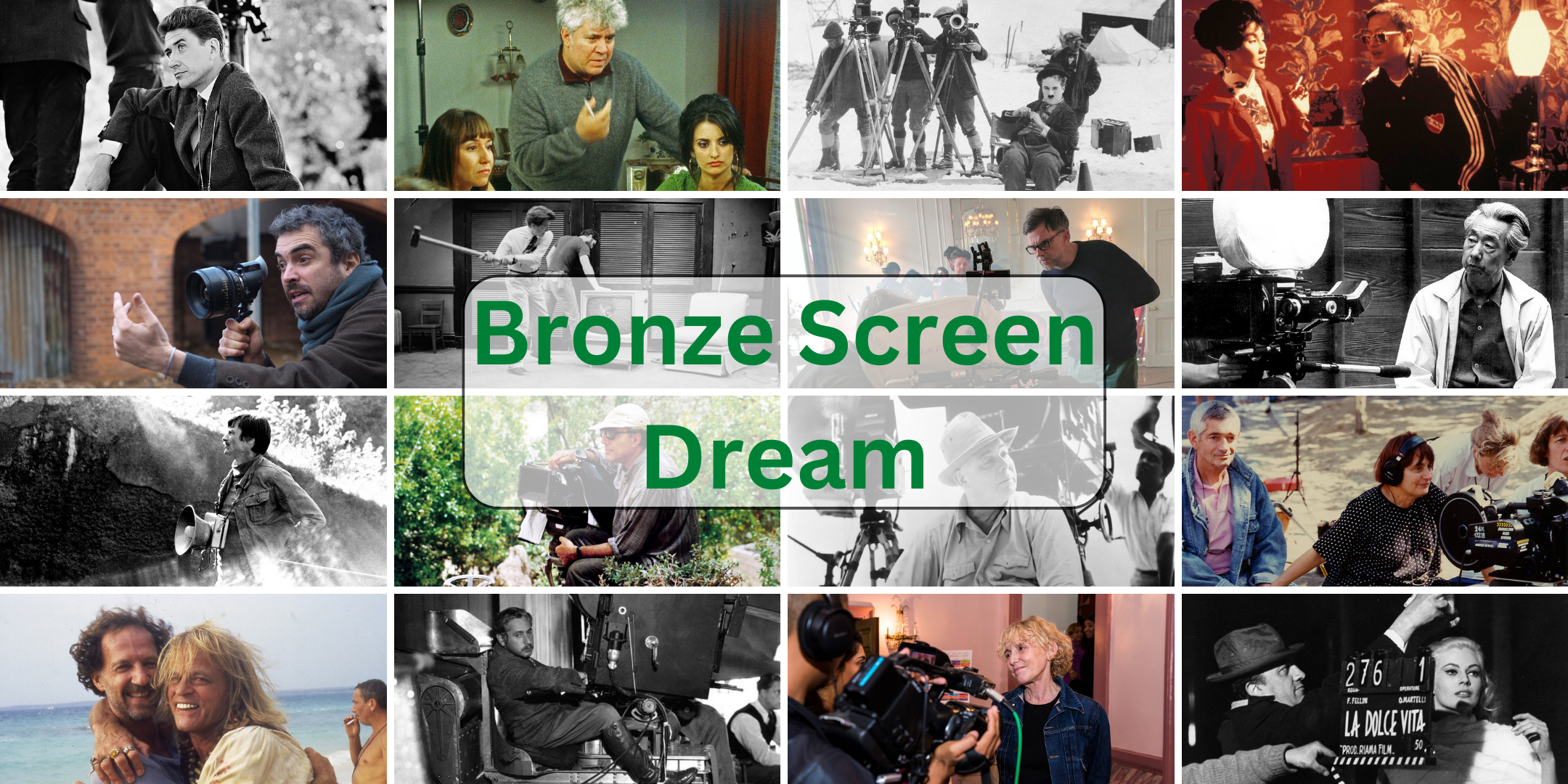
Below are some of the best French directors ever. Click on their pictures to discover more about them.





A Brief History of Early French Cinema
The Lumière brothers, Auguste and Louis, are often credited with inventing the motion picture camera in the late 19th century. Their invention, the Cinématographe, was a camera, projector, and printer all in one. The Lumière brothers’ first film, “Workers Leaving the Lumière Factory,” shot in 1895, is considered by many as the first true motion picture. Their subsequent public screenings in Paris marked the birth of cinema as a commercial medium.
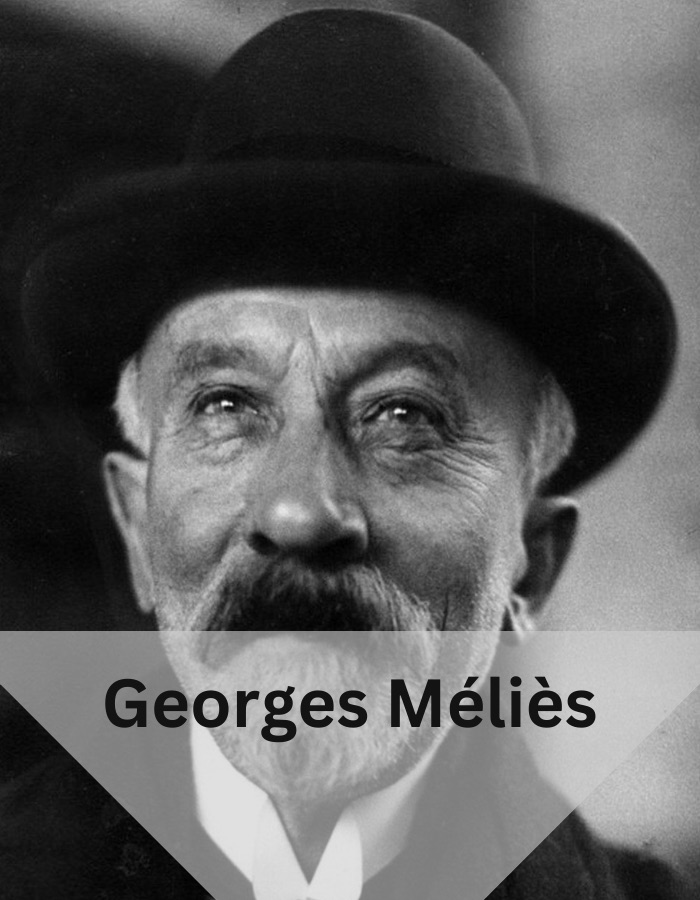
In the early 1900s, French cinema quickly evolved from its documentary origins into more narrative forms. Georges Méliès, a stage magician turned filmmaker, became one of the most influential figures in this transition. His films, like the iconic “A Trip to the Moon”, were known for their imaginative storytelling, special effects, and creative use of the medium. Méliès’ work laid the foundation for the genres of science fiction and fantasy in cinema. His pioneering use of special effects, including stop-motion photography, multiple exposures, and time-lapse photography, revolutionised the industry.
Another significant figure in early French cinema was Alice Guy-Blaché, one of the first female film directors in the world. Starting her career as a secretary at Gaumont, she quickly rose to become the head of production. Guy-Blaché directed, wrote, and produced numerous films, experimenting with colour and sound long before they became standard. Her contributions to narrative and visual storytelling significantly influenced the direction of early cinema.
The 1920s saw the emergence of French Impressionist Cinema, characterised by its focus on visual style and narrative ambiguity. Directors like Abel Gance, Jean Epstein, and Germaine Dulac explored complex editing techniques, visual metaphors, and thematic depth. Gance’s “Napoleon”, with its innovative use of camera angles and editing, was a landmark in cinematic storytelling. This period also saw the rise of Surrealist cinema, with directors like Luis Buñuel and Salvador Dalí pushing the boundaries of film as an art form.
As the 1930s approached, French cinema continued to evolve, with directors like Jean Renoir and René Clair coming to prominence. Renoir’s films, including “La Grande Illusion” and “The Rules of the Game”, are celebrated for their deep humanism and complex character studies. Clair’s contributions, notably in films like “Under the Roofs of Paris” and “Le Million”, combined innovative sound techniques with a whimsical visual style. These directors not only defined the pre-war era of French cinema but also left a lasting impact on the global film industry.
 Bronze Screen Dream