
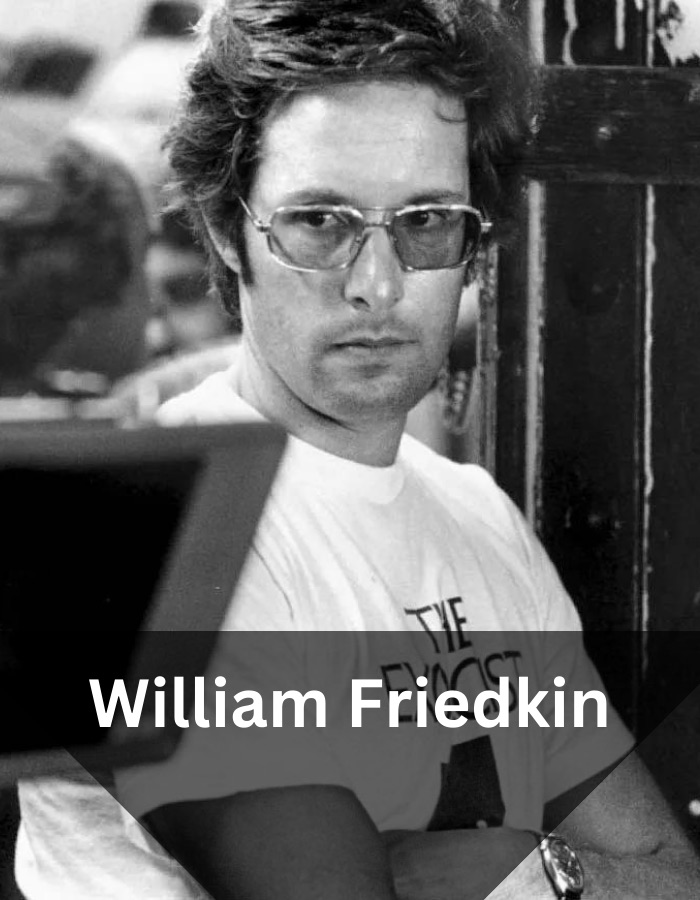
Below are some of the best American directors ever. Click on their pictures to discover more about them. This grouping covers the directors who came to prominence in the late 1960s to late 1970s.


























A Brief History of New Hollywood
New Hollywood was a period of departure from traditional studio systems and saw the emergence of a new wave of directors and cinematic styles. This period, spanning from the late 1960s to the early 1980s, is often viewed as a renaissance in American cinema, one that reshaped the industry and the art of filmmaking itself.
The genesis of New Hollywood can be traced back to the waning influence of the classic Hollywood studio system. By the late 1960s, major studios were facing financial difficulties, partly due to the growing popularity of television. This decline paved the way for a new generation of filmmakers, often educated at film schools, bringing fresh perspectives and innovative techniques. These directors, including Francis Ford Coppola, Martin Scorsese, Steven Spielberg, and George Lucas, among others, were influenced by European art cinema and sought to create more personal, introspective, and visually distinctive films.
This era was marked by several key films that exemplified the New Hollywood ethos. Movies like “Bonnie and Clyde”, “The Graduate”, and “Easy Rider” challenged traditional narratives and aesthetic norms, featuring more complex characters, unconventional storylines, and a focus on contemporary social issues. These films resonated with a younger audience, reflecting their disillusionment with the American dream and the social upheavals of the time.
The success of these groundbreaking films led to a shift in the industry, where directors gained more creative control. This period saw the production of some of the most critically acclaimed and commercially successful films in American cinema, like “The Godfather”, “Jaws”, and “Star Wars”. These films not only showcased the directors’ distinct visions but also revolutionised various aspects of filmmaking, from narrative structures to special effects and marketing strategies.
However, by the early 1980s, the New Hollywood era began to wane. The commercial failure of some high-profile projects, coupled with the rise of high-concept films that prioritised marketability over artistic merit, led to studios reclaiming control over production. Despite its relatively short lifespan, the legacy of New Hollywood endures.
 Bronze Screen Dream