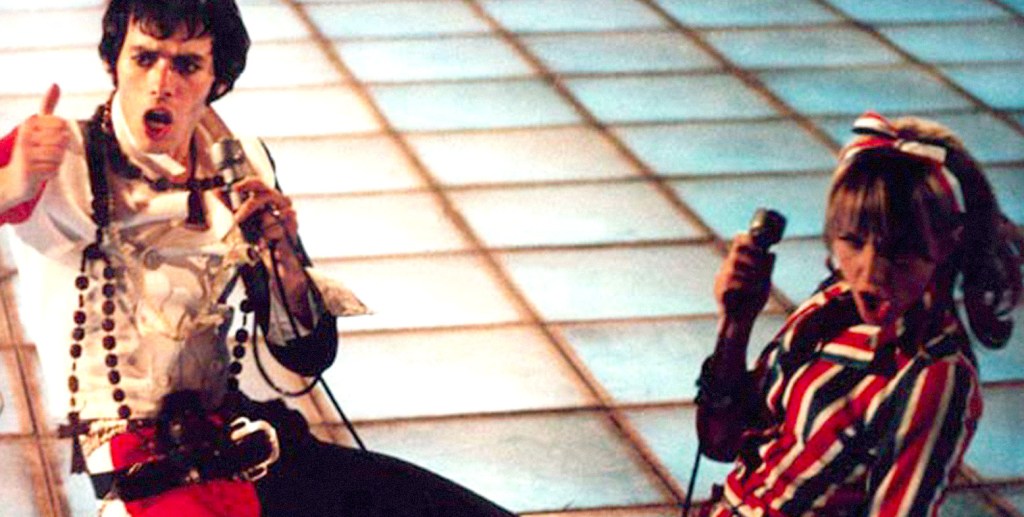
Marc’O spent his life at the centre of things, and his name never quite made it into the histories, which is one of French cinema’s more instructive oversights. He was there at the founding of Lettrism, produced the first significant Lettrist film, published Guy Debord’s first text and founded the experimental theatre centre that launched French counterculture. The fact that he died in 2025 at 98 and received minimal coverage tells you exactly how badly the canon can fail.
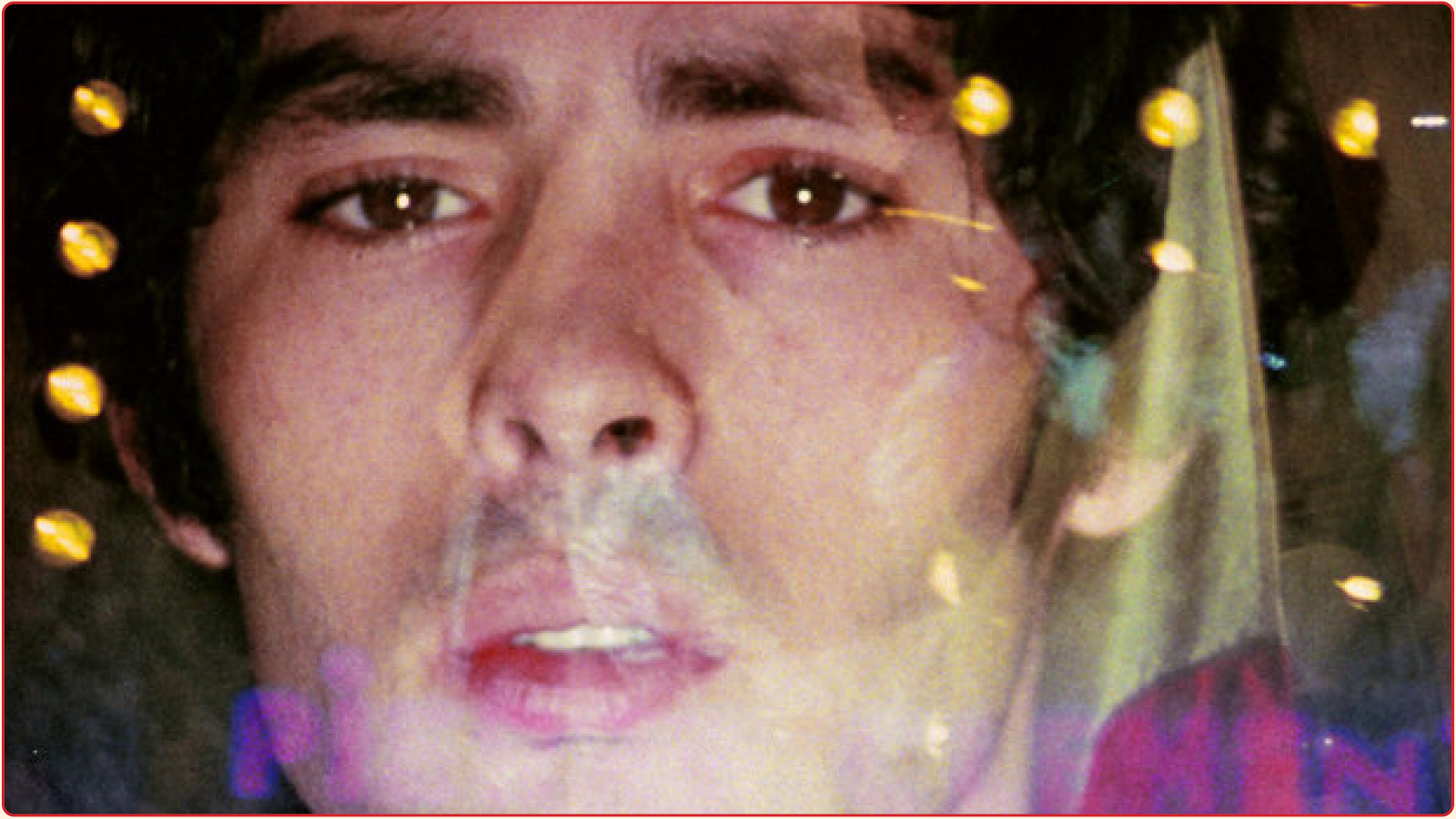
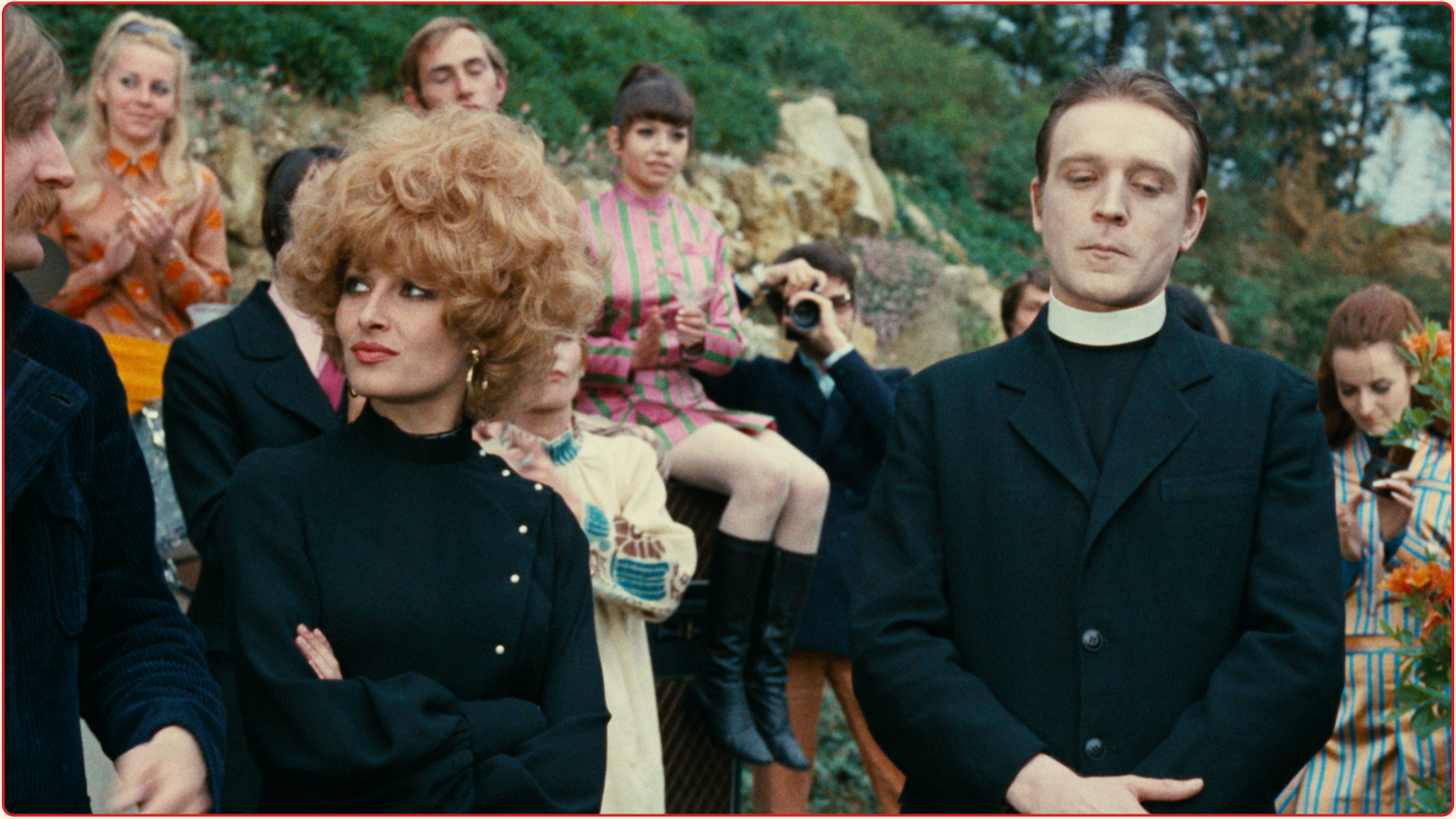
His filmography as a director is genuinely small. There are only really two films worth highlighting: Vision Interdite in 1954 (championed by Cocteau and Buñuel at Cannes) and Les Idoles in 1968. Les Idoles is the essential document: a musical satire of Yé-Yé pop and celebrity culture that functions simultaneously as backstage drama, denunciation of consumer capitalism, and historical record of a meeting between commercial auteurism and the avant-garde. Released into the teeth of May ’68 and immediately withdrawn from cinemas in solidarity with the protests, it barely had a run and spent decades as a rumour before archival screenings confirmed its quality. Rivette watched it and promptly recruited its cast wholesale.
The theatre work may ultimately be his most significant contribution. The Centre de Musique et de Théâtre expérimental at the American Centre was where a generation of French actors learned a kind of physical, politically-charged performance that hadn’t existed before. The influence dispersed into French cinema of the 1970s through the people Marc’O trained, even when his own name disappeared from the credits.
Marc’O (1927 – 2025)
- 1954 – Closed Vision
- 1958 – Voyage au bout du rêve
- 1965 – Les Bargasses
- 1968 – Les Idoles
- 1970 – Tamaout
- 1978 – Flash rouge
- 1980 – La nef des fous
- 1984 – La vocazione di San Matteo
- 1985 – L’adolescence de l’art
- 2003 – Les barbares arrivent avec gourmandise
- The Spectacle Theorised and Then Filmed: Marc’O articulated in Ion magazine what Debord would later systematise as Situationist theory: the dismantling of passive spectatorship, the manipulation of sensory conditions, the audience as participant rather than consumer. Les Idoles then enacts this: it reframes Situationist theory as individual experience, showing living representatives of the Society of the Spectacle eaten alive by their own image. bronzescreendream
- Theatre as Political Act: The American Centre’s productions weren’t aesthetic experiments in a vacuum. They were explicitly politically charged, designed to shock and activate. The training method Marc’O developed, the physical abandonment it demanded from Ogier and Clémenti and Kalfon, was a theory of performance as resistance before it was anything else.
- Anti-Celebrity as Avant-Garde Subject: Les Idoles arrived before the pop-culture deconstruction that became a critical industry, taking aim at Yé-Yé and the celebrity machinery with a precision that reads as prophetic. It embodies the social violence of Paris 1968: a yawp of pop psychedelia, Yé-Yé, and anticonsumerist critique.
- The Underground Network as Method: Marc’O’s career can’t be understood as an individual auteur’s trajectory. It’s a web of collaborations, productions, introductions and institutional foundations. He makes things possible for other people as much as he makes things himself, which is a different kind of creative identity than the cinema tends to accommodate.
- Radical Presence and Deliberate Obscurity: The avant-garde events were publicised precisely to cause outcry, then the films were withdrawn or barely distributed. There’s a consistent logic of provocation followed by disappearance. Make the intervention, refuse the career. Whether this was principled or circumstantial probably varies by episode, but it produced a body of work that exists more as influence than as canon.
- Alain Tanner
- Carmelo Bene
- Dusan Makavejev
- Guy Debord
- Isidore Isou
- Jacques Baratier
- Jacques Rivette
- Jean-Luc Godard
- Vera Chytilova
- Werner Schroeter

