Louis Malle was never quite one of them. He didn’t come up through Cahiers du cinéma. He came up through Jacques Cousteau’s boat and Robert Bresson’s set, and he was making acclaimed features before Truffaut and Godard had made any. But he was there at the start; he shared their cameraman and their stars, and for a few years his films looked like nobody else’s except theirs. After that he went wherever he liked: Paris, India, New Orleans, Atlantic City, a restaurant table in New York. He never made the same film twice.
This list covers what I’ve seen: 13 of his fiction features plus the short Vive le Tour. The gaps are significant. Lacombe, Lucien, Milou en mai, Damage, Vanya on 42nd Street, Crackers and Alamo Bay are all missing, as are the documentaries (Calcutta, Phantom India and the rest). They’ll go in as I see them. For more on the man, see my Louis Malle profile.
Every Louis Malle Film Ranked
14. Pretty Baby (1978)
Starring Brooke Shields, Keith Carradine, Susan Sarandon · 109 min
A repulsive film, and very hard to watch. I’m not someone who argues that this or that shouldn’t be allowed on film. It isn’t that the film lacks Malle’s usual technical qualities; Sven Nykvist shoots it beautifully, but I can’t square it morally. It isn’t the subject matter as such; it’s how it’s shot and how it’s handled. It hasn’t gotten easier to watch in the past fifty years.
13. Black Moon (1975)
Starring Cathryn Harrison, Thérèse Giehse, Joe Dallesandro · 100 min
A really weird film. A teenage girl flees a war between men and women, follows a unicorn to a remote country house, and finds an old woman in bed, a brother and sister who are both also called Lily, and eventually a unicorn that talks. Coming straight before Pretty Baby, it’s an uncomfortable pairing. Taken on its own, it’s just a pretty bad film.
You can admire that Malle never made what anyone else was making; he made the films he wanted to make, on his own estate in this case, and that’s respectable. There are moments here that are beautiful, curious, even fascinating, and it’s dense with weirdness. I’m not judging its narrative coherence, because it’s wilfully incoherent, but that doesn’t mean it works. It’s opaque and clumsy, and more boring than whimsical.
12. Vive le Tour (1962)
Narrated by Jean Bobet · 18 min
Malle’s short documentary on the 1962 Tour de France is the most New Wave thing he ever made. Look at the editing, the stylising, the handling: cameras on bikes, cameras by the roadside as the pack roars past, cuts timed like gags. At eighteen minutes it’s never going to rank high, but there’s absolutely nothing wrong with it.
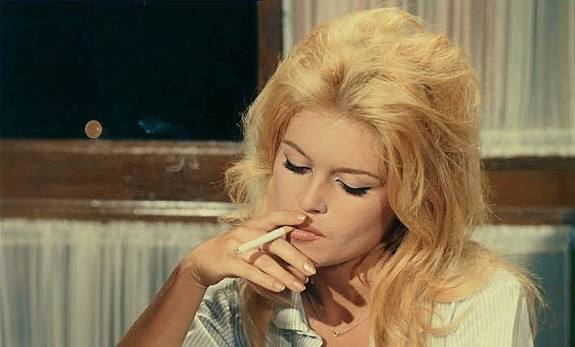
11. Vie privée (A Very Private Affair, 1962)
Starring Brigitte Bardot, Marcello Mastroianni · 103 min
What a shame this film is. On paper it should be a classic: Brigitte Bardot at the height of her fame, hounded and tormented, playing a thinly disguised version of herself and finally given a chance to make her case. Instead it’s bland. It’s fine, it’s okay, it isn’t a bad film, but it has nothing new to say, and its commentary on privacy and fame is surface-level. On the positive side, Bardot is very good. Mastroianni, who reportedly couldn’t stand her, is rather forgettable.
10. Atlantic City (1980)
Starring Burt Lancaster, Susan Sarandon · 105 min
Against the grain here. It won the Golden Lion and five Oscar nominations, and critics adore it, but I don’t think it’s a revolution. Lancaster is very good, there’s no denying it, and a fair few neat ideas linger around the movie. But broadly the film feels isolated and uneventful, a film full of atmosphere that never quite becomes more than that. It’s hard to see what the fuss is about.
9. Le Voleur (The Thief of Paris, 1967)
Starring Jean-Paul Belmondo, Geneviève Bujold · 120 min
It’s more or less two hours of Belmondo casually breaking furniture, sleeping with pretty women and being compulsive in every other way. And he’s very good at it. There’s nothing in the film that doesn’t work, exactly. The plot is serviceable, the costumes are nice, and while the film does run long in places, that shouldn’t be the biggest problem. Ultimately, it just feels like Malle is making a film by the numbers; there’s no anger in it, despite the plot. It’s disappointing that Malle, of all directors, made a film that anyone could’ve made.
8. My Dinner with Andre (1981)
Starring Wallace Shawn, André Gregory · 111 min
The oddball of Malle’s filmography, and the one with the longest afterlife. Two friends, playing versions of themselves, talk over dinner for nearly two hours: Gregory about his years of spiritual searching in Poland, the Sahara and on a Long Island mock burial, and Shawn about the comfort of electric blankets. You can make its influence as big as you like: critics have called Before Sunrise “My Dinner with Andre on the Danube”, so why not every podcast ever? It’s fairly ugly by Malle’s standards, but clearly on purpose. It’s an odd film; neither Shawn nor Gregory is especially captivating here, and it’s hard to distinguish what the best part is. It’s somewhat overhyped, though still good. It’s a little like a less neurotic Woody Allen film in which Allen has forgotten who Bergman and Fellini were.
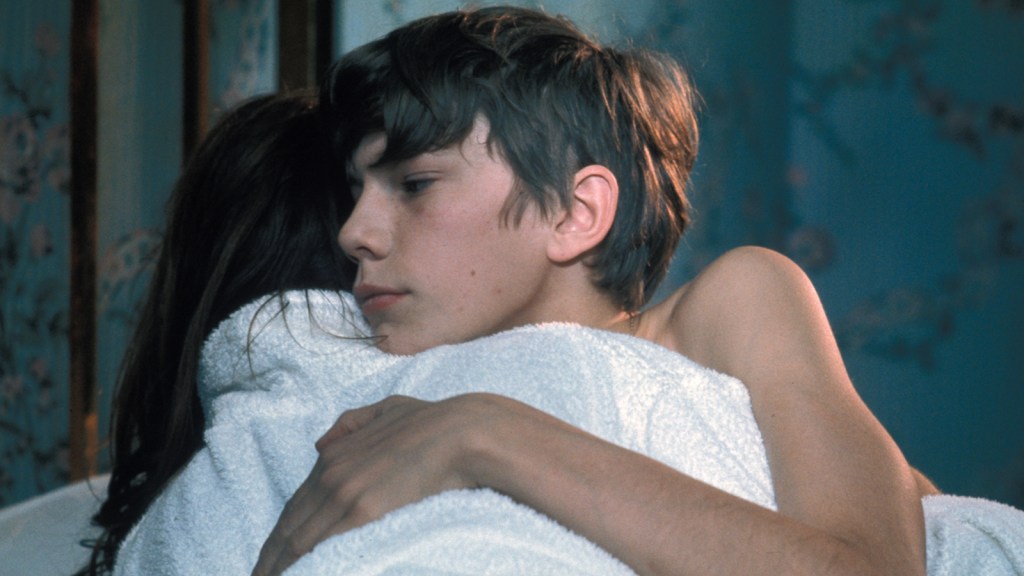
7. Le Souffle au cœur (Murmur of the Heart, 1971)
Starring Lea Massari, Benoît Ferreux, Daniel Gélin · 118 min
A lot of people call this film “semi-autobiographical”, and if we’re honest, that’s a lie. Laurent is fourteen in Dijon in 1954. Malle was twenty-one that year and working with Cousteau, and he certainly didn’t bang his mum. It’s got plenty of little details of Malle’s life: the jazz obsession, the tyrannical older brothers, a heart murmur that did send the young Malle to a spa with his mother. But the autobiographical label is overstated, and that gets in the way of what it is: a rather funny and uneasy little film.
6. Les Amants (The Lovers, 1958)
Starring Jeanne Moreau, Jean-Marc Bory, Alain Cuny · 90 min
Quietly, shyly, a masterpiece. Is that an overstatement? Probably, but it does feel that way. Moreau is a bored provincial wife with a cold husband and a polo-playing lover in Paris. When her car breaks down, a young stranger drives her home, and over one moonlit night everything changes. It’s very funny to imagine the US Supreme Court, all gathered in their robes and prim frowns, deciding whether this was pornography, which it obviously isn’t. It’s tender, and it gives Moreau the full blossom of emotions: adoration, despair, compassion, emptiness. She’s beguiling. The first half ambles prettily. The second half, the night walk and the boat ride through the grounds to Brahms, elevates it into something else entirely.
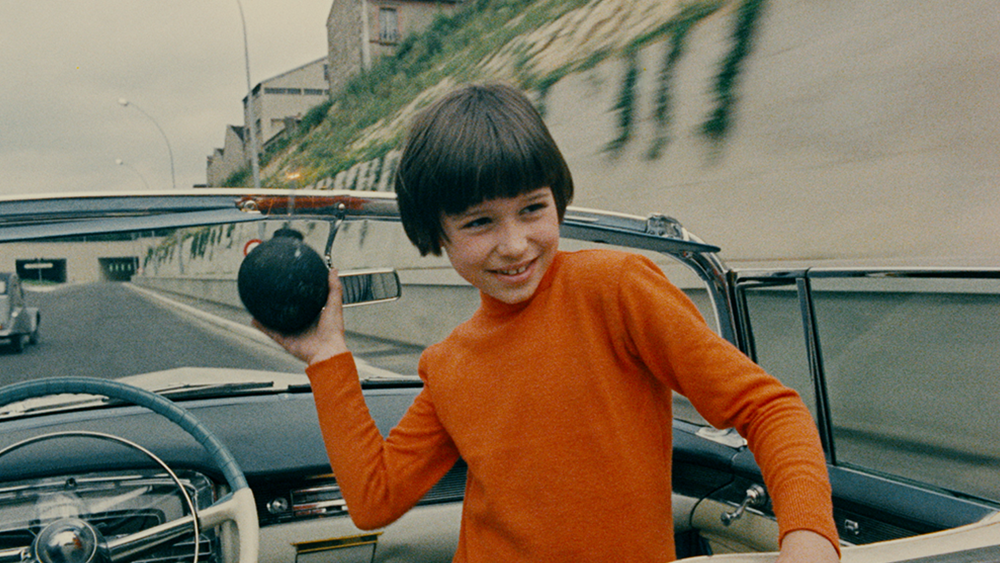
5. Zazie dans le métro (1960)
Starring Catherine Demongeot, Philippe Noiret · 89 min
Very underrated. It was a flop on release, and it’s still treated as a curiosity. To describe it to someone, you’d need a basic equation: Tati plus fun Godard equals Zazie. A ten-year-old girl arrives in Paris for the weekend, desperate to ride the Métro, finds it on strike, and runs riot across the city instead. Malle sets out to find a film equivalent for every pun and mangled word in Raymond Queneau’s novel. It’s relentlessly inventive. Malle works overtime to make it brilliant: sped-up chases, impossible continuity, characters popping in and out of frame, the Eiffel Tower turning into a lighthouse. There’s barely a scene that isn’t packed to the brim with ideas, undercurrents, chaos and surrealism. It has a great meta quality, and it balances the book perfectly. Zazie is neither corrupt nor innocent. It’s mind-boggling.
4. Le Feu follet (The Fire Within, 1963)
Starring Maurice Ronet, Léna Skerla, Jeanne Moreau · 108 min
This film takes a while to get into. A recovering alcoholic who has decided to shoot himself the next day spends a last day in Paris visiting the friends who might give him a reason not to. That’s a slow-burning, dialogue-heavy film about a man who wants to die, which isn’t the easiest recipe to get along with. He muses constantly, on everything, with little success. Shot in grey, black and white on real Paris streets, to Satie piano pieces, it’s Malle’s most New Wave film in spirit. It almost leans into the stereotypes of the arty French film, but it does so deftly, not mockingly or ironically, but consciously. Ronet is brilliant. Every gesture is right, even though he’s sleepwalking through his last day.
3. Viva Maria! (1965)
Starring Brigitte Bardot, Jeanne Moreau · 119 min
Here’s my big statement: Viva Maria! is a great film, a masterpiece. I’ll concede it hits a wall around the halfway point and gets sluggish, but before that, I’d say no film of its scope is as good. It’s almost the perfect Malle film because it does a new genre nearly every scene: comedy, musical, war film, western. It’s astounding. Malle built it as a female reworking of the buddy western Vera Cruz, and you can see something of it in the comic westerns that came after (and, decades later, even in Shanghai Noon). Bardot and Moreau are brilliant together, and they’re the gravity that holds the whole thing together.
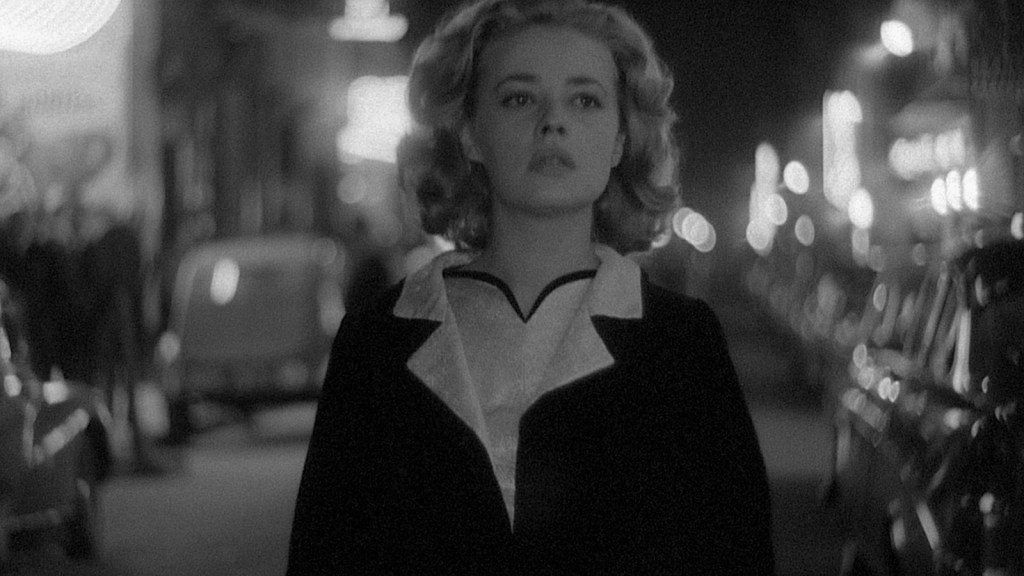
2. Ascenseur pour l’échafaud (Elevator to the Gallows, 1958)
Starring Jeanne Moreau, Maurice Ronet, Lino Ventura · 91 min
There’s always a slight pity in the young artist who makes one of their best films at the very start, because it suggests everything is downhill from there. Fortunately, that isn’t the case for Malle, who made this at twenty-four. It’s not exactly thrilling, despite being called a crime thriller. It’s absurdly stylish and beautifully shot by Henri Decaë. The score Miles Davis… Well, what can you say? It’s perfect. And the purest image of longing in French cinema is Moreau walking the Champs-Élysées alone at night, lit only by shop windows, looking for a man who never comes.
1. Au revoir les enfants (1987)
Starring Gaspard Manesse, Raphaël Fejtö, Philippe Morier-Genoud · 104 min
One of the most affecting films you can imagine: heartbreaking, and always relevant. Malle was eleven and at a Carmelite boarding school near Fontainebleau when the Gestapo came in January 1944 for the headmaster and the Jewish boys he was hiding. It’s a perfectly, elegantly crafted story of boyhood: poignant, tragic, and sadly real. The Occupation is there throughout, yet the film is so absorbing as a story of two boys becoming friends that it almost lulls you into forgetting where it’s heading. Then the end comes, and you’re stuck with it. Just as Malle was.


Leave a Reply