François Truffaut made twenty-one features in twenty-five years before his death in 1984 at the age of fifty-two, plus a handful of shorts. He was the New Wave’s most loved director and, for a while, its most resented. To Godard, he was the one who went back to making “proper” films. Watched now, he’s the one whose films kept their warmth.
This list is limited to what I’ve seen: 14 of the 21 features, plus three shorts. That means some big gaps. Stolen Kisses, Bed and Board and Love on the Run are missing, so only two of the five Antoine Doinel films are here. Two English Girls, Such a Gorgeous Kid Like Me, The Green Room, The Woman Next Door and Confidentially Yours are missing too. I’d rather be upfront about that than rank films off their reputation. The list will grow as I fill the gaps. The shorts sit low because they’re slight, not because they’re bad. For more on the man, see my François Truffaut profile.
Every François Truffaut Film Ranked
17. Los 4 Golpes (1962)
With François Truffaut, Marie Laforêt · 3 min
What is there to say about it? Truffaut was in Mar del Plata, Argentina, for the 1962 film festival with Jules et Jim, and he and a group of friends spent an afternoon shooting a three-minute silent crime pastiche on 16mm. He directs and plays the assassin, and the title is a pun on the Spanish title of The 400 Blows. It’s not a serious effort. It’s fun for what it is, a perfectly silly Mack Sennett-style lark. It’s a holiday souvenir, not a film.
16. Une histoire d’eau (A Story of Water, 1958)
Starring Jean-Claude Brialy, Caroline Dim · 12 min
When the floods hit the countryside outside Paris in early 1958, Truffaut grabbed a camera crew, Brialy and a young actress and improvised a two-day romance among the floodwaters, then lost interest. A bit later, Godard took the footage and turned it into something of his own. It’s the only film to carry both their names as directors, and no film could live up to that billing. It’s light and frivolous and not worth much, but it’s an interesting relic.
15. Les Mistons (1957)
Starring Bernadette Lafont, Gérard Blain · 18 min
Truffaut’s first real short, made through his own new production company, already has all the hallmarks of later Truffaut: the urges of adolescence, the uncontrollable nature of desire, boys in a world they can’t quite understand. It’s beautiful, in a way, but also very light. The best and worst you can say of it is Truffaut is evident in every moment, before he’d learned to direct like himself.
14. Fahrenheit 451 (1966)
Starring Oskar Werner, Julie Christie · 112 min
Truffaut’s only English-language film: and one made under the shadow of Hitchcock. Scored by Bernard Herrmann! Written during his Hitchcock-Truffaut interview years! It doesn’t feel like a Truffaut film. It’s stylish, it’s sharp, the narrative doesn’t fall in on itself or get messy. There’s nothing in the film that ‘fails.’ But it lacks the humanism of Truffaut’s cinema. The shortcomings are hard to pin down exactly, but they can be found on the square shoulders of Oskar Werner.
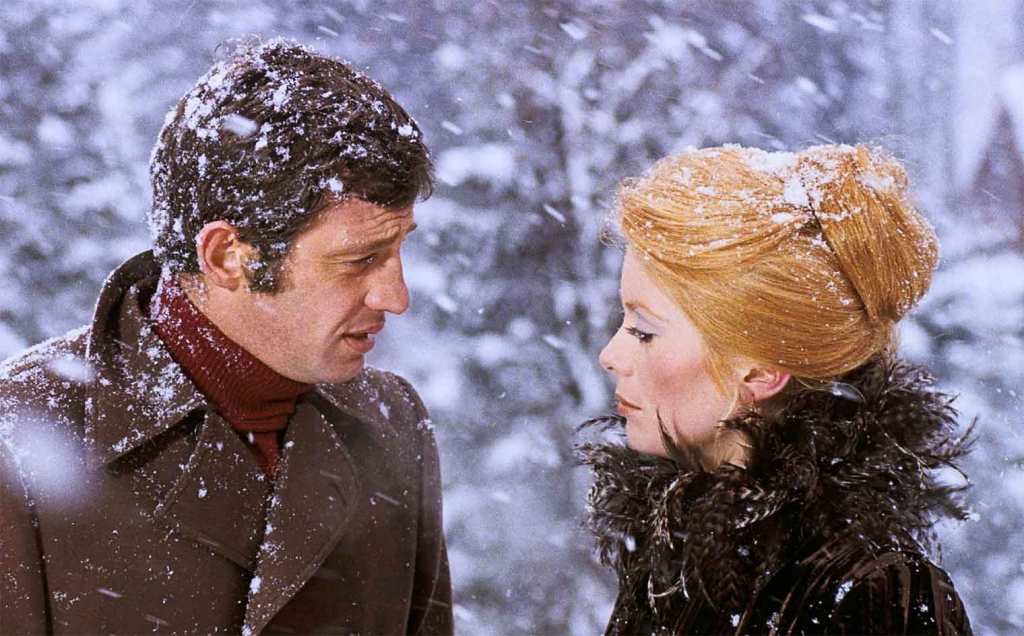
13. La Sirène du Mississipi (Mississippi Mermaid, 1969)
Starring Jean-Paul Belmondo, Catherine Deneuve · 123 min
Mississippi Mermaid, Truffaut’s second Woolrich adaptation in two years and his most expensive film to date, isn’t that serious a film. The good news is Truffaut knows this. He is consciously making it fun and silly; the issue is it doesn’t quite pull off what it wants to be. It aspires to be one of the more “his and hers” Hitchcock films, where men and women pull at each other, like To Catch a Thief, but it doesn’t have that underbelly. It’s as sexually charged as Hitchcock would shoot it, but less seedy, which is ironic given the duplicitous plot.
12. Le Dernier Métro (The Last Metro, 1980)
Starring Catherine Deneuve, Gérard Depardieu · 131 min
Le Dernier Métro was one of the most important films of Truffaut’s career. It won ten Césars, it touched on a wholly new subject for Truffaut; the occupation. It was a huge hit, and many regard it as his late masterpiece. But it lacks whatever it is at the centre of a Truffaut film that makes it come alive.
Compare it to Day for Night, the other half of his planned trilogy about show business: this is more restrained, too controlled, too concentrated. The real oddity is the lack of repressed passion I get from Deneuve or Depardieu. The attraction between them is meant to be the film’s centre, the thing the whole plot turns on, and instead everyone seems to work around it.
11. La Mariée était en noir (The Bride Wore Black, 1968)
Starring Jeanne Moreau, Michel Bouquet, Charles Denner · 107 min
Julie Kohler’s husband was shot dead on the church steps on their wedding day by a stray bullet from five men larking about with a rifle across the street. She tracks them down and kills them one at a time: a push from a balcony, poisoned arak, a man taped into a cupboard under the stairs, an arrow in the back.
Another Truffaut B-movie attempt. Again from Woolrich, again with Herrmann. But it’s too straightforward; the list of men just gets ticked off. There’s a really brilliant character and performance from Moreau here, but the film never fully delivers to her what she needs. We learn what she does, but not much more. It’s not a bad film at all; it’s energetic, lively and his best attempt at Hitchcock, but it just doesn’t do everything it could.
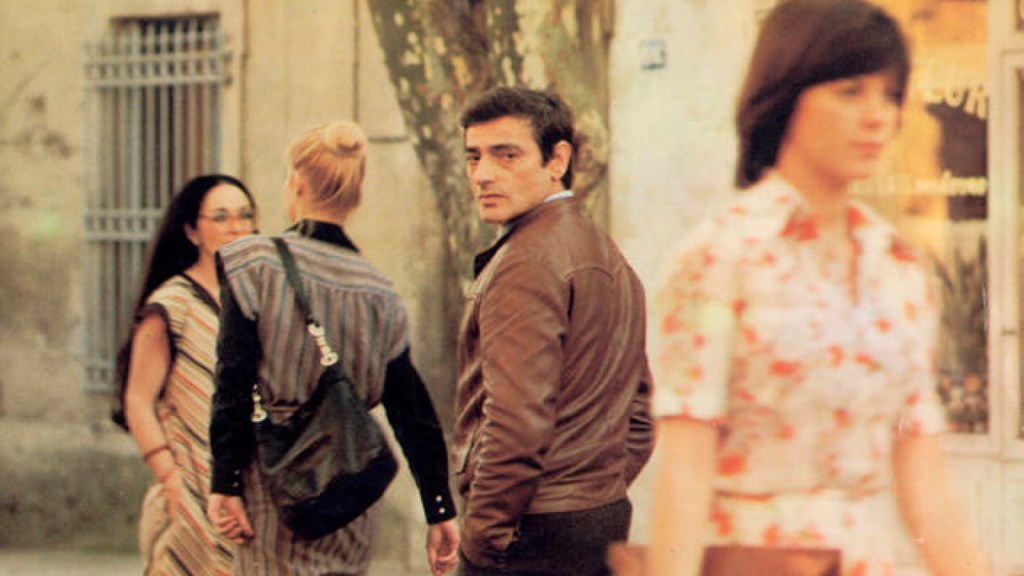
10. L’Homme qui aimait les femmes (The Man Who Loved Women, 1977)
Starring Charles Denner, Brigitte Fossey, Leslie Caron · 120 min
A great little comedy, and a great story of avoidance. In many ways it’s the most autobiographical thing Truffaut ever made. His real adult life certainly verged closer to Bertrand Morane than Antoine Doinel. It’s a movie about a man who pursues women compulsively, sleeps with a great many of them, commits to none, then romanticises the chase.
On paper, that’s perfect material for a boorish and off-putting film; look at Blake Edwards’s 1983 American remake. Truffaut’s handling of the material is light; loving and mocking at the same time, he manages to save the film from itself. Another director, Buñuel, say, wouldn’t wink or be as whimsical. His version would be cooler, sharper and far better as satire, but it’d be far harder to love than Truffaut’s.
9. La Peau douce (The Soft Skin, 1964)
Starring Jean Desailly, Françoise Dorléac, Nelly Benedetti · 113 min
The most notorious flop of Truffaut’s career: booed at Cannes, dismissed as cold and boring by French critics, and abandoned by foreign distributors. In many ways it was Truffaut’s attempt to push the New Wave in a new direction. It’s softer than his previous films in that it’s not rebelling for freedom but groping for it. It’s pained, awkward and unsure, and certain at the same time. It’s a good film, not a perfect film, but surely Truffaut knew that as he made it. There’s no glamour here, there are no scenes of euphoria; it’s no surprise it clashed with audiences, but it has well earned its later reappraisal.
8. Tirez sur le pianiste (Shoot the Piano Player, 1960)
Starring Charles Aznavour, Marie Dubois · 81 min
It’s a film noir with an existential crisis, a noir that turns Hollywood inside out. It’s brilliantly shot by Coutard, and it’s chaotic, weird, unpredictable and full of pastiche. It’s built on a decade of Truffaut’s Hollywood B-movie worship as a critic, and you can tell: there are nods to Nicholas Ray, Sam Fuller and Hitchcock, and silent-era iris shots. The lead is a sad caricature, and the gangsters are clowns, and the women are all too mysterious and magnetic for the men around them.
It isn’t a brilliant film exactly; it’s too messy. But there’s something admirable about a film that has no interest in playing by the rules. Coming straight after the success of The 400 Blows, that took nerve. Good for it.
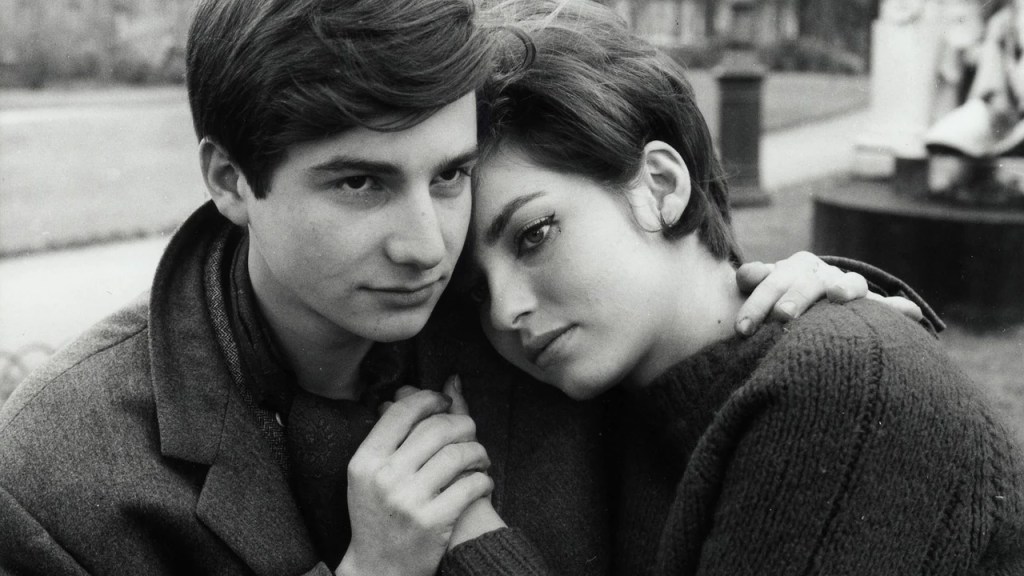
7. Antoine et Colette (Antoine and Colette, 1962)
Starring Jean-Pierre Léaud, Marie-France Pisier · 30 min
Truffaut’s segment of the anthology Love at Twenty brings back Antoine Doinel at seventeen, living alone, working at a record-pressing plant, and falling for Colette (Pisier, in her first role) at a concert. Her parents adore him. She doesn’t. It’s beautiful: sweet, pure, and very true to Truffaut’s adolescent pursuit of Liliane Litvin in 1950. It’s romantic, melancholic, comic and adolescent, and just thirty minutes long.
6. L’Argent de poche (Small Change, 1976)
Starring Geory Desmouceaux, Philippe Goldmann · 105 min
The last weeks of the school year and the start of the summer holidays in Thiers, a small town in central France, seen through a crowd of children. It was a hit in its day, but it’s maybe the most overlooked of Truffaut’s great films now. Unlike most of his filmography, it’s a mosaic. A toddler crawls out of a high-rise window after a kitten and falls, and lands unharmed. A girl left home alone uses her father’s megaphone to tell the whole courtyard she’s hungry, and the neighbours send food down in a basket. And Julien, the quiet new boy who wears the same jumper every day, turns out to be abused at home.
Here we see a world of children in all their joy and pathos, grappling with the obtuseness of the adult world. It’s a beautiful film that shows Truffaut’s deft hand with childhood. It’s funny, it’s sad, and it’s great.
5. L’Enfant sauvage (The Wild Child, 1970)
Starring Jean-Pierre Cargol, François Truffaut · 85 min
L’Enfant sauvage is a beautifully shot film. In many ways it’s the counter to Mississippi Mermaid‘s scope. It’s small, kind-hearted and sincere. It never verges into melodrama despite its material, and it never leans into the ironic winks at sincerity that the New Wave often did. There are two basic readings of the film. Truffaut as the patient master to Léaud, to whom it’s dedicated, as the savage, or Truffaut as the wild child to Bazin’s tutelage. Either way, the film works, and you can see how tenderly Truffaut took the story.
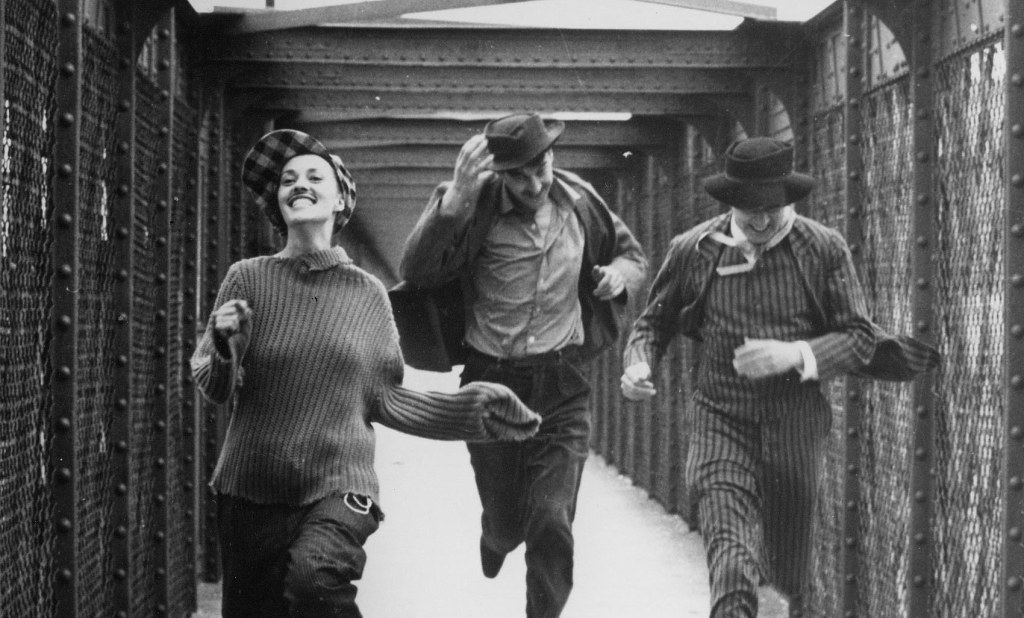
4. Jules et Jim (1962)
Starring Jeanne Moreau, Oskar Werner, Henri Serre · 105 min
Pound for pound, for iconography, Jules et Jim would win most contests. There’s Catherine in a drawn-on moustache, winning a race across a footbridge by cheating at the start. There’s “Le Tourbillon”, her faces held in freeze-frames, and Delerue’s score. It’s quintessential New Wave, and almost Chaplinesque at times in how it holds bathos and pathos together.
It’s well loved and undeniably effervescent, yet about halfway through, the film seems to lose its steam. It becomes less inventive, less playful; it feels like it fails to deliver on everything it promised to do in the early part of the film. This isn’t for lack of narrative; it just seems to run out of itself. That’s not to dismiss the film, of course; I’m just cooler on it than its reputation.
3. L’Histoire d’Adèle H. (The Story of Adèle H., 1975)
Starring Isabelle Adjani, Bruce Robinson · 96 min
In 1863, Adèle Hugo, younger daughter of Victor Hugo, arrives in Halifax, Nova Scotia, under a false name, chasing a British officer who has already rejected her. She writes home that they’re married and wrecks his engagement. She considers paying a stage hypnotist to make him love her. Finally she follows him to Barbados, where she wanders the streets in rags, so far gone that she walks straight past him without recognising him.
This is the one Truffaut film where the actor beats his sensibility without overwhelming it. The film is Isabelle Adjani. Without her, the film could have been cold and unfeeling. Instead, it becomes a story that keeps justifying itself, a vicious cycle of self-deception and unrequited love. Truffaut had made films about obsessive love before, but this is his bleakest.
2. La Nuit américaine (Day for Night, 1973)
Starring Jacqueline Bisset, Jean-Pierre Léaud, Valentina Cortese · 116 min
If Truffaut was meant to make any other film aside from Les Quatre Cents Coups, it was this one. It’s dazzling. A glorious celebration and condemnation of the joys and faults, trials and woes of filmmaking. It’s filled with references, jokes, characters who conquer scenes and fade away, dreams and the potential of cinema.
It isn’t that the subject is unique. Many films handle similar material, often too self-serious or too light-hearted; take Godard, if he made the film, he’d make sure you knew he didn’t take it seriously, even if he did. But Truffaut does a more complex balance. La Nuit américain takes cinema seriously, and itself not at all, and lets you in on the joke. It’s the film that ended Truffaut and Godard’s friendship, as Godard thought it was a lie, but Godard was wrong; the film is an outstanding symphony of chaos.
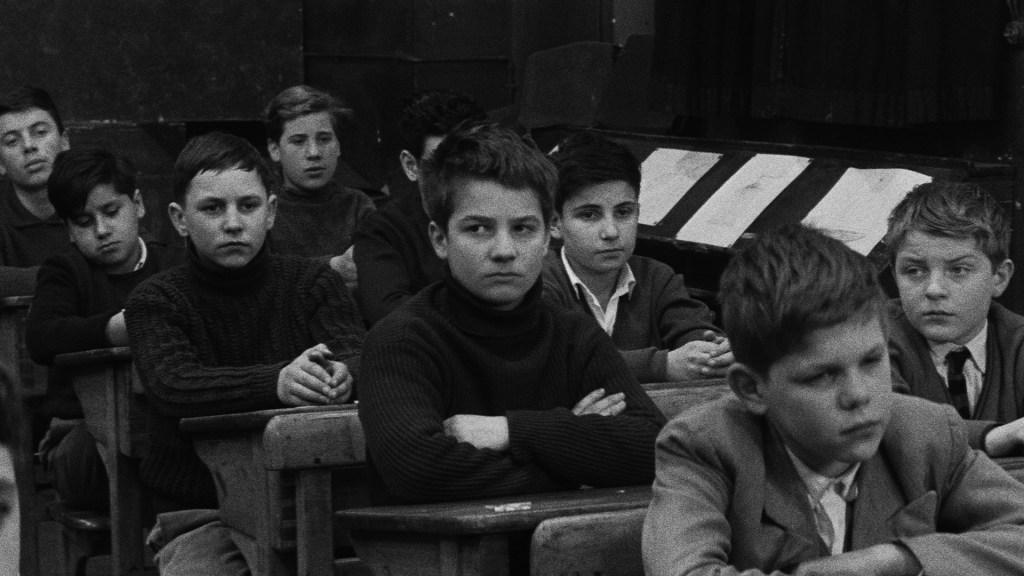
1. Les Quatre Cents Coups (The 400 Blows, 1959)
Starring Jean-Pierre Léaud, Claire Maurier, Albert Rémy · 99 min
What is there to say about this film that hasn’t been said? Nothing, everything that can be said has been said. It’s interestingly plotless when you think about it; it has its great freeze-frame climax, it has its moments of drama and pain and joy, but it’s devoid of melodrama or the older Truffaut’s sometimes too-light handling of emotions. It’s beautifully shot and scored too; there’s a feeling that everyone involved was at their peak, or starting it.
Jean-Pierre Léaud, of course, deserves the most important mention. Cast as, essentially, the stand-in for Truffaut, but instead he takes Antoine Doinel and makes him a merging of them both: the adult’s past and the adolescent’s present. There’s a lot to talk about, and a lot have talked about it; suffice to say, it’s perfect.


Leave a Reply