Before Francois Truffaut did his iconic manifesto, Une certaine tendance du cinéma français, against the Tradition of Quality in January 1954, Michel Dorsday had already attacked it fifteen months earlier. That’s not a commonly known fact in French New Wave history.
In Cahiers du Cinéma No 16, October 1952, Dorsday wrote an article called Le cinéma francais est mort (French Cinema Is Dead), which was a scathing review of Christian-Jaque’s film Adorables Créatures. Throughout the article, he attacked prestige-works, films that aimed to be literary and highlighted his own personal canon of good directors; many of which were contrary to Truffaut’s latter list: Dorsday defended Clouzot, Clement, Bresson, Allégret, Daquin and Marcello Pagliero, and even targeted Truffaut’s favourite, Jacques Becker. [1][2]
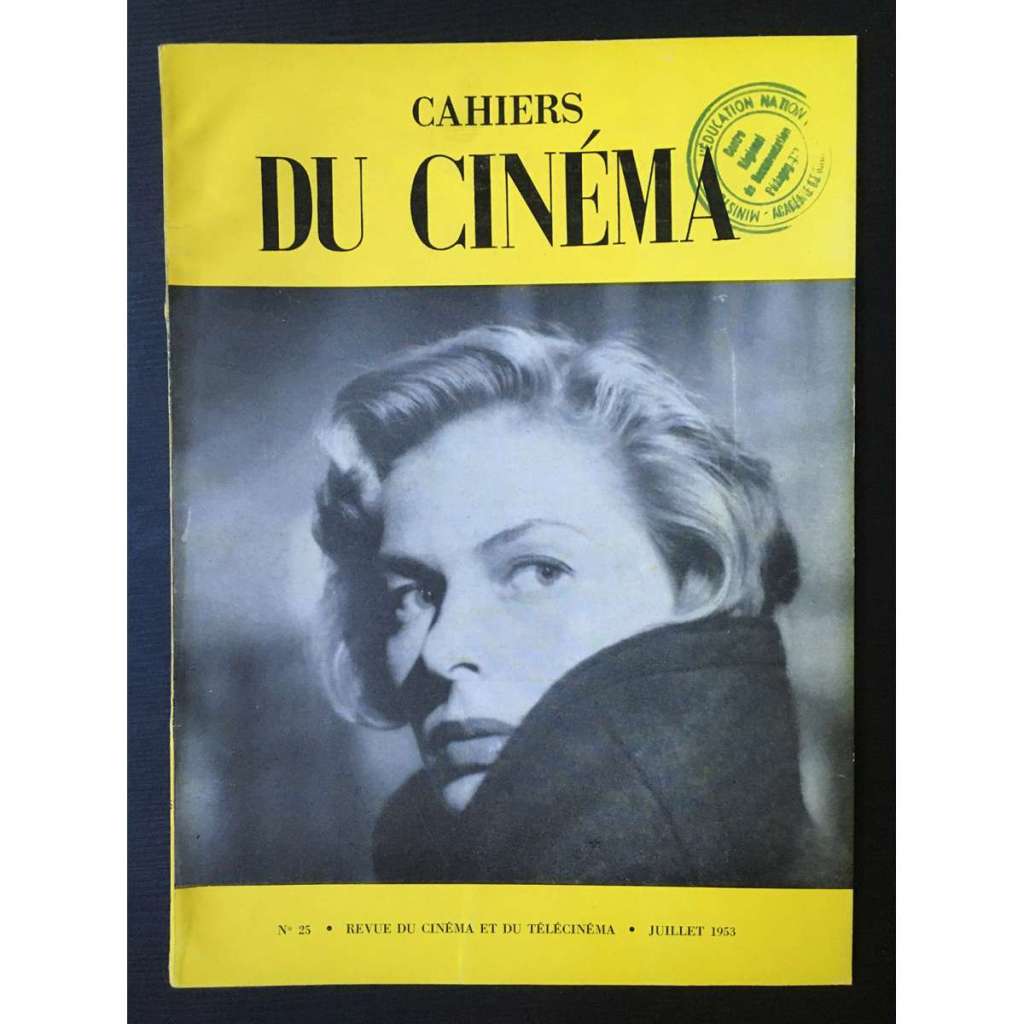
He also, just like Truffaut would, targeted specific screenwriters (Though Dorsday picked Charles Spaak rather than Aurenche and Bost) as at fault, and attacked middle-brow spectatorship in a similar way that Godard and Rivette would by focusing on American B-movies instead of safe prestige films.
In the introduction to the article, Dorsday penned this line:
“Le cinéma français est mort, mort sous la qualité, l’impeccable, le parfait – parfait comme ces grands magasins où tout est propre, beau, bien en ordre, sans bavures.”
Which translates to “French cinema is dead, dead under the weight of quality, the impeccable, the perfect—perfect like those department stores where everything is clean, beautiful, well-ordered, without flaws.”
It’s hard not to see the parallels.
Michel Dorsday, the Proto-François Truffaut
Dorsday was the proto-Truffaut. From 1952 to 1954, he was the firebrand of Cahiers du Cinéma. Articulate, fierce and vitriolic. He was born Michel Rontchevsky in 1931 in Bouxweiller in Alsace, into a German-Russian family. He claimed to take the name Dorsday from his first play, written in the late 40s. But it’s strikingly similar to Van Dorsday, the exploitative art dealer antagonist in Schnitzler’s Fraulein Else (1924), and likely that influenced his pen name. [3]
Dorsday’s writings in Cahiers were erudite and inflammatory, and he was clearly an outlier. He was a Bunuel and Lang fan, not an Americaphile (Or at least not a Hitchcock-Hawksian). For the article, he wrote 34 (39 if we include Torletsky) reviews for them primarily in 1953. [4]
He wrote on Cinemascope (He was against it, but came around to it) and wrote an interesting article, Misogynie du cinéma américain, in January/February 1953, where he attacked the misogyny of the American film industry, though from a slightly conservative contrarian position. [5]
Like all the Cahiers critics, he also used pseudonyms; his most regular one was Michèle Torletsky, which he used for 5 reviews, and this has led some to assert that ‘she’ was one of the only regular female writers for Cahiers in the early days (The only real example of a regular contributor is Marie-Claire Solleville). [6]
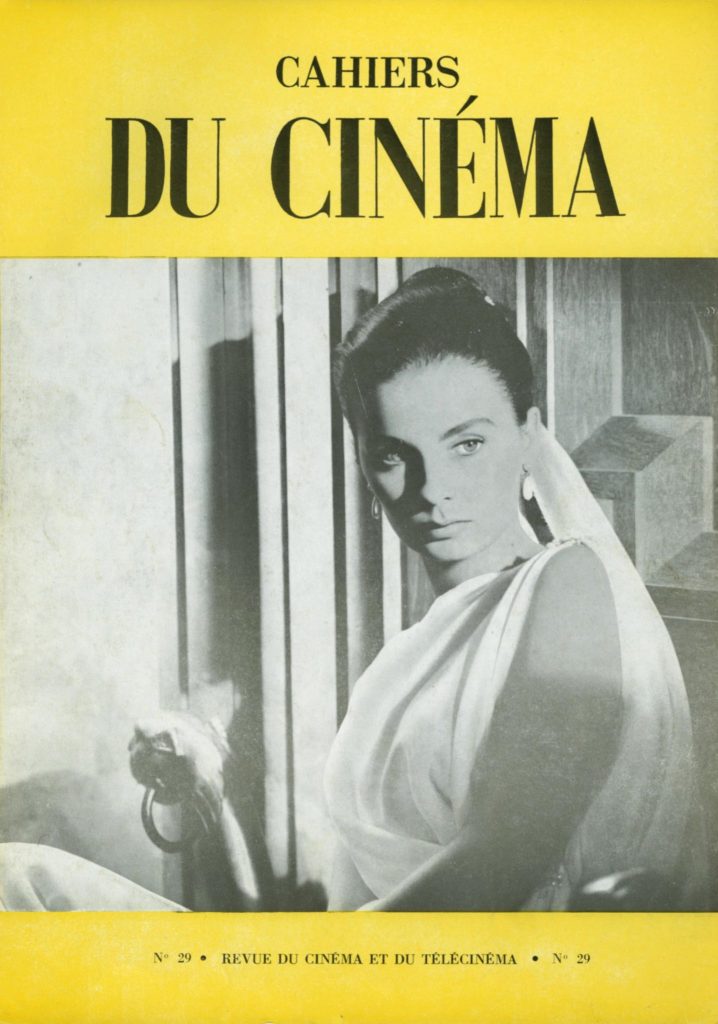
Similarly, he once used the byline ‘Mylène Demongeot and Michel Dorsday’ for an erudite, verbose and dense article called Les Ombres on the famous December 1953 No 30 Cahiers du Cinéma issue La Femme et le cinema. This has led Google Arts and Culture’s article to list Demongeot as a writer for Cahiers despite Antoine de Baecque explicitly noting this was Dorsday’s pseudonym. [7] [8]
Given that Demongeot’s cinematic debut was in November 1953 for Les enfants de l’amour, the month before the issue, and given that the article makes no reference or gesture at her as an actress. It seems most likely Dorsday saw Les enfants de l’amour and took her name, and coincidentally, she actually became famous. Ironically, Google didn’t fact-check, and their claim that ‘Only 5 editors out of 19 were women’ is worse than it looks.
Michel Dorsday’s Replacement
It’s clear Dorsday was the dominant young critic from 1952 until 1954; Nicole Vedres complains in that December 1953 issue about Dorsday’s insistence that she write a women’s piece, taking offence at the demand. Then, Truffaut supplanted him, becoming his successor and rival. After January 1954, Dorsday wrote just one article for Cahiers in No 37 on Luis Buñuel’s El.
Luc Moullet wrote in his autobiography, Mémoires d’une savonnette indocile, that Truffaut initially refused his articles because he was worried about introducing a critic who was more extreme than him and would supplant him, as Truffaut had supplanted Dorsday.
“he feared that I would overtake him: the All About Eve syndrome, Bette Davis ousted by Anne Baxter, herself threatened by Barbara Bates.” [9]
It’s unclear about the exacts, but it’s clear Dorsday clashed with Truffaut, Doniol-Valcroze and Pierre Kast (He once challenged Kast to a duel). He’d leave the magazine voluntarily and return to Strasbourg, where he’d stay away from cinema criticism. De Baecque stated this was le premier petit drame de l’intimité des Cahiers.” [6]
After Cahiers du Cinéma, Dorsday became a novelist, claiming to write 40 titles, all of which are published by Domanova, a family-run press. He would become a psychoanalyst influenced by Georg Groddeck. He would pass in 2008, long after the cinema of tradition he’d first named had been replaced. [3]
‘Michel Dorsday’ also appears as a signature on the Manifesto of 121, which, given this isn’t a common name, and that there are no alternatives I can find, I would assume means the same Dorsday as the Cahiers critic; ironically right beneath Doniol-Valcroze and on the same list as his successor-rival Francois Truffaut. [10]
Sources
- Cahier du Cinéma, No 16, October 1952
- Mise en scene and authorship in the Tradition of Quality (1945-1960), French Screen Studies, Barry Nevin, 2025,
- Michel Dorsday’s Facebook Page (About page contains detailed biographical notes)
- Michel Dorsday Cahiers Articles, J.J. Green
- Cahier du Cinéma, No 19 and 20, January/February 1953
- Les Cahiers du Cinéma: Histoire d’une revue, Antoine de Baecque, 1991
- Women in Cahiers du Cinema, Google Arts & Culture
- Cahiers du Cinéma, No 30, December 1953
- Mémoires d’une savonnette indocile, Luc Moullet, 2021, p. 21
- Manifesto of 121, Maitron,


Leave a Reply