A dazzling spectacle of colour, style, and cinematic invention, Seijun Suzuki‘s Tokyo Drifter stands as an indispensable masterpiece of Japanese cinema. Created at the height of Japan’s 1960s economic boom, the film melds traditional yakuza movie tropes with an avant-garde approach, resulting in a visual and narrative experience that is nothing short of revolutionary.
The film’s plot centres on Tetsuya Hondo, also known as “Phoenix,” a yakuza gang member struggling to navigate a rapidly changing Japan. After his gang disbands, Tetsuya pledges to lead a straight life, but his past won’t let him off the hook so easily. He becomes embroiled in a tangled web of deception and violence, compelling him to drift from city to city as he tries to uphold his code of honour amid the escalating chaos.
Seijun Suzuki, by the time of Tokyo Drifter, had already established a reputation for his creative and unconventional filmmaking within the genre confines of the Nikkatsu studio system. Yet, it was with Tokyo Drifter that Suzuki’s rebellious spirit and audacious style truly soared, thanks to the artistic freedom granted by the studio.
The film’s enduring impact is a testament to Suzuki’s remarkable vision. From its influence on directors like Quentin Tarantino and Jim Jarmusch to its reverberations in contemporary pop culture, the echoes of Tokyo Drifter are far-reaching. Its bold use of colour, stylish direction, nonlinear narrative, memorable characters, and evocative soundtrack not only set a new benchmark for the yakuza genre but also elevated it to the realm of high art.
To experience Tokyo Drifter is to delve into a world where tradition meets modernity, style meets substance, and the ordinary becomes extraordinary. It’s not just a film; it’s a journey into the imaginative mind of a cinematic maverick.
Visual Aesthetics
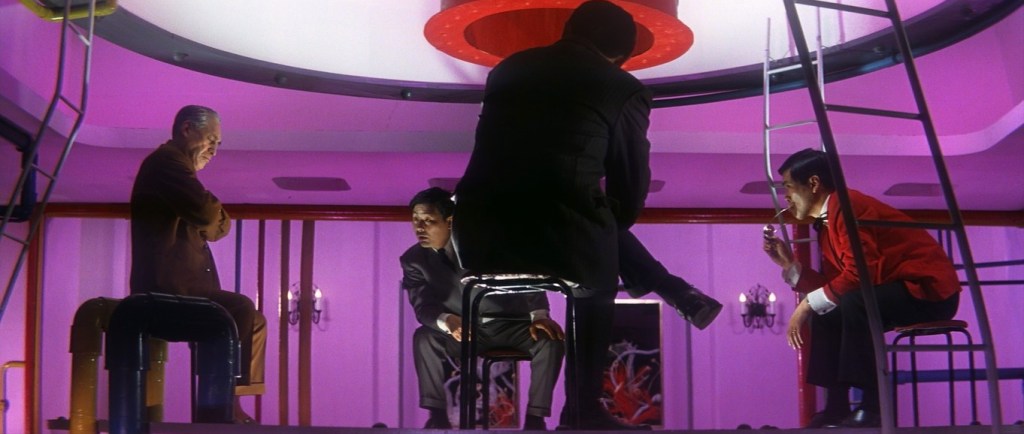
In an era where black and white was still common, Seijun Suzuki’s Tokyo Drifter emerged as an eruption of bold colour and kaleidoscopic visual splendour, riveting audiences with its audacious aesthetic experimentation.
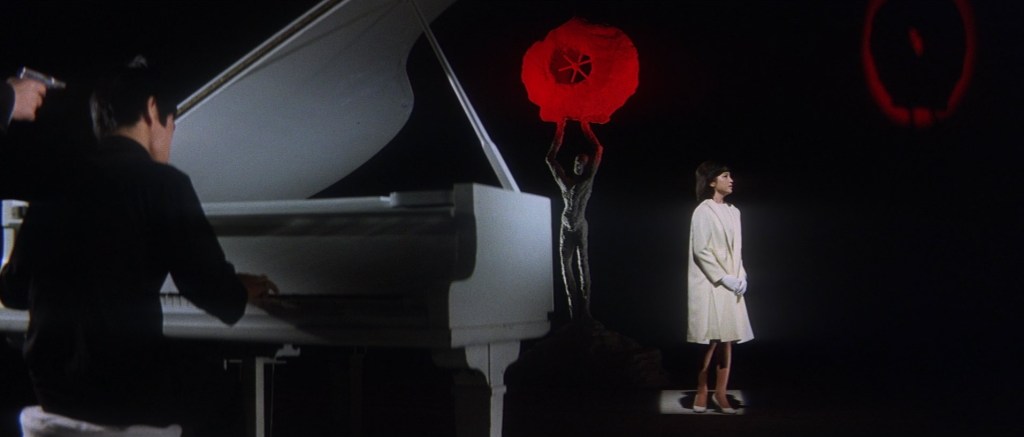
The vibrant colour palette used throughout the film is, without a doubt, one of its most distinguishing features, breathing vivacity into the classic yakuza genre. An example that particularly stands out is the scene in the nightclub where the protagonist, Tetsuya Hondo, otherwise known as Phoenix Tetsu, is singing the iconic Tokyo Drifter theme song. The room is bathed in a striking cobalt blue, enhancing the sense of surrealism and isolation inherent in the character’s drifter persona.
In this scene and throughout the film, Suzuki uses colour not just as a visual device but as a narrative one. The colour palette shifts and evolves with the emotional temperature of the plot, sometimes harsh and glaring, sometimes cool and detached. Bright reds express danger and confrontation; deep blues represent loneliness and resignation; and stark whites symbolise the unforgiving reality of the underworld. The director’s daring use of colour is reminiscent of the American technicolour films of the 50s and 60s, like Vertigo, and predates the stylised colour grading of more modern movies like Amélie and The Grand Budapest Hotel.
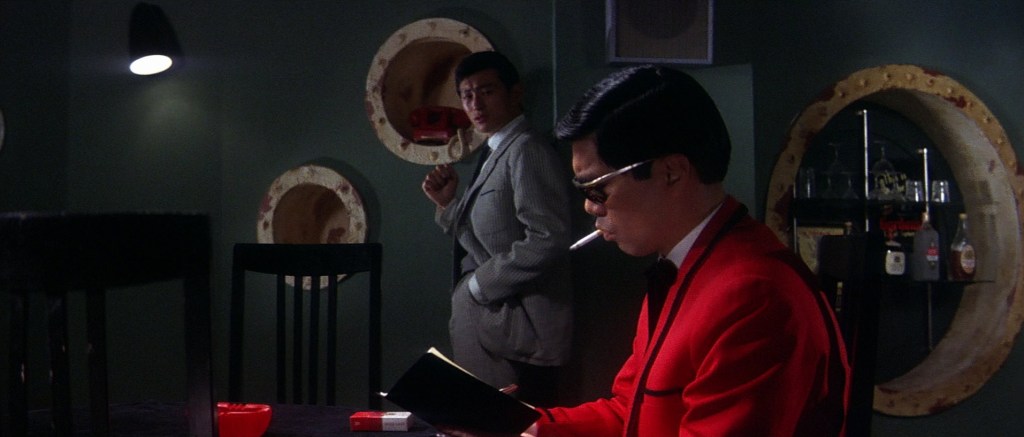
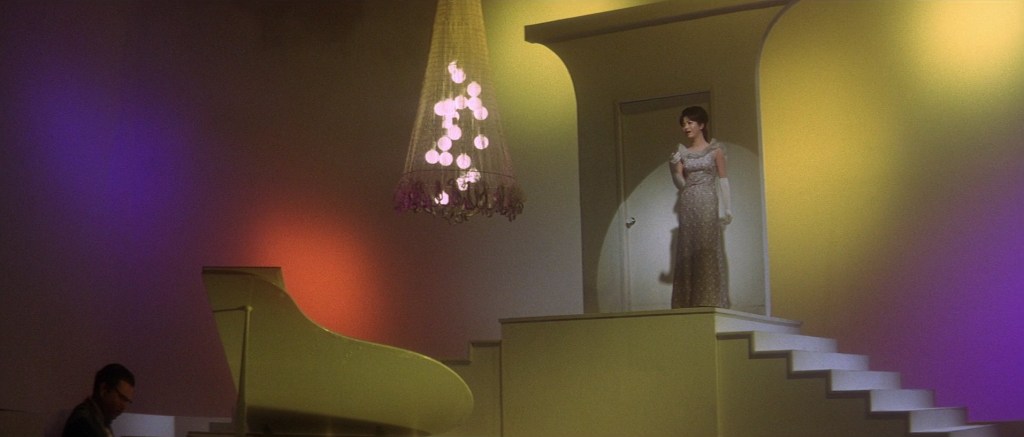
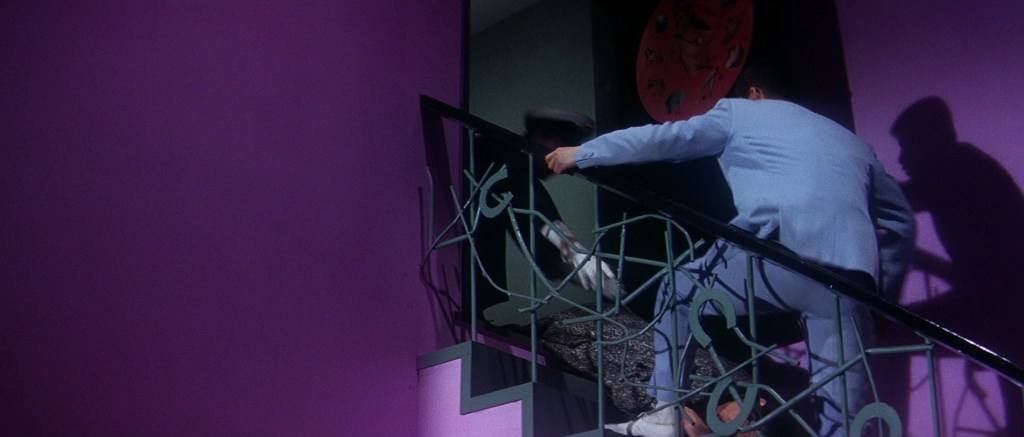
However, Suzuki’s innovative set design isn’t a feature that should be overlooked. The blend of realistic and stylised sets contributes to the film’s unique visual identity, with Suzuki often deviating from traditional spatial conventions. The nightclub in Tokyo Drifter, for instance, is a labyrinth of staircases, mirrors, and dramatic lighting, creating an otherworldly atmosphere that mimics the disorienting journey of the protagonist. The mise-en-scène and cinematography work hand in hand to encapsulate viewers in a world where the boundaries between real and surreal constantly blur.
Moreover, the production design is also highly intricate and intentionally detailed, invoking a sense of the dreamlike. One of the most memorable instances of this is the climactic showdown between Tetsu and his rivals in a stark white, eerily empty room. The aesthetic choice of this minimalist setting heightens the tension, emphasising the inherent drama and gravitas of the scene. With this, Suzuki creates a space detached from the real world and deeply entangled within it, a direct echo of Alphaville, Jean-Luc Godard’s sci-fi noir.
On the whole, Tokyo Drifter’s fusion of a vibrant colour palette and innovative set design defied the conventions of its time. The groundbreaking visual aesthetics introduced by Suzuki had an enormous influence on Japanese cinema and global film-making. Directors such as Quentin Tarantino, Jim Jarmusch, and Wong Kar-wai have all referenced Suzuki’s style in their work, using colour and design to set a mood, advance narrative, and deepen character.
Stylish Direction & Cinematography
Seijun Suzuki’s directorial prowess and Kazue Nagatsuka’s cinematographic mastery in Tokyo Drifter offer a fascinating exploration of visual storytelling, stretching the boundaries of conventional cinema with an array of inventive camera techniques. This distinctive style is brought to life through dynamic camera movements, unconventional angles, and intricate framing techniques accentuating the film’s kinetic energy.
There’s a fluidity and dynamism to the film’s visual narrative, an aspect especially evident during the high-octane action sequences. Suzuki wasn’t afraid to push boundaries with his camera work: employing swooping crane shots, disorienting Dutch angles, and abrupt zooms. The audacious camera movements and angles in the action scenes intensify the pace and tension and amplify the stylised choreography of these sequences, recalling the exaggerated aesthetic of Hollywood musicals such as Singin’ in the Rain.
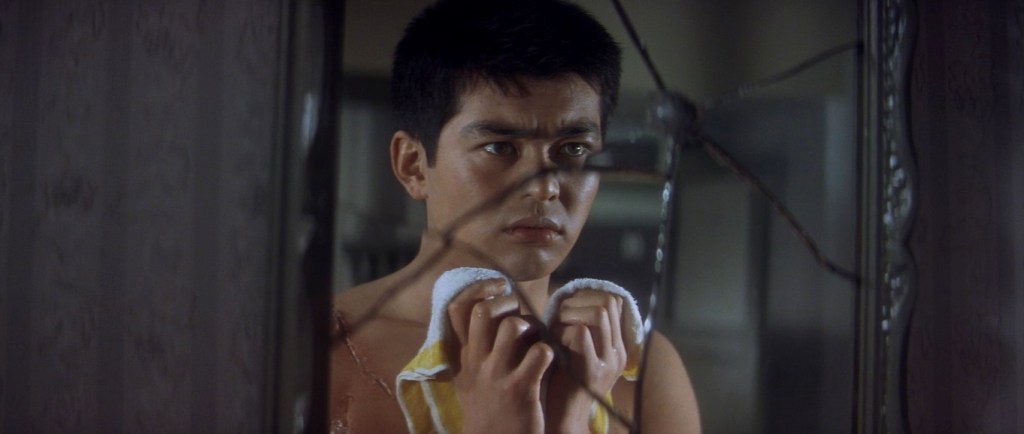
However, Suzuki’s innovative direction extends beyond the realms of action. His subtle framing adds an extra layer of depth to the film’s dramatic moments. Close-ups of characters during pivotal scenes emphasise their internal struggles, capturing fleeting nuances of emotion and sentiment. These techniques accentuate the themes of isolation and identity that run throughout the film, grounding its stylistic flamboyance in poignant human drama.
Cinematographer Nagatsuka’s meticulous attention to composition must be mentioned. Each frame is carefully crafted, with careful placement of characters and objects to create visually captivating and aesthetically pleasing images. The film frequently employs symmetry and asymmetry in its framing, echoing the constant shifting of alliances and power dynamics within its yakuza-infused narrative.
A masterclass in this is the final confrontation scene where Tetsu stands alone in the stark white room, framed asymmetrically against his adversaries. This visually striking composition underscores Tetsu’s solitude and defiance, underscoring his character’s emotional journey.
Suzuki’s unconventional framing choices also contribute significantly to the storytelling. A prime example of this is when the camera peers through objects or architectural structures, framing the characters within these unusual spaces. This technique subtly reinforces the themes of entrapment and surveillance that pervade the film.
The stylish direction and cinematography of Tokyo Drifter serve as integral components of its artistic success. The bold camera techniques and meticulous composition bring an exhilarating dynamism to the film while simultaneously enhancing its storytelling.
Distinctive Storytelling
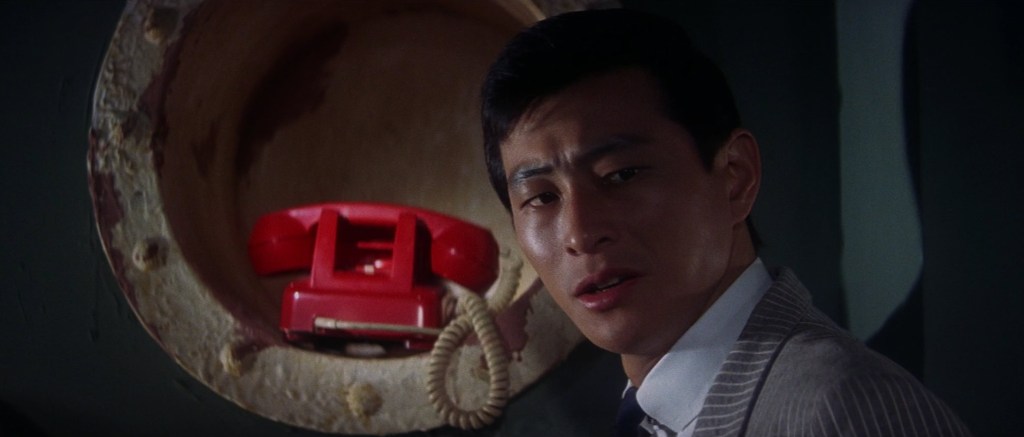
In Tokyo Drifter, Seijun Suzuki employs a storytelling approach as innovative and unconventional as his visual style. By embracing a non-linear narrative structure, he shatters traditional storytelling norms, introducing an added layer of intrigue and complexity that forces audiences to engage with the film.
Suzuki’s non-linear storytelling is reminiscent of the narrative experimentation seen in films like Rashomon or Pulp Fiction. The story of Tetsu, the eponymous ‘Tokyo Drifter’, unfolds in a fragmented manner, the plot zigzagging through time and space. This distinctive structure requires the audience to piece together Tetsu’s story from the scattered fragments presented to them, investing them in the narrative process. As a result, the film achieves a sense of dynamism and unpredictability that keeps viewers on their toes.
Moreover, Tokyo Drifter subverts the traditional tropes of the yakuza film genre. While many films of the genre revolve around themes of loyalty and honour within the gangster underworld, Suzuki uses these expectations to craft a narrative that is far from predictable. Tetsu’s character is not your average yakuza foot soldier; he is a man caught between his desire for a peaceful life and his inherent loyalty to his boss. This dichotomy sets the stage for a narrative that constantly surprises and defies genre conventions.
A significant twist in the narrative occurs when Tetsu’s loyalty is tested. Rather than resorting to violence as one might expect, Tetsu chooses to drift away, putting the film in stark contrast to the typical yakuza narrative. This subversive plot device exemplifies Suzuki’s penchant for upending audience expectations, keeping them guessing about Tetsu’s fate until the end.
Suzuki also undermines the classic trope of the femme fatale. Chiharu, Tetsu’s love interest, is far from the seductive and dangerous women often portrayed in yakuza films. Instead, she is characterised by her innocence and unwavering faith in Tetsu, further subverting the genre’s conventional narrative and character arcs.
Suzuki’s narrative experimentation and genre subversion in Tokyo Drifter reflect his distinct approach to filmmaking. He challenges the audience to question and reassess their understanding of the yakuza genre, inviting them into a complex narrative maze where nothing is as it seems. Much like his daring visual style, Suzuki’s storytelling approach reflects a bold desire to innovate and experiment, pushing the boundaries of cinema.
Just as the film’s visual aesthetics inspired countless filmmakers, its engaging storytelling has profoundly influenced directors. Suzuki demonstrated that non-linear narratives and subversive plots could create a compelling, immersive experience, challenging filmmakers to think outside the box. The echoes of his storytelling innovation are still felt in contemporary cinema, from the labyrinthine narratives of Christopher Nolan to the genre-bending tales of Bong Joon Ho, underscoring the enduring impact of Tokyo Drifter.
Memorable Characters
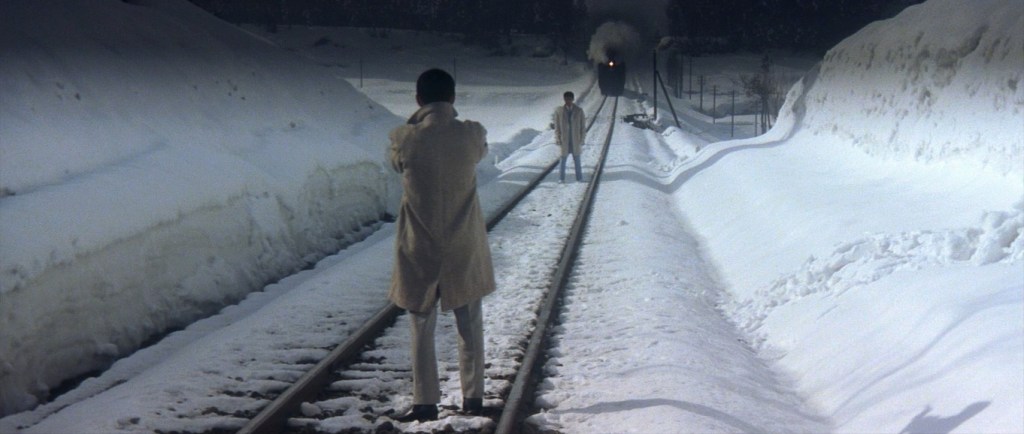
A crucial element of Tokyo Drifter’s enduring appeal is the characters within it. There is a roster of memorable personalities punctuating the stylish visuals and intricate plot.
At the heart of the narrative is Tetsuya ‘Phoenix’ Hondo, portrayed with charismatic aplomb by Tetsuya Watari. The film’s protagonist is a paradox: a hardened yakuza who yearns for a peaceful existence, a solitary drifter eternally bound by his loyalty. The duality of his character, coupled with Watari’s suave and understated performance, makes Tetsuya an iconic figure in the annals of cinema.
Tetsuya is more than just a classic anti-hero. His cool demeanour and stylish appearance – from his sharp suits to his disarming smile – are certainly captivating. Still, it’s his unwavering loyalty and personal integrity that resonate most deeply with viewers. The film positions him as a man out of time, a romantic figure grappling with an evolving world and his place within it. Much like the morally ambiguous protagonists of Jean-Pierre Melville‘s gangster films like Le Samouraï, Tetsuya’s enigmatic aura and complex character arc create a compelling and captivating central figure.
But Tokyo Drifter is not solely the Tetsuya Hondo show. Suzuki populates his film with a quirky and colourful ensemble of supporting characters, each contributing their own unique elements to the narrative. These range from Tetsuya’s devoted love interest, Chiharu, to his old-school boss, Kurata, and his ruthless rival, Otsuka.
Take, for example, Kurata, portrayed by Ryuji Kita. His character adds an unexpected layer of depth and complexity to the narrative. On the surface, he appears to be a supportive father figure to Tetsuya, but as the story unfolds, we see a more duplicitous side to his character, revealing the profound moral corruption at the heart of the yakuza code of honour.
Then there’s the eccentric hitman “Viper” Tatsu, who brings a sense of unpredictability and danger to the story. His quirky personality and volatile temper provide not just moments of tension but also instances of humour, reminiscent of the colourful rogues found in Akira Kurosawa‘s Yojimbo.
Ultimately, the characters of Tokyo Drifter breathe life into Suzuki’s stylish universe, adding depth, humour, and humanity to the visual splendour and intricate plot. Each one leaves an indelible impression, demonstrating that behind the flashy suits and stylised aesthetics, the film’s heart lies in its memorable characters.
Soundtrack & Sound Design
Sound is an essential component of the cinematic experience, and in Tokyo Drifter, it plays a vital role in establishing the film’s unique style and atmosphere.
The film’s theme song, sung by lead actor Tetsuya Watari, is a prime example. With its catchy melody and lyrics, the song is an infectious earworm that immediately ties viewers to the narrative. It not only characterises the nomadic life of Tetsuya “Phoenix” Hondo but also enhances the film’s overall style. Much like the unforgettable melodies in Sergio Leone’s The Good, the Bad, and the Ugly, the theme song of Tokyo Drifter has become synonymous with the film, its haunting refrain echoing throughout the narrative and ingraining itself in the minds of viewers.
In addition to the music, the film’s sound design is commendably effective. Suzuki understood the importance of sound in creating an immersive cinematic world and used it expertly to enhance the atmosphere and action sequences of Tokyo Drifter.
The intense sound of gunshots punctuates the film’s numerous confrontations, heightening the tension and lending a visceral, immediate quality to the action scenes. Each bullet fired resonates with viewers, adding depth and impact to the stylised violence on screen.
Meanwhile, the ambient sounds of Tokyo – the bustling city streets, the hum of nightlife, the quietude of deserted spaces – create a vibrant soundscape that draws viewers into the world of the film. The contrast between the silence of Tetsuya’s solitary moments and the noise of his violent encounters serves to underline the duality of his existence.
Ultimately, from its catchy theme song to its effective sound design, Tokyo Drifter uses sound to amplify its storytelling, characterisation, and visual aesthetics. The result is a film that is a treat for the eyes and a feast for the ears, creating a comprehensive sensory experience that lingers long after the credits roll.
Reflections of a Changing Japan
Tokyo Drifter is more than a stylish and innovative cinematic experience; it is also a potent social commentary. The film, set in the transformative period of the 1960s, uses its narrative and characters to reflect upon the social and cultural changes in Japan at the time.
The 1960s was a time of profound change for Japan. Rapid economic growth transformed the country into a modern industrial power, bringing a seismic shift in social structures and cultural norms. This changing landscape serves as the backdrop for the film, with Tetsu, the drifting yakuza, embodying the tension between tradition and modernity.
Tetsu’s struggle to reconcile his sense of honour and loyalty with the realities of a changing world mirrors the broader societal struggle taking place. His yearning for a simpler, honourable life in a society increasingly characterised by ruthless ambition and moral ambiguity echoes the anxieties of a nation grappling with rapid modernisation and westernisation. Tetsu’s solitary journey can be seen as an allegory for Japan’s own journey during this tumultuous period.
Tokyo Drifter subverts the traditional yakuza film genre, which typically glorifies the values of loyalty and honour, and instead presents these ideals as increasingly untenable in the face of societal change. Characters who cling to these traditional values find themselves exploited or left behind, a biting critique of the cost of unbridled progress.
The themes of loyalty, honour, and the struggle to adapt are not just central to the narrative but are woven into the visual fabric of the film. From the stark contrast between the neon-lit cityscapes and the minimalist white room to Tetsu’s transition from traditional yakuza attire to a Western-style suit, the film is imbued with symbolism that reflects the tension between old and new.
Tokyo Drifter is a poignant reflection of a changing Japan. By incorporating societal themes into its narrative and visual design, Suzuki elevates the film from a stylish yakuza flick to a thoughtful commentary on a society in transition.
Seijun Suzuki’s Maverick Filmmaking
Tokyo Drifter represents the artistic zenith of Seijun Suzuki’s career, a film that encapsulates his unique vision and indomitable spirit of innovation. With this film, Suzuki exemplifies the maverick filmmaker, unrestrained by the conventions of his genre or the expectations of the studio system.
Before embarking on Tokyo Drifter, Suzuki had already established a reputation as a director willing to experiment within the confines of genre cinema. His early works, such as Youth of the Beast and Gate of Flesh, were known for their unconventional approach to narrative and stylistic flourish. Yet, these films were still produced within the studio system, bound by the guidelines and restrictions imposed by Nikkatsu, the studio Suzuki was under contract with.
However, with Tokyo Drifter, Suzuki was granted a degree of creative freedom that allowed him to express his directorial vision. Given a script for a standard yakuza film, Suzuki transformed it into a vibrant, surreal, and genre-defying work of art. He took the conventions of the yakuza genre and turned them on their heads, injecting the film with a distinctive style that blends elements of noir, westerns, and musicals, echoing films like Kiss Me Deadly and A Fistful of Dollars.
The result is a film transcending its genre, becoming a canvas for Suzuki’s artistic exploration. His rebellious and experimental approach to filmmaking shines throughout Tokyo Drifter, from the bold use of colour and innovative set designs to the unconventional narrative structure and character development. This creative audacity gives the film its unique identity and sets it apart within the yakuza genre.
After Tokyo Drifter, Suzuki continued to push the boundaries of filmmaking, often clashing with the studio executives over his unorthodox approach. His defiance culminated with Branded to Kill, another revolutionary yakuza film, but one that led to his dismissal from Nikkatsu and a ten-year hiatus from directing. Despite these setbacks, Suzuki’s impact on cinema remained significant. His films inspired countless filmmakers and continue to be celebrated for their originality and daring.
Ultimately, Tokyo Drifter is a testament to Seijun Suzuki’s fearless creativity and the artistic potential of directorial freedom. It shows what can be achieved when a filmmaker is allowed to challenge the status quo and express their unique vision, a lesson that resonates in cinema to this day.
Seijun Suzuki’s Tokyo Drifter
Tokyo Drifter remains a seminal work that beautifully encapsulates Seijun Suzuki’s maverick spirit. Through its stunning visual aesthetics, stylish direction, engaging storytelling, memorable characters, evocative soundtrack, poignant societal commentary, and, most importantly, the director’s unrestrained expression, the film transcends genre conventions to offer a unique cinematic experience.
Its influence is seen in countless films that followed, a testament to its enduring impact. More than just a yakuza film, Tokyo Drifter is an artful exploration of style, subversion, and the transformative power of creative freedom. It stands as a vibrant reminder of Suzuki’s remarkable contribution to cinema.
Further Reading
Translating Prewar Culture into Film: The Double Vision of Suzuki Seijun’s Zigeunerweisen by Rachel DiNitto.
Imagining the Fractured East Asian Modern: Commonality and Difference in Mass-Cultural Production by C. J. W.-L. Wee.
SEIJUN SUZUKI: O YAKUZA MODERNO by Rodrigo Ravelli.
The Proto-Neon-Noir of Seijun Suzuki’s Tokyo Drifter | Film Obsessive


Leave a Reply