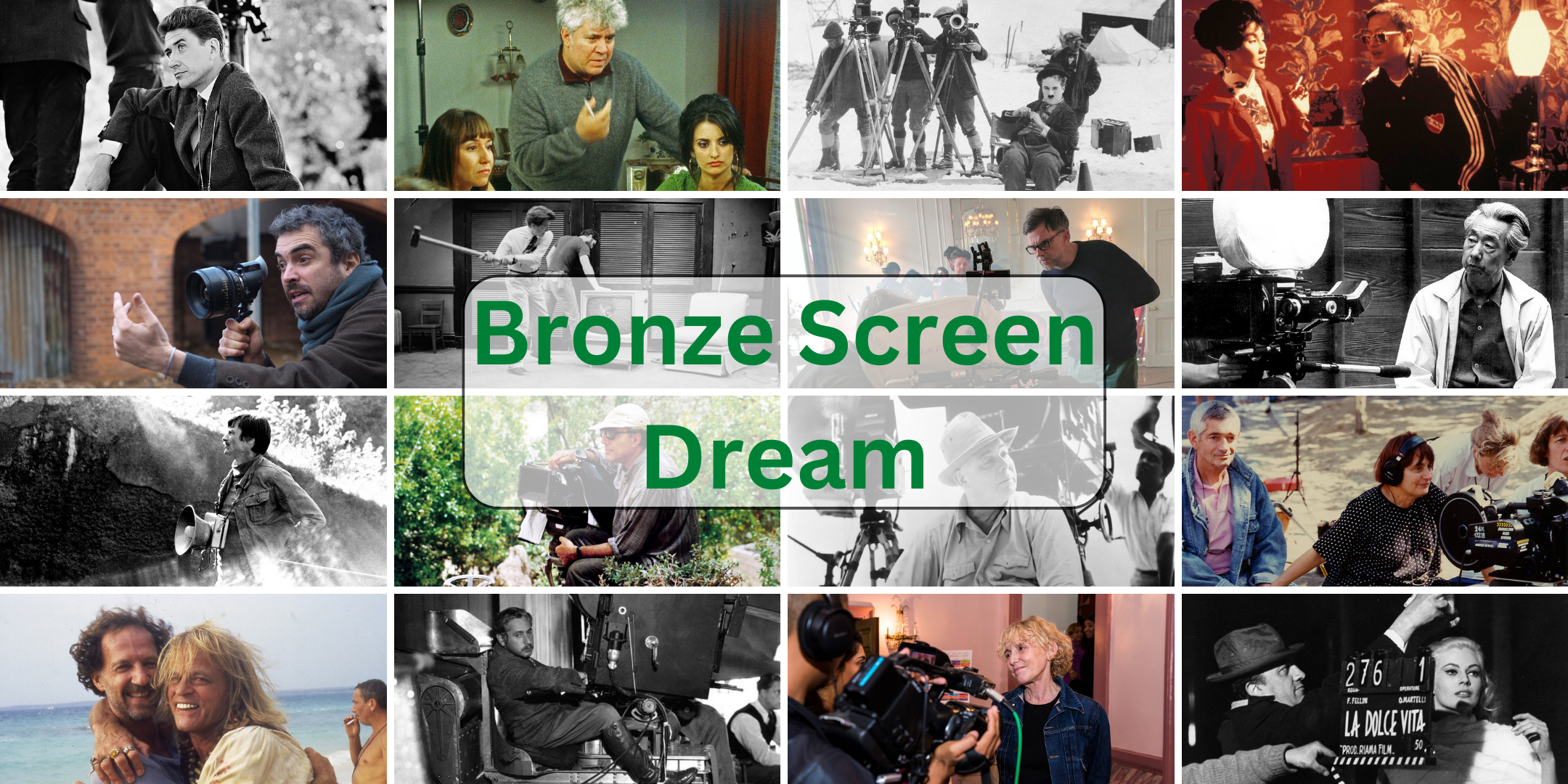
Below are some of the best Italian directors ever. Click on their pictures to discover more about them.


A Brief History of Spaghetti Westerns
The Spaghetti Western, a subgenre of Western films, emerged in the mid-1960s and changed the traditional American Western narrative. Its name, “Spaghetti Western,” was initially a derogatory term used by American critics due to its Italian origins, but it soon became a hallmark of a new style of Westerns. These films were primarily produced and directed by Italians and often filmed in Spain, offering a grittier, more stylised, and often more violent vision of the American West compared to the classic Hollywood Westerns.
One of the most significant figures in the Spaghetti Western genre was Sergio Leone. Leone, an Italian director, is often credited with establishing and popularising the style. His “Dollars Trilogy”—comprising “A Fistful of Dollars”, “For a Few Dollars More”, and “The Good, the Bad and the Ugly” —not only catapulted the genre into the international spotlight but also made a star out of Clint Eastwood, who was then a relatively unknown actor. Leone’s films were known for their iconic music scores, composed by Ennio Morricone, and their distinctive visual style, which included extreme close-ups and long, tense build-ups to action sequences.
Another prominent director of the era was Sergio Corbucci, known for his darker and more violent approach to the genre. Corbucci’s “Django”, featuring a mud-laden, bleak setting and a ruthlessly efficient protagonist, became a landmark film and inspired numerous sequels and imitations. His other notable works include “The Great Silence” and “Compañeros”, which demonstrated his versatility and continued influence in the genre.
Beyond Leone and Corbucci, there were other notable directors like Sergio Sollima, known for his politically charged narratives, and Enzo Barboni, who introduced a more comedic element to the genre with films like “They Call Me Trinity”. This period also saw the emergence of other iconic actors, such as Lee Van Cleef, Franco Nero, and Gian Maria Volontè, who became synonymous with the genre.
The Spaghetti Western genre’s influence extended beyond its active years in the 1960s and 70s, impacting not only the Western genre but also global cinema. Its stylistic innovations, thematic complexity, and moral ambiguity have been echoed in various films and genres, particularly in the works of directors like Quentin Tarantino and Robert Rodriguez.
 Bronze Screen Dream