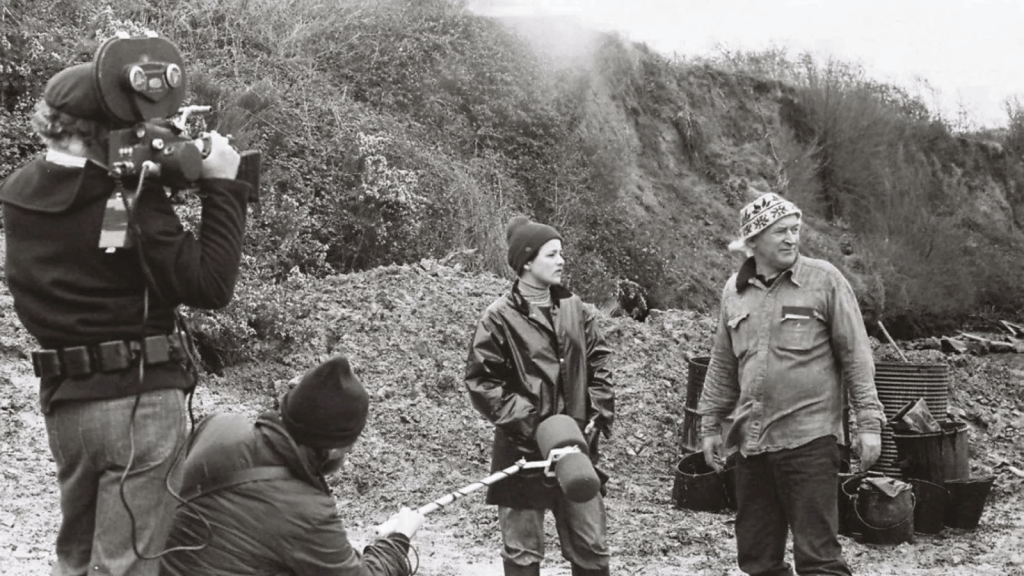
René Vautier came to filmmaking through the Resistance. He was fifteen when he joined the Breton maquis in 1943, decorated by de Gaulle two years later, and went directly from the liberation to film school at IDHEC; the same institution that trained a generation of French filmmakers, though few of them took it in quite the direction Vautier did. The political commitment that had got him into the Resistance never left, and the camera became the next instrument of it.
He was twenty-one when he went to West Africa in 1950 on a commission from the Ligue de l’Enseignement to document French educational provision in its colonies. What he filmed instead was forced labour, police violence, and the daily texture of colonial subjugation. Afrique 50 is seventeen minutes long and was banned for forty years. It earned him a year in military prison. It remains the first French anti-colonial film ever made, which is a fact that sits uncomfortably alongside the history of a cinema that liked to think of itself as politically serious.
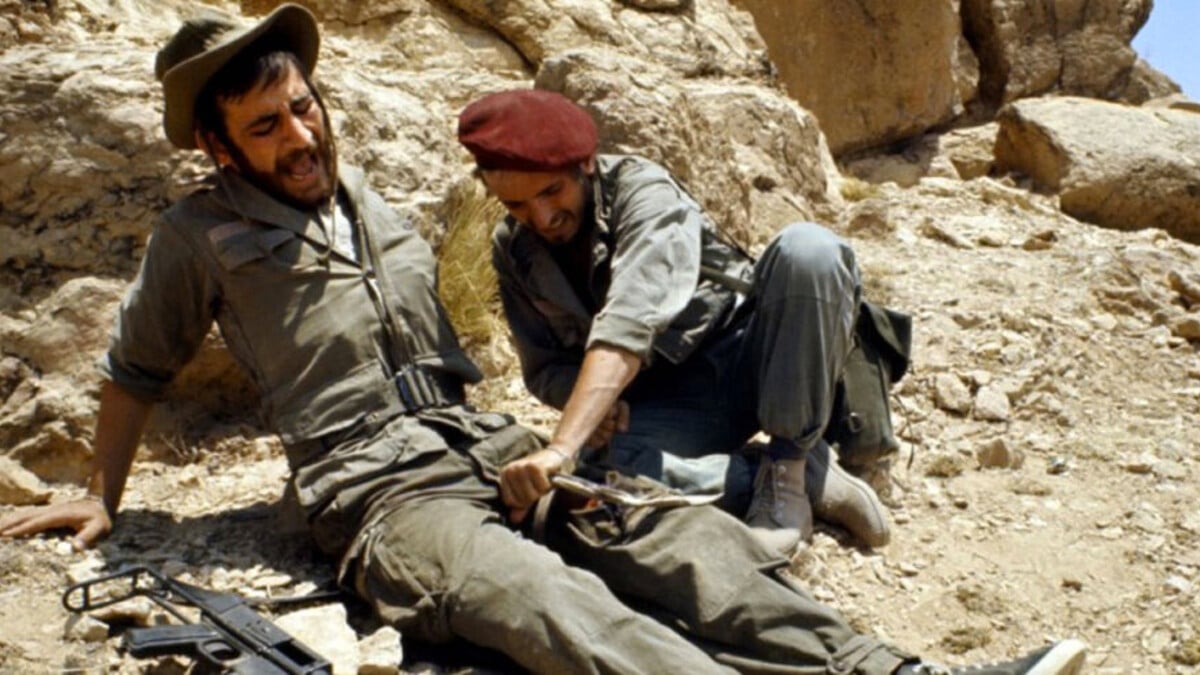
The Algerian War became his central subject and, in some ways, his central act. He joined the FLN maquis in Algeria, filmed under constant threat of confiscation and arrest, trained a generation of Algerian filmmakers, and helped found the country’s National Audio-Visual Centre after independence. In France, he was charged with endangering national security. In Algeria, he is considered a Mujahid. Avoir 20 ans dans les Aurès, constructed entirely from recorded testimony of French conscripts, won the International Critics’ Prize at Cannes in 1972 and remains the most searingly honest French film about what the Algerian War actually did to the people ordered to fight it.
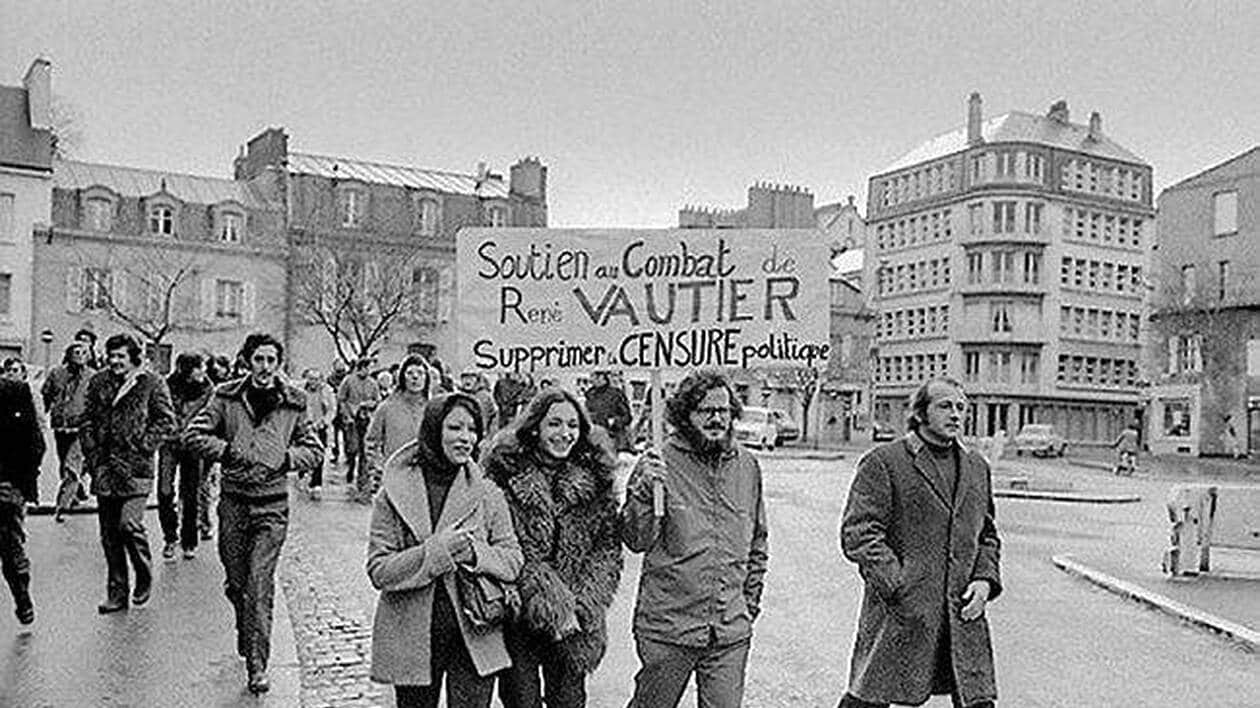
He made over 150 films across a career defined by censorship, hunger strikes, imprisonment, and an absolute refusal to let the available conditions determine what he would or wouldn’t show. He described himself as the most censored director in France, which is probably accurate and was certainly a point of pride.
Rene Vautier (1928 – 2015)
- 1950 – Afrique 50
- 1958 – Algérie en flammes
- 1959 – Anneaux d’or
- 1961 – J’ai huit ans
- 1963 – Peuple en marche
- 1972 – To Be Twenty in the Aures
- 1974 – The Madwoman of Toujane
- 1976 – Quand tu disais Valery
- 1978 – Quand les femmes ont pris la colère
- 1978 – Marée noire et colère rouge
- Pioneering Anti-Colonialism and Transnational Resistance: Afrique 50 was commissioned as a document on the benefits of French rule. Vautier instead delivered a film of forced labour and police atrocities. That’s when it became clear he was going to be totally committed. Algeria, Brittany. It’s all about local liberation as part of a global fight against imperial capitalism: Vautier’s cinema understood decolonisation not as a regional issue but as the central political fact of the postwar world.
- Film as Counter-Information: Vautier coined the term himself: the citizen camera, the idea that film’s primary function in conditions of state censorship was to bring back real images rather than narrate false stories. This wasn’t just a slogan it was a practice, pursued under conditions of genuine danger, with footage regularly at risk of confiscation and the filmmaker himself repeatedly arrested. The camera as legal evidence, as social intervention, as a weapon against official disinformation.
- Rhythmic Montage as Urgency: Shooting on 16mm under constant threat meant developing an aesthetic out of necessity: short, fast-cut shots edited in sharp rhythmic montage, creating psychological momentum from the speed and accumulation of images. The visual urgency isn’t decorative: it enacts the conditions of production and the political stakes of the material, juxtaposed against voiceover narration of deliberate intensity and music drawn directly from the resistance movements being filmed.
- Fiction Grounded in Testimony: When Vautier made fiction, he built it on a documentary foundation. Avoir 20 ans dans les Aurès was constructed from over 800 hours of recorded interviews with former conscripts. The script is their words, their experiences, their account of being systematically converted from pacifist citizens into instruments of state violence. The fiction strips away heroism precisely because the testimonies he’d recorded showed that heroism was the lie the state told about the war.
- The Autonomy of Images and Collective Practice: Vautier believed footage belonged to the struggle rather than to the filmmaker or the studio. He freely distributed raw material to activists and workers who needed it; he founded the Brittany Cinema Production Unit and Images sans chaînes outside the commercial and censored mainstream; he trained Algerian filmmakers and handed them the tools. The practice of cinema as cooperative working-class solidarity; the image as common property of the resistance rather than a product of an individual auteur.
- Ahmed Rachedi
- Fernando Solanas
- Gillo Pontocorvo
- Heiny Srour
- Omar Amiralay
- Marceline Loridan-Ivens
- Med Hondo
- Nicole Le Garrec
- Sarah Maldoror
- Yann Le Masson
Biography
Coming soon

