
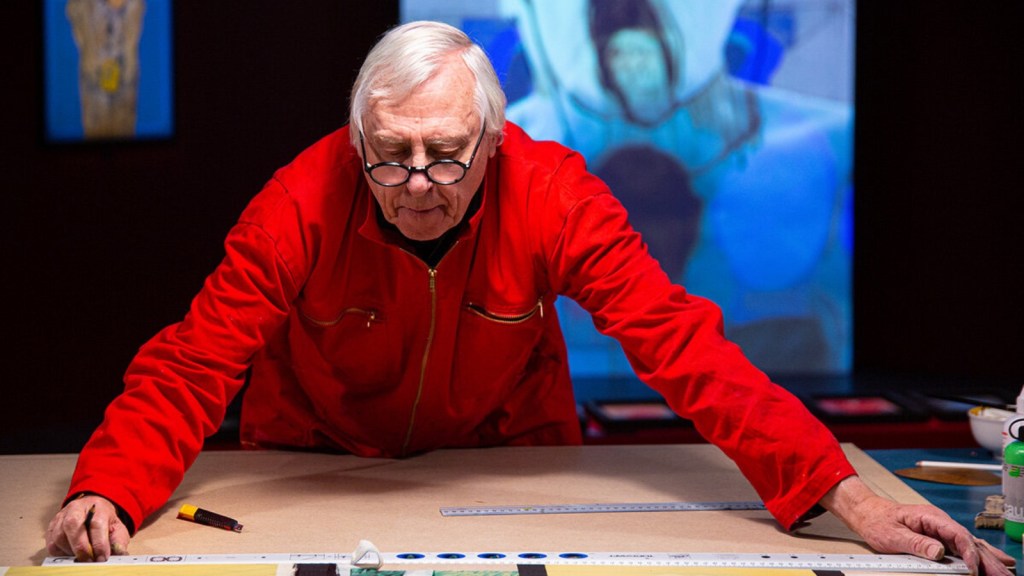
Peter Greenaway, a British filmmaker and artist, is known for his unconventional storytelling and intricate visual compositions that blur the boundaries between cinema and fine art. His films, such as The Draughtsman’s Contract and The Cook, the Thief, His Wife & Her Lover, have established him as a unique voice in contemporary cinema, particularly for those who appreciate artistic experimentation and intellectual provocation.
Originally trained as a painter, Greenaway transitioned to filmmaking in the 1960s, finding a unique platform for his artistic vision. His background in fine art significantly influences his cinematic approach, as demonstrated by his ornate visual design and the structural complexity of his narratives. This is particularly evident in The Falls, a mock documentary that marries encyclopedic erudition with surreal imagery, displaying Greenaway’s flair for artful, cerebral cinema.
Greenaway’s recurring motifs and themes often centre around art, intellectual games, life’s absurdities, and sexual politics, enveloped in a Baroque aesthetic. His films often explore the relationship between power, desire, and art, articulated through meticulously crafted visual compositions and provocative narratives. The Belly of an Architect is a powerful example, presenting a deconstruction of an architect’s obsession with the perfection of art and his body’s inevitable decay.
Greenaway’s Canvas of Power, Desire and Artifice
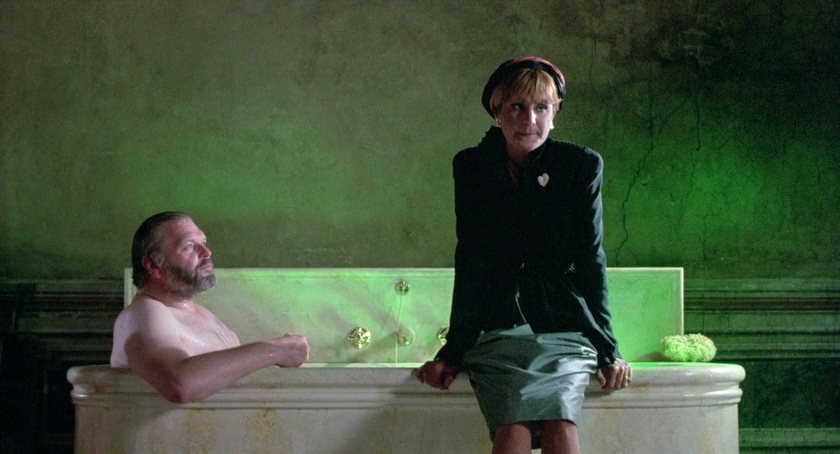
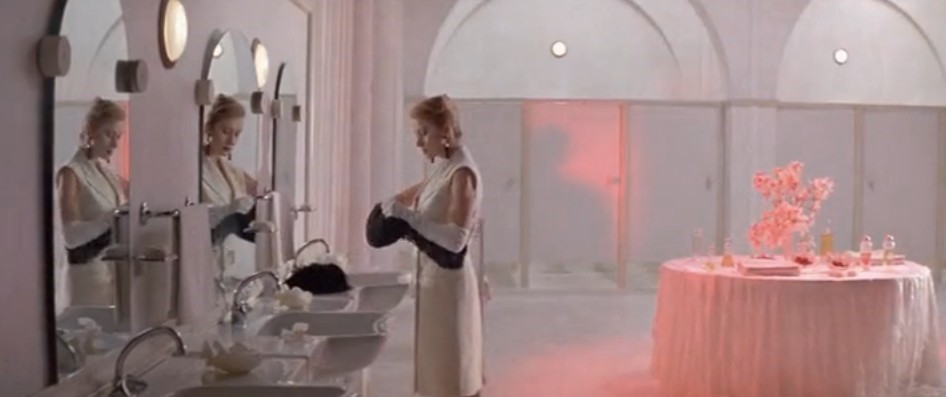
In terms of visual style, Greenaway’s work is distinguished by its symmetrical compositions, intricate details, and use of colour to create theatrical, almost painting-like frames. His penchant for long, static shots and carefully constructed tableaux vivants lend a distinctly fine-art quality to his films. In The Cook, the Thief, His Wife & Her Lover, for example, Greenaway uses colour and opulent set design to navigate the narrative’s dark humour and grotesque violence.
Greenaway’s influence extends to directors experimenting with narrative forms and visual styles, such as Lars von Trier and David Lynch. Although some critics argue that his films prioritise style over substance, his unabashedly artful approach to cinema has secured his position in film history as an auteur. His films, while divisive, have contributed to ongoing discussions about the boundaries of cinema, making him an important figure for both film studies and the broader art world.

Peter Greenaway (1942 –)
Calculated Films:
- The Falls (1980)
- The Draughtsman’s Contract (1982)
- A Zed & Two Noughts (1985)
- Drowning By Numbers (1988)
- The Cook, The Thief, His Wife and Her Lover (1989)
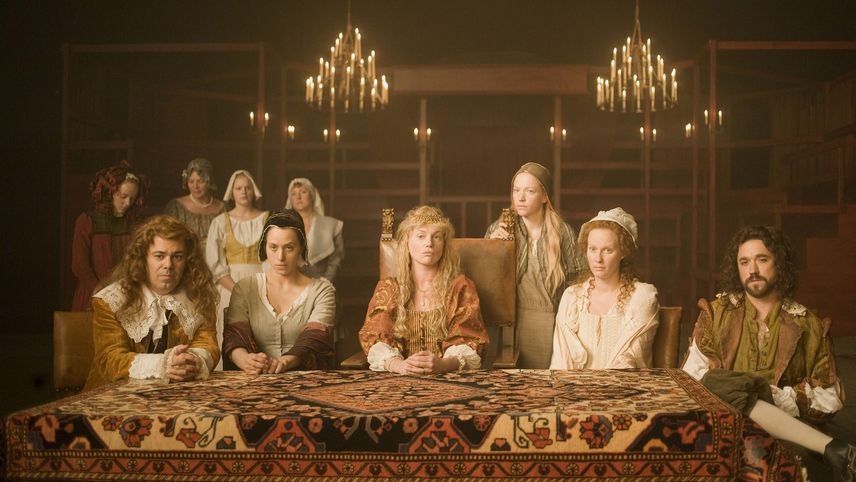
- Goltzius & The Pelican Company (2012)
Similar Filmmakers
- Alain Resnais
- Alejandro Jodorowsky
- Andrew Kötting
- Derek Jarman
- Federico Fellini
- Guy Maddin
- Hans-Jurgen Syberberg
- John Maybury
- Ken Russell
- Lars von Trier
- Luis Bunuel
- Manoel de Oliveira
- Patrick Keiller
- Raul Ruiz
- Roy Andersson
- Sally Potter
- Sergei Parajanov
- Terry Gilliam


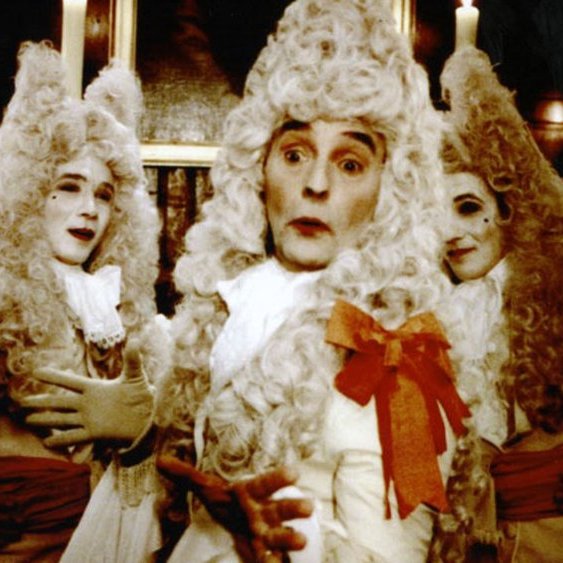
Peter Greenaway‘s Top 10 Films Ranked
1. The Cook, The Thief, His Wife & Her Lover (1989)
Genre: Black Comedy, Drama, Satire

2. The Falls (1980)
Genre: Mockumentary, Absurdist Comedy, Postmodernism

3. Drowning By Numbers (1988)
Genre: Black Comedy, Crime, Postmodernism
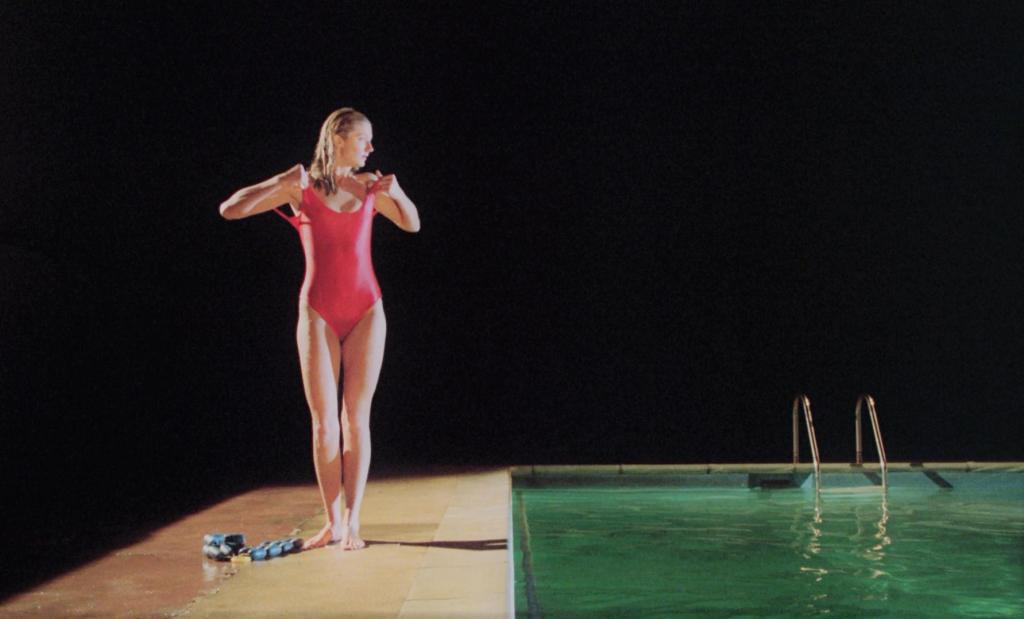
4. A Zed & Two Noughts (1985)
Genre: Black Comedy, Drama, Postmodernism

5. The Draughtsman’s Contract (1982)
Genre: Period Drama, Mystery

6. The Baby of Macon (1993)
Genre: Drama, Satire, Postmodernism

7. Rembrandt’s J’Accuse (2008)
Genre: Art Documentary, Essay Film, Conspiracy Theory Documentary
8. Vertical Features Remake (1978)
Genre: Mockumentary, Satire, Structural Film, Postmodernism

9. The Belly of an Architect (1987)
Genre: Drama

10. The Tulse Luper Suitcase (2003 – 2004)
Genre: Video Art, Experimental, Biographical

Peter Greenaway: Themes and Style
Themes:
- Intellectualism and Art: Greenaway’s films often delve deep into the realms of art, history, and intellectual discourse. Movies like The Draughtsman’s Contract and The Belly of an Architect centre around art and its interpretation.
- Life, Death, and Decay: He often explores the juxtaposition of life and death, using visual metaphors like rotting meat in A Zed & Two Noughts to signify decay.
- Sexuality and Eroticism: Many of his films, such as The Cook, the Thief, His Wife & Her Lover and Drowning by Numbers, are charged with explicit sexuality, using it as a tool for narrative and symbolism.
- Order and Chaos: Greenaway has an affinity for examining the dichotomy between structure/order and chaos/disorder. This theme is apparent in the meticulous lists and cataloguing in Drowning by Numbers or the structured, numbered murders in The Falls.
Styles:
- Symmetry and Composition: Drawing from his background in painting, Greenaway often frames his scenes with painterly precision, leading to symmetrical compositions that are visually striking.
- Long Takes: His films feature lengthy, uninterrupted shots, encouraging viewers to absorb every detail on the screen.
- Overlapping Narratives: He often plays with non-linear narratives or juxtaposes multiple storylines, as seen in The Pillow Book and Prospero’s Books.
- Text Overlays: Greenaway integrates textual elements directly onto the screen, blending the visual with the literary. The Pillow Book is a prime example, where text is written on bodies.
- Rich Color Palettes: His films often use a lush and vivid colour palette reminiscent of classical paintings.
Directorial Signature:
- Integration of Art Forms: Beyond just cinema, Greenaway incorporates elements of opera, painting, literature, and performance art into his films, creating a multi-disciplinary tapestry.
- Intertextuality: He frequently references other works of art, literature, or history within his films, creating a dense web of intertextual connections.
- Provocation: Greenaway isn’t afraid to challenge or even shock his audience. His films often contain graphic imagery, both violent and erotic, forcing viewers to confront their own sensibilities and boundaries.
- Intellectual Rigor: His films aren’t just visual experiences; they challenge the mind with complex narratives, references, and thematic depth.
- Use of Recurring Actors: Greenaway often collaborates with certain actors repeatedly, like Michael Gambon and Helen Mirren, creating a unique, consistent world across his films.
Peter Greenaway: The 220th Greatest Director


 Bronze Screen Dream