
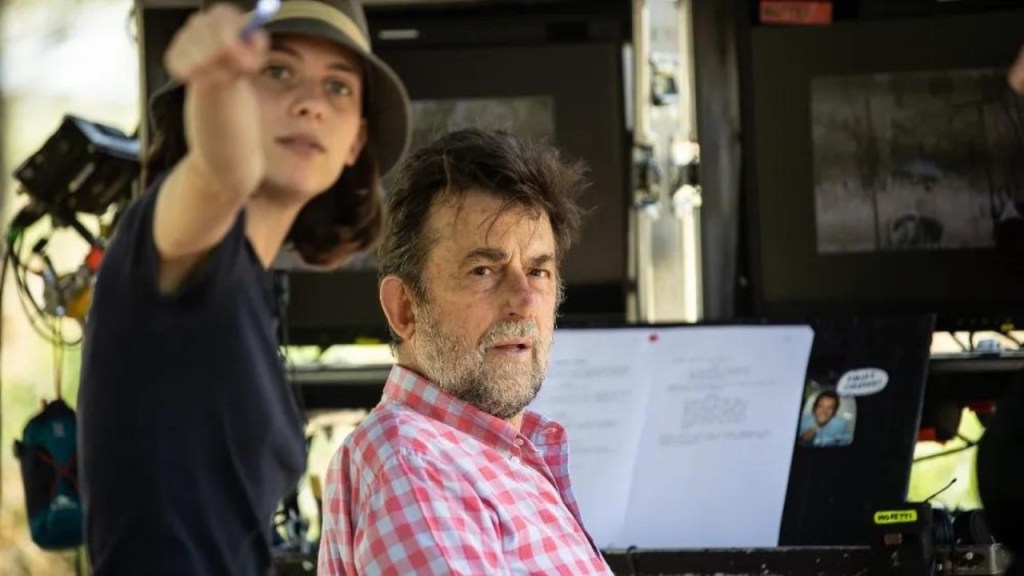
Nanni Moretti, an Italian filmmaker, is highly regarded for his distinctive approach to cinema that often blends personal narrative with broader social commentary. He is best known for his ability to infuse his films with a unique blend of humour, introspection, and political observation, often drawing from his own life experiences. Moretti’s films are not just stories; they are explorations of contemporary Italian culture, politics, and the human psyche, making him a significant figure in both Italian and international cinema.
Moretti’s career is characterised by his tendency to use cinema as a medium for self-expression and societal critique. His films often feature autobiographical elements, with Moretti himself frequently taking on the role of the protagonist. This is evident in Caro Diario (Dear Diary), where he presents a semi-autobiographical journey through various facets of his life and thoughts. The film showcases his distinctive style – a blend of personal narrative, whimsy, and acute social observation. Another notable work, La Stanza del Figlio (The Son’s Room), deviates from his usual comedic style, offering a more sombre exploration of family dynamics and grief. This film demonstrates his versatility and ability to handle a range of emotional tones, from the light-hearted to the deeply poignant.
Moretti’s approach to filmmaking is also notable for its engagement with political themes, often reflecting his personal leftist leanings. Il Caimano (The Caiman) is an example of this, offering a critique of Silvio Berlusconi’s political reign in Italy. Visually, Moretti’s style is often straightforward, eschewing elaborate cinematography in favour of a more direct, almost documentary-like approach. This simplicity in visual style allows the narrative and thematic elements of his films to take centre stage. What makes Moretti an interesting director is not just his storytelling prowess but his ability to act as a mirror to Italian society, capturing its nuances and transformations through a deeply personal yet universally accessible lens.

Nanni Moretti (1953 –)
Calculated Films:
- Ecce Bombo (1978)
- Bianca (1984)
- Dear Diary (1993)
- The Son’s Room
- My Mother (2015)
Similar Filmmakers
- Carlo Mazzacurati
- Daniele Luchetti
- Eric Rohmer
- Ettore Scola
- Federico Fellini
- Francois Truffaut
- Gianni Amelio
- Giuseppe Tornatore
- John Cassavetes
- Marco Bellocchio
- Maurizio Nichetti
- Michelangelo Antonioni
- Mike Leigh
- Mimmo Calopresti
- Paolo Sorrentino
- Pedro Almodovar
- Roberto Benigni
- Woody Allen


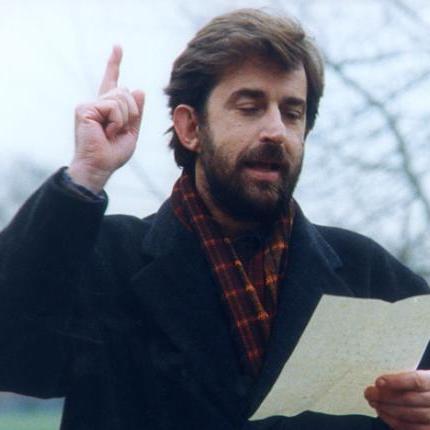
Nanni Moretti’s Top 5 Films Ranked
1. Bianca (1984)
Genre: Drama, Comedy

2. The Son’s Room (2001)
Genre: Drama

3. Dear Diary (1993)
Genre: Comedy, Drama

4. April (1998)
Genre: Comedy, Satire, Drama, Political Drama

5. My Mother (2015)
Genre: Drama, Family Drama
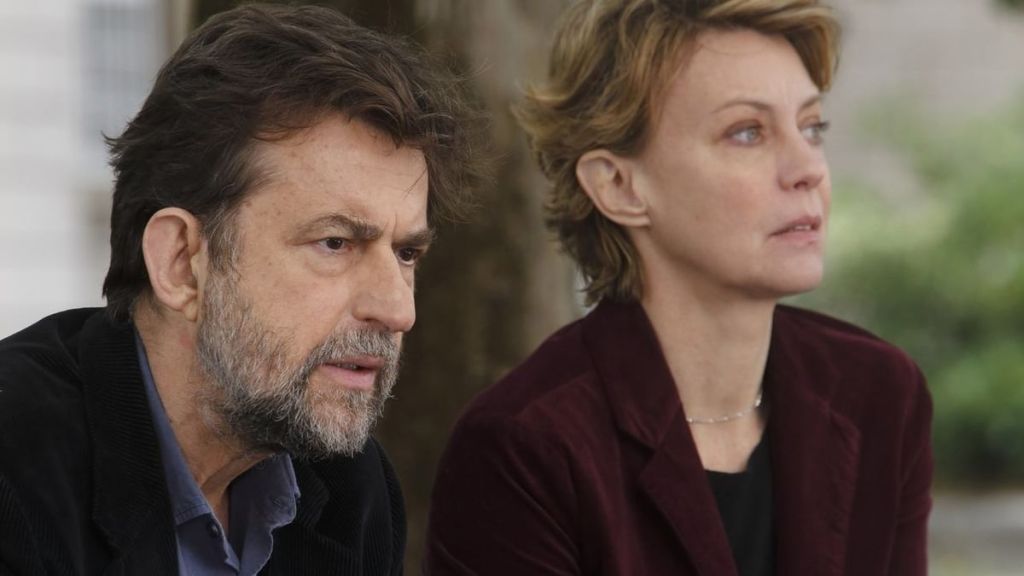
Nanni Moretti: Themes and Style
Themes:
- Personal and Political Narratives: Moretti often intertwines personal stories with broader political and social issues, as seen in Caro Diario, where a personal journey mirrors societal observations.
- Family Dynamics: Exploring complex family relationships is a key theme, particularly in The Son’s Room, which deals with grief and familial bonds.
- Self-Reflection and Autobiography: Many of Moretti’s films, such as Caro Diario and Mia Madre, are semi-autobiographical, blending his personal experiences with fiction.
- Italian Society and Culture: Moretti frequently examines aspects of Italian society, politics, and culture, critiquing and celebrating them in films like Il Caimano, which delves into the Italian film industry and political landscape.
- Healthcare and Illness: The healthcare system and the impact of illness on individuals and families are recurrent themes, highlighted in The Son’s Room and Mia Madre, where characters navigate emotional and physical health challenges.
Styles:
- Blend of Comedy and Drama: Moretti skillfully combines humour with serious themes, creating films that are simultaneously poignant and comedic, as evidenced in Caro Diario, where humorous observations are juxtaposed with deeper reflections.
- Documentary-Like Realism: His style often includes a realistic, almost documentary-like approach, bringing authenticity to the narrative and characters, particularly notable in Dear Diary.
- Direct Address and Monologues: Moretti frequently uses direct address to the camera and monologues, allowing characters (often played by himself) to express inner thoughts, creating a personal connection with the audience.
- Intimate Cinematography: The cinematography in Moretti’s films often features close-ups and tight framing, emphasising the emotional depth of characters and their experiences, a technique used effectively in The Son’s Room.
- Fluid Narrative Structure: His films often eschew traditional narrative structures, opting for a more fluid and episodic approach, as seen in Caro Diario, which feels like a series of vignettes or diary entries.
Directorial Signature:
- Personal Participation: Moretti often acts in his films, blurring the line between director, writer, and actor, which adds a unique dimension to his work, especially evident in Caro Diario.
- Social and Political Commentary: His films frequently include social and political commentary, reflecting his engagement with contemporary Italian issues, as showcased in Il Caimano.
- Emotional Honesty: There is notable sincerity and emotional honesty in his films, whether dealing with grief in The Son’s Room or exploring personal crises in Mia Madre.
- Everyday Comedy: Moretti has a unique ability to find humour in everyday situations and mundane details, lending a light-hearted touch to even his most serious films.
- Versatility in Themes and Genres: Despite having distinct thematic preoccupations, Moretti shows versatility, tackling various genres and themes with a consistent personal touch and identifiable style.
Nanni Moretti – Great Director


 Bronze Screen Dream