

Lasse Hallström is a Swedish director celebrated for his heartfelt and visually expressive films. He gained international recognition with My Life as a Dog, a poignant portrayal of adolescence that earned him both Academy Award and Golden Globe nominations. Hallström’s films, such as The Cider House Rules and Chocolat, are celebrated for their warmth, depth, and the delicate way they explore complex relationships and moral dilemmas. His adeptness at adapting novels and real-life stories into visually stunning and emotionally resonant films has made him a respected figure in both European and Hollywood cinema.
Hallström’s journey into filmmaking began in Sweden, where he directed a series of music videos and television productions. His breakthrough came with My Life as a Dog in 1985, which not only established him as a formidable talent in Swedish cinema but also garnered international acclaim. This success paved the way for his transition to Hollywood, where he continued to build his reputation with a diverse range of films, including What’s Eating Gilbert Grape and The Cider House Rules. These films, known for their rich storytelling and character-driven narratives, marked the high points of his career. Despite facing challenges and less acclaimed works along the way, such as The Hoax and Casanova, Hallström’s resilience and versatility have allowed him to maintain a steady presence in the film industry.
Hallström is adept at handling character-driven stories, often exploring the nuances of human relationships and personal transformation. His characters are usually complex, relatable, and deeply human, navigating through life’s challenges and joys with a sense of authenticity and vulnerability that resonates with audiences. In The Cider House Rules, for example, Hallström presents a poignant tale of love, loss, and moral dilemma, allowing the characters’ internal conflicts and emotional arcs to drive the narrative forward. He often works with ensemble casts, drawing out stellar performances that bring depth and subtlety to the multifaceted characters populating his films.
His style is similarly tender and evocative, employing a warm, often nostalgic aesthetic that complements his narrative themes. His use of picturesque locales, like the charming French village in Chocolat or the idyllic New England scenery in The Cider House Rules, not only serves as a visual treat but also as a vital component of the storytelling, reflecting and amplifying the emotional tones of the films. The director has a penchant for crafting atmospheres that are as compelling and intricate as his characters, immersing viewers in environments that feel both real and enchanted.

Lasse Hallström (1946 – -)
Calculated Films:
- My Life as a Dog (1985)
- What’s Eating Gilbert Grape (1993)
- Hachiko: A Dog’s Story (2009)
Similar Filmmakers
- Ang Lee
- Billie August
- Cameron Crowe
- Garry Marshall
- James Ivory
- Lone Scherfig
- Marc Forster
- Mike Newell
- Mira Nair
- Nancy Meyers
- Nora Ephron
- Peter Chelsom
- Richard Curtis
- Rob Reiner
- Roger Michell
- Ron Howard
- Scott Hicks
- Stephen Daldry
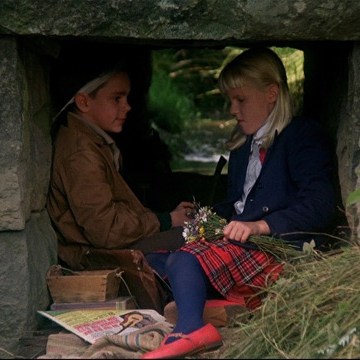


Lasse Hallström’s Top 5 Films Ranked
1. My Life as a Dog (1985)
Genre: Coming-of-Age, Drama

2. What’s Eating Gilbert Grape (1993)
Genre: Drama, Coming-of-Age, Family Drama

3. Hachi: A Dog’s Story (2009)
Genre: Family, Melodrama

4. The Cider House Rules (1999)
Genre: Drama, Romance, Coming-of-Age

5. The Hundred-Foot Journey (2014)
Genre: Drama, Comedy, Food

Lasse Hallström: Themes and Style
Themes:
- Human Connections and Relationships: Hallström often dives deep into the intricacies of human relationships, be they familial, romantic, or friendly. Films such as My Life as a Dog and The Cider House Rules explore the depth and complexity of these ties.
- Coming-of-Age: Several of Hallström’s films focus on the transitional periods in a person’s life. They highlight the trials, tribulations, and growth of young individuals, as seen in movies like My Life as a Dog and Gilbert Grape.
- Redemption and Personal Growth: The director often portrays characters seeking personal redemption or growth after past mistakes or traumatic experiences, as observed in Chocolat and An Unfinished Life.
- Cultural Clash and Integration: Hallström occasionally delves into the themes of cultural misunderstandings and the beauty of diverse cultures coming together, notable in The Hundred-Foot Journey.
Styles:
- Character-Driven Narratives: Hallström’s films often prioritise character development over plot-driven scenarios. His characters are well-rounded and deeply layered, and they drive the story forward.
- Naturalistic Performances: He has a knack for eliciting grounded, realistic performances from his actors, making even the most dramatic scenes feel incredibly authentic.
- Nuanced Storytelling: Hallström approaches stories with a certain gentleness, allowing the narrative to unfold organically without rushing the pace or forcing dramatic moments.
- Visual Storytelling: While not overly flashy, Hallström’s films often boast a certain visual elegance. His framing, use of colours and setting selection add layers to the story he’s trying to convey.
Directorial Signature:
- Humanistic Approach: Perhaps Hallström’s most distinguishable signature is his profound humanism. His films exude warmth and empathy, drawing viewers into the world of his characters and making them deeply care for their fates.
- Complex Female Characters: Hallström frequently introduces strong, complex female protagonists or supporting characters, displaying their strengths, vulnerabilities, and multi-dimensional personalities, such as Vianne in Chocolat or Grace in An Unfinished Life.
- Subtle Humor: Unlike directors who rely heavily on overt comedic scenes, Hallström infuses his films with subtle humour, often derived from everyday situations or character interactions.
- Detailed Environments: The world in which Hallström’s characters live is always detailed and feels lived-in. Be it a chocolate shop in Chocolat or a small town in What’s Eating Gilbert Grape, the environment plays a crucial role in the story.
Lasse Hallström – Great Director



 Bronze Screen Dream