

Joshua Oppenheimer is an American filmmaker primarily celebrated for his groundbreaking work in the realm of documentary cinema. He is best known for his deeply reflective and often controversial films that explore themes of collective memory, responsibility, and the impact of violence and atrocity on human societies. The Act of Killing and The Look of Silence are among his most acclaimed works, each taking a distinct approach to examining the aftermath of the Indonesian mass killings of 1965-66.
Oppenheimer’s films are distinct for their unflinching exploration of grim and complex issues, often brought to life through innovative narrative structures and visual techniques. His approach to storytelling is special in that it actively engages with the subjects of his films, prompting them to reflect and even reenact their experiences, as seen in The Act of Killing. This method not only provides viewers with profound insight into the psychological depths of his subjects but also probes the intricate web of collective guilt and responsibility, forcing audiences to grapple with uncomfortable truths about humanity.
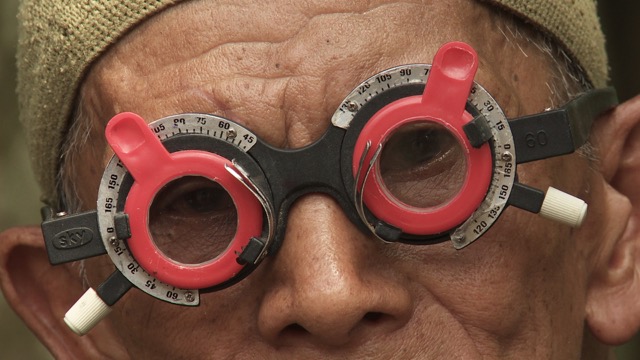
Moreover, Oppenheimer employs a visually arresting style that seamlessly combines elements of surrealism with stark realism, amplifying the emotional and psychological impact of his films. The Look of Silence, for example, is lauded for its hypnotic and contemplative visual language that deeply immerses audiences in the painful legacy and silent trauma experienced by survivors of political violence.

Joshua Oppenheimer (1974 – -)
Calculated Films:
- The Act of Killing (2012)
- The Look of Silence (2014)
Similar Filmmakers
- Adam Curtis
- Agnes Varda
- Alan Berliner
- Barbara Kopple
- Chris Marker
- Claude Lanzmann
- Errol Morris
- Frederick Wiseman
- Harun Farocki
- Kirsten Johnson
- Les Blank
- Ljubomir Stefanov
- Michael Moore
- Mila Turajlic
- Patricio Guzman
- Rithy Panh
- Ross McElwee
- Werner Herzog



Joshua Oppenheimer’s Top Films Ranked
1. The Look of Silence (2014)
Genre: Political Documentary, Crime Documentary

2. The Act of Killing (2012)
Genre: Documentary

Joshua Oppenheimer: Themes and Style
Themes:
- Historical Atrocities & Human Rights: Oppenheimer delves into historical crimes, focusing on genocide and mass violence. His work exposes and critiques the impunity enjoyed by perpetrators and the systemic denial of justice to victims.
- Memory & Trauma: He explores the psychological scars left by violence on both victims and perpetrators, investigating how societies remember and forget traumatic events.
- Moral Complexity & Ethical Dilemmas: Oppenheimer’s films do not present a simplistic division between good and evil, instead showing individuals as morally complex and conflicted.
Styles:
- Participatory Documentary: His documentary style actively involves the subjects in the filmmaking process, enabling them to express their perspectives and experiences intimately.
- Performative Approach: Oppenheimer often asks his subjects to re-enact or perform their memories, resulting in disturbing yet revealing scenes that blend fiction and reality.
- Visual Intensity: His films are visually striking, often employing surreal and dreamlike imagery to convey the emotional and psychological depth of the subjects.
Directorial Signature:
- Engagement with Perpetrators: Unlike many documentarians, Oppenheimer engages directly with perpetrators of violence, providing insights into their mindset and the structures enabling their actions.
- Layered Storytelling: His narrative structure is often non-linear and multi-layered, weaving together various elements to create a dense and complex cinematic tapestry.
- Ethical Reflection: The ethical issues raised by his approach to filmmaking are often foregrounded in the films themselves, prompting viewers to reflect on their own moral position and responsibility.
- Empathy & Humanisation: Despite dealing with harrowing subjects, Oppenheimer’s films are marked by empathy and an attempt to humanise, rather than demonise, individuals involved in atrocities.
Joshua Oppenheimer – The 293rd Greatest Director



 Bronze Screen Dream