
Jean-Pierre Melville was born Jean-Pierre Grumbach, and the name change tells you something about him. A Frenchman so in love with American literature and cinema that he remade himself in its image, then spent his career doing the same to the crime film. His Paris is American noir’s Paris: deserted streets at 3am, men in trench coats and fedoras, a city that exists almost entirely at night.
He came out of the Resistance, served in it, not just observed it, and that experience left its mark. Army of Shadows, his most personal film, has an authenticity that his crime films don’t need but still possess in spirit. His characters, whether hitmen or Resistance fighters, operate by the same logic: a strict private code in a world that no longer shares it. Alain Delon in Le Samouraï is perhaps the purest expression of this — a man so reduced to his own ethics that he barely seems human anymore.
What made Melville singular was the tension between his influences and his sensibility. He worshipped American cinema but filtered it through something colder and more fatalistic. Le Cercle Rouge and Bob le Flambeur have the bones of Hollywood crime pictures and the soul of something altogether more European. He built his own studio, controlled his own productions, and worked at his own pace — a model that the French New Wave directors who admired him would later follow, even as his aesthetic sat apart from theirs.
His influence spread further than France. John Woo took the honour codes and slow-motion choreography. Tarantino took the cool. Johnnie To built a career in his shadow. Not bad for someone who started by simply loving American movies too much.
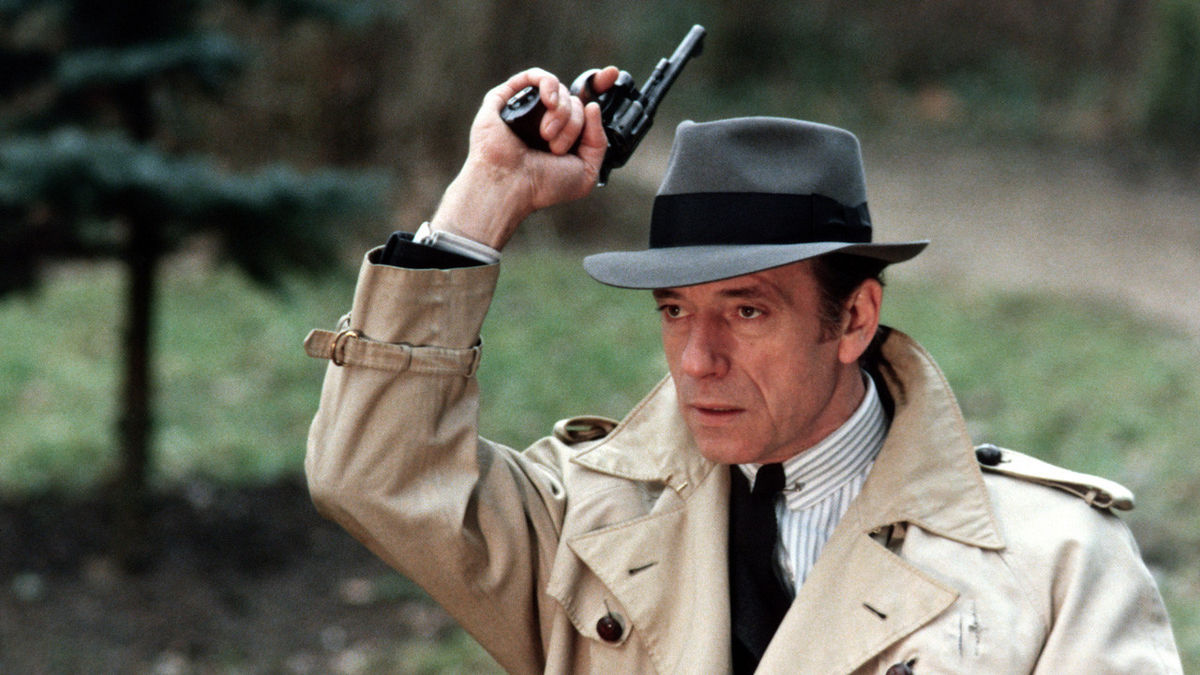

Jean-Pierre Melville (1917 – 1973)
- 1949 – Le Silence de la mer
- 1950 – Les Enfants terribles
- 1955 – Bob le flambeur
- 1959 – Two Men in Manhattan
- 1961 – Léon Morin, Priest
- 1963 – Le Doulos
- 1963 – Magnet of Doom
- 1966 – Second Breath
- 1967 – Le Samouraï
- 1969 – Army of Shadows
- 1970 – The Red Circle
- 1972 – Un Flic
- The Private Code: Every Melville protagonist operates according to an internal set of rules that the world around them no longer recognises or shares: Honour, loyalty, professionalism. This isn’t nostalgia, it’s tragedy: the code is real, and it costs them everything. Le Samouraï reduces this to its essence; Army of Shadows gives it historical weight.
- American Noir Filtered Through European Fatalism: He loved American crime cinema with a convert’s passion and remade it into something colder and more resigned. The bones are Hollywood, but the soul is French. These men are going to lose, they know it, and they proceed anyway with a kind of dignity that is both admirable and hopeless.
- Silence and Economy: Melville’s films are among the least talkative in French cinema, which is saying something. The long wordless sequences – for example, The Red Circle‘s heist, Le Samouraï apartment opening – trust the image and the sound design completely. What isn’t said accumulates as tension and, eventually, as meaning.
- The City at Night as Moral Landscape: His Paris is a nocturnal, depopulated city where the normal rules of social life don’t apply and where the only law is whatever code the protagonist carries with him. The deserted streets, the jazz clubs at 4am, the rain-slicked locations; none of this is just atmosphere, it’s an argument too.
- Resistance and Collaboration: The Occupation runs underneath even the crime films as a kind of structuring historical trauma. Army of Shadows makes it explicit. What do you do when survival requires compromise and the enemy is inside as well as outside? His characters repeatedly face versions of the same question: betrayal, loyalty, and the price of survival.
Biography
Coming soon

