

James Cameron, a Canadian film director, is synonymous with the fusion of cinematic spectacle and cutting-edge technology. Renowned for his meticulous attention to detail and passion for pushing the boundaries of what’s possible in film, Cameron’s works consistently achieve both critical acclaim and commercial success. His iconic films, such as Terminator 2: Judgment Day, Titanic, and Avatar, showcase his knack for crafting compelling narratives embedded in richly imagined worlds underpinned by groundbreaking technological innovations.
Cameron began his career in visual effects for Roger Corman before making his directorial debut with The Terminator in 1984. This film, alongside Aliens, which followed two years later, marked the first of many instances in which Cameron would demonstrate his talent for blending action-packed spectacle with deeply human stories. From the outset, he demonstrated a propensity for creating strong, resourceful female characters—a pattern that would recur in many of his films, including the Terminator series and Aliens.
A common theme threading through Cameron’s filmography is the exploration of humanity’s relationship with technology, often probing the potential consequences of their interaction. In The Terminator and Terminator 2: Judgment Day, for instance, he envisions a future where artificial intelligence threatens mankind’s existence. Alongside this, Cameron’s films frequently feature high-stakes action sequences, renowned for their breathtaking special effects, intricate choreography, and visual mastery.
The Billion Dollar Director
Cameron’s unquenchable thirst for technological advancement is integral to his filmmaking. He has consistently pushed the boundaries of CGI and 3D effects, with films like Avatar and Titanic boasting novel filming techniques that have revolutionised the industry. His interest in the ocean’s depths—expressed in The Abyss, Ghosts of the Abyss, and Titanic—has also resulted in pioneering underwater filming techniques. His commitment to authenticity is evidenced in Titanic, where he meticulously reconstructed the legendary ship to ensure accuracy.
Simultaneously, Cameron’s films often convey a profound environmental consciousness. His narrative in Avatar strongly criticises humanity’s destructive impact on nature, utilising the imagined world of Pandora as a metaphor for Earth’s endangered ecosystems. Indeed, many of his films’ narratives are characterised by their epic scale and scope, offering viewers expansive, detailed worlds underpinned by the weight of their environmental or societal commentaries.
James Cameron’s influential role in the cinematic landscape is evident in the works of numerous contemporary filmmakers who cite him as an inspiration, including directors like J.J. Abrams and Guillermo del Toro. His films have not only broken box-office records—both Titanic and Avatar held the title of the highest-grossing film upon their respective releases—but have also garnered widespread recognition and accolades, including multiple Academy Awards. Through his marriage of gripping storytelling, technological innovation, and visually stunning cinematic worlds, Cameron has indelibly shaped the evolution of film and continues to inspire filmmakers worldwide.

James Cameron (1954 – -)
Calculated Films:
- The Terminator (1984)
- Aliens (1986)
- The Abyss (1989)
- Terminator 2: Judgment Day (1991)
- True Lies (1994)
- Titanic (1997)
- Avatar (2009)
- Avatar: The Way of Water (2022)
Similar Filmmakers



James Cameron’s Films Ranked
1. Aliens (1986)
Genre: Action, Sci-Fi, Horror, Extraterrestrial

2. Terminator 2: Judgment Day (1991)
Genre: Action, Sci-Fi, Time Travel

3. The Terminator (1984)
Genre: Action, Sci-Fi, Thriller, Time Travel, Cyberpunk, Tech-Noir

4. Titanic (1997)
Genre: Romance, Disaster, Period Drama, Melodrama, Epic

5. The Abyss (1989)
Genre: Sci-Fi, Adventure
6. Avatar: The Way of Water (2022)
Genre: Action, Adventure, Epic, Fantasy, Extraterrestrial

7. Avatar (2009)
Genre: Action, Sci-Fi, Adventure, Fantasy, Extraterrestrial, Epic

8. True Lies (1994)
Genre: Action, Spy, Comedy

9. Piranha II: The Spawning (1982)
Genre: Natural Horror, Exploitation

James Cameron: Themes and Style
Themes:
- Man vs. Technology: Cameron frequently explores the conflict between humanity and technology, as seen in The Terminator and Terminator 2: Judgment Day, where artificial intelligence poses an existential threat to mankind.
- Environmentalism: A deep respect and concern for the natural world permeate Cameron’s work, with Avatar serving as a prime example of a narrative that champions environmental protection and harmony with nature.
- Feminism and Strong Female Leads: He often features strong female protagonists who defy traditional gender roles, like Ellen Ripley in Aliens and Sarah Connor in The Terminator series, showcasing resilience and complexity.
- Class Struggle and Social Commentary: Cameron’s films sometimes delve into class issues and social inequality, as epitomised by the stark divisions portrayed in Titanic between the opulent lifestyles of the rich and the desperation of the lower classes.
- The Human Spirit: The resilience and indomitable nature of the human spirit are central to Cameron’s storytelling. His characters frequently face insurmountable odds, as in The Abyss, where humans confront both personal limitations and otherworldly forces.
Styles:
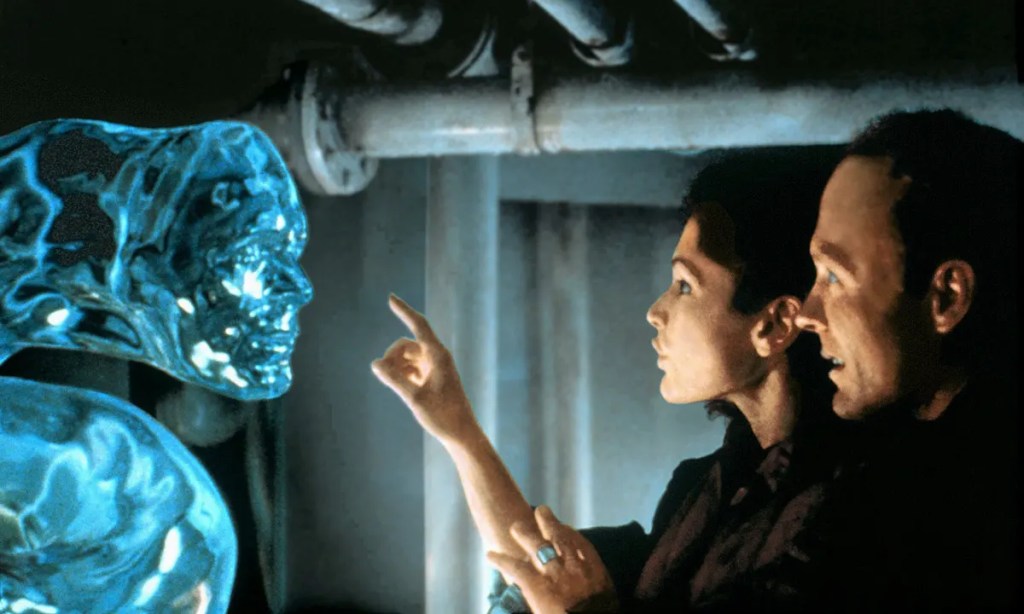
- Groundbreaking Visual Effects: Cameron is a pioneer in using cutting-edge visual effects to create immersive worlds, evident in the revolutionary CGI of The Abyss, Terminator 2: Judgment Day, and the breathtaking visuals of Avatar.
- Action Sequences: His films are known for intense and meticulously choreographed action sequences, often pushing the boundaries of what’s possible on screen, as seen in the high-octane chase scenes in True Lies.
- Deep-Sea Imagery: An avid diver, Cameron frequently incorporates underwater scenes into his films, utilising his passion for creating stunning sequences in The Abyss and Titanic and extending this interest to his documentary work.
- Epic Scale and Scope: Many of Cameron’s films, such as Titanic and Avatar, are epic in scale, featuring grand set pieces and complex world-building that transport the audience to thoroughly conceived alternate realities.
- Narrative Pacing: Cameron masterfully controls the pacing of his narratives, building tension gradually to lead up to explosive climaxes, keeping viewers engaged from start to finish.
Directorial Signature:
- Technological Innovation: Cameron is synonymous with technological advancement in filmmaking, constantly pushing the limits with new techniques and technologies, including the 3D camera system he developed for Avatar.
- Attention to Detail: His directorial approach is characterised by meticulous attention to detail, whether it’s the historical accuracy of the Titanic or the biological plausibility of the flora and fauna on Pandora in Avatar.
- Cameos of High-Tech Hardware: He often includes cameos of cutting-edge or imagined technology, a nod to his personal interest in engineering and the future of tech.
James Cameron: The 74th Greatest Director




 Bronze Screen Dream