

Hong Sang-soo is a South Korean filmmaker renowned for his distinctive narrative style and introspective explorations of human relationships. Often dubbed an “auteur of everyday life,” his filmography spans over three decades, encompassing works such as The Day a Pig Fell Into the Well, On the Beach at Night Alone, and The Woman Who Ran. His films are cherished for their thoughtful portrayal of the complexities of everyday human interactions, characterised by subtle humour, contemplative dialogue, and a keen observation of human nature.
Hong Sang-soo’s filmography is distinguished by recurring themes of relationships, infidelity, and personal introspection. He is particularly celebrated for his unique narrative structure, often featuring non-linear storytelling and repeated scenes that offer different perspectives on the same event, as seen in Right Now, Wrong Then. This approach imparts a sense of realism to his narratives and allows a deep exploration of his character’s inner lives and perspectives. Moreover, the recurring motif of alcohol in his films adds another layer of complexity, often serving as a catalyst to reveal his characters’ vulnerabilities and desires.
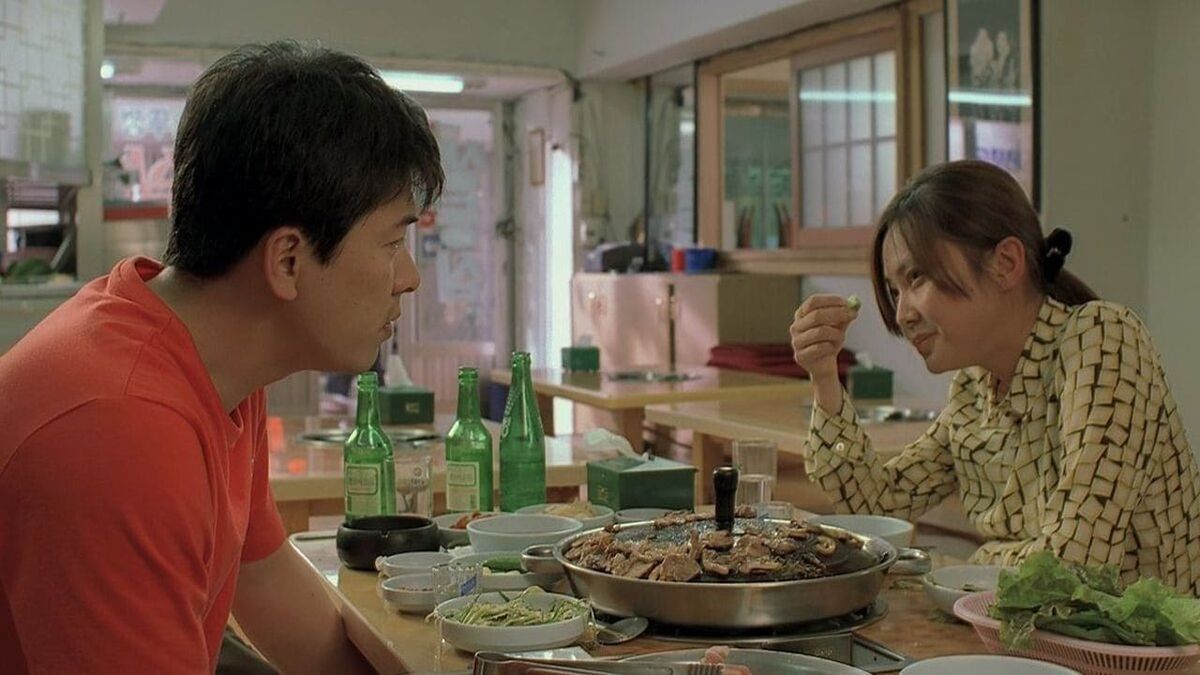
Regarding visual style, Hong Sang-soo adopts an unassuming yet effective approach. He favours long takes and minimal camera movements, reminiscent of the style of Yasujirō Ozu, which heightens the focus on dialogue and character interaction. Often utilising natural settings and ordinary locations, his films emanate a sense of familiarity that further accentuates their realism. Despite his modest and restrained style, his influence on contemporary cinema, particularly within independent film, is profound. Through his deceptively simple narratives, Hong Sang-soo masterfully dissects the complexities of human behaviour and emotions, making the ordinary extraordinary and proving the power of cinema in its most subtle and nuanced form.
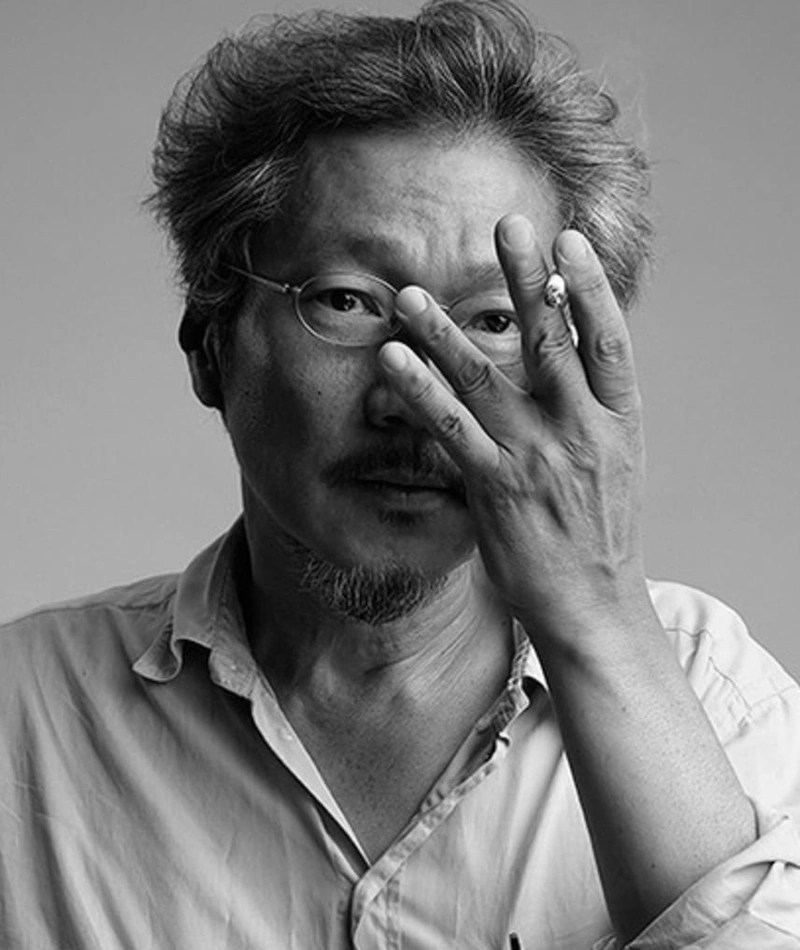
Hong Sang-soo (1960 – -)
Calculated Films:
- Turning Gate (2002)
- Night and Day (2008)
- The Day He Arrives (2011)
- Right Now, Wrong Then (2015)
- The Woman Who Ran (2020)
Similar Filmmakers
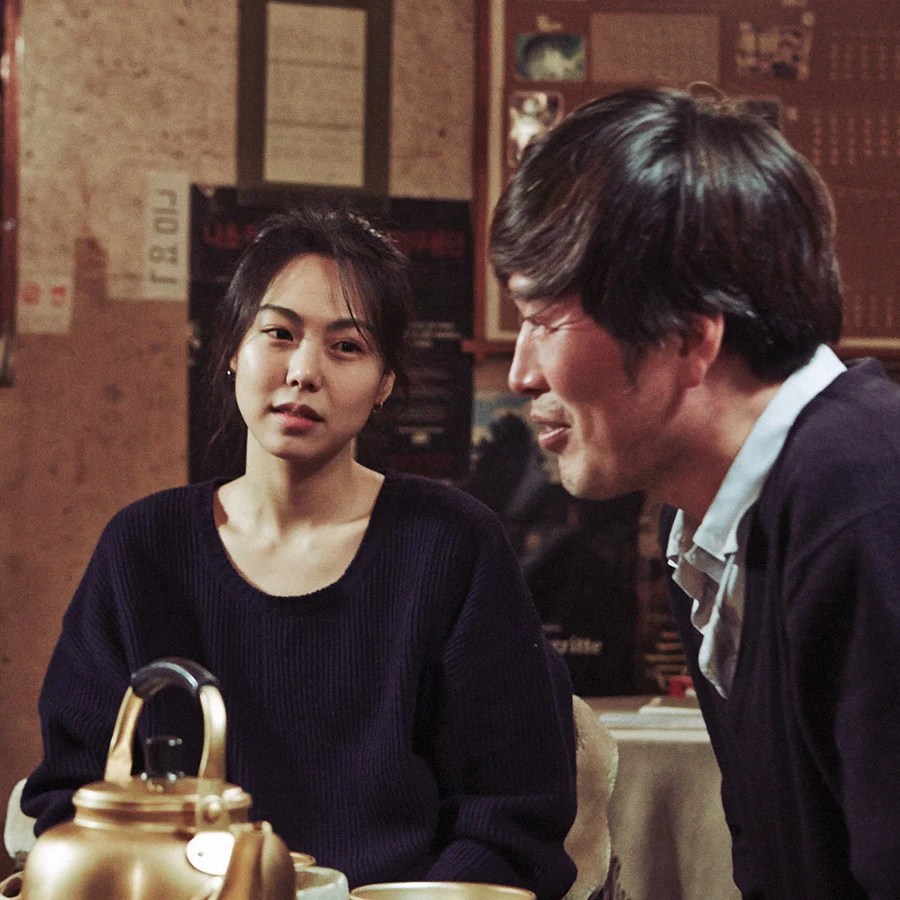
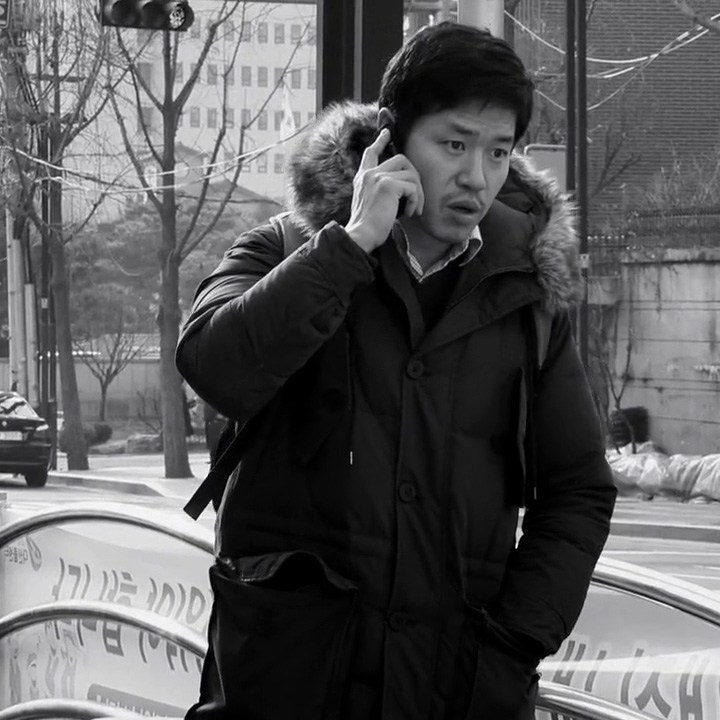

Hong Sang-soo‘s Top 5 Films Ranked
1. Right Now, Wrong Then (2015)
Genre: Romance

2. The Day He Arrives (2011)
Genre: Drama, Slice of Life

3. Night and Day (2008)
Genre: Drama, Romance, Black Comedy

4. On The Beach at Night Alone (2017)
Genre: Drama

5. Hill of Freedom (2014)
Genre: Drama, Comedy
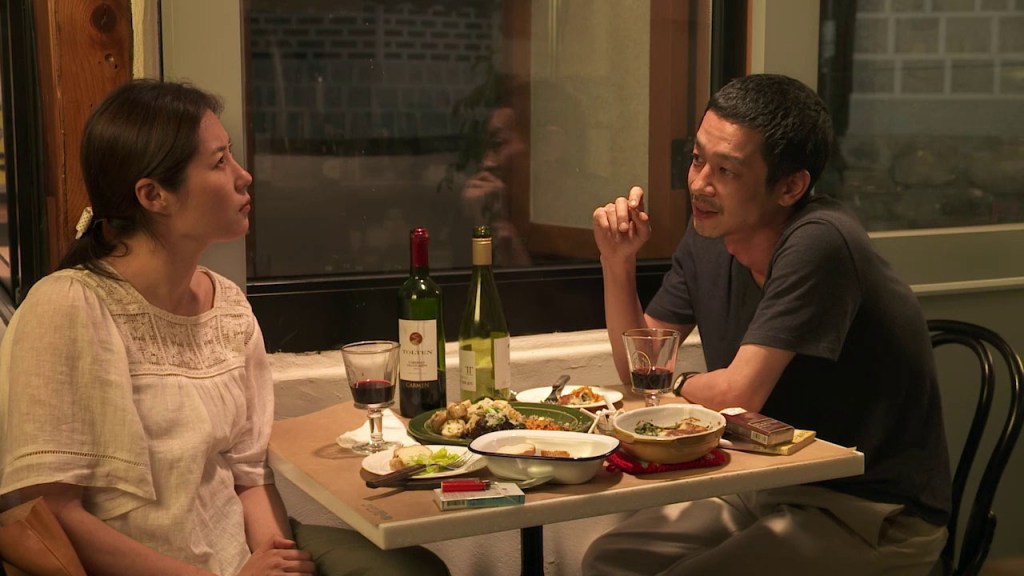
Hong Sang-soo: The Korean Eric Rohmer
With an unassuming yet penetrating gaze into everyday life, South Korean filmmaker Hong Sang-soo has quietly etched his place as a master of subtlety, existentialism, and human relationships. Though his canvas may appear mundane at first glance, Hong’s artistry lies in his ability to magnify the ordinary, revealing profound truths and endless complexities.
Born in Seoul, South Korea, in 1960, Hong’s upbringing was marked by a fusion of Eastern and Western influences. A childhood filled with curiosity soon led him to the United States, where he immersed himself in the study of filmmaking at the University of California and the Art Institute of Chicago. His artistic sensibilities were honed, not in the grandiose corridors of Hollywood but in the intimate classrooms and independent cinemas, where cinema was more a philosophy than entertainment.
His directorial debut, The Day a Pig Fell into the Well, was an enigmatic introduction to his distinct style. Unadorned yet profound, it painted a bleak picture of urban loneliness and disillusionment, themes that would become a recurring motif in Hong’s works. The film’s success not only put him on the map but marked the emergence of a cinematic voice that defied conventions.
Hong Sang-soo’s characters are rarely heroic; they are flawed, fragile, and utterly human. They navigate through life’s ambiguities, their desires and anxieties laid bare in a manner both empathetic and unsparing. There is an honesty in his portrayal of human nature that transcends cultural boundaries, striking a universal chord as the work of Eric Rohmer and Richard Linklater has before him.
Sustained Success
The subsequent years saw Hong experimenting and refining his craft with films like The Virgin Stripped Bare by Her Bachelors and On the Occasion of Remembering the Turning Gate. His films were never about dazzling the audience with visual spectacle; they explored the human soul. Time and memory bend in his stories, and the lines between reality and imagination blur, creating a surreal yet hauntingly familiar experience.
But it was his audacity to remain true to himself that set him apart. In an industry driven by trends and commercial viability, Hong was an unyielding artist, indifferent to fame and undeterred by criticism. He was not there to please but to probe and challenge his audience and himself.
As the years unfolded, Hong Sang-soo’s cinema evolved, becoming more intricate and universal. From the lustful confusions of Woman on the Beach to the existential wanderings of Ha Ha Ha, Hong’s films transcended their limitations. His characters were no longer confined to the screen; they wandered into the minds of viewers, triggering reflections and resonances.
Kim Min-hee
His professional and personal work with actress Kim Min-hee added a layer of richness to his narratives. Films like Right Now, Wrong Then and On the Beach at Night Alone were not only explorations of relationships but insightful studies of human vulnerability, art, and identity. The synergy between director and actor yielded cinematic moments that were raw and riveting; love was portrayed not as a mere emotion but as a complex psychological landscape.
Hong’s technique of narrative fragmentation, where time loops and events recur with variations, lent his films an enigmatic quality. They were like life itself, unpredictable and open to interpretation. The linear was abandoned for the labyrinthine, yet his direction never lost its compass. Every frame was deliberate, every pause meaningful.
His influence was not restricted to South Korea alone. Whether it was the Cannes Film Festival or the Berlinale, his films were celebrated not for their glamour but their gravity.
The 2020s brought new challenges and opportunities, yet Hong’s commitment to his craft has remained steadfast. He continued to delve into human complexities with films like The Woman Who Ran. Hong continues to put out new movies every year, a prolific yet delicate filmmaker.
Most Underrated Film
Few of Hong’s films have really broken into the mainstream so far that you could consider them accurately rated, so picking the most underrated is a tricky task. Still, perhaps it is 2011’s The Day He Arrives, a perfect example of Hong’s subtle yet intricate probing of everyday life.
Set in a wintry Seoul, the film follows a former filmmaker, Seongjun, who has turned to teaching. His wandering through the streets leads to encounters that repeat and overlap, time folding in on itself. The narrative becomes a circular, almost meditative experience, where the line between the real and the imagined is tantalisingly blurred.
The Day He Arrives is not just a film but a contemplation, a rumination on existence, relationships, and the nature of art itself. Seongjun’s interactions are not merely events; they are revelations of character, glimpses into the multifaceted nature of human emotion. Laughter mingles with melancholy; love intertwines with loneliness.
Hong’s handling of black and white cinematography lends the film a timeless aura, each frame a carefully crafted piece of visual poetry. The monochrome palette enhances the emotional resonance, stripping away distractions and laying bare the human condition.
The characters in The Day He Arrives are neither heroes nor villains; they are reflections of ourselves. Their conversations, though casual, are laden with significance, each word a subtle brushstroke in a complex portrait. The film’s ability to capture the nuances of everyday life, the unspoken tensions, the fleeting joys, and the shared uncertainties makes it an unsung masterpiece.
Hong Sang-soo’s Themes and Styles
Themes
- Human Relationships: Hong often explores the complexities of human connections, be it romance, friendship, or professional relationships. He delves into the subtleties and nuances that define human interactions.
- Existentialism and Identity: Many of his films examine questions about existence, purpose, and personal identity. Characters often face existential crises or undergo self-discovery. Apparent in The Day After, as characters grapple with moral and existential dilemmas.
- Time and Memory: Hong plays with the concept of time, using flashbacks, repetitions, and nonlinear narratives to explore how memory shapes reality.
- Everyday Life: He has a knack for finding the extraordinary in the ordinary, using mundane settings and situations to unfold deeper truths about human nature.
- Cultural Commentary: Through his characters and stories, Hong often offers subtle critiques of societal norms, modern culture, and the filmmaking industry.
Styles
- Minimalism: Hong’s films are known for their understated elegance, relying on simple dialogues and settings to convey complex emotions and ideas.
- Improvisation: He often encourages actors to improvise, leading to natural, spontaneous performances that breathe life into the characters.
- Narrative Fragmentation: He employs fragmented narratives that defy conventional structure, creating a dreamlike, often perplexing experience that invites interpretation. Showcased in Oki’s Movie, with a fragmented narrative defying conventional structure.
- Visual Aesthetics: Though his visual style is unembellished, it is highly intentional, with each shot carefully composed to enhance the storytelling. He often uses black-and-white cinematography to add a timeless quality.
Hong’s Directorial Signature
- Character Complexity: His characters are flawed and relatable, and their development throughout the film is essential to the storytelling.
- Intellectual Engagement: Hong’s films require the audience to think, ponder, and often rewatch to grasp the full meaning. They are intellectual puzzles as much as emotional journeys.
- Subtlety: His approach is never heavy-handed. Through subtle hints, visual cues, and layered dialogues, he leads viewers to revelations and insights.
- Intertextuality: His films often contain references to other works within his oeuvre, creating a web of interconnected themes and motifs.
Further Reading
Books
Tale of Cinema by Dennis Lim – In the fourth title of the Decadent Editions series, Dennis Lim explores the filmography of South Korean auteur Hong Sang-soo via his 2005 film.
Articles & Essays
The World-Making Aesthetic of Hong Sangsoo by Dennis Zhou, The Nation
TWICE-TOLD TALES: THE FILMS OF HONG SANG-SOO by James Quandt, Art Forum
Hong Sang-soo’s Capacious and Confined Cinema by Rory O’Connor, Frieze
Hong Sang-soo – Great Director



 Bronze Screen Dream