

František Vláčil, a leading figure in Czech cinema, is best known for his deeply contemplative films such as Marketa Lazarová and The Valley of the Bees. Vláčil’s works tended to be period films, frequently set in medieval or wartime periods. His commitment to historical accuracy, from the costumes to the settings, lends his films an immersive and authentic portrayal of historical events and contexts. At the same time, he presents narratives imbued with an exploration of Czech identity and cultural heritage, reflecting on the nation’s historical roots and the impact of socio-political changes on its people.
Vláčil’s films stand out for their integration of symbolism and allegory and their visual and emotional intensity. His narratives often unfold at a deliberate pace, allowing viewers to immerse themselves fully in his characters’ psychological and emotional journeys. With the use of symbolic elements, he explores existential questions, spiritual dilemmas, and the complexities of human nature, inviting viewers to interpret his works on multiple levels and encouraging deeper contemplation. This exploration of national identity, human struggles, and aspirations lends his films their resonating emotional depth.
Vláčil’s visual style is characterised by its poetic and lyrical quality. His ability to create breathtaking, meticulously composed images, often using natural landscapes as powerful metaphors, transports viewers into a world of ethereal beauty and evocative atmospheres. His innovative use of cinematography techniques, from sweeping camera movements to unconventional angles and long takes, adds a distinctive aesthetic quality to his works.

František Vláčil (1924 – 1999)
Calculated Films
- Marketa Lazarova (1967)
- The Valley of the Bees (1968)
Similar Filmmakers
- Elem Klimov
- Ermek Shinarbaev
- Ingmar Bergman
- Jerzy Kawalerowicz
- Lav Diaz
- Miklos Jancso
- Sergei Parajanov
- Terrence Malick
- Theo Angelopoulos
- Vaclav Krska
- Werner Herzog
- Yuri Ilyenko


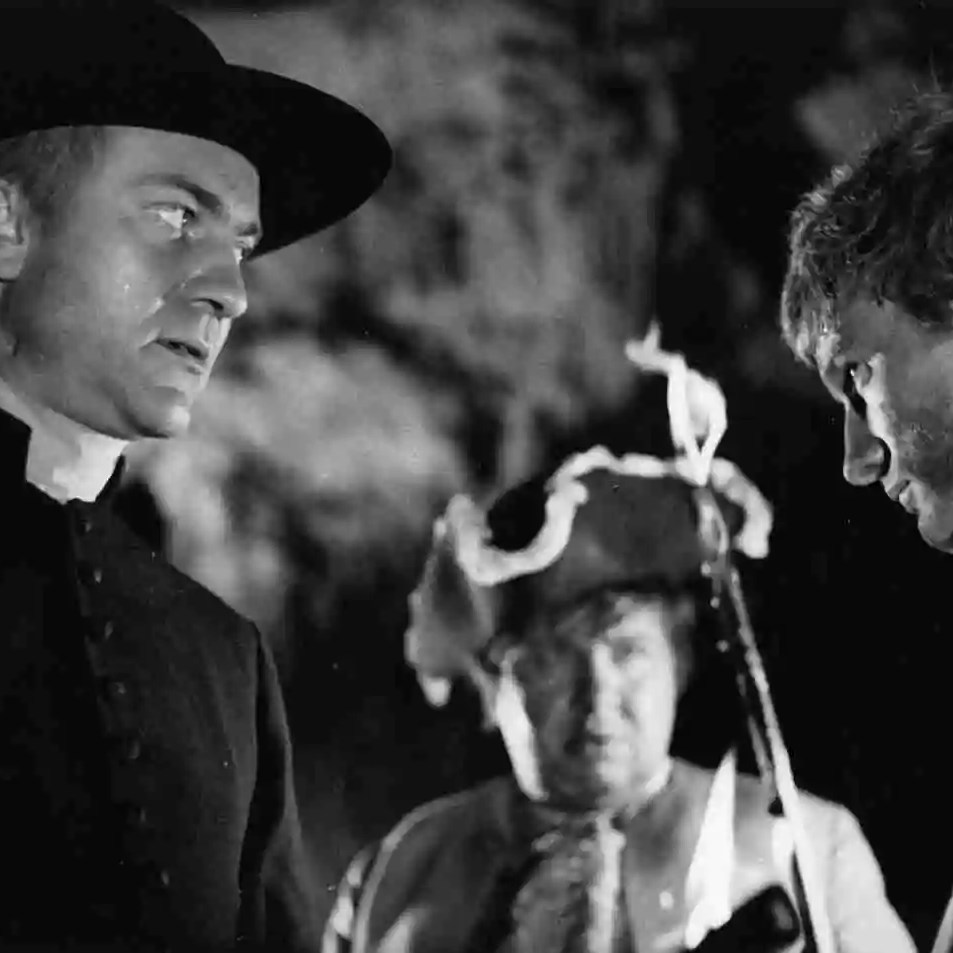
František Vláčil’s Top 5 Films Ranked
1. Marketa Lazarova (1967)
Genre: Period Drama, Medieval, Epic

2. The Valley of the Bees (1968)
Genre: Period Drama, Medieval
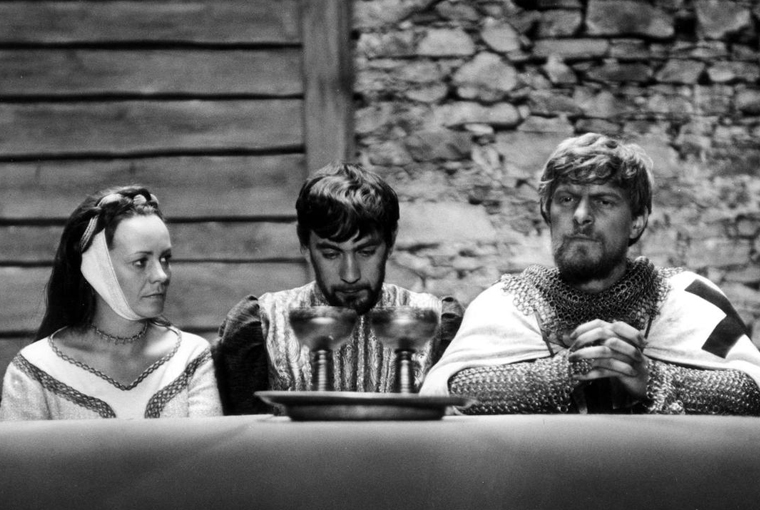
3. The Devil’s Trap (1962)
Genre: Period Drama, Religious Film

4. The White Dove (1960)
Genre: Drama, Surrealism

5. Adelheid (1970)
Genre: Drama, Romance

Frantisek Vlacil: Whispering Woods and Warring Warriors
Wolves surround and approach Marketa amidst a hauntingly desolate snowscape. The chilling intensity of this sequence evokes a visceral sense of vulnerability and primal fear. It’s a moment that encapsulates the raw brutality and poetic beauty of Frantisek Vláčil’s vision.
Born on February 19, 1924, in Český Těšín, a charming town located in Czech Silesia, František Vláčil would go on to become one of Czechoslovak cinema’s most poetic and visionary filmmakers. Though often overshadowed by the better-known figures of the Czech New Wave, Vláčil’s films stand as unique meditations on history, nature, and the human spirit.
Growing up in a country marked by both cultural richness and political turmoil, Vláčil’s childhood was marked by stories of the First World War and the subsequent birth of Czechoslovakia. His early interest in storytelling and the arts eventually led him to study art and music. Yet, his experiences during World War II, where he served in the army, deeply influenced his future film endeavours. The military milieu and the brutality of war would provide fodder for several of his early works.
His foray into filmmaking began in the early 1950s when his documentary and short film projects predominantly revolved around the theme of war. Vláčil’s military films, while deeply rooted in the Czechoslovakian experience, often contain universal themes of sacrifice, the horrors of war, and the tragic dimensions of human conflict.
The White Dove marked a significant turning point for Vláčil. No longer confined to the harrowing battlefields, Vláčil turned his attention to the quieter yet equally profound struggles of everyday life. A poetic tale about a boy, an old artist, and a wounded pigeon, the film was a masterclass in visual storytelling. Its lyrical quality, combined with rich black-and-white imagery, invoked comparisons with the works of Robert Bresson and Yasujirō Ozu.
Transitioning from the contemporary setting of The White Dove, The Devil’s Trap saw Vláčil delve into the 16th century amidst the backdrop of the Czech Reformation. The film perfectly weaves the historical with the personal. The Devil’s Trap is a vivid tableau of medieval life, packed with period details and atmospheric settings that rival the best of Bergman or Tarkovsky. More than just a historical epic, it is a film that speaks to the universal theme of faith versus fanaticism, resonating deeply in 1960s Czechoslovakia grappling with its ideological battles.
The decade was an exhilarating time for Czechoslovak cinema. The country’s film schools were producing a new generation of filmmakers, brimming with fresh ideas and keen to challenge the state-sanctioned Social Realism of the 1950s. This was the era of the Czech New Wave, and names like Miloš Forman, Jiří Menzel, and Věra Chytilová were taking the international film scene by storm with their audacious narratives and innovative techniques.
But where did Vláčil fit in this radical movement? Rather intriguingly, while his contemporaries were producing more overtly rebellious and politically charged films, Vláčil seemed to sidestep the direct political confrontations of the New Wave. Instead, he delved deeper into the historical and the poetic. While this might suggest an apolitical stance, Vláčil’s films were subversive in their own right. They questioned national identity, human nature, and the moral complexities of existence in ways that were subtly defiant.
Vlacil’s true masterpiece, Marketa Lazarová, is a historical and aesthetic tour de force. Set in medieval Bohemia, it revolves around the struggles between paganism and Christianity, capturing the brutalities and spiritual transcendence of its age. Often nonlinear and dreamlike, the narrative doesn’t bow to conventional storytelling. Instead, it offers a raw, atmospheric immersion into a bygone era. Reminiscent of Tarkovsky’s Andrei Rublev in its scope and depth, Marketa Lazarová shows Vláčil’s ability to transcend time, using cinema to capture the essence of humanity’s eternal struggles.
In the following year, Vláčil continued his exploration of medieval Europe with The Valley of the Bees. The film probes the life of a young man pledged to the Order of Teutonic Knights, spotlighting the conflicts between personal desires and spiritual duties. Unlike the sweeping epic nature of Marketa Lazarová, this film is more restrained yet equally haunting in its portrayal of monastic life and the sacrifices it demands. Vláčil’s craftsmanship shines through every frame, making it a compelling companion to his previous work.
Adelheid marked a thematic departure from Vláčil’s medieval preoccupations. Set in the aftermath of World War II, it’s a tale of love and tragedy between a Czech officer and a German woman, both scarred by the war. In its sombre tone, the film dissects the trauma of post-war Europe, making it an intimate reflection on guilt, redemption, and the impossibilities of love in a fragmented world. Vláčil subtly addresses the wounds of Czech-German relations through this narrative, making Adelheid a poignant historical document.
Vlacil enjoyed a relatively fruitful career, making films into the late 80s; however, it’s safe to say none quite hit the sweet spot as his 1960 – 1970 run. Vlacil struggled with alcoholism in this period, and these troubles spilled over into his productions.
František Vláčil’s filmography is worth a deeper inspection than modern critics give it. While the Czech New Wave made waves internationally with its radicalism, Vláčil’s films were revolutionary in their own right — a deep dive into the soul of humanity across the ages. His ability to marry the personal with the historical, the poetic with the prosaic, makes him a fascinating figure in cinema.
Most Underrated Film
The Valley of the Bees, often eclipsed by the towering stature of Marketa Lazarová, remains one of František Vláčil’s most underrated gems. Released just a year after Marketa, this film delves deeply into the psyche of medieval monastic life, offering a poignant examination of the balance between unwavering faith and human desire.
The painstaking attention to detail, evident in the meticulously designed costumes and historically accurate set pieces, transports the audience to a time of deep spiritual reverence, contrasted starkly by the innate human struggles bubbling beneath the surface. The cinematography, with its gray, bleak hues, mirrors the internal torments of its central characters, marking it as visually evocative as any in Vláčil’s oeuvre.
Common criticisms often label the film as “too contemplative” or “lacking the grandeur of Marketa Lazarová.” While it’s true that The Valley of the Bees doesn’t possess the epic breadth of its predecessor, its strength lies in its restraint. The film offers an intimate portrait of spiritual anguish and human frailty, a tale as powerful as it is understated.
One particularly memorable scene involves the protagonist, Ondrej, confiding in a fellow monk about his conflicting desires and fears in a moment of vulnerability. This emotional outpouring, set against the austere backdrop of the monastery, encapsulates the film’s essence — the eternal conflict between personal desires and spiritual commitments. Vláčil’s prowess in capturing raw, human emotion makes this scene, and many others in the film, linger long after the credits roll. For those willing to engage with its meditative pace, it offers rich rewards, revealing layers of depth with each viewing.
Frantisek Vlacil: Themes and Style
Themes:
- Historical Deep Dive: Many of Vláčil’s works revolve around historical settings, ranging from medieval Europe (Marketa Lazarová, The Valley of the Bees) to post-war Europe (Adelheid). His films not only reconstruct the periods but also delve deep into the psyche and societal conditions of the times.
- Nature vs. Man: The elemental struggle between humans and their surroundings, whether it’s the desolate snowscapes of Marketa Lazarová or the austere monastic settings of The Valley of the Bees.
- Spiritual and Moral Conflicts: Vláčil’s characters often grapple with spiritual quandaries, dilemmas of faith, and moral compromises, reflecting larger societal and historical contexts.
- Raw Human Emotion: At the heart of his historical epics lie deeply personal stories of love, loss, hope, and despair.
Styles:
- Visual Poetry: Vláčil’s films are known for their lyrical quality, combining breathtaking cinematography with deliberate pacing to create a poetic cinematic experience.
- Historical Authenticity: His attention to detail in set design, costumes, and ambiance ensures that viewers are wholly transported to the era he portrays.
- Atmospheric Soundscapes: From haunting choral pieces to the raw sounds of nature, Vláčil’s sound design adds another layer of immersion to his films.
Directorial Signature:
- Intimate Epics: While Vláčil’s films often have the scope of historical epics, they remain deeply intimate, focusing on individual experiences within larger historical tapestries.
- Deep Connection with Nature: Whether it’s the vast snow-covered landscapes or the serene monastic gardens, nature plays a significant role in setting the mood and tone of his films.
- Cinematic Realism: Despite his stories’ historical and sometimes mythic nature, there’s a raw, grounded realism in how he portrays characters and events.
- Complex Characters: Vláčil’s characters are multifaceted, often caught in dilemmas that make them relatable despite the historical distance. Their internal struggles mirror universal human experiences, making his films timeless.
Further Reading:
Articles and Essays:
- František Vláčil: Out of the Past by Michael Brooke, Sight and Sound
- The Vanguard of Marketa Lazarová by John Edmond, Senses of Cinema
- Reality Czech by Kristin M. Jones, Wall Street Journal
František Vláčil – Great Director


 Bronze Screen Dream