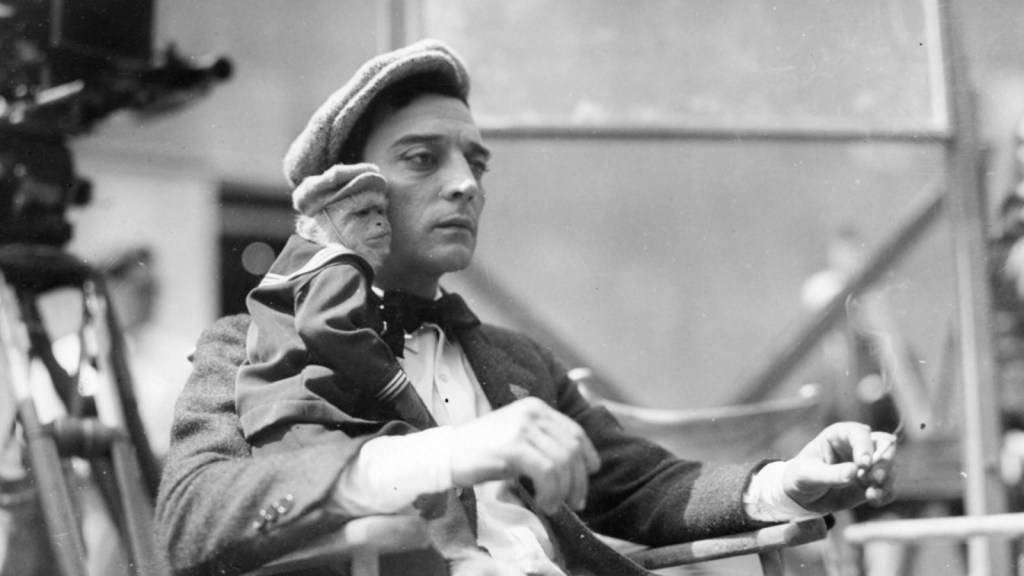
Buster Keaton, an American icon of the silent film era, is renowned as a writer, director, and actor known for his stoic on-screen persona and innovative physical comedy. Regarded as one of the greatest comic actors in cinema history, Keaton combined his athletic prowess with technical ingenuity to create daring stunts and visual gags. Films like The General and Sherlock Jr. are enduring testaments to his unique comedic vision and directorial skill.
Born in 1895, Keaton’s entry into the world of performance was predestined, as he was born into a vaudeville family. His early exposure to stage performance primed him for a career in comedy and imbued him with a physical dexterity that would later distinguish his film work. After meeting Roscoe “Fatty” Arbuckle in the 1910s, Keaton transitioned from vaudeville to film, eventually directing and starring in his own feature films.
The essence of Keaton’s filmmaking lies in his masterful execution of physical comedy. Known for performing his own stunts, many of them perilous, Keaton capitalised on his athleticism and acrobatics to create comedic moments. This is evident in films such as Steamboat Bill, Jr., where Keaton barely avoids a collapsing facade, and Sherlock Jr., wherein he performs impossible manoeuvres like diving into a suitcase. These moments, characterised by detailed set pieces and visually striking gags, reflected Keaton’s meticulous attention to detail and his daring commitment to comedy.
The Great Stone Face
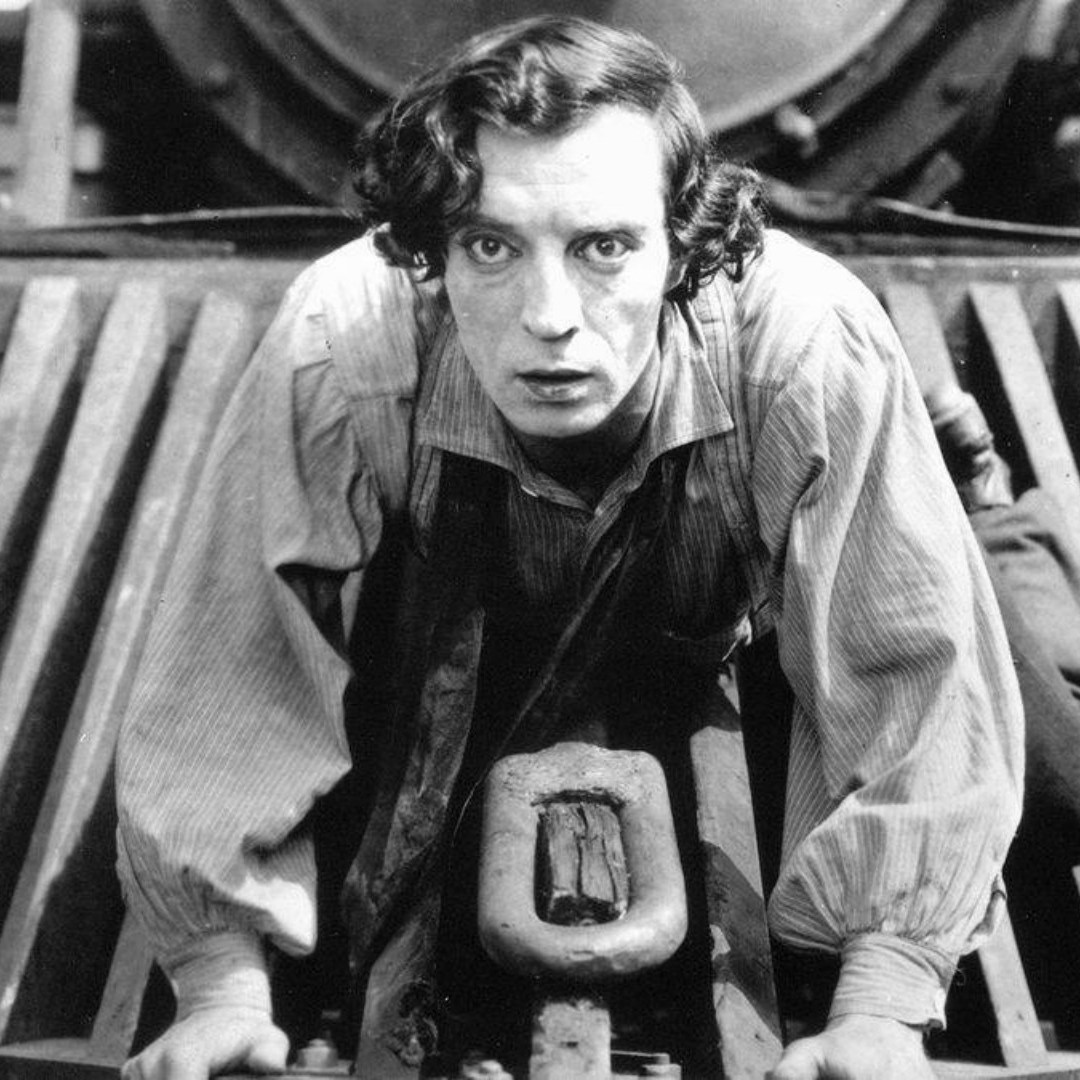
Keaton’s stoic persona contrasted sharply with the chaos unfolding around him, providing a wellspring of comedy. Despite the absurd and surreal scenarios his characters found themselves in, Keaton maintained a calm and composed demeanour. This approach and his knack for satirising societal norms made films like The General, where he plays a train engineer caught in the American Civil War, both humorous and subversive.
Beyond his comedic skills, Keaton was also a technically proficient and innovative director. He utilised advanced camera techniques to create surreal comedic moments and impossible scenarios. For instance, in Sherlock Jr., he walks into a cinema screen and joins the action, blurring the line between fiction and reality. As a writer-director-actor, Keaton had a high degree of control over his films, enabling him to realise his unique comedic vision.
Despite his career declining with the advent of sound in cinema, Keaton’s influence remains significant. His pioneering work in physical comedy, visual storytelling, and technical filmmaking has profoundly impacted the world of cinema, particularly in the comedy genre. Contemporary filmmakers and comedians such as Jackie Chan, with his elaborate stunts, and Wes Anderson, known for his detailed set pieces and absurd situations, have cited Keaton as an inspiration. Indeed, Keaton’s influence continues to permeate through film comedy, securing his legacy as one of cinema’s great innovators.

Buster Keaton (1895 – 1966)
Calculated Films:
- One Week (1920)
- The Scarecrow (1920)
- Neighbors (1920)
- The Goat (1921)
- Cops (1922)
- Our Hospitality (1923)
- Three Ages (1923)
- Sherlock Jr. (1924)
- The Navigator (1924)
- Seven Chances (1925)
- The General (1926)
- Battling Butler (1926)
- Steamboat Bill, Jr. (1928)
Similar Filmmakers
- Charlie Chaplin
- Chuck Jones
- Clyde Bruckman
- Edward F. Cline
- Ernst Lubitsch
- Fatty Arbuckle
- Frank Tashlin
- Fred C. Newmeyer
- H. C. Potter
- Jackie Chan
- Jacques Tati
- James W. Horne
- Jean Durand
- Jerry Lewis
- Max Linder
- Mel Brooks
- Pierre Etaix
- Ted Wilde

Buster Keaton’s Top 10 Films Ranked
1. Sherlock Jr (1924)
Genre: Slapstick

2. The General (1926)
Genre: Slapstick, Adventure, War, Action
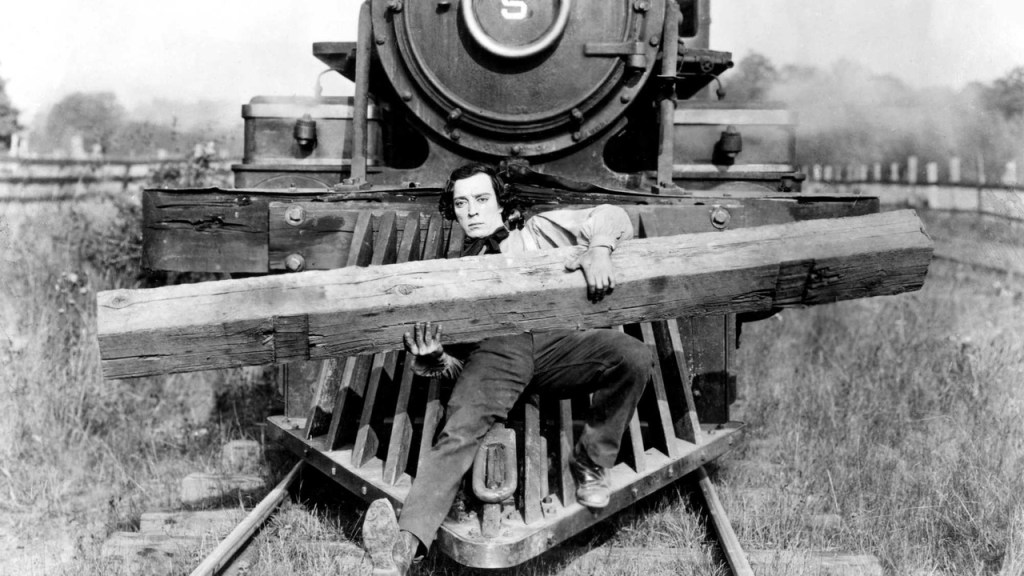
3. Steamboat Bill, Jr. (1928)
Genre: Slapstick, Romance

4. Seven Chances (1925)
Genre: Romantic Comedy, Slapstick
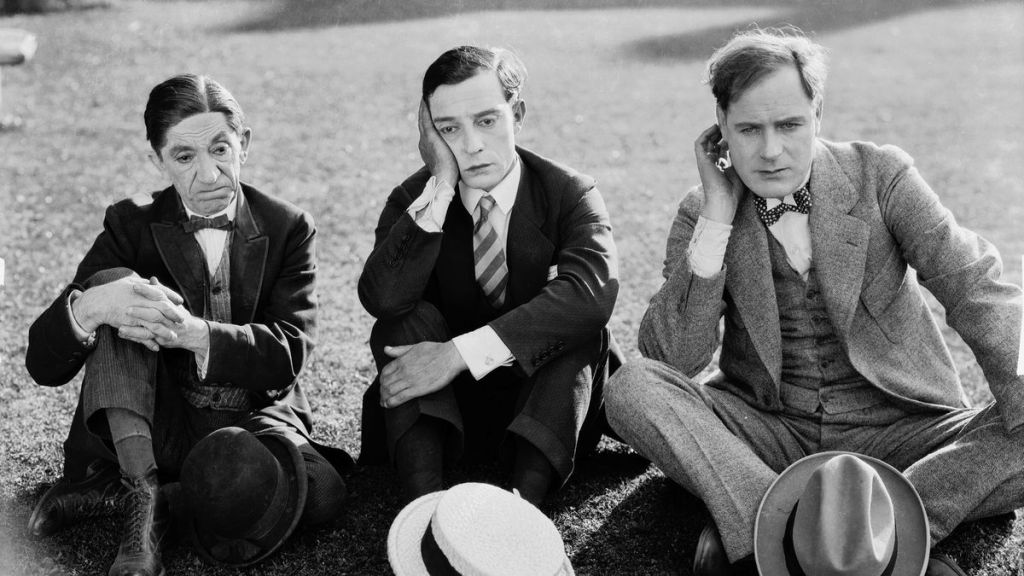
5. Our Hospitality (1923)
Genre: Slapstick

6. One Week (1920)
Genre: Slapstick

7. Cops (1922)
Genre: Slapstick

8. The Navigator (1924)
Genre: Slapstick, Adventure

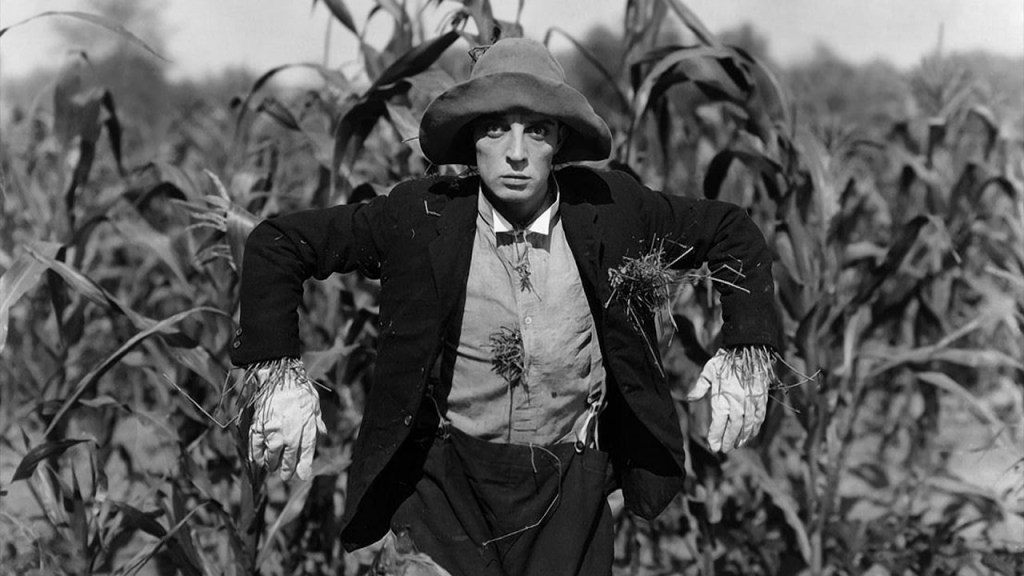
9. The Scarecrow (1920)
Genre: Slapstick
10. The High Sign (1921)
Genre: Slapstick
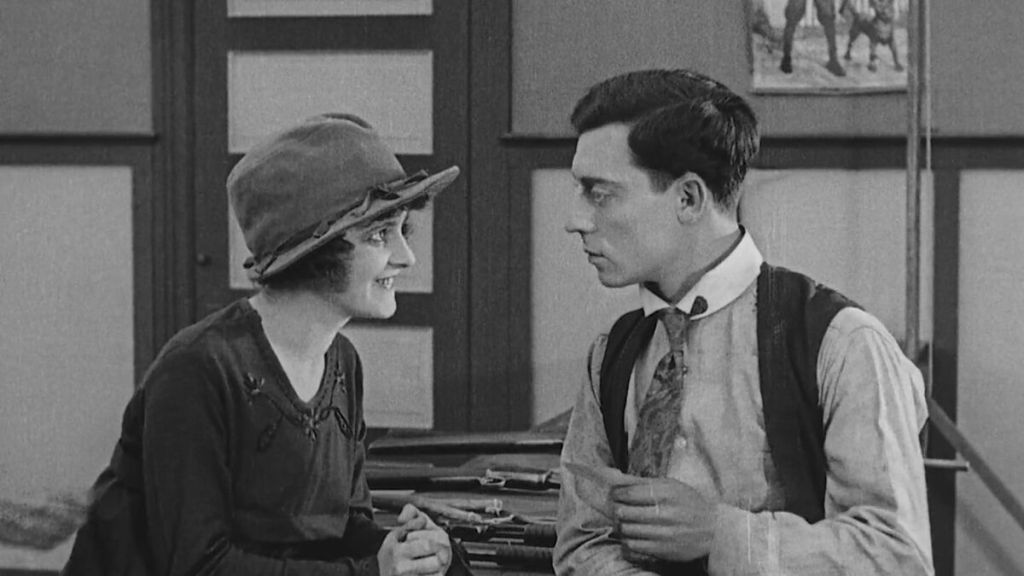
Buster Keaton: Themes and Style
Themes:
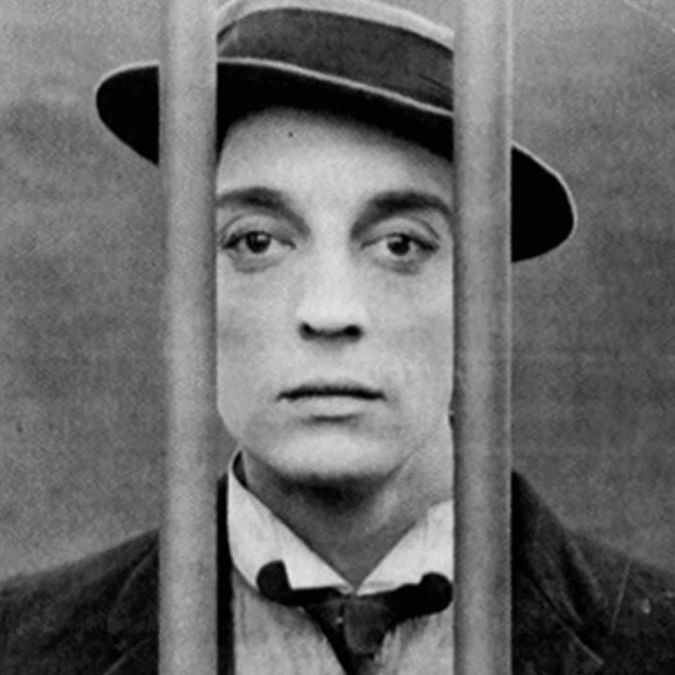
- Physical Comedy & Stunts: Keaton was renowned for his astonishing physical comedy and dangerous stunts, which he executed without doubles. His physical agility and deadpan expression while performing perilous feats earned him the nickname “The Great Stone Face.”
- Individual vs. Technology & Environment: Many of his films depict the protagonist’s struggle against industrialisation and the modernising world, often showcasing characters in constant conflict with their environment or machinery.
- The Underdog Hero: Keaton often portrayed the ‘everyman’ or underdog who, despite facing insurmountable odds, triumphs using wit and resilience.
- Romantic Pursuits: Romantic themes frequently surface in Keaton’s work, with his characters often pursuing love interests amidst chaotic and comedic circumstances.
- Visual Gags & Wordplay: He ingeniously used visual gags, playing with perspective and using minimal intertitles, relying instead on visual imagery to convey the humour.
Style:
- Visual Composition & Framing: Keaton was a master of composition and framing, crafting visually stunning scenes that maximised the comedic potential and narrative effectiveness of each shot.
- Minimalist Acting Style: Known for his stoic, expressionless demeanour, Keaton’s acting style is minimalist yet highly expressive, communicating volumes without uttering a word.
- Practical Effects & Realism: He was known for in-camera effects, practical stunts, and real-time gags. His commitment to realism, even in comedic scenarios, enhanced the believability and impact of his visual comedy.
- Rhythm & Timing: Keaton had an impeccable sense of timing and rhythm in editing, which enhanced the comedic effect of his gags and stunts.
Directorial Signature:
- Innovative Use of Set Pieces: Keaton ingeniously used elaborate, dynamic set pieces to create visually compelling and comedic scenarios, often culminating in iconic, meticulously timed stunts.
- Interplay Between Foreground and Background: His films frequently employed deep focus and wide shots that allowed audiences to appreciate the interaction between characters and their environments, creating a visually rich cinematic experience.
- Symmetry and Geometry in Composition: Keaton’s frames often showcased a keen eye for symmetry and geometric composition, creating balanced and aesthetically pleasing images that served both the narrative and comedic elements of his films.
- Integration of Stunts into Narrative: Unlike many of his contemporaries, Keaton seamlessly integrated his breathtaking stunts into the narrative flow, making them not just spectacle but integral parts of the storytelling.
- Emphasis on Visual Storytelling: With a preference for showing over telling, Keaton minimised the use of intertitles in favour of visual storytelling, allowing the images to convey the story’s humour, emotion, and narrative progression.
Buster Keaton: The 23rd Greatest Director


 Bronze Screen Dream