
Below are some of the best Czech directors ever. Click on their pictures to discover more about them.



A Brief History of Czech Cinema
The first significant phase of Czech film began in the 1930s with the advent of sound films, leading to a flourishing of cinematic creativity and storytelling. This era was marked by the rise of directors such as Martin Frič and Otakar Vávra, who made significant contributions to the industry with their innovative storytelling and technical skills. The 1930s and 1940s were considered the golden age of Czech cinema, producing classics such as “Ecstasy” by Gustav Machatý and “Kristián” by Martin Frič.
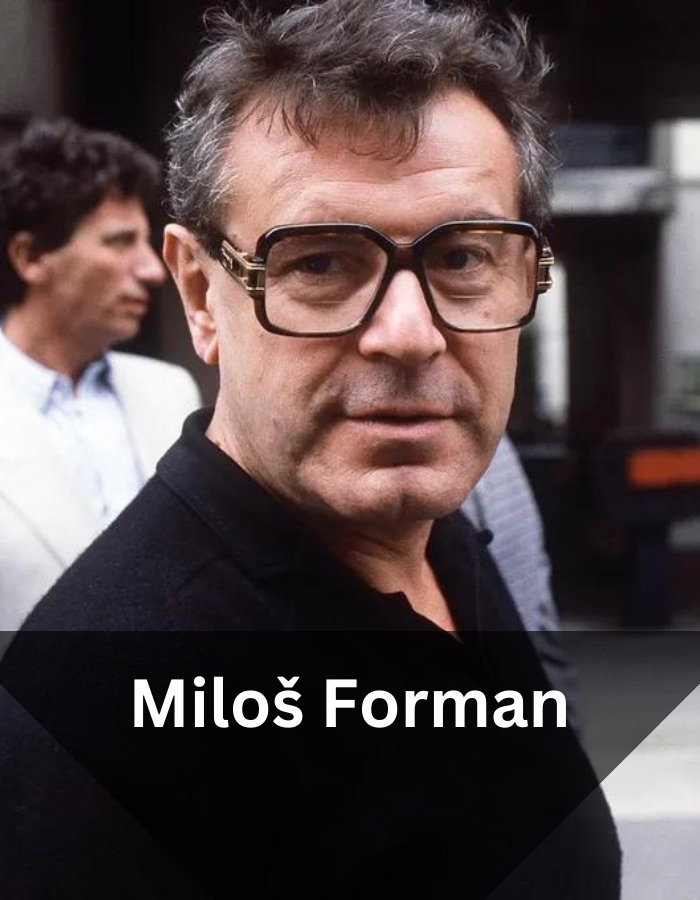
The post-World War II period saw a shift in Czech cinema, with the nationalisation of the film industry and the influence of Communist ideology on film content and production. Despite these constraints, this period gave birth to the Czechoslovak New Wave in the 1960s, a movement known for its innovative approaches, dark humour, and social commentary. Directors like Miloš Forman, Věra Chytilová, and Jiří Menzel emerged as prominent figures. Films such as “Loves of a Blonde” by Miloš Forman and “Closely Watched Trains” by Jiří Menzel gained international acclaim, including an Academy Award for Best Foreign Language Film for Menzel’s work. The New Wave was abruptly ended by the Soviet invasion of Czechoslovakia in 1968, but its influence continued to shape Czech cinema.
In recent years, Czech cinema has seen a resurgence, blending traditional storytelling with contemporary themes and techniques. Directors like Jan Svěrák and Bohdan Sláma have gained recognition for their work both domestically and internationally. Jan Svěrák, for instance, won an Academy Award for Best Foreign Language Film with “Kolya” in 1996.
 Bronze Screen Dream