Jean-Luc Godard made well over a hundred films across seven decades: features, shorts, video essays, television, adverts, and things that don’t fit any of those categories. Ranking them is a slightly absurd exercise, and Godard would probably have hated it. That’s partly why it’s worth doing.
This list covers 34 films, most of the essential features plus a handful of shorts, ranked from the bottom up. These are the 34 I’ve seen. A word on those shorts: most of them sit low not because they’re bad but because they’re slight. It’s hard to put eight minutes of test footage above Le Mépris, however interesting the eight minutes are. It’s a living list, and I’ll add to it as I go. For more on the man himself, see my Jean-Luc Godard profile.
Every Jean-Luc Godard Film Ranked
34. Opération béton (Operation Concrete, 1955)
Narrated by Jean-Luc Godard · 20 min
Godard’s first film exists because he needed money. In 1954 he took a labouring job on the Grande Dixence dam in the Swiss Alps, borrowed a 35mm camera, and filmed the concrete being poured. He then sold the result to the dam’s builders, and the proceeds let him quit, move to Geneva and make a second film.
As a documentary, it’s what you’d expect: a film about building a dam, with an attempt at a poetic narration that can’t quite make concrete exciting. It did its job, and its value is almost entirely to posterity.
33. Une femme coquette (1955)
Starring Maria Lysandre, Roland Tolmatchoff · 10 min
The film the dam money paid for. Loosely based on Maupassant’s story “Le Signe”, it follows a young Genevan woman who watches a prostitute signal to men in the street, then tries the same gesture herself to see what happens. Shot on 16mm with Godard as essentially the entire crew, it was never distributed and screened only a handful of times over the decades from a privately held print, until it turned up on YouTube in 2017. It’s exactly what you’d expect of a rarely seen short from seventy years ago: amateurish in both the acting and the directing. The interest is in spotting what’s already there, a fascination with looking and imitating, and with money and desire.
32. Une bonne à tout faire (An All-Round Maid, 1981)
With Vittorio Storaro, Andrei Konchalovsky · 8 min
In 1981, while preparing Passion, Godard shot test footage on the set of Coppola’s One from the Heart at Zoetrope Studios, with Storaro lighting and Konchalovsky on hand reading a text about Cézanne. The aim was a tableau vivant of Georges de La Tour’s candlelit The Newborn Child. This footage was eventually cut into this short for a 2006 exhibition. The tableau is genuinely fascinating, and you could call the film a little sibling to Passion. But it’s also eight minutes long.
31. Meetin’ WA (1986)
With Woody Allen, Jean-Luc Godard · 26 min
Made at Cannes in 1986 in place of a press conference for Hannah and Her Sisters, this is Godard interviewing Woody Allen about his work, and partly a bid to keep Allen attached to King Lear. Allen talks about writing as the most important stage, which is the precise opposite of how Godard worked, and Godard chops the conversation into fragments separated by punning intertitles.
It closes on him slamming down a stack of books, slowed so the thud lands like a verdict, and a final card reading “Meeting’s Over”. It’s edited into something awkward, and funny, and fascinating, but it’s not very deep.
30. British Sounds (1969)
Directed with Jean-Henri Roger · 54 min
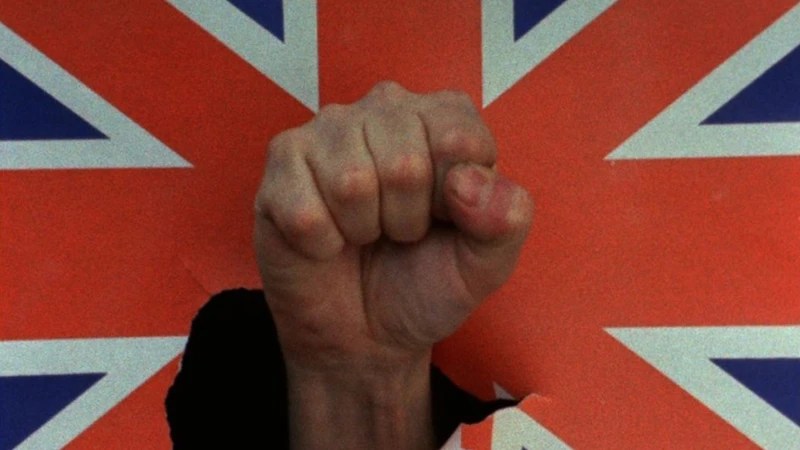
Commissioned by London Weekend Television, which then refused to broadcast it. Which says a lot about the film’s radicalism; what it doesn’t define is the film’s quality. In reality, it’s a very busy film; it opens with a ten-minute tracking shot down the MG assembly line at Cowley, the factory din fighting with readings from the Communist Manifesto, and moves through a naked woman reciting a feminist text, a reactionary TV broadcast, trade unionists, and Essex students rewriting Beatles songs as agit-prop. It isn’t “unworthy”, as such, and at moments it almost verges on feeling vital. But the overlapping techniques, sound set against image at every turn, render it somewhat incoherent. It isn’t a film you watch for joy or curiosity.
29. One Plus One (Sympathy for the Devil, 1968)
Starring the Rolling Stones, Anne Wiazemsky · 100 min
Godard’s first English-language film intercuts the Rolling Stones building “Sympathy for the Devil” at Olympic Studios with staged political tableaux: Black Panthers reading revolutionary texts in a junkyard, a porn bookshop where customers give Nazi salutes, Wiazemsky as “Eve Democracy” answering an interviewer only with yes or no. The producer recut the ending to play the finished song in full, and Godard punched him at the London premiere. It’s a beautiful-looking film, but its real curiosity is in seeing the Dziga Vertov style be built in real-time.
The film is sadly littered with the nuance-free nature of his Maoist films, which strains it considerably. What’s most interesting is how Godard treats the Stones essentially as a found object, with Brian Jones visibly drifting to the margins. And the music, obviously, works.
28. Détective (1985)
Starring Nathalie Baye, Claude Brasseur, Johnny Hallyday · 95 min
A commercial job taken on to help pay for Hail Mary, Détective sets several loosely linked groups loose in a Paris hotel: a sacked house detective and his nephew (Jean-Pierre Léaud) chewing over an old murder, a couple trying to recover a debt from a boxing promoter (Hallyday), and a Mafia godfather drifting through the lobby. It’s good-looking and made at speed, and very messy. There’s something to the idea that it has no main character, only extras, a film made entirely of supporting players, with credits scattered through it rather than bunched at either end. But it doesn’t quite come off. The hotel never fully populates itself; instead, the film drifts without purpose.
27. Une histoire d’eau (A Story of Water, 1958)
Starring Jean-Claude Brialy, Caroline Dim · 12 min
When the Seine flooded the countryside outside Paris in early 1958, Truffaut sent a crew out to improvise a little romance among the floodwaters, then lost interest. Godard took the footage, cut away most of the story and laid over it a rambling, digressive voice-over from the young woman trying to get to Paris for her classes. The result is playful, but mostly interesting as a New Wave curiosity. Godard and Truffaut work together! Kind of… It’s not especially rich.
26. Charlotte et son Jules (Charlotte and Her Boyfriend, 1960)
Starring Jean-Paul Belmondo, Anne Collette · 20 min
As a plot, it works. The whole self-pitying, insulting monologue by Jules and Charlotte’s blank waiting for it to finish to get her toothbrush. The juxtaposition between Jules’ tirade and Charlotte’s indifference is very funny, but the film lacks gravitas and is a frivolity.
25. Le Livre d’image (The Image Book, 2018)
Narrated by Jean-Luc Godard · 84 min
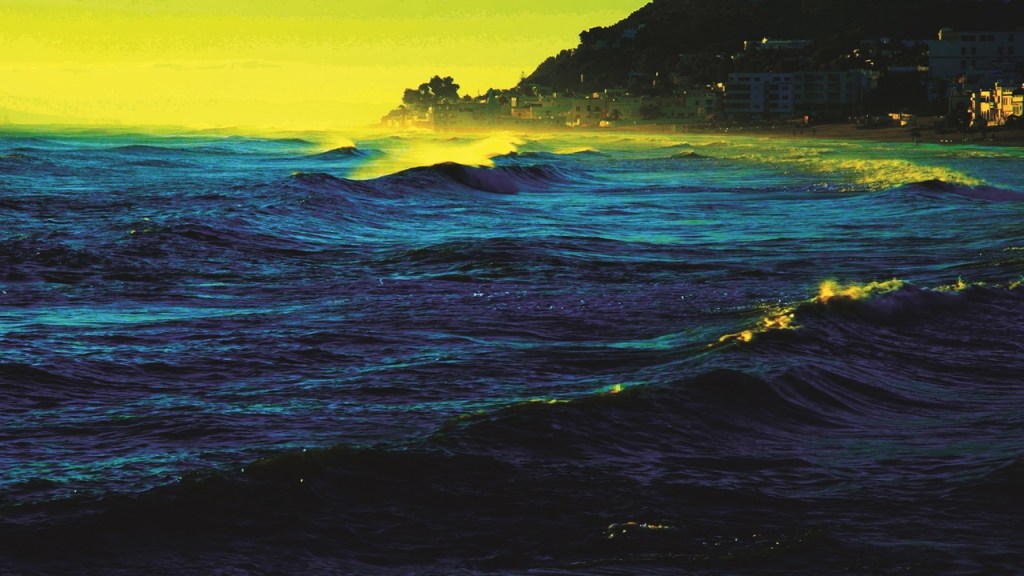
Godard’s last feature is a collage of film clips, paintings, text and music, much of it digitally saturated until it bleeds, moving from the history of cinema and violence to a long final section on the Arab world and how the West has imagined it. Cannes gave it a one-off Special Palme d’Or, the only one in the festival’s history.
It has all the issues of late Godard. You can understand what he was going for, and you can appreciate the ambition, and yet… It’s a fool’s errand to criticise late Godard: he offers what he offers, and you take what you take. But it isn’t a great film.
24. Je vous salue, Sarajevo (1993)
Narrated by Jean-Luc Godard · 2 min
A single news photograph from the Bosnian war, of a soldier standing over civilians lying in the street, is shown in fragments and close details and only revealed in full at the end. Over it, to Arvo Pärt, Godard sets “the rule” (culture, commerce, war) against “the exception” (art). It’s a very good, harrowing short. It’s a paradox too: an abstraction that refuses to point fingers, yet lands harder than most war films manage. But it’s two minutes long, and it feels harsh to judge it at all.
23. Grandeur et décadence d’un petit commerce de cinéma (The Rise and Fall of a Small Film Company, 1986)
Starring Jean-Pierre Léaud, Jean-Pierre Mocky · 92 min
Made for TF1’s Série noire thriller strand, shown once in 1986 and then barely seen until a 2017 restoration, this is one of the little-seen Godard works of the 1980s that has finally resurfaced. A broke producer (Mocky) and a director (Léaud) try to get a film off the ground while the director auditions dozens of unemployed extras, each reciting one fragment of the same Faulkner passage in a loop. It was shot in the offices of Godard’s own production company. It’s fascinatingly meta, and it plays to me almost as a reaction against his own Détective: where that film was a star vehicle that didn’t know what to do with its cast, this one is about the anonymous people a production uses up. It feels slightly held back by its limits, as if he had more to do and say than a TV budget would allow, but it’s a visual treat: fun and richly textured.
22. Je vous salue, Marie (Hail Mary, 1985)
Starring Myriem Roussel, Thierry Rode · 76 min
The Annunciation retold in modern Switzerland: Marie plays basketball and works at her father’s petrol station, Joseph drives a taxi, and the angel Gabriel arrives by plane. The Pope condemned it, a cinema in Tours was set on fire, and it was banned in several countries.
There’s a lot of worth in it, but much of the discussion still revolves around whether or not it’s blasphemous, which feels beside the point. The most interesting thing is how blatantly horny Godard is for Myriem Roussel. Antoine de Baecque’s biography backs this up: Godard was in love with her, wrote and phoned constantly, and was turned down. You can feel it in every lingering shot of her alone in bed, and in the final close-up of her open, lipsticked mouth. It’s transcendent and poetic, but it does drag itself through some scenes.
21. King Lear (1987)
Starring Burgess Meredith, Molly Ringwald, Peter Sellars · 90 min
The legend is that Godard signed the deal with Cannon’s Menahem Golan on a napkin at Cannes. Norman Mailer was to write it and play Lear, but he walked off after a day or two, and his departure stays in the film. What’s left is set after Chernobyl has wiped out culture, with Shakespeare’s descendant (Sellars) trying to reconstruct the lost plays, Godard as a dreadlocked Professor Pluggy, and Woody Allen turning up as “Mr Alien”. What an odd film. It’s so prankishly elusive, so Godard, that it defies everything. It wants you to mock it, and when you do, you end up half agreeing with it. It’s a puzzle. It borrows, it steals, it tries to piss off anyone who wants to ‘read’ it.
20. For Ever Mozart (1996)
Starring Madeleine Assas, Frédéric Pierrot · 84 min
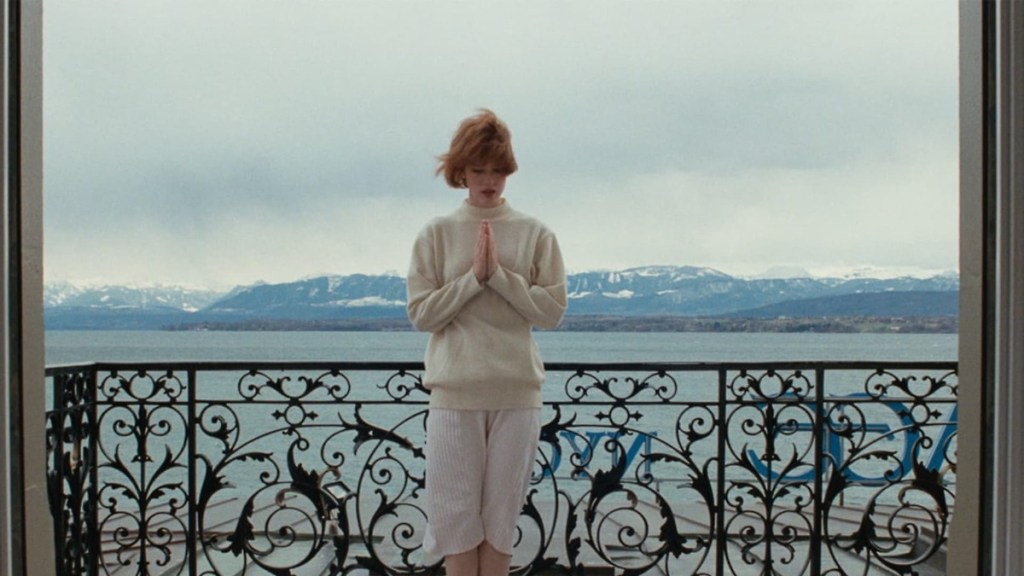
One of Godard’s busiest films; the result of Godard building it from three abandoned projects. You can feel its seams. The plotting is uneven; it has no respect for basic cinema conventions, and it doesn’t feel entirely like Godard knows what he is trying to say with it. It’s very dense, full to the brim with ideas; the only issue is those ideas are cluttered around various scenes when you’re just kind of waiting for the next moment.
19. Les Carabiniers (1963)
Starring Marino Masé, Albert Juross · 80 min
That Godard made this shabby, grainy, deliberately crude satire in the same year as Le Mépris is proof of who he always was. It’s a slight film without much depth to it. Still, it’s a good anti-war satire, and the postcards scene is brilliant: the two men lay out their “treasures” one card at a time, the Parthenon, the Taj Mahal, a Chicago aquarium, Liz Taylor’s Cleopatra, all announced in the same deadpan, for close to ten minutes. It’s the whole film’s argument in one gag, and it gets funnier and sadder as it goes on.
18. Dans le noir du temps (2002)
Directed by Jean-Luc Godard · 10 min
Godard’s segment of the anthology Ten Minutes Older: The Cello, which asked directors for ten minutes on time. He answered with a countdown of “last minutes”: of youth, of courage, of thought, of memory, of love, of silence, and finally of cinema, each set out in clips from his own films set against real images of atrocity. It’s the highest-placed short here, and limited only by being one. It’s elegiac, and it’s the best argument there is for cinema as an art of time itself. The ten-minute brief stops being a constraint and becomes the subject.
17. La Chinoise (1967)
Starring Anne Wiazemsky, Jean-Pierre Léaud, Juliet Berto · 96 min
Five young Maoists spend a summer in a borrowed Paris flat, lecturing each other, staging agit-prop skits and talking themselves into terrorism. It’s stylish as hell: primary colours, walls daubed with slogans, a barricade built from copies of the Little Red Book. But its limitations are well known. The style is the spoonful of sugar that helps the medicine go down. The characters are isolated buffoons, a little too keen to kill. They pick their assassin with a nursery-rhyme counting game, and Véronique kills the wrong man first because she reads the room number backwards. The best scene is the quietest, a long conversation on a train in which the philosopher Francis Jeanson calmly takes apart her case for violence and doesn’t move her an inch. And the film’s mood captures exactly how 1967 felt in France: things can’t go on like this.
16. Passion (1982)
Starring Isabelle Huppert, Hanna Schygulla, Michel Piccoli · 88 min
A Polish director in Switzerland is making a film called Passion that consists of nothing but restaged old master paintings (Rembrandt’s Night Watch, Goya’s The Third of May 1808, Ingres’s Bathers, Delacroix’s Crusaders). He has no story and can never get the light right. Around the shoot, a factory worker (Huppert) is sacked for organising a strike. It reunited Godard with Raoul Coutard for the first time since 1967, and it’s gorgeous, of course, and beautifully meta. What strikes me most is that, unlike other “painterly” directors (Peter Greenaway, say), Godard stays attentive to the people who make up the compositions: the extras recruited from the local factory who grow restless, the crusaders circling their horses round the set, the models standing naked in Ingres’s bath between takes. The paintings are the film’s subject, but its sympathy is with the bodies holding the poses.
15. Une femme mariée (A Married Woman, 1964)
Starring Macha Méril, Bernard Noël, Philippe Leroy · 94 min
Twenty-four hours in the life of Charlotte, a Parisian wife moving between her pilot husband and her actor lover, reading magazines and worrying about her body, until she finds she’s pregnant and doesn’t know by whom. French censors banned it at first. It’s hard now to see what the fuss was about. To me, abstractly, the film is about Karina; Godard’s own marriage was coming apart, and it’s hard not to see it in every scene. Méril is one of the less compelling Godard heroines. The film tells you there’s nothing to be learned from looking, and it plays almost like a piece of music, all repetition, rhythm and texture rather than explanation.
14. Le Petit Soldat (1960, released 1963)
Starring Michel Subor, Anna Karina · 88 min
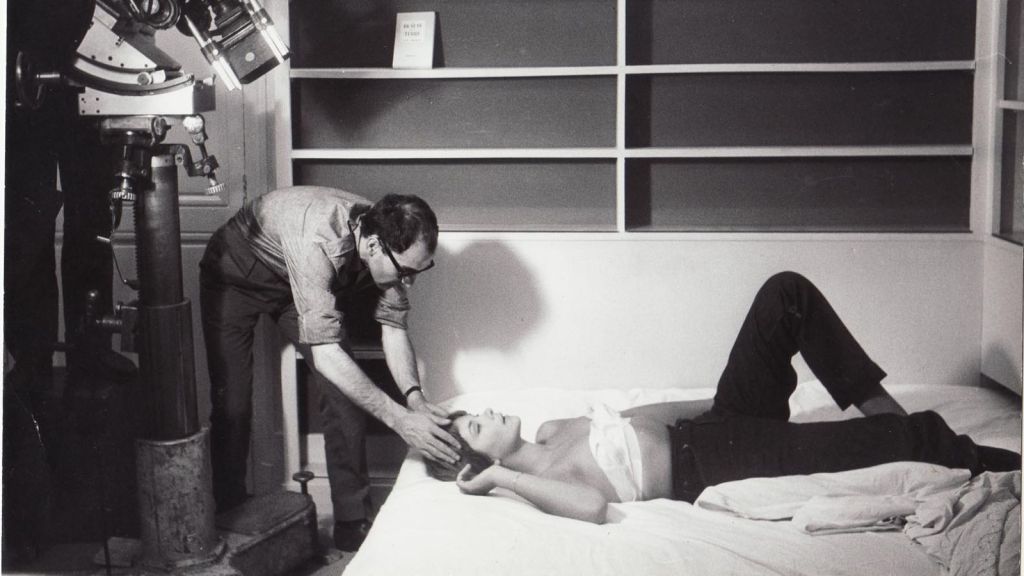
Bruno, a French deserter in Geneva working for a right-wing cell fighting the FLN, is ordered to kill a radio commentator and keeps stalling. Meanwhile, he falls for Veronica, played by Anna Karina in her first Godard film, who turns out to be on the other side. The censors banned it for nearly three years for showing torture. It’s a huge departure from Breathless, and yet very close to it: the handheld camera, the real Geneva streets, the old spy-movie standbys in place of Breathless‘s gangster tropes, and Bruno’s voice-over doing what Michel’s mugging did. It’s also where Godard says, “Photography is truth. And cinema is truth twenty-four times a second,” during Bruno’s photo session with Veronica. It’s most fascinating as a show of Godard’s political ambivalence early on. Retrospectively, you’d anticipate a pro-FLN piece, but no, the only torture is by the FLN. There’s a naivety to the films in general that places it firmly in Godard’s pre-radical phase.
13. 2 ou 3 choses que je sais d’elle (Two or Three Things I Know About Her, 1967)
Starring Marina Vlady, Anny Duperey · 87 min
2 ou 3 choses que je sais d’elle was shot in the same month as Made in U.S.A., one film in the morning and the other in the afternoon. It is the lesser of the two films, with a spread of very funny moments, such as an American war correspondent making two women parade naked with airline bags over their heads, and some truly aimless ones. Depending on the hour, it’s either a masterpiece or a pretentious waste of film.
12. Prénom Carmen (First Name: Carmen, 1983)
Starring Maruschka Detmers, Jacques Bonnaffé · 85 min
Bizet’s Carmen reworked as a heist film: Carmen talks her uncle Jeannot, a washed-up filmmaker played by Godard himself, into lending her his seaside flat for “a film” that is really a cover for a kidnapping, and falls for Joseph, the guard she meets during a bank raid. It won the Golden Lion at Venice. It’s a hodgepodge of genres (heist, meta-comedy, romance), and does so in an unfocused, off-kilter and often hard-to-follow style. It’s rudely sexual and beautifully shot, languid and taut in neighbouring scenes, with the thriller constantly intercut with a string quartet rehearsing late Beethoven. And it’s funny: Godard as a burnt-out director hiding in a clinic is one of his best comic turns. It might be one of his least political films.
11. Masculin féminin (1966)
Starring Jean-Pierre Léaud, Chantal Goya, Marlène Jobert · 103 min
It’s littered with classic Godardisms: “The children of Marx and Coca-Cola.” It’s sharp, vital and at a time when much of the French New Wave was edging towards a certain ‘cinema of tradition’ position they were meant to reject (Rivette’s The Nun, Truffaut’s Fahrenheit 451), Godard violently continues to reject it. The film itself is about failure: failure to engage, failure to find the right way to be, failure to impress. Everyone interviews everyone, and nobody hears an answer. When Madeleine tells Paul she loves him in a cinema, he walks out to spray-paint a slogan.
10. Week-end (1967)
Starring Mireille Darc, Jean Yanne · 104 min
A bourgeois couple, each plotting to kill the other, drive out of Paris to claim an inheritance as France collapses around them into car wrecks, burning bodies, figures from literature and history, and finally cannibal guerrillas in the woods. Every Godard film gets a superlative, and this one’s might be “his bleakest satire”. It’s bold and daring, the closest he ever comes to Buñuel, and a great film, though its reputation as the last word on 1960s Godard is somewhat overblown.
Here Godard sets cinema up just to watch it crash. The centrepiece is the traffic jam, a single sideways tracking shot of roughly eight minutes past stalled cars, zoo animals, a Shell tanker and children playing ball, ending in carnage. It’s as if to show that when he’d been brief elsewhere, he was brief on purpose. The film signs off with “End of cinema”. Its bleakness can be a bit much, but it’s a great film.
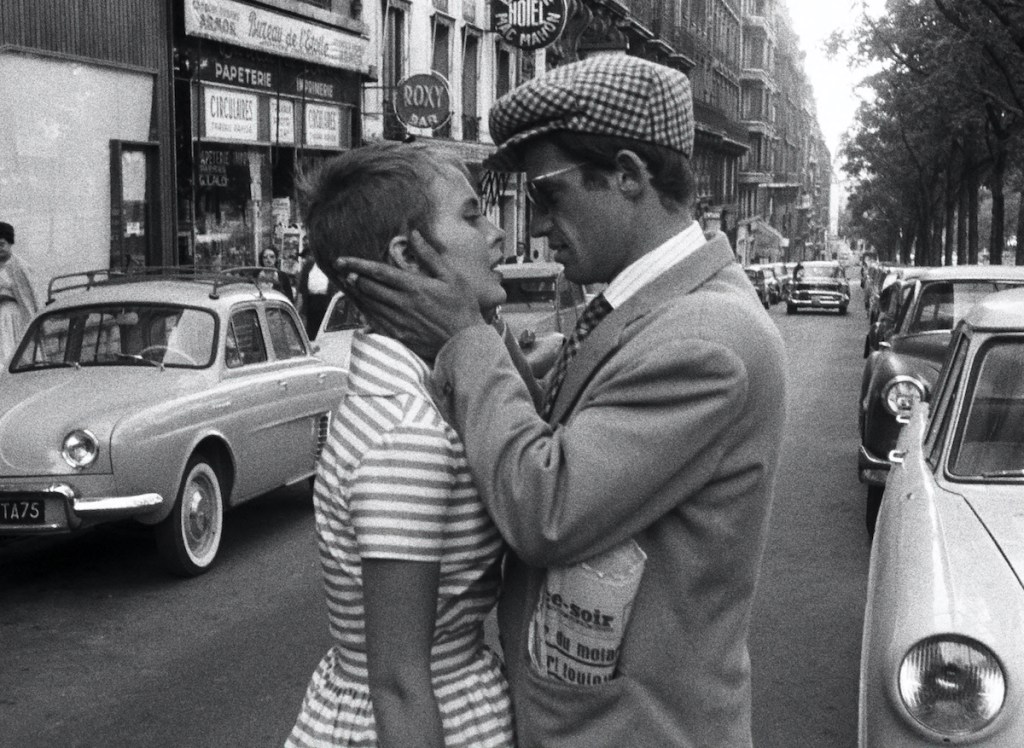
9. À bout de souffle (Breathless, 1960)
Starring Jean-Paul Belmondo, Jean Seberg · 90 min
What is there to say about Breathless that hasn’t been said? Shot in twenty-three days without permits, with Coutard pushed around in a wheelchair, it’s the film that started it all. It isn’t that Breathless has aged badly; it hasn’t. It’s still iconic, chic and stylish, the sort of film that arrived burning at exactly the right moment. The only reason I rank it below the others is that it suffers from Citizen Kane-itis. So much of what made it revolutionary, the jump cuts, the handheld camera, the casual cool, has been borrowed and repurposed so many times since that its vitality feels less urgent. But that’s not the film’s fault.
8. Alphaville (1965)
Starring Eddie Constantine, Anna Karina, Akim Tamiroff · 99 min
Eddie Constantine’s Lemmy Caution, the trench-coated pulp hero of a string of French B-movies, arrives in Alphaville, a city run by a computer called Alpha 60 that has outlawed emotion and poetry. No sets were built. The future is just 1965 Paris at night, office blocks and hotel corridors, shot by Raoul Coutard with almost no extra light.
It’s one of Godard’s most outright entertaining films. Anna Karina is perfect in it, as a woman learning to say “I love you”, and the detective thriller set in the future works with precious little political pill-swallowing required. Godard pares the genre down to its bare essentials. A shootout in a hallway is reduced to a second or two, cutting from a bullet wound in a forehead straight to several bad guys unconscious on the floor, and fights are frozen into comic-book poses.
7. Une femme est une femme (A Woman Is a Woman, 1961)
Starring Anna Karina, Jean-Claude Brialy, Jean-Paul Belmondo · 84 min
Angela, a striptease dancer, wants a baby now. Her boyfriend Émile doesn’t, and his friend Alfred is in love with her. That’s the whole plot, and it’s all Godard needs for his first film in colour and widescreen, which he called “a neorealist musical”. It’s a perfect little film: delightful, funny, meta and playful with itself. Godard takes the romantic musical comedy and pares it right down, so Michel Legrand’s score surges up and cuts out mid-phrase, the couple bow to the camera before a row, and during one fight they argue by pointing at book titles. It’s so playfully pared down that the strangeness starts to feel normal. The fourth-wall breaks make it, along with the in-jokes: Belmondo rushing off so as not to miss Breathless on TV, Jeanne Moreau asked in a bar how Jules et Jim is going. And Karina, in red against Émile’s blue, is sublime. It’s a trifle, but who doesn’t like trifle?
6. Bande à part (1964)
Starring Anna Karina, Sami Frey, Claude Brasseur · 95 min
Based on an American pulp novel, it’s maybe Godard’s most accessible and straightforward work. It isn’t exactly experimental, though the narration and the sudden silences are devices all the same, and it balances its joyful chic with a thoughtful melancholy. The famous scenes are famous for a reason. The three line-dance the Madison in a café while the music drops out and Godard narrates their thoughts. They call for a minute of silence, and the soundtrack goes dead for about thirty-six seconds. It’s no surprise it has stayed popular: it’s the ideal Godard film for people who don’t like Godard. Look no further than the run through the Louvre, nine minutes and forty-three seconds.

5. Sauve qui peut (la vie) (Every Man for Himself, 1980)
Starring Jacques Dutronc, Isabelle Huppert, Nathalie Baye · 88 min
Three lives cross in a Swiss town: Paul Godard, a TV director splitting from his partner Denise, who is leaving for the country, and Isabelle, a prostitute trying to move up. Godard’s “second first film” is a return to narrative. A rebirth, supposedly, after a decade of Dziga Vertov militancy and video work. It’s a joy to see the technical wizardry back, especially the stuttering, frame-by-frame slow motion he brings out at moments of contact or violence. It’s a wonderfully shot film, but it isn’t one to start with. You need to know Godard, and his journey to 1980, to get it. At its centre is a filmmaker who shares his surname, at a personal impasse and constantly voicing dirty thoughts. The film is heavy. Whatever comedy there is, like a businessman choreographing a sex act from behind his desk like a production line, is deadpan and joyless. This is Godard coming to terms with the death of his 1970s idealism, and it ends with Paul hit by a car while walking backwards away from his family.
4. Le Mépris (Contempt, 1963)
Starring Brigitte Bardot, Michel Piccoli, Jack Palance, Fritz Lang · 101 min
Perhaps his best-looking film. CinemaScope. Cinecittà. Villa Malaparte. Godard liked to quote Griffith’s line that all you need for a film is a girl and a gun, and here Bardot is an artillery barrage. The film dances around its real subject, which is the film itself. Godard makes a film that mocks the idea of making the film. He attacks the American money behind it, folds his own failing marriage into the central one, and watches two people abuse each other through a half-hour apartment sequence that is among the best things he ever shot. It’s an obsessive film that only really makes sense as two films at once. One is about making a film inside a capitalist system run on American money that can’t comprehend what it’s seeing. The other is about being obsessed with a woman you torture and who tortures you, and where that inevitably leads.
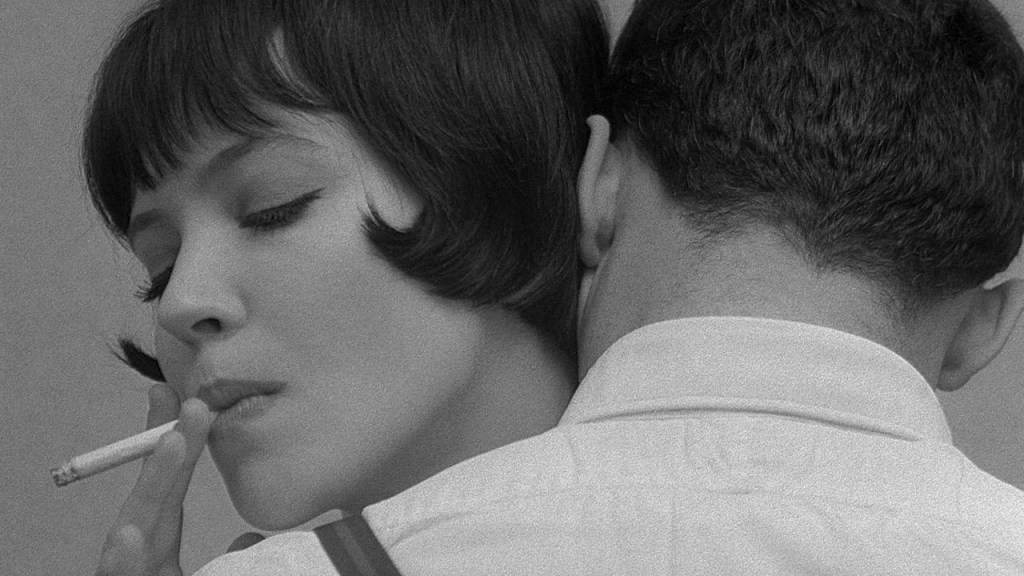
3. Vivre sa vie (1962)
Starring Anna Karina, Sady Rebbot · 85 min
Vivre sa vie follows Nana, a young Parisian woman who leaves her husband hoping to act and drifts into prostitution, across twelve tableaux, each introduced by a numbered intertitle like a chapter heading in an old novel. Godard tried the approach several times again, but never with the same willingness to lean into the melodrama. This is where his distancing devices become a system: the intertitles, the sociological voice-over, the characters shot from behind, as in the opening conversation where we see Nana’s face only in a mirror.
All of them remind you that this is artificial, and they defined the next sixty years of his work. And yet, perversely, we still care about Nana. We care when she weeps at Dreyer’s The Passion of Joan of Arc in a cinema, when she dances alone round a pool table to the jukebox, and when she sits with the philosopher Brice Parain talking about language. Then there’s the ending, abrupt and almost offhand, which hurts precisely because the film refused to milk anything before it.
2. Tout va bien (1972, with Jean-Pierre Gorin)
Starring Jane Fonda, Yves Montand · 95 min
An American radio reporter (Fonda) and her husband, a former New Wave director now making adverts (Montand), visit a sausage factory just as a wildcat strike breaks out, and get locked in the manager’s office with him. Finally, and maybe for the only time, Godard (with Gorin, who by some accounts ran much of the shoot while Godard recovered from a motorcycle accident) manages to synthesise formal radicalism with political radicalism.
The first thing the film does is make sure you know it knows this is a sell-out. It opens on the sound of cheques being signed for each part of the production, while voices discuss the need for stars. They need Jane Fonda to make the film; the film doesn’t need Jane Fonda; the audience doesn’t need Jane Fonda. Films need scripts, but this film doesn’t.
It’s mature. Unlike Week-end or La Chinoise, it attacks without loud bravura. There’s enough distance that there’s no thrashing anger, as if Godard had remembered, briefly, that he didn’t need to stop being an artist to be political. There’s a lot to say about the factory set, a cut-away doll’s house the camera tracks along room by room, and the supermarket finale, a long sideways track along the checkouts as the shop is looted. There’s the sadness and the frustration of 1972, four years after the barricades. And there’s the transparency of it all.

1. Pierrot le fou (1965)
Starring Jean-Paul Belmondo, Anna Karina · 110 min
There’s a sense that Pierrot le fou is the culmination of his early work: the musical, the crime film, the lovers on the run. It’s a postmodern Bonnie and Clyde two years before Bonnie and Clyde, a script that was offered to Godard and that he turned down. It’s no surprise that what came after looked so different. It’s endlessly playful and inventive, reinventing his own wheel. He casually, so casually, breaks conventional storytelling: the couple talk to the audience from the car, Samuel Fuller turns up at a party to explain that cinema is “emotion”, and comic-book panels, quotations and songs crowd in. He puts mood, colour and bursts of feeling ahead of anything like convention. It ends with a pan across the open sea as Rimbaud’s lines on eternity are whispered.
Watching it is like listening to Dylan’s “Like a Rolling Stone”, released the same summer. You’re introduced to it, and you think it’s great. Then you stop going back, because you’ve moved on to the contested territory of the ’70s, ’80s and ’90s, and you start arguing that Dylan, or Godard, never got worse and was always as good as ever. Then you rewatch Pierrot le fou and realise that maybe they had a point. Maybe it never got better.




Leave a Reply