
Getting a movie made is a huge success, and having one which can arguably be called a masterpiece is the sort of success any director would dream of having. Calling someone a fluke director might seem mean, but it’s not really intended that way, it’s meant as more of a signifier than a detraction. However, the difference between a great director and a good one can often be consistency. Here, we look at ten directors who made stone-cold classics but whose larger body of work is fairly middling.
1. Mathieu Kassovitz
Mathieu Kassovitz is an intriguing example of a director who fits the mould of a “fluke masterpiece director.” Kassovitz, primarily known for his 1995 film “La Haine” (“Hate”), created a profound and gripping portrayal of life in the French banlieues. This film stands out starkly in his filmography, which otherwise lacks the same level of critical acclaim and impact. It’s a brilliant film, celebrated for its raw and authentic depiction of urban discontent and racial tensions in France, and it won numerous awards, including the Best Director award at the Cannes Film Festival.
The rest of Kassovitz’s directorial work, however, hasn’t garnered the same level of recognition. Films like “Gothika” and “Babylon A.D.” were met with mixed to negative reviews, failing to match the critical success of “La Haine.”
2. Bob Clark
Bob Clark presents a different but equally interesting case. Clark is best known for his 1983 holiday classic, “A Christmas Story,” a film that has become a staple of Christmas movie marathons and is celebrated for its nostalgic, heartwarming portrayal of childhood holiday experiences in mid-20th century America. He has other successes like Black Christmas and Dead of Night, which are well-regarded, but A Christmas Story stands head and shoulders above.
Clark’s other works, including “Porky’s,” “Baby Geniuses,” and its sequel, while commercially successful in some cases, are quite frankly terrible movies. Clark’s career is blotchy at best.
3. Irvin Kershner
Whereas the majority of Bob Clark’s filmography ranges from bad-terrible to only a handful of good films, contrastingly, Irvin Kershner’s movies tended to be average throughout his career, with one major exception. Star Wars: Episode V – The Empire Strikes Back is widely regarded as not only the best film in the original “Star Wars” trilogy but also as one of the greatest sequels in cinematic history. This film’s critical and commercial success, its deep impact on popular culture, and its darker, more complex tone compared to its predecessor set it apart as a standout achievement in his career.
Kershner enjoyed a good career and was always an outsider in Hollywood. Most of the rest of his works are uneven; however, films like The Eyes of Laura Mars and RoboCop 2 are decent films that are just underdeveloped. Does that make The Empire Strikes Back a fluke? No, but Kershner never got anywhere near that level again.
4. Richard Kelly
At this point, the story of Richard Kelly is pretty well known. He made one instant-cult classic film, Donnie Darko, and proceeded to follow it up with an obtuse sprawling film which definitely has its fans. Still, even its biggest worshippers will admit it was a commercial failure and had little in the way of mainstream critical acclaim. Kelly hasn’t had the same opportunities since Donnie Darko, which makes him one of the most clear-cut examples of a fluke director.
5. Mike Hodges
In 1971, Mike Hodges made a classic British film, Get Carter, which gained international acclaim for Michael Caine’s performance and its gritty sense of realism. By all rights, the director of this film should have joined fellow Brit grit maker Peter Yates in Hollywood, but this never happened. Instead, the rest of Hodges’ career was blotchy. Yes, he had moderate hits like Pulp or The Terminal Man and cheesy, colourful sci-fi films like Flash Gordon, but none of these have withstood time as Get Carter has. Eventually, he’d make The Croupier, which is a well-regarded film, so Hodges isn’t a one-note director, but none of his works even stand nearly as tall as Get Carter.
6. Andrew Davis
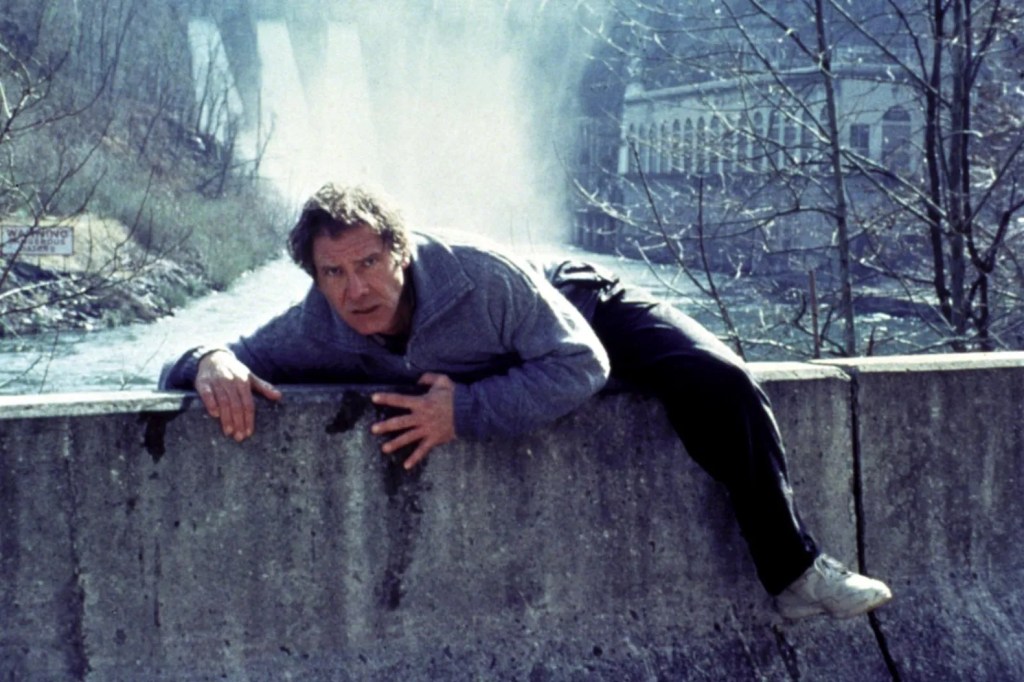
Any list covering Harrison Ford’s best performances will touch on films directed by Peter Weir, George Lucas, and Steven Spielberg. One constant on these sorts of lists is 1993’s classic action-thriller The Fugitive, co-starring Tommy Lee Jones. The film was a commercial and critical success, but unlike Ford’s other directors, its creator isn’t generally highly regarded. Andrew Davis has a few other OK films, Holes or Under Siege, but neither really transcend their genre origins. He never enjoyed another standout hit, making him one of the most obvious directors on this list.
7. Neill Blomkamp
Some of the directors here had hits in the middle of their careers; some had them towards the end. However, Blomkamp’s big film was his debut, District 9, a distinct commercial and critical success that blended sci-fi and social commentary, addressing widespread issues like segregation and xenophobia. It’s a groundbreaking film that shows an auteur who could craft an unprecedented world. People were excited for what would come next. But instead of a masterpiece, we got watered-down works like Elysium and Chappie, whose social messages felt wish-washy but still retained his visual style. Blomkamps is an interesting figure, and it is possible he’ll resurrect his career, but if he doesn’t, he neatly fits on this list.
8. Dan Gilroy
Like Richard Kelly, Dan Gilroy made his big movie with Jake Gyllenhaal – something to consider casting agents. Nightcrawler is a tense, character-driven film that dives into the life of a morally ambiguous protagonist in the neon city of Los Angeles. Many of the directors on this list are outsiders to Hollywood, which perhaps contributes to their lesser opportunities. However, Gilroy is as Hollywood as it gets, having written for the Bourne series and coming from a filmmaking family. Gilroy’s hype didn’t last for long after Nightcrawler, Roman J Israel, was an adequate film with a good Denzel Washington performance, while Velvet Buzzsaw was an easy-to-forget Netflix flick. This means Gilroy remains, as of now, a fluke director.
 Bronze Screen Dream