

Five new profiles. If you pay attention, you’ll be able to notice a trend in this one; the majority aren’t from the West. I’m trying to broaden our coverage. We’ll inevitably have more Western directors on here, but I don’t think that means we can’t attempt to spread the attention just a bit.
David O. Russell
United States of America 🇺🇸 | 1958 – – | Flirting With Disaster
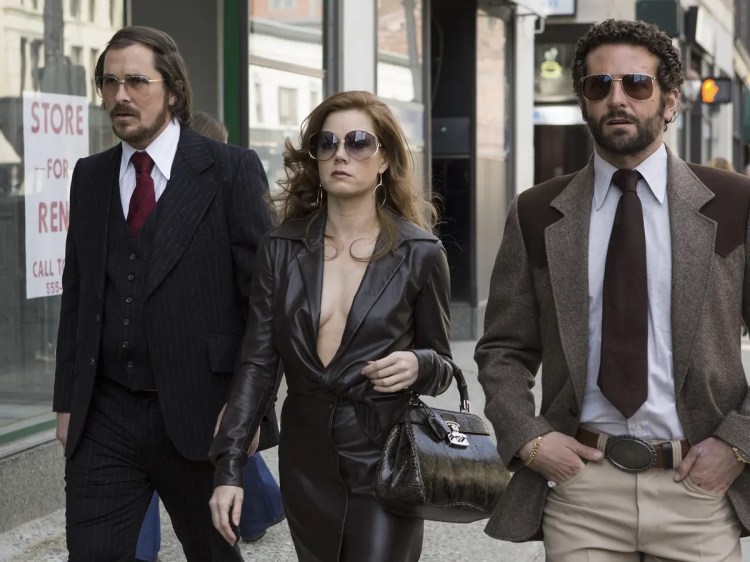
Let’s get the elephant out of the room. David O. Russell’s filmography comes with plenty of baggage. When he isn’t steeped in controversy, he’s… well, he’s always steeped in controversy, isn’t he? You might be thinking, ‘Why add him? And if you do, why now? So many major directors aren’t added yet, he is?’
Russell appears in plenty of ‘similar director’ sections and has been a major figure in American cinema since the 90s. While he might not be to everyone’s taste, it’s hard to argue he doesn’t deserve a profile.
He’s an enigma, a chameleon of sorts, shifting effortlessly from the gritty realism of films like Three Kings to the whimsical charm of Silver Linings Playbook. He’s achieved mainstream success, critical plaudits, and awards in a way few directors have in American cinema, especially while maintaining an idiosyncratic voice beneath his star-studded ensembles.
Russell’s films, at their heart, are about complex characters, often flawed, confronting their personal demons and societal expectations. Whether it’s the intricate family dynamics in The Fighter or the raw ambition driving the characters in American Hustle, he’s a master at revealing the underbelly of the American Dream.
Controversially, his work with actors is what really makes his films great. Think about that performance by Jennifer Lawrence or the transformation of Christian Bale under Russell’s direction. His sets might be infamous for their high tension, but it’s undeniable that this energy translates on-screen in often electric performances.
Kiyoshi Kurosawa
Japan 🇯🇵 | 1955 – – | Contemporary Japanse Seediness

Like most film fans, I first heard the name Kiyoshi Kurosawa and absently wondered if he was related to Akira in any way, perhaps a long-lost child. However, this Kurosawa couldn’t be much more different from that one. They’re both Japanese directors, but they don’t share much more than that.
Kiyoshi Kurosawa’s world of enigmatic atmosphere and psychological intricacies isn’t too well known to the general public. This is ironic, given his ability to straddle genres— from horror to family drama— with a distinct, quiet tension.
Perhaps his masterful Cure has most imprinted itself on the global cinematic consciousness. The film’s brooding ambience, haunting performances, and lingering narrative questions tap into the mind’s deepest recesses. This penchant for unsettling silence and unspoken horrors has solidified Kurosawa’s place.
Yet, while Cure might be his apex, you cannot afford to overlook other films like Tokyo Sonata. Here, Kurosawa steps away from the outright eerie, offering instead a muted family drama that resonates deeply with Japan’s socio-cultural landscape. The film’s handling of familial strife and economic pressures feels intimate, yet it transcends borders, touching hearts universally.
Then there’s the visually spellbinding Journey to the Shore. Veering into romantic fantasy territory, Kurosawa showcases his versatility and deft touch in evoking emotions, whether chills down your spine or tears in your eyes.
While there’s a lot of talk about the cinematic greats of Japan, Kurosawa remains a shade more elusive, a tad more shadowed. Yet, as those fortunate enough to witness his work will attest, the depths of his creations run profound, revealing layers of humanity and mystery with each viewing.
Nelson Pereira dos Santos
Brazil 🇧🇷 | 1928 – 2018 | The Father of Cinema Novo
The Western-centric nature of these profiles annoys me. Yeah, there are plenty of Japanese directors, but even China is underrepresented. It’s sad, but it’s also a clear reflection of cinema history; only a select few nations have really been afforded the chance to leave an imprint on the medium. As such, I take a rather casual approach generally to representation. I’ve addressed this before, but I’m not sure that amplifying a voice based on what could have been is fair.
But I’m always trying to expand the roster because there are always directors who are pushing the medium even in places with no support, such as Apichatpong Weerasthakul in Thailand. But this entry is about Nelson Pereira dos Santos, who is our 3rd Brazilian entry after Glauber Rocha and Eduardo Coutinho. Like these two, dos Santos emerged in the 1960s as a voice of the Cinema Novo.
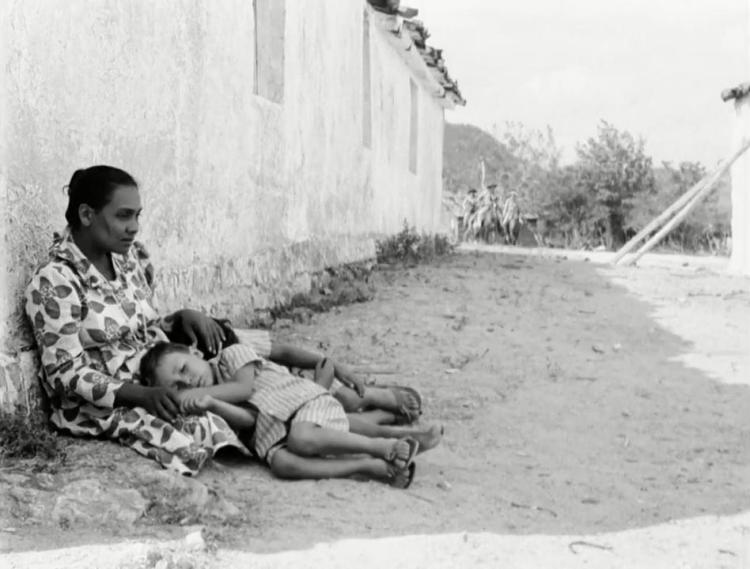
Dos Santos had this undeniable ability to capture Brazil’s diverse culture and social fabric. His movies, like Rio, 40 Graus, and Vidas Secas, are like beautiful tapestries woven with threads of stark reality and poetic beauty. They never merely showcased Brazil; they breathed its air, echoed its voices, and pulsated with its rhythms.
You can’t forget the sheer impact of his 1963 work, Vidas Secas. Here, dos Santos beautifully translates the arid Brazilian hinterlands into a deeply resonating story of family, survival, and the relentless onslaught of nature. His signature style – capturing ordinary people against the backdrop of vast landscapes – is hauntingly present, and the characters’ desperation is so palpable that it lingers long in the memory.
The subtle genius of dos Santos wasn’t just in his directorial prowess. It lay in his ability to mirror Brazil’s intricate social issues onto the silver screen without succumbing to preachy or overtly dramatic tendencies. He was a storyteller first, with the soul of a poet and the eye of a documentarian.
Djibril Diop Mambety
Senegal 🇸🇳 | 1945 – 1998 | Touki Bouki & More

Djibril Diop Mambety was one of the first and greatest African directors. His Touki Bouki blew up the world of international cinema. Hailing from Senegal, his films stand as a testament to the boundless creativity of African cinema and a searing indictment of post-colonial complexities.
Mambéty’s cinema offers a lyrical juxtaposition of whimsy and poignancy, often navigating the dense maze of socio-economic issues plaguing Senegal with a touch that is both gentle and hard-hitting. Touki Bouki remains his magnum opus—a film as scathing in its critique as it is poetic in its narrative. It’s a tale of love, disillusionment, and the yearning for something more told through Mambéty’s unique vision.
But it isn’t just the stories he tells; it’s the manner of his telling. His use of sound, experimental editing, and vivid imagery placed him in a league of his own. The method in which he played with traditional narrative structures while still maintaining a distinct African voice makes him not just an icon in Senegalese cinema but in world cinema.
His later films, such as Hyenas, proved he wasn’t a one-hit wonder, weaving parables of modernity and tradition, Western influence, and African essence. Each frame Mambéty composed is a canvas, brimming with vibrant emotion, context, and subtext hues.
The only reason it’s taken this long for Mambety to get his profile is that the system I have in place to select which directors to profile is somewhat biased. It relies on directors appearing in the top 250 list (Meaning rich filmographies are favoured) or similar filmmakers sections. Mambety, being such a vibrantly African voice, doesn’t appear much in other filmmakers’ profiles, and his lack of opportunities throughout his career meant he didn’t have the chance to create a thick, rich backlog of films. But make no mistake, Mambety is a major director worth watching.
Lav Diaz
Philippines 🇵🇭 | 1958 – – | Filipino Slow Cinema
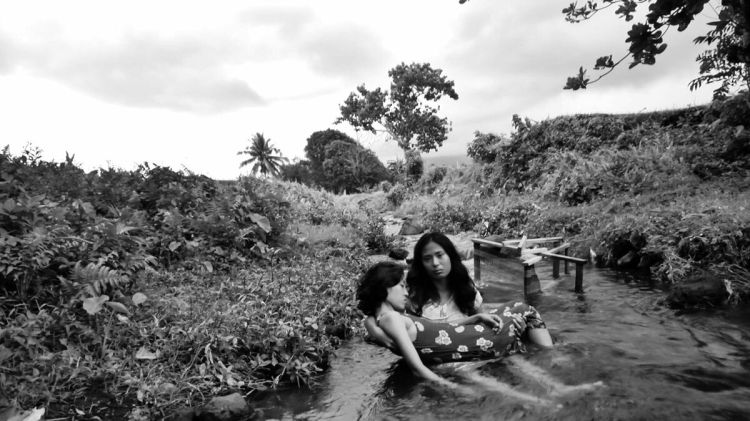
The ebb and flow of time dictate Lav Diaz’ slow cinema. It operates as an invitation into the Filipino psyche, a meditation on its history, traumas, and the beauty that emerges amidst pain. While other directors use film as a sprint, for Diaz, it’s an ultra-marathon, but the rewards for those patient enough to embark on the journey are immeasurable.
His films are not merely extended in terms of time but are expansive in their thematic reach. Works like Norte, the End of History, and The Woman Who Left are not just tales of personal struggles but epics that speak to a nation’s soul. The former, an inspired reimagining of Dostoevsky’s “Crime and Punishment”, reveals Diaz’s talent in melding literary classicism with Filipino narratives.
The landscapes of Diaz’s films are characters themselves, speaking volumes with their silences. There’s a poignant beauty in the way he captures the sprawling hills, the endless horizons, and the life that moves subtly within them. His black and white palette is not a mere stylistic choice but rather an evocative tool to underscore the stark contrasts of life, much like the stories he crafts.
Diaz isn’t a major director in the classical sense; none of his films have really transcended their arthouse origins, and even his best films aren’t universally acclaimed in the festival circuit, but over the years, he has steadily built a filmography crafted around lingering moments of deep introspection.
 Bronze Screen Dream