
Roll up, roll up! We’ve got some more profiles going. In this entry, we’ve got a horror master, a period drama maestro, a talented choreographer, a controversial realist and the journeyman of French cinema.
In case you’re counting, that’s three Americans and two Frenchmen.
Wes Craven
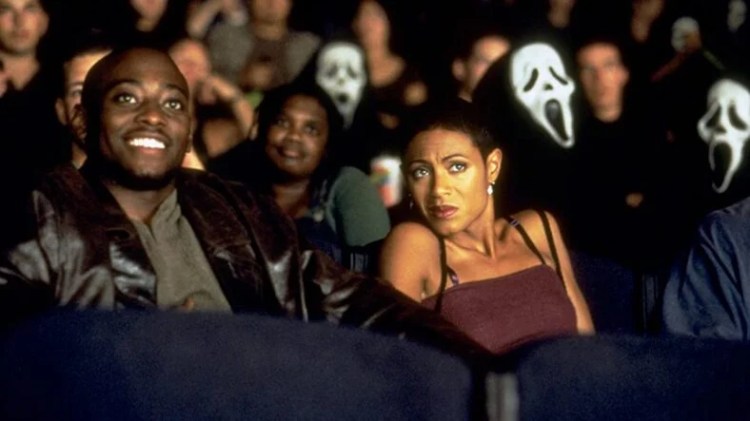
United States of America 🇺🇸 | 1939 – 2015 | The Man Who Made Our Nightmares Scream
Horror never tends to get its deserved plaudits. Rarely do its films reach critical acclaim, and nor do its creators. Weirdly, horror doesn’t get much credit for what it does. Yes, it is filled with films that simply rehash boring tropes, but a great horror film is as good as a great drama. Horror only really came into its home as a genre of dread in the 1970s, thanks to the likes of Wes Craven and Tobe Hooper.
From the dream-haunting Freddy Krueger to the metatextual chills of Ghostface, Craven wasn’t just making monsters – he was crafting cultural icons. The audacity of his work, mixing terror with an astute comment on society’s darkest corners, constantly set him apart. His films weren’t just about jumpscares; they deconstructed the very nature of fear and our relationship with it.
How about the opening scene of Scream, a brutal subversion of Hollywood conventions that masterfully blends tension, dark comedy, and cultural commentary. It wasn’t just a declaration of Craven’s return to form but an unspoken manifesto of what horror in the ’90s would be – self-aware yet utterly terrifying.
Craven enjoyed a long and successful career as far as horror directors go; most only get a handful of films and then fade away, but he was at the top of his game for four decades.
It’s perplexing that Craven’s name isn’t already in the top 250 directors list. Perhaps it’s the genre’s perennial fight for legitimacy, or maybe Craven’s sly winks to his audience made some take him less seriously. But make no mistake, Wes Craven deserves to be considered a major director.
Craven once said, “Horror films don’t create fear. They release it.” And with each masterful cut, jump, and scream, he did just that. Every cinephile, whether they admit it or not, has been touched by Craven. And as the night descends and shadows lengthen, his cinematic phantasms continue to haunt us, reminding us of a master at the peak of his craft.
James Ivory

United States of America 🇺🇸 | 1928 – – | Merchant-Ivory Productions
For a few years, James Ivory had the film industry in the palm of his hands. While blockbusters enraptured mainstream audiences, Ivory created pleasant period dramas for those looking for a more languid pace. Those Ivory-Merchant productions are steepled parts of history at this point, those films perfectly capturing a bygone era. His penchant for detailed storytelling and immersion into the world of the characters brought forth a style that was less about showmanship and more about substance.
Ivory’s collaborations with Ismail Merchant were like a match made in cinema heaven – the duo excelled in period dramas, adapting classic literature into cinematic gems that reflected the times they portrayed. Films like A Room with a View, Howards End, and The Remains of the Day showed Ivory’s capacity to weave intricate tales of passion, restraint, and societal norms, all with an elegance quintessentially Merchant Ivory.
In a scene from The Remains of the Day, the unspoken tension and suppressed emotions between Anthony Hopkins and Emma Thompson beautifully capture Ivory’s ability to say so much without saying anything at all. The subtleties, the glances, the moments of hesitation – Ivory directed them all with an astute sense of emotional depth.
Many have tried to pigeonhole Ivory as a purveyor of ‘heritage cinema,’ but to reduce him to just that would be a gross underestimation. His movies were not just about aesthetics or the grandeur of the past; it was about the emotions, the turmoil, the cultural shifts, and the intimate moments that define humanity.
Busby Berkeley
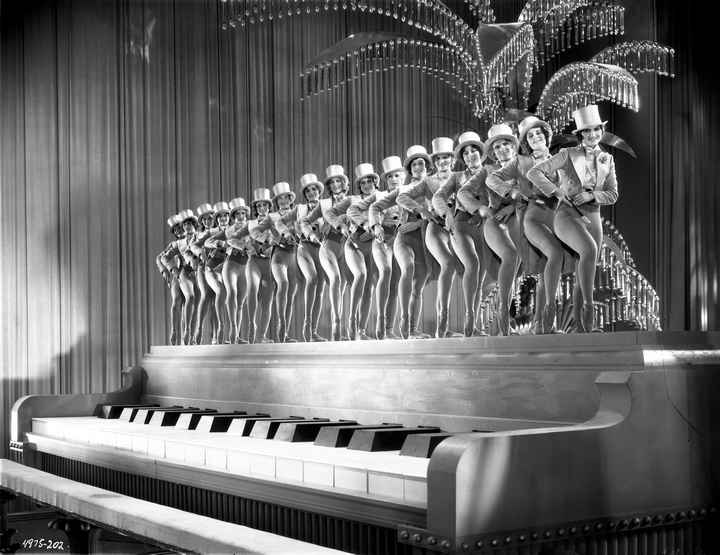
United States of America 🇺🇸 | 1895 – 1976 | The Secret Mastermind of Golden Age Musicals
Busby Berkeley is a tricky director to make a profile for. Most of his greatest films were made with him as a secondary director. He doesn’t have many canonical films in his backlog, and he doesn’t have the standing as a major director. Yet, the term Busby Berekley-esque means something. We’ve all seen his style on display, and as such, his directorial imprint is obvious. He isn’t an obvious candidate for a profile like the others on this list, but I feel he deserves one.
When you think of Hollywood’s Golden Age musicals, the opulent and kaleidoscopic visions of Busby Berkeley should immediately dance into your mind. With an eye for the extravagant and meticulously choreographed, Berkeley transformed the cinematic musical into an art form that wasn’t just about songs but visual spectacles.
You could argue that without Berkeley, we wouldn’t have the same perception of the grandiosity that musicals can attain. His geometrically complex and dizzyingly ornate numbers in films like 42nd Street, Gold Diggers of 1933, and Footlight Parade became iconic, practically inventing the idea of the overhead shot – a legacy still imitated but never surpassed.
Yet, despite being the maestro of his craft, Berkeley wasn’t exactly the poster boy for Hollywood glamour. He rarely interacted with the stars, preferring the company of his chorus girls, his real instruments. He understood the power of collective synchrony, of many moving as one, turning the human form into living, breathing geometry.
Consider the iconic waterfall sequence in Footlight Parade. The scene is a symphony of movement and grace as dozens of swimmers move in perfect harmony, forming and reforming patterns that dazzle and beguile. Berkeley wasn’t just content with putting a good song on screen; he wanted to transport audiences to a world of wonder where reality bent and twisted into glorious fantasies.
It’s fascinating to think how someone with military roots could transition into creating some of the most mesmerising and lavish sequences in Hollywood. But perhaps that’s where his penchant for synchrony and order was born.
Abdellatif Kechiche
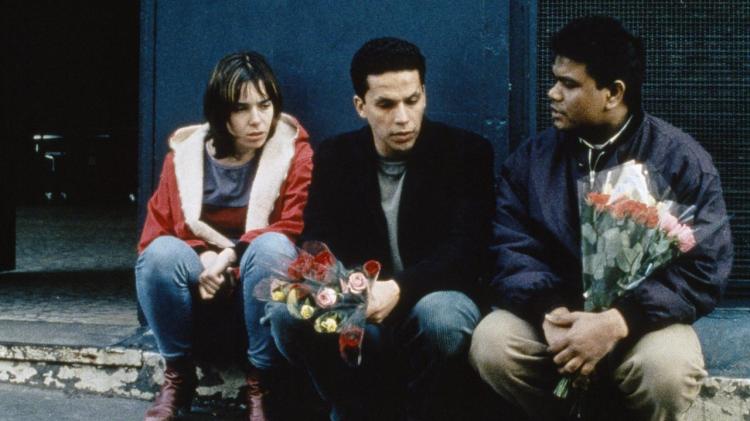
Tunisia/France 🇹🇳🇫🇷 | 1960 – – | Blue Is The Warmest Colour
Directors who get profiles on this site tend to have worked decades ago; these directors have rich filmographies, and their influence is obvious. Of the directors in this article, only two are alive, and one of those two started their careers in the 1950s. The other one, Abdellatif Kechiche, wasn’t even born then.
It’s always a struggle to decide which modern directors are worthy of profiling, and Kechiche could be claimed to be lower-priority than many who will come after him. But his Blue is the Warmest Colour is one of the largest Cannes sensations of the 21st century. He is warmly regarded for his visceral, tactile approach to storytelling, particularly when dissecting the nuances of human relationships and societal constraints.
In a way, Kechiche is a modern-day Renoir – encapsulating raw emotions and intertwined destinies with an intimacy that’s both palpable and unnerving. His films don’t merely unravel a story; they explore passion, identity, and, often, conflict. There’s an organic nature to his craft, a sensitivity to the ebb and flow of human desire and anguish, making his work both relatable and provocatively unsettling.
In The Secret of the Grain, Kechiche beautifully unravels the challenges and aspirations of an immigrant family. The dining scenes are more than just moments around a table; they become a microcosm of the human experience, with every bite revealing layers of culture, history, and interpersonal dynamics. This innate talent of Kechiche’s – to find profound depth in ordinary moments – distinguishes him.
While Blue Is the Warmest Colour might be his most internationally recognised work, a passionate tale of love and longing, Kechiche’s brilliance doesn’t stop there. His continuous commitment to thematically and visually pushing boundaries ensures that he’s not merely a one-hit wonder but a persistent force in modern cinema.
And yet, like many of the directors mentioned above, Kechiche remains somewhat on the fringe. There’s a duality in how he’s perceived – on one end, the genius auteur; on the other, a provocative outlier. His approach to filmmaking, uncompromising and at times controversial, challenges the viewer, demanding active engagement rather than passive consumption.
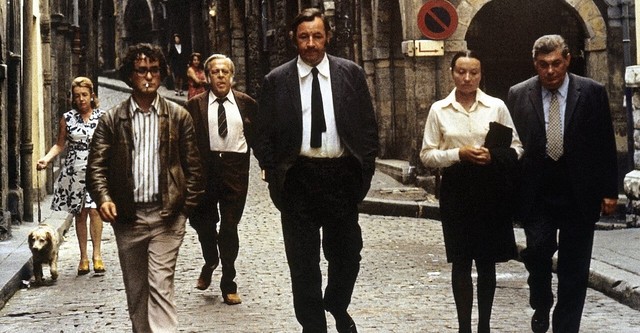
Bertrand Tavernier

France 🇫🇷 | 1941 – 2021 | Beyond The French New Wave
I wrote an article about the Mac-Mahoniens a while ago, talking about their influence and standing in French cinema. On the international stage, they are perhaps worthy of a footnote, but little more, yet within France itself, they deserve credit for changing how people interacted with films and challenging the Cahiers du Cinema positions. One of their members was Bertrand Tavernier, and much like the Mac-Mahoniens, he never enjoyed a significant international career. Instead, his films are much better regarded in France.
Often overlooked, never boring, Bertrand Tavernier painted vivid, emotional landscapes that touch the heart and challenge the mind. His vast filmography is filled with versatile films from The Clockmaker of St. Paul to Life and Nothing But.
He navigated French history, societal complexities, and human emotions with an effortless grace. While his contemporaries like Truffaut and Godard changed the face of French New Wave cinema, Tavernier gracefully threaded a middle ground, blending tradition with innovation. His films are neither entirely classical nor completely revolutionary, yet they harbour an undeniable magnetism, a quiet storm of contemplation.
Consider the profound emotional depths of ’Round Midnight, where the interplay of jazz, longing, and nostalgia paint a melancholic canvas. Here, the camera loves Dexter Gordon, delving deep into the soul of a musician, lost in his world yet so present in every note. Tavernier’s eye for such intricate emotions and the subtleties of human nature made him stand out.
In his later works, Tavernier continued to explore the French historical landscape, delving into forgotten tales and humanising them with his signature touch. The Princess of Montpensier comes to mind – a rich tapestry of love, politics, and societal pressures in 16th-century France.
Unfortunately, he remains a slightly enigmatic figure, particularly to those outside of France. He deserves a more robust examination, especially in discussions on the evolving trajectory of French cinema. As such, he was an obvious candidate for a profile here, even if his name doesn’t have quite the same impact as other entries.
 Bronze Screen Dream