
Cars and cinema have shared a symbiotic relationship since the early days of filmmaking. As the automobile industry grew, so did its presence on the silver screen, reflecting not just a mode of transportation but a symbol of culture, status, and identity. From the humble beginnings with the Ford Model T to the sleek and powerful Aston Martin DB5 in “Goldfinger,” cars have played pivotal roles in storytelling, character development, and visual aesthetics.
The evolution of cars in cinema is a fascinating journey that mirrors societal changes, technological advancements, and artistic innovation. Whether it’s the adrenaline-pumping chase scenes in “Bullitt” or the futuristic self-driving cars in sci-fi films, automobiles have transcended their functional purpose to become characters, symbols, and icons in their own right.
Join us as we drive through the history of cars in cinema, from the silent film era to the modern blockbusters, and discover how this dynamic duo has shaped entertainment, culture, and our perception of mobility and freedom.

The Birth of Automobiles in Cinema: Ford Model T
The birth of automobiles in cinema can be traced back to the early 20th century when the automotive and film industries were in their infancy. The Ford Model T, often called the “Tin Lizzie,” symbolised innovation and accessibility on the roads and the silver screen.
In those early days, cars were more than mere props; they signified modernity and progress. They represented a new era of mobility and freedom, and filmmakers quickly recognised their potential as storytelling devices. With its affordability and simplicity, the Model T became a common sight in films, reflecting the aspirations and realities of the time.
Iconic early car movies and scenes began to emerge, showcasing the vehicles themselves and the evolving landscape of urban life and transportation. Cars created tension in chase scenes, symbolised status and wealth, or even served as a backdrop to romance and adventure.
The integration of cars into cinema was not just a reflection of technological advancement but a testament to the creative vision of filmmakers. They understood that vehicles could be more than machines; they could be characters with personalities, symbols with meanings, and tools to drive the plot forward.
From Charlie Chaplin‘s comedic antics with cars in films like “The Kid” to the thrilling car chases in silent crime dramas, the automobile’s presence in cinema began to grow, setting the stage for a relationship that would continue to evolve and flourish.
As the decades rolled on, movie cars would take on new roles, shapes, and meanings. They would become synonymous with glamour and luxury, rebellion and freedom, power and identity. The stage was set for the arrival of some of the most iconic cars in cinematic history, which would leave an indelible mark on pop culture and continue inspiring filmmakers and audiences alike.

Iconic Cars and Their Impact: Aston Martin DB5 in “Goldfinger”
The allure of the automobile reached new heights with the introduction of the Aston Martin DB5 in the 1964 James Bond film “Goldfinger.” This legendary car, equipped with various gadgets and sleek design, became an instant icon, symbolising sophistication, technology, and the quintessential British spy’s charm.
But the DB5 was more than just a beautiful piece of machinery; it was a character in its own right. Its presence on the screen was magnetic, and its features, from the ejector seat to the revolving license plates, captured the imagination of audiences worldwide. It wasn’t just a car; it was James Bond’s car, which embodied the character’s essence and the franchise’s adventurous spirit.
The impact of the DB5 extended beyond the silver screen, influencing the automotive industry and popular culture. It set a new standard for cars in cinema, turning them into stars, complete with personalities, roles, and cultural significance. Other films began to follow suit, showcasing vehicles that were not just modes of transportation but integral parts of the story.
This trend continued to grow, with cars becoming central to the plot in films like “The Italian Job,” where Mini Cooper’s agility and charm played a crucial role in the heist.
The relationship between cars and cinema had evolved into a dynamic partnership, where vehicles were no longer mere props but active participants in the storytelling process. They were symbols of style, power, innovation, and even rebellion, reflecting the themes and emotions of the films they graced.
From the elegance of the Jaguar E-Type in “Harold and Maude” to the rugged resilience of the Jeep in “Jurassic Park,” cars began to take on diverse roles, mirroring the complexity and richness of human characters. They became extensions of the characters, enhancing the narrative and adding layers of meaning and symbolism.
The era of iconic cars had arrived. Cars were no longer just machines; they were art, characters, and cultural statements.

Chasing Realism: “Bullitt” and the Ford Mustang GT 390
The pursuit of realism in cinema took a thrilling turn with the release of “Bullitt” in 1968. Starring Steve McQueen as the titular character, the film featured a car chase that would become one of the most iconic in cinematic history. The Ford Mustang GT 390, driven by McQueen, roared through the streets of San Francisco in a high-speed chase that was as groundbreaking as it was exhilarating.
What set this chase apart was not just the skilful driving or the powerful engine’s roar but the commitment to authenticity and realism. The chase was filmed on actual city streets, with real speeds and genuine risks. It wasn’t just a scene but a statement, a declaration that car chases could be more than special effects and staged stunts. They could be art.
The influence of “Bullitt” and the Ford Mustang GT 390 extended far beyond the film itself. It set a new standard for action sequences, inspiring filmmakers to push the boundaries of realism and creativity. Car chases became more than mere spectacles.
This pursuit of realism continued to influence films in the decades that followed. From the gritty streets of “The French Connection” to the desert landscapes of “Mad Max,” car chases evolved into complex, multi-layered sequences that were as much about storytelling as they were about action.
Each car was carefully chosen to reflect the character’s personality, the film’s theme, or the era’s cultural context. Whether it was the rebellious spirit of the Dodge Challenger in “Vanishing Point” or the futuristic vision of the DeLorean in “Back to the Future,” cars were no longer just transportation; they were part of the story’s fabric.
The chase scenes became a dance, a carefully choreographed ballet of speed, skill, and emotion. They were a testament to the filmmakers’ vision, the driver’s talent, and the cars’ performance. They celebrated cinema’s ability to transport audiences into a world where the engine’s roar, the tires’ screech, and the thrill of the chase were as real as they were mesmerising.
The legacy of “Bullitt” and the Ford Mustang GT 390 continues to resonate, a reminder that realism, creativity, and innovation can turn a car chase into a cinematic masterpiece. It was a turning point in the evolution of cars in cinema, a moment when the automobile became more than a machine; it became a symbol of artistry, a character in motion, and a driving force in the world of film.

Rebellion and Freedom: “Vanishing Point” and the Dodge Challenger
The 1970s were a time of cultural upheaval and transformation, and nowhere was this more evident than cinema. A sense of rebellion and a desire for freedom was in the air, and films like “Vanishing Point” captured this spirit with raw intensity. The Dodge Challenger, a symbol of power and defiance, became the vehicle for a journey that was as much about self-discovery as it was about speed.
“Vanishing Point” was more than a car movie; it reflected the era’s zeitgeist. The open road became a metaphor for existential exploration, and the Dodge Challenger was the protagonist’s companion, a mechanical embodiment of his quest for meaning and liberation.
The film’s portrayal of muscle cars and their cultural symbolism resonated with audiences, tapping into a collective longing for authenticity and individuality. The engine’s roar, the thrill of the chase, and the open highway’s allure were not just there for the sake of it; they were expressions of a generation’s hopes and dreams.
This exploration of muscle cars’ cultural symbolism extended beyond “Vanishing Point,” finding its way into other films of the era. Whether it was the rebellious spirit of “Two-Lane Blacktop” or the nostalgic charm of “American Graffiti,” muscle cars became icons when society questioned norms and sought new paths.
The connection between muscle cars and societal themes continued to evolve, finding new expressions in modern films like “Fast & Furious.” The resurgence of these powerful vehicles, with their aggressive design and unapologetic performance, reflected a renewed fascination with power, identity, and freedom.
Technological Advancements: “The Matrix Reloaded” Freeway Chase
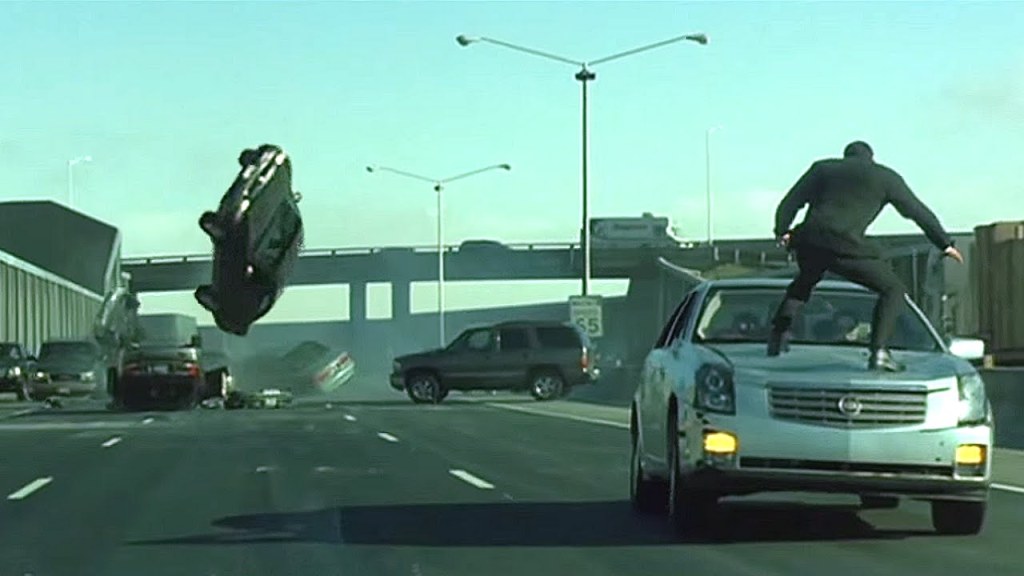
The dawn of the 21st century brought a wave of technological advancements that transformed our daily lives and how we experience cinema. In film, this technological revolution was vividly demonstrated in the breathtaking freeway chase scene in “The Matrix Reloaded.”
This sequence, featuring a blend of real stunts, computer-generated imagery (CGI), and innovative camera techniques, significantly departed from traditional car scenes. It was a fusion of art and technology, a dance of virtual and physical reality that pushed the boundaries of what was possible on the big screen.
The “Matrix Reloaded” freeway chase was more than just a spectacle; it was a statement about the evolving relationship between cars, cinema, and technology. The cars were not just vehicles but part of a larger virtual world, a complex system where the lines between reality and illusion were blurred.
This approach to car scenes, where technology was used to enhance realism, create impossible stunts, and expand the narrative’s scope, became a hallmark of modern cinema. From the gravity-defying manoeuvres in “Inception” to the futuristic vehicles in “Blade Runner 2049,” filmmakers began to explore new horizons, using technology to tell stories as complex as they were captivating.
Cars as Characters: “Drive” and “Baby Driver”
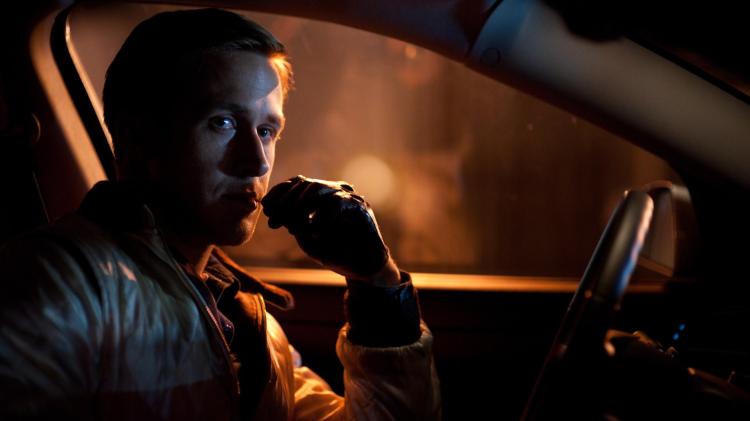
In contemporary films like “Drive” and “Baby Driver,” vehicles became extensions of the characters, reflecting their personalities, emotions, and journeys.
In “Drive,” the protagonist’s car is not just a means of getting from one place to another; it’s a part of his identity, a reflection of his cool, calculated demeanour and his life as a getaway driver. The car becomes a silent companion, a witness to his actions, and a symbol of his isolation and longing.
Similarly, in “Baby Driver,” the titular character’s connection to his car is profound and personal. It’s his escape tool, stage for performance, and way of connecting with the world. The car chases are not just thrilling sequences but expressions of Baby’s character, his love for music, and his quest for freedom.
These films take the relationship between cars and characters to a new level, turning vehicles into complex, multi-dimensional beings. The cars are not just metal and machinery; they’re alive, with personalities, emotions, and stories to tell.
The in-depth look at the vehicles used in these films reveals a careful consideration of design, performance, and symbolism. Every detail, from the make and model to the colour and sound, is chosen to enhance the character’s portrayal and the story’s thematic depth.
This approach to car scenes, where vehicles are intricately woven into the narrative and character development, represents a significant evolution in the portrayal of cars in cinema. It celebrates the automobile’s multifaceted role, from a functional tool to a character with depth and meaning.

“Mad Max” and “Fast & Furious”
Certain films and franchises stand out for their unique contributions to the evolution of cars in cinema. Two examples are the post-apocalyptic world of “Mad Max” and the adrenaline-fueled universe of “Fast & Furious.”
In “Mad Max,” cars are more than mere transportation; they are survival tools, war machines, and symbols of power and chaos. The vehicles are customised, weaponised, and transformed into grotesque, fascinating monstrosities. They reflect the harsh, dystopian world of the characters and become central to the narrative’s tension and drama.
The “Mad Max” franchise’s in-depth analysis carefully considers design, functionality, and symbolism. Every vehicle, from Max’s iconic Interceptor to the monstrous War Rig, is crafted to tell a story, convey emotion, and enhance the film’s thematic depth.
On the other end of the spectrum, the “Fast & Furious” franchise celebrates the joy of speed, the thrill of the chase, and the family bond. The cars are sleek, powerful, and customised to reflect the characters’ personalities and the films’ high-octane energy.
The “Fast & Furious” films are a testament to the diversity and creativity of car scenes, from gravity-defying stunts to emotional drives that explore relationships and values. The cars are not just machines but part of a larger narrative, connecting characters, driving the plot, and adding layers of meaning and excitement.
Conclusion
The journey through the evolution of cars in cinema has been thrilling, filled with innovation, creativity, and profound insights into our culture, values, and aspirations. From the early days of the Ford Model T to the futuristic visions of electric and self-driving cars, the automobile’s role is as diverse as it is significant.
That concludes our exploration of film’s history with cars, but we’ll be following this article up with a top X ‘car films’ car films ever, so if you’re an expert on these movies or just a novice, you’ll hopefully have something new to watch.
 Bronze Screen Dream