
Loving movies is loving The Godfather. Every beat is perfect, every moment meaningful. Few films are so universally adored. Yet, its production was infamously troubled, so tricky that a whole TV show has been made about them.
Nowadays, it’s a given that Francis Ford Coppola was one of the best directors in the world during the 1970s, but before 1972 he was just this weird outcast who secluded himself in San Francisco, away from the glitz and glam of Hollywood. A man who’d made some interesting films (Rain People) but most of whose work was… well, bad.
In retrospect, it’s amazing that Paramount picked Coppola. He was never an obvious choice for the role; perhaps even more surprising that they stuck with him, considering all the production difficulties. He was not the first choice to direct the film, nor was he the 2nd, 3rd, 4th or even 5th choice. In fact, we know seven directors rejected the role, and perhaps even more.
Now, Robert Evans frequently went on record stating that he wanted the picture to be directed by an Italian American to make the film authentic, especially after the failure of the very non-Italian cast and crew of The Brotherhood. I suppose that’s why Coppola was given a chance in the end, and his ethnicity certainly inflated his odds because compared to the directors who turned down the role, Coppola was a nobody pre-Godfather.
As an aside, I’ve tried to think of Italian American directors of the time who could have taken on the role to see if Coppola was the only one available.
❌ Martin Scorsese – Had barely started his career and was roughing it out in Corman’s film school
❌Brian De Palma – Career was at a standstill after the failure of Get To Know Your Rabbit.
❌Michael Cimino – A nobody at the time who was writing and rewriting Silent Running.
As you can see, there weren’t very many choices. Even if we stretch the definition, there aren’t many choices.
❌Frank Capra – He had been retired for over a decade.
Some people with Italian ancestry could have been decent picks, like Peter Bogdanovich, Robert Aldrich, or Stanley Kubrick, but none were Italian American.’
Beyond that, you might consider Italians who could direct it and would be big enough to make a Hollywood film. Federico Fellini was certainly big enough, but you can’t imagine he’d be interested in the project, similar to Michelangelo Antonioni. However, Antonioni is more probable as he did work in America.
Otherwise, I don’t know. Sergio Corbucci probably could have done a job with it. But the conclusion is that Francis Ford Coppola was the best Italian heritage director available.
However, there is one director I’ve chosen not to mention who was arguably the better pick. He was Italian, had experience with action set pieces, had worked with American casts, and was critically acclaimed. He was the one and only Sergio Leone, who was Paramount’s first choice for the role.
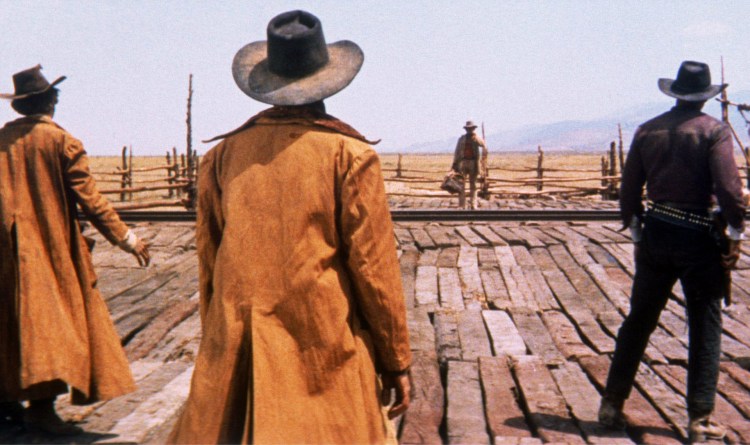
Sergio Leone
I’m not sure I’ve ever come across someone who doesn’t love The Good, The Bad, and the Ugly, or if I’m honest, any of his films (Excluding his debut). Leone was a complete master who knew how to tell intricate, complex tales without becoming beholden to their scope.
Leone’s ability to capture tension and atmosphere makes him a great pick for this film. Similarly, I believe he’d have no trouble with the film’s scope as he’d already worked on several large films. If Coppola didn’t direct the movie, it’s hard to think of a director who’d do it better than Leone. That being said, it wasn’t as clear as success as all that.
Up to this point, he had only worked on westerns, which might have been seen as a handicap; of course, we know he made Once Upon a Time in America a decade later, a crime epic, but at this point, Paramount didn’t realise this. Similarly, Leone might struggle to match the tone and pacing of the novel with his distinctive style, although, again, America proved this wouldn’t be a handicap.
Was He A Good Pick? Yes.
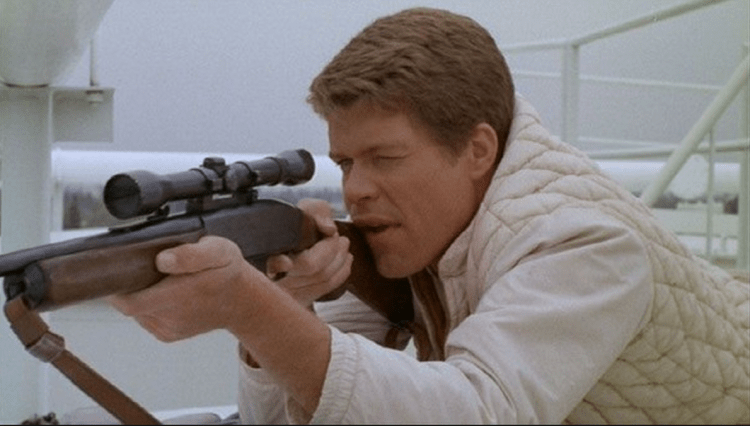
Peter Bogdanovich
After Leone was Bogdanovich, who was partially Italian American, so he made sense; he was hot property after making The Last Picture Show. Arguably he was the hottest director in the country at that moment. But let’s look at his credentials.
He could balance drama with understated humour, was excellent with actors and character development, and was great at capturing period settings. All things that could apply to The Godfather, and most importantly, he deeply understood American culture, which would be a great positive for a film like The Godfather.
But. And there always is a but; he had just one hit. Targets was a great film but a low-budget movie that was forgotten for decades. Bogdanovich hadn’t proven many of his abilities at this point. He even misses some crucial aspects of the film. He never worked on such a large scale and rarely used violence or dark themes, as seen in The Godfather. As such, it’s hard to see his sensibility melding with the material. I could be wrong, but I feel Bogdanovich’s The Godfather would have many of the same flaws as Bogdanovich’s Daisy Miller.
Was He A Good Pick: Possibly
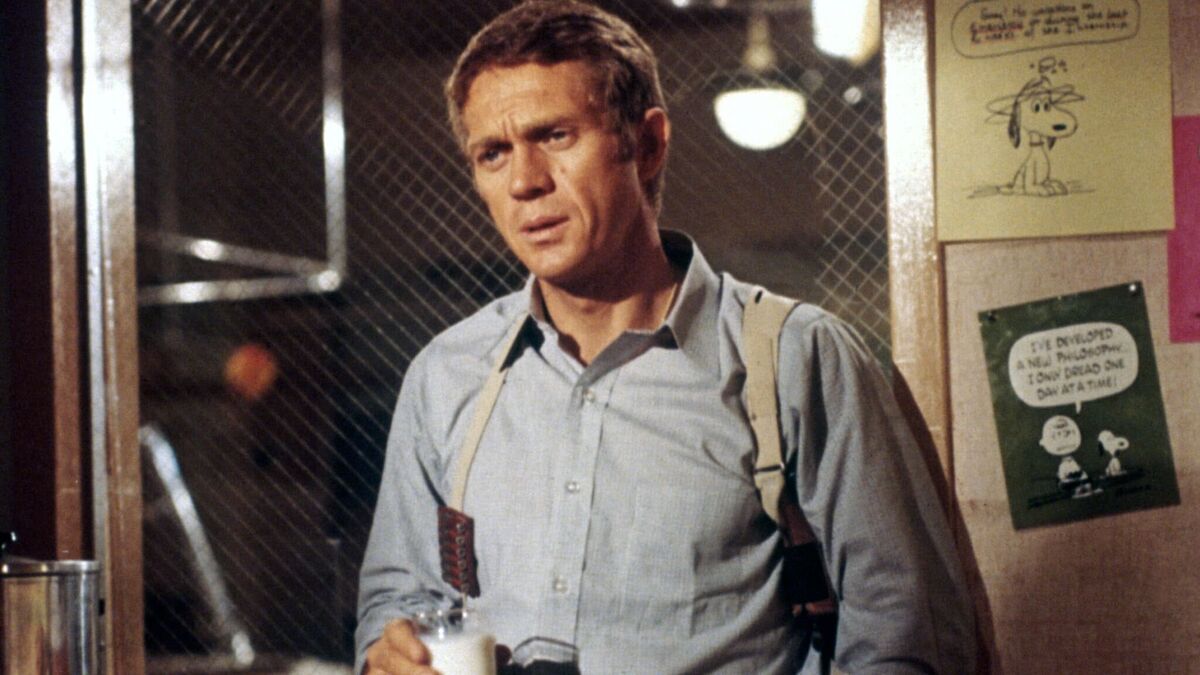
Peter Yates
The other five directors we know they offered the directing role to weren’t Italian at all. Peter Yates was a British director best known for Bullit. With that in mind, we can see things that would work in The Godfather, his ability to create thrilling sequences and handle complex male characters.
He’s not a bad pick and dabbled in the crime genre, so we know he was interested in it. Yet there are also plenty of signs he wasn’t suited for it. He wasn’t the most consistent director and often overemphasised action, which could lead to The Godfather being a less deep film. His action sequence would be dynamic, but we’d probably have less touching family moments.
Yates could have made good The Godfather film, he was a talented director, but I’m pretty happy they didn’t pick him.
Was He A Good Pick: Possibly

Richard Brooks
Richard Brooks was a Hollywood veteran by 1972. He’d been in the game for nearly three decades, and to his benefit, he’d been a mainstay most of the time. He was one of the few classic Hollywood directors you couldn’t label as being on a downward trajectory. Not every film was good, but he was just five years removed from In Cold Blood and six from The Professionals.
Still, he does feel outdated for the role. The Godfather was a landmark film that helped cement the New Hollywood generation’s status; Brooks directing the film would have made it just another movie.
There are some concerns about how he’d handle the material too. He wasn’t a very stylised director, and he was well known for a sometimes-heavy-handed approach to moral themes, which would be very cumbersome in a mafia movie, especially one with such a large grey area.
Yet, something has to be said for Brooks. He was very good at handling adaptions and maintaining faithfulness to the source material; plus, he was great with character-driven narratives and well-experienced with large ensemble casts. Brooks has almost everything required of The Godfather’s ideal director, but his age and ethics could be an issue.
Was He A Good Pick: Probably
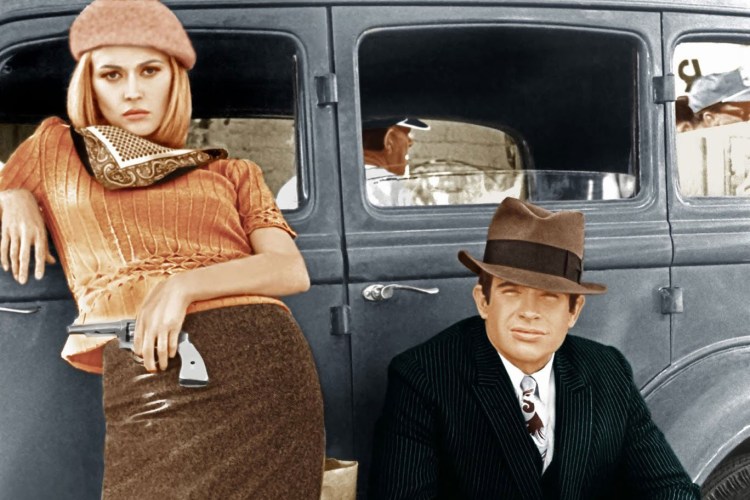
Arthur Penn
Talking of New Hollywood bombshells, Arthur Penn might have been the first director of the movement, with his blood-soaked Bonnie and Clyde and New Wave-inspired Mickey One. Penn was adept at capturing the zeitgeist and balancing tension with emotion. His work on Bonnie and Clyde showed he could handle complex characters, crime dramas and violent themes.
Similarly, Penn was never worried about diving into the abyss and taking creative risks, things that all truly great directors must have. Frankly, Penn is a great pick for The Godfather. The only problems with him arise from his boneheaded approach. He was never one to buckle to studio pressure which could take the film in all sorts of directions.
There’s a fair chance he’d diverge from the source material through experimentation, he could struggle with the traditional elements of the story, and he had a very modern sensibility, even in films like Bonnie and Clyde, which could make the movie feel too contemporary for the intended period.
But all those negatives are ‘coulds’. It’s just as likely that his creative risks would pay off. He wasn’t a had-been director, he was a director on form, and I wouldn’t gamble against him.
Was He A Good Pick: Yes
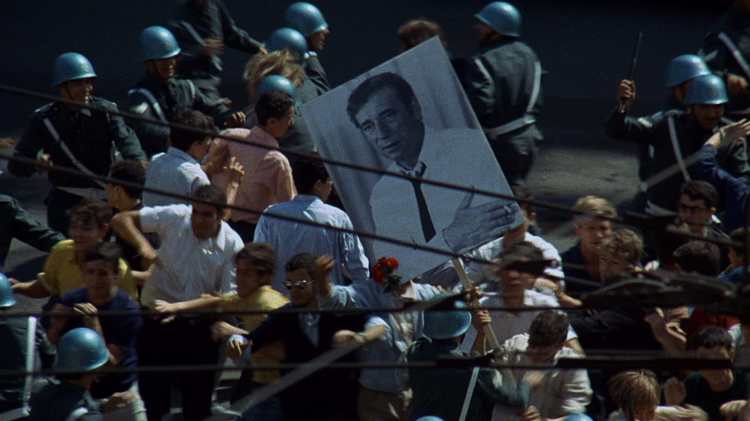
Costa-Gavras
Costa-Gavras is an interesting pick. I’m not sure it’d work out, but I’d love to see it. So let’s cross off the pros to him in this role.
- Skilled at blending political themes with personal drama.
- A Strong visual style that could enhance the narrative.
- Unique perspective as a non-American director.
- Known for politically charged films, adding depth to the underlying themes of power and corruption.
- Excellent at building tension and creating atmospheric films.
Costa-Gavras was coming off an incredible streak of hot, incendiary films, and it would be curious to see what he could have done here. We know he’d eventually make an American film, Missing, which is great, so we know he had it in him to work in the country.
Yet, I can’t help but feel he’d probably infuse more overt political commentary than necessary into the film. It’d become heavy-handed, and I’m not sure it’d work. The Godfather is a ‘great American novel’ sort of a film; if handled incorrectly, it would lose much of its potency.
Was He A Good Pick: Possibly
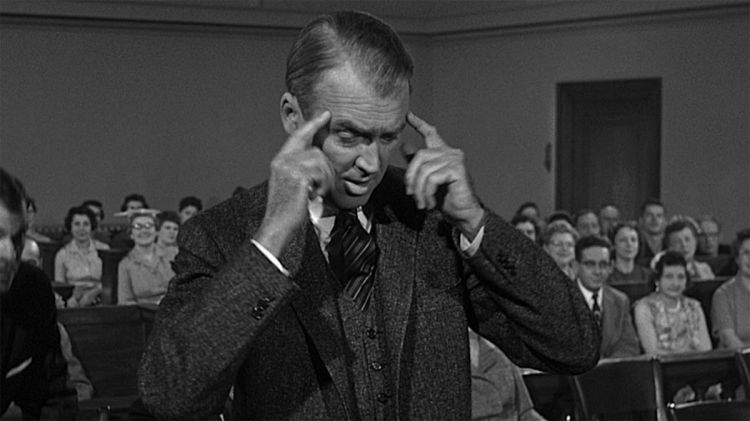
Otto Preminger
The least inspired pick has to be Otto Preminger. The guy was nearly seventy years old and hadn’t had a hit in a decade. It’s harsh to say a director was finished, but it’s hard not to feel that way towards Preminger during this period of his career.
But there is some logic for him. He was experienced in film noirs (which could reflect in The Godfather), he was not afraid to tackle controversial subjects and was good at working with large ensembles. He was also probably seen as a reliable hand by Paramount who wouldn’t rock the waters, unlike Coppola.
Preminger’s style was outdated by 1972. His films rarely showed that sense of grit or intensity, even in his film noirs, required for The Godfather and his movies, while diverse in genre, rarely merged genre elements as The Godfather did. Similarly, Preminger’s films often feel quite theatrical and stage-like, which would result in a much worse experience than the one Coppola made.
Was He A Good Pick: Probably Not

Ranking
- Sergio Leone
- Arthur Penn
- Richard Brooks
- Peter Yates
- Costa-Gavras
- Peter Bogdanovich
- Otto Preminger
So there we have it, every director who could have directed The Godfather ranked. Thank god we got Francis Ford Coppola.
If I could go back in time and chuck two names in Paramount’s hat, I’d pick Sidney Lumet and Robert Altman. However, I can see some issues with both of them too.
 Bronze Screen Dream