
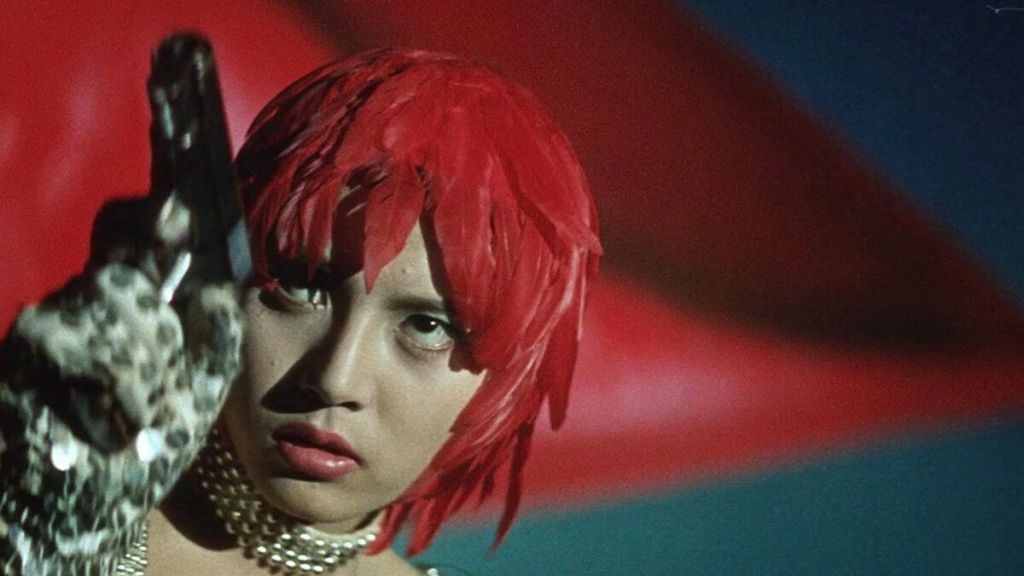
Masahiro Shinoda, born in 1931 in Gifu, Japan, is a towering figure in Japanese cinema. Emerging as a key player in the Japanese New Wave movement, his films blend visual mastery, profound thematic exploration, and a distinctive fusion of traditional and modern sensibilities.
Early Career and Breakthrough
Shinoda began his career at Shochiku Studios in 1953, working under the legendary Yasujiro Ozu. His directorial debut in 1960 with “One-Way Ticket for Love” showcased his willingness to challenge conventional storytelling. His breakthrough came with films like “Dry Lake” (aka “Youth in Fury”), “Killers on Parade,” and “Pale Flower”, the latter earning him critical acclaim for its unique noir aesthetics.
Stylistic Choices and Themes
Masahiro Shinoda’s stylistic choices are an intricate blend of traditional Japanese aesthetics with modern experimental techniques. This is not a mere fusion; it’s a deliberate dissection of cultural norms and values that challenges and provokes thought. For example, in “Double Suicide”, Shinoda utilised Bunraku puppet theatre elements as a stylistic choice and a commentary on societal constraints and the roles we are forced to play.
His recurring themes often include existential despair, societal oppression, and individual rebellion. Rather than employing these themes superficially, Shinoda’s films delve into human behaviour’s psychological complexity, reflecting a profound understanding of both Eastern and Western philosophies.
Key Films
- Pale Flower (1964): This film is more than just a Yakuza crime story. Shinoda’s unique presentation of moral ambiguity through striking imagery and disjointed narrative structure exposes a nihilistic worldview. The constant juxtaposition of beauty and violence symbolises a broader societal decay, turning a genre film into a profound commentary.
- Double Suicide (1969): In a daring move, Shinoda incorporated traditional Bunraku puppet theatre to explore the tragic love story. The film goes beyond mere tragedy, analysing how societal structures control and manipulate human desires. Using puppets isn’t a mere aesthetic choice; it symbolises how societal expectations shape and constrain individual lives.
- MacArthur’s Children (1984):, Unlike his previous works, this film offers a more humanistic perspective, examining the American occupation of Japan through the innocent eyes of children. Shinoda’s deft handling of this sensitive subject shows his maturation as a filmmaker, turning historical events into a touching story of growth, loss, and resilience.

Stylistic Fusion of Traditional and Modern Elements
Masahiro Shinoda’s films often demonstrate a profound integration of traditional and modern elements, epitomising the synthesis of Japan’s rich cultural heritage and its evolving contemporary context. This fusion of styles creates a nuanced cinematic language that allows Shinoda to explore complex themes, such as personal identity, morality, and the tension between the past and present.
In Shinoda’s film “Double Suicide”, a compelling adaptation of the traditional Bunraku puppet theatre play “The Love Suicides at Amijima,” the director incorporates puppetry elements and contemporary cinematic techniques. He uses the conventional puppet handlers, dressed all in black, to portray the manipulative forces in society that lead the protagonists to their tragic end. This interplay between the old and the new heightens the tragedy and reflects the societal constraints that persist in modern times.
Similarly, “Pale Flower” draws on traditional imagery, such as using flowers to symbolise impermanence, juxtaposed with the high-paced life of Tokyo’s underworld. The film’s visual style combines the abstract beauty of Japanese art with a modern, almost noir-like sensibility. Shinoda’s use of shadows, close-ups, and wide angles adds complexity to the storytelling, evoking a world where tradition and modernity coexist but often clash.
“Ballad of Orin” showcases Shinoda’s affinity for Noh theatre, as the protagonist’s life and struggles mirror a Noh play’s structure and themes. The film’s composition and cinematography reflect Noh’s austere and symbolic nature, weaving traditional aspects into the narrative. At the same time, Shinoda introduces modern concerns, such as social outcasts and societal norms, creating a dialogical reflection on Japan’s evolving cultural dynamics.
In the case of “MacArthur’s Children”, Shinoda explores the Western influence on Japan after World War II through the eyes of children. The juxtaposition of Western elements like baseball with Japanese traditional values creates an effective narrative on the generational shift in post-war Japan. The film’s ability to delicately weave these elements together is a metaphor for Japan’s post-war identity crisis, caught between traditional values and Westernization.
Shinoda’s affinity for Kabuki theatre shines in “Demon Pond”, where he adopts Kabuki’s stylised acting, elaborate makeup, and aesthetic to create a visually stunning and philosophical film. The intertwining of modern cinematographic techniques with Kabuki’s formalism adds depth to the film’s mythological tale, making it both timeless and contemporary.
The artistic collaboration with composer Toru Takemitsu in films like “Samurai Spy” further emphasises the fusion of East and West. Takemitsu’s music, which often blends traditional Japanese instruments with Western orchestration, perfectly aligns with Shinoda’s thematic explorations.
Shinoda’s ability to combine traditional Japanese art forms such as Noh and Kabuki with modern cinematic techniques has allowed him to create films that resonate deeply with both domestic and international audiences. His vision reflects Japan’s cultural richness and ongoing dialogue with the modern world, crafting a cinematic experience that speaks to universal human conditions and questions.

Political and Social Commentary
Delving into the turbulent climate of the 1960s and 70s, Masahiro Shinoda’s films often mirror a society grappling with its own identity amidst rapid change, a process fraught with conflicts, confrontations, and challenges.
“Assassination” is one such film that throws light on the political intrigues of the Meiji Restoration. As much as it’s a historical drama, it’s also a commentary on the political turbulence of Shinoda’s contemporary Japan. By depicting the internal and external pressures that leaders of the Meiji period faced, Shinoda hints at the political manipulation and compromises that characterised Japan’s modern politics.
“Pale Flower” can be seen as a metaphor for the burgeoning counterculture of the 1960s. The Tokyo underworld, with its gang wars and gambling dens, reflects a society in chaos. The nihilism and sense of impending doom that permeates the film resonate with the larger societal disillusionment, especially among the youth, who were increasingly sceptical of the establishment and its values.
“Silence”, based on the novel by Shusaku Endo, offers a deep exploration of the challenges faced by Christian missionaries in feudal Japan. Beyond its religious themes, the film speaks to the broader issues of cultural clash, colonialism, and the nature of faith in a hostile environment. By presenting Japan’s historical resistance to foreign influence, Shinoda parallels Japan’s post-war identity crisis as it negotiates its place in a world dominated by Western powers.
One of Shinoda’s most politically charged films, “Himiko”, delves into ancient Japanese mythology, chronicling the life of a shaman queen. But this narrative is more than just a historical recounting; it becomes a subversive commentary on the patriarchal nature of ancient and contemporary Japanese society. By focusing on a powerful female figure, Shinoda critiques gender norms and underscores the suppression of female voices.
“The Petrified Forest” serves as another remarkable piece of political commentary. The film depicts a youth rebellion in a remote mountain village, drawing clear parallels with the student protests and movements sweeping across Japan and much of the world during the late 1960s. Through the eyes of the young protagonists, Shinoda captures the restlessness and disillusionment of a generation that felt betrayed by the older, more conservative establishment.
It’s not just the macro-political climate that Shinoda comments upon. Films like “Ballad of Orin” shed light on societal prejudices and the marginalisation of certain groups. By focusing on an “eta” girl, considered an untouchable in Japanese society, Shinoda draws attention to the deep-rooted biases and discrimination that often go unquestioned.
Through the lens of cinema, Masahiro Shinoda has given voice to the societal undercurrents, tensions, and transformations of 20th-century Japan. By skillfully intertwining personal stories with broader political and social themes, he has managed to create films that are both deeply personal and universally resonant. Each frame, each narrative arc, becomes an invitation to introspect, question, and engage with the world more meaningfully.

Visual Aesthetic and Cinematic Language
The artistry of Masahiro Shinoda’s filmmaking is perhaps best exemplified by his exquisite visual aesthetic. His filmography showcases a mastery of cinematic language beyond mere storytelling, transforming each frame into a canvas filled with meaning, emotion, and artistic expression. Through intricate compositions, thoughtful use of colour and texture, and a profound understanding of visual symbolism, Shinoda has crafted a distinctive and deeply resonant style.
One of the standout elements in Shinoda’s visual repertoire is his use of wide shots. This can be seen in films like “Double Suicide”, where he employs the technique to emphasise the isolation and existential despair of the characters. Wide shots create a spatial disconnect between the characters and their surroundings, underscoring their existential dilemmas. In contrast, in “Samurai Spy”, Shinoda uses wide images to illustrate the sweeping landscapes, conveying the grandeur and complexity of the historical setting.
The intricate compositions that characterise Shinoda’s films also contribute to their visual richness. For instance, in “Pale Flower”, the gambling scenes are composed with meticulous attention to detail, with each element carefully arranged to create a sense of tension and excitement. The characters’ positions, the cards’ layout, the scene’s framing – everything is deliberately designed to draw the viewer into the dark, intense world of the Tokyo underworld.
Colour and texture play a significant role in Shinoda’s visual storytelling. In “Demon Pond”, the vivid use of colour contributes to the film’s surreal and mythological quality. The combination of bright and dark shades creates an enchanting and unsettling dream-like atmosphere. Similarly, in “Ballad of Orin”, Shinoda uses colour and texture to symbolise the protagonist’s social status and emotional state, creating a visual language that speaks to the character’s inner world.
Shinoda’s films are also known for their rich symbolism and imagery. “Silence” is a striking example, filled with haunting images that reflect the spiritual struggle of the characters. Whether the crucifix hidden in a samurai’s locket or the Christian symbols etched into the landscapes, each visual cue deepens the film’s thematic exploration of faith, persecution, and cultural clash.
In “Himiko”, Shinoda’s visual language goes even further, using imagery that taps into ancient Japanese mythology to create a visual allegory for contemporary political and gender dynamics. The fusion of historical aesthetics with modern techniques makes the film visually stunning and intellectually stimulating.
The collaboration with renowned cinematographers like Kazuo Miyagawa has also played a part in shaping Shinoda’s visual style. Miyagawa’s innovative cinematography in “Sharaku”, for example, provides a sumptuous visual feast that perfectly complements Shinoda’s artistic vision.

Character Development
Masahiro Shinoda’s approach to character development is one of the distinguishing features of his filmmaking. Through his keen understanding of human nature and psychology, he crafts multifaceted, complex characters imbued with depth. These characters often undergo profound transformations, mirroring the dilemmas of their specific context and the broader human experiences of conflict, growth, and self-discovery.
In “Pale Flower”, Shinoda presents the character of Muraki, a seasoned Yakuza member who becomes entranced by the young and mysterious Saeko. As the film progresses, Muraki’s internal struggle between his dark past and a longing for something pure unravels. His fascination with Saeko symbolises a deeper yearning for redemption and an escape from his criminal life. The complexity of his character, swinging between cynicism and hope, draws the viewer into his existential journey, making his ultimate fall all the more poignant.
“Double Suicide” provides another compelling example of Shinoda’s mastery of character development. Through the ill-fated relationship between Jihei and Koharu, he explores themes of love, sacrifice, and societal constraints. Jihei’s internal battle between his commitment to his family and his obsessive love for Koharu reflects a broader human struggle with desire and responsibility. His transformation from a loving husband to a desperate lover illustrates the destructive power of passion and the tragic consequences of choices made in its thrall.
The characters in “The Petrified Forest” represent different facets of rebellion and discontentment among Japanese youth during the late 1960s. The young protagonists are not mere stereotypes but fully realised individuals, each grappling with unique challenges and aspirations. Their growth and transformations provide insights into the complexities of adolescence, political unrest, and the search for identity.
“Ballad of Orin” delves into the life of Orin, an “eta” girl considered an untouchable in Japanese society. Her journey from rejection to self-acceptance is both heartbreaking and inspiring. Shinoda’s depiction of Orin as a strong, resilient, yet deeply vulnerable character humanises a marginalised segment of society, reflecting the broader themes of prejudice, dignity, and human empathy.
Even in a historical context, Shinoda’s characters maintain their complexity. In “Assassination”, Hachiro Kiyokawa, a samurai, is portrayed not just as a heroic figure but as a man torn between loyalty to his cause and a recognition of the flawed politics of his time. His internal struggles and eventual downfall encapsulate the era’s political turmoil and moral ambiguity.
The power of Shinoda’s character development lies in his ability to create characters that are not merely plot devices but fully realised human beings with hopes, fears, contradictions, and complexities. He weaves their internal struggles with broader societal themes, adding layers of meaning and resonance to his storytelling. His characters’ journeys become reflective mirrors to the viewers, allowing them to see their struggles, dilemmas, and human essence in these cinematic portrayals.
Shinoda’s meticulous focus on character depth ensures that his films are visually stunning, thematically provocative, and deeply human. They resonate emotionally, engaging the audience’s empathy and understanding, transforming the cinematic experience into a shared exploration of what it means to be human.

Place in the Japanese New Wave
The Japanese New Wave marked a seismic shift in Japanese cinema. A group of young, avant-garde filmmakers challenged the conventional studio system, narrative structures, and social taboos, ushering in a new era of creativity and expression. Masahiro Shinoda was an instrumental figure in this movement, joining the ranks of directors like Nagisa Oshima, Yoshishige Yoshida, and Seijun Suzuki. Together, they redefined Japanese cinema, infusing it with bold artistic vision, controversial themes, and innovative techniques.
Shinoda’s early films, such as “Dry Lake” and “Youth in Fury”, demonstrate his willingness to innovate and explore uncharted territories. While Oshima’s work, like “Cruel Story of Youth”, often focused on political radicalism and sexual liberation, Shinoda’s films delved into existential themes and the dichotomy between tradition and modernity. They also displayed a more nuanced aesthetic sensibility.
Compared to Yoshishige Yoshida’s often abstract and intellectual approach, Shinoda’s style can be seen as more accessible yet no less challenging. His film “Pale Flower” is a prime example of this balance, offering a gritty portrayal of the Tokyo underworld while engaging with existential themes and visual poetry.
Seijun Suzuki’s work, known for its wild and visually flamboyant style, contrasts sharply with Shinoda’s more restrained and thoughtful aesthetic. Where Suzuki’s “Tokyo Drifter” is a frenetic and stylised yakuza film, Shinoda’s “Assassination” takes a more introspective look at political intrigue, reflecting on Japan’s history and contemporary challenges.
The willingness to address taboo subjects and portray darker aspects of contemporary Japanese society was a common thread among New Wave directors. Like Oshima’s “In the Realm of the Senses”, a film that caused a scandal for its explicit sexuality, Shinoda’s “Under the Blossoming Cherry Trees” was unafraid to explore human nature’s dark and grotesque aspects.
What set Shinoda apart within this movement was his ability to seamlessly blend the experimental with the traditional, using his unique visual language to explore complex themes. His theatre background, especially Noh drama, gave his films a distinctive quality, even as he embraced the revolutionary spirit of the New Wave.
Shinoda’s work during this era helped define the Japanese New Wave and laid the groundwork for his future films, where he continued to push boundaries and challenge the status quo.
 Bronze Screen Dream