

Five new directors profiles have been made for directors from the UK, USA, Russia, France and South Korea. Probably one of the more diverse selections we’d had. Here you’ll find my personal thoughts on these directors and their inclusion, perhaps justifying why they’ve been given a spot on the list while your favourite hasn’t yet.
Jonathan Glazer
United Kingdom | 1965 – – | Directors’ Director
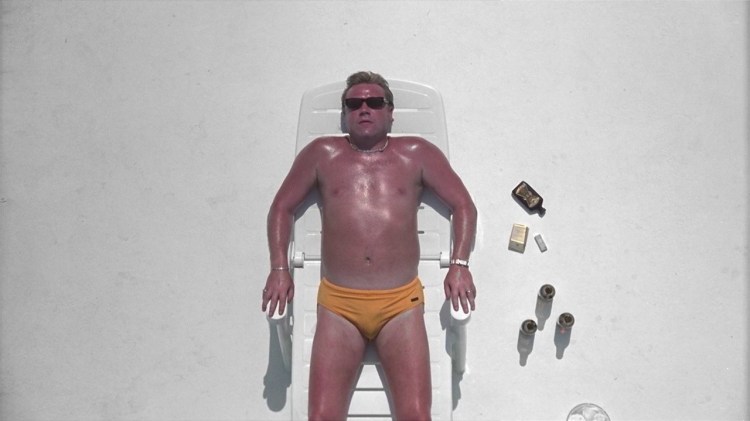
Some directors are so prolific that it feels like it was just impossible for them not to make great movies accidentally. Many of the greatest directors of classic Hollywood had hundreds of lost films from the silent era, where they found their voice and flexed their muscles. Jonathan Glazer is not a prolific director. In the over 20 years since his debut, he has released two movies, with a fourth due this year (2023.)
However, like John Ford, Glazer worked through hundreds of jobs to define his voice; Music videos. Glazer was one of those directors, like David Fincher or Spike Jonze, who became famous through their innovative videos and showed their talent. If you want to see his best, check out his Radiohead collaborations, but there are plenty of great ones.
But these videos don’t figure into Glazer’s inclusion here. Many great music video directors fail to make brilliant movies. Very few have made the leap. But Glazer was one of those few. As stated before, he’s not prolific, with only three movies out, but he is the definition of a director’s director.
With Sexy Beast, Glazer turned the British gangster film on its head, presenting a fresh, sardonic take that turned into a cult hit. But with Under the Skin, Glazer transcended into a league of his own, creating an ethereal, unsettling experience that sticks with you long after the credits roll.
Remember the scene in Under the Skin where Scarlett Johansson’s character lures a victim into an otherworldly black void? It’s jarring, stunning and unsettling. The minimalism, the use of music, the pacing – it all adds to create an incredible moment.
In the current climate, where instant gratification is often the order of the day, Glazer’s work is a gentle reminder that patience, passion, and precision still have their place in cinema. Who knows where Glazer will end up,
Aleksei German
Russia/Soviet Union | 1938 – 2013 | Russian Cinema
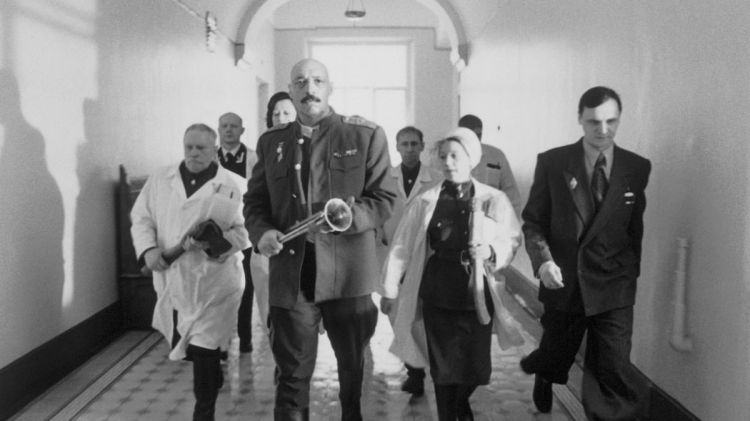
Russian cinema is, from the outside at least, easily separated into a few eras. The first era was from the mid-20s until the lateish 30s. Then a period from the late 50s until the 80s. Nowadays, I’m not sure they really have an ‘era’, although they do have two practising director genius, Aleksandr Sokurov & Andrey Zvyagintsev. Aleksei German began his career in the Krushev Thaw and outlasted many of his contemporaries. You can compare him to many of the great Russian directors. He’s a bit like Tarkovsky and a bit like Shepitko, yet, German is hard to pin down.
He only released six films across his nearly fifty-year career, rarely working within the same genre frameworks more than once or twice. His films are not your everyday fare; they are rigorous, dense, and often difficult to penetrate, much like the Russian winter landscape they often mirror.
Consider Khrustalyov, My Car! – a film that’s as chaotic as it is profound. Its portrayal of the Stalin era isn’t just a period piece; it’s a surreal and jarring experience that thrusts you into the very soul of a terrifying epoch. The mise-en-scène is so rich, the symbolism so dense, that every viewing unravels new layers, new insights.
But what makes German an interesting case study is his refusal to conform, to bow to the trends of the time. His films are labour-intensive, with years, sometimes decades, between them. He was never in a hurry or interested in box office revenue. Every film was a mountain to be scaled and conquered with a single-minded approach.
Yet, German’s name isn’t really mentioned that often. Despite being one of the great Russian auteurs, it feels like his name is shrugged off by modern audiences, not just the ones who swarm to the new Indiana Jones film, but by those arthouse fans who love Tarkovsky films. It’s hard to pinpoint why German fails to get much attention. Perhaps his movies are just too inaccessible, perhaps he is just too remote a figure to approach, or maybe we viewers have a habit of only allowing non-Western countries just a handful of auteurs worth watching. Perhaps Russia is too thick with directors, so German doesn’t get a look in too often.
In the wake of his passing, there seems to be a slow but steady resurgence of interest in German’s films, a recognition that perhaps we’ve missed something vital in our appreciation of cinema. He’s not an easy director, but he is rewarding.
Kim Ki-duk
South Korea | 1960 – 2022 | Korean Maverick

Long before Bong Joon-ho conquered world cinema with Parasite, South Korea was considered a relative backwater of cinema. There were a few directors worth mentioning from the country, such as Kim Ki-young or Lee Jang-ho, and South Korean cinema is an interesting history to read about, but generally, it made little impact on the world stage.
That all began to change at the turn of the century with the likes of Lee Chang-dong, Park Chan-wook, Bong Joon-ho and Kim Ki-duk. Two of those names (Park and Bong) are instantly recognisable to most film fans today, while Lee Chang-dong is well known in arthouse circles. However, Kim Ki-duk is less revered, although still fairly well known.
Kim’s name will surely get a reaction, whether it be awe or disdain. A figure as controversial as much for his personal life as his artistic endeavours, Kim’s work is nothing short of enigmatic and polarising.
From the very beginning, Kim’s cinema defied categorisation. His films, from the poetic melancholy of Spring, Summer, Fall, Winter… and Spring to the raw brutality of Pieta, have never shied away from probing the dark, often painful aspects of the human condition. Kim’s style, marked by minimal dialogue, long takes, and usually a disturbing blend of violence and beauty, strikes a chord that resonates deeply or not at all.
Take, for instance, his 2003 film Spring, Summer, Fall, Winter… and Spring. Set on a floating monastery, it’s a serene yet profound meditation on life’s cyclical nature. In stark contrast, The Isle presents a savage and unflinching look at obsession and madness. Kim’s ability to oscillate between these extremes demonstrates a rare mastery of cinematic language.
But Kim’s career has not been without controversy. Accusations regarding his behaviour off-screen have cast a shadow over his legacy, leading to divided opinions on the man and his art. For some, the unapologetic intensity of his work is a testament to an uncompromised artistic vision; to others, it’s an uncomfortable mirror reflecting the darker aspects of the creator’s psyche.
Whether loved or loathed, Kim Ki-duk’s influence on South Korean cinema cannot be denied. At a time when the Korean film industry was evolving and seeking its voice, Kim’s films were a bold declaration of what cinema could be.
It’s easy to brush Kim off as an enfant terrible or a dark genius, depending on your perspective, but what’s indisputable is the singularity of his vision. Like it or not, his films demand attention and engagement. You may walk away entranced, horrified, or even offended, but you’ll never walk away indifferent.
Kim’s death in 2020 left a void in the landscape of world cinema. In Korean cinema, there was none quite like him – an artist unafraid, a storyteller unrivalled, and a director who dared to bare the soul, however tormented it might be.
Michel Gondry
France | 1963 – – | Transatlantic Director

With his world of artistic panache and poetic dreamscapes, Michel Gondry has captured the hearts and minds of audience goers everywhere with his magus opus Eternal Sunshine of the Spotless Mind, created in collaboration with Charlie Kaufman. In most of Gondry’s films, there is a sense of childlike innocence, a playful enthusiasm that shines through. Whether it’s The Science of Sleep or Be Kind Rewind, his work is filled with boundless imagination and quirkiness, almost as if Wes Anderson’s whimsy took a psychedelic detour.
His foray into music videos is legendary, working with the likes of Daft Punk and The White Stripes. The innovation, the creativity, the audacity – Gondry’s visual flair shines as a beacon of artistic integrity and originality.
Yet, it’s not all sunshine and daydreams. It’s hard to claim he has lived up to the metric set by Eternal Sunshine; many of his efforts since come across as self-indulgent or substanceless. On the one hand, you can consider him something of a one-trick pony, but that feels unfair; on the other, some claim his erratic output as proof that he is a relentless auteur refusing to be pigeonholed, although that also feels a bit too kind.
Regardless of your opinion of Gondry’s work, you can deny his visual talents. In an era of sequels, franchises, and risk-averse productions, Gondry’s artistic vision is more than just refreshing; it’s vital. Perhaps it’s time to stop analysing his twists and turns and simply let go, falling into the dreams he’s carefully crafted for us.
Blake Edwards
United States of America | 1922 – 2010 | Classic Hollywood
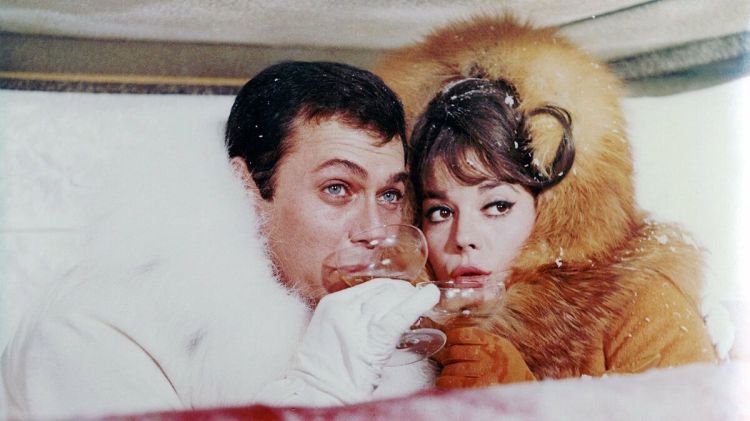
If you ask your everyday person to name five classic Hollywood films, they’ll probably name Breakfast at Tiffany’s. Yet, its director, Blake Edwards, is, relatively speaking, not a particularly acclaimed name. Many people love his movies, but I doubt many would put him in their top 10 1960s directors. The guy made some of the best comedies of his era and was as versatile as the best of them, but you still get the feeling that he somehow didn’t quite achieve what he could have.
That shouldn’t diminish what he did achieve, though. He created timeless movies, iconic scenes and beloved experiences. His films were sometimes sneered at by critics for being too comedic or sentimental, but those critics are now long dead, and the audiences who loved those films still exist.
But Edwards’ career wasn’t particularly easy. His battle with studio executives, most famously during the troubled production of Darling Lili, showcases the darker side of the film business. Despite being a commercial director, Edwards didn’t fit snugly into the Hollywood machine.
His 1960s period is diminished by the fact that he was largely in decline from 1968 onwards, yes, he made some good films, like his best one, Victor/Victoria, but he never had a good string of movies again. But isn’t it the case that many great directors have just one brilliant period? Why should Edwards be penalised for having the same flaw as most directors?
Edwards’ films merged old-school Hollywood glam, continental sophistication and a whole lot of heart to make a versatile bunch of movies. For those unfamiliar with the magic of Edwards, dive into The Party, The Great Race, or Days of Wine and Roses. You’ll find yourself on the edge of smiling, crying, and reflecting, often in the span of a single scene.
 Bronze Screen Dream