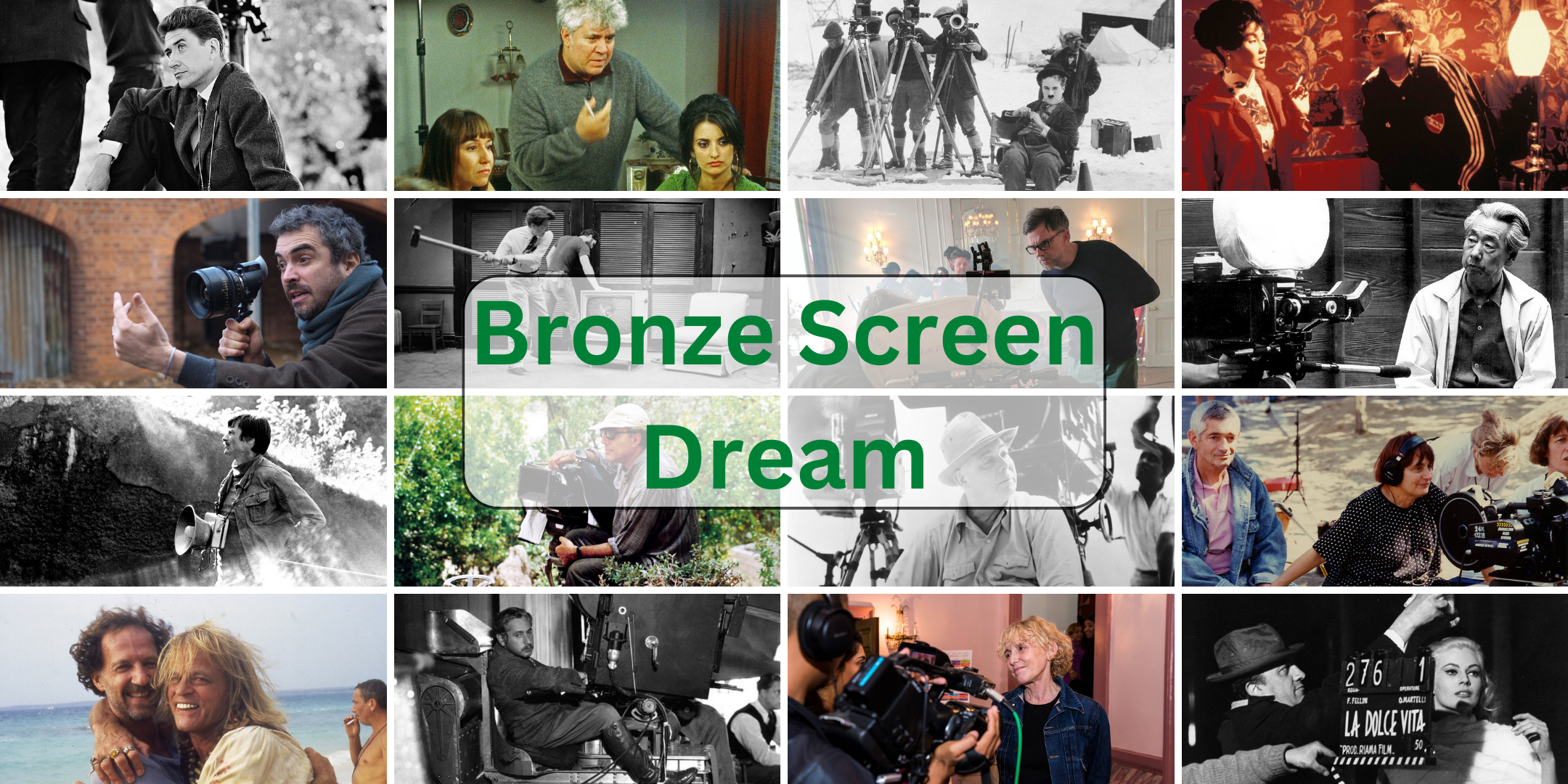

While this site’s main aim is to roughly track the ebbs and flows of directors’ standings, it’s also meant to be a place where he can find out the core themes of directors and serve as a sort of index card for directors. Ideally, someone could look at one of these profiles and identify what distinguishes this director, their best films and what filmmakers they are similar to.
Hopefully, this gives people a well-rounded idea about directors and their place in film history. While, as I said, the main aim is to track the top 250 directors’ rankings, I also keep a larger track of it. However, I plan to do one behind-the-scenes update to the orders in September and one in March (The March one will be the public one). Between those six months, it’s best to do something with this site, so I’ve been trying to create profiles for directors.
The problem is a) The images used to take up space in my 3GB WordPress allowance, b) they take time, and c) it can get problematic trying to figure out who should be included.
Obviously, the top 250 have to be made. But having a best 300 list feels superfluous; at what point do I stop past 250, 500?
So what directors should I focus on? Should we target 250 – 300 directors? Doing so would continue the overall goal of offering digestible profiles of directors. However, there are other reasons to have profiles on directors.
For example, a director I have added since is Henry Hathaway, a relative unknown without a masterpiece. Some great filmmakers don’t have a profile, so why should he come before them? Well, quite simply, he’s well-connected. The guy appears in so many ‘similar filmmakers’ selections that his name needed to link to something. Besides that, he had a long career, which makes him quite interesting. Charles Laughton made a much better film and thus is much higher in the rankings, but a profile on him would be quite dull, although I expect I’ll make one at some point.
So that’s been my main reason for adding a director. Do they have enough references to them on the site to justify adding a page and linking it?
This feels like a fair way to do it and removes my personal bias from the equation; many of my favourite filmmakers still don’t have a profile because to do so would overstep this line.
Generally, I think this is the best way to do it, but there are some issues.
1) If a director is suddenly newsworthy, should they have a page made? This issue came up with Kenneth Anger, obviously a genius, obviously influential, but in terms of references, he’s hard to tie to many other directors. Yet, I made a page for him to celebrate his work.
2) The nature of a top 250 in 2023 will be primarily filled with one demographic – I’m not going to name it, but you know it, as do I. Some people have a different perspective on this issue, but I’m generally laissez-faire towards it. Films historically were mainly accessible to white men, so why the hell would I be surprised that most of the notable filmmakers of the past century are of that demographic? I don’t really like inflating the numbers and granting more importance to a director than they perhaps deserve. For example, Dorothy Arzner was a groundbreaking director, but she doesn’t have the filmography to fight entry nor many ‘similar directors.’
3) This brings us up to the most glaring issue with this way of doing things. If we only make profiles for ‘similar directors, ’ we favour directors who work in critically acclaimed genres. There aren’t as many horror directors here, or even something like musical directors. This extends into foreign language cinema. There are plenty of French directors in the top 250, so there are many outside it too, but India just has Satyajit Ray because which of the directors here is similar to Raj Kapoor? He might have the odd reference, but you need around 6 to get a page. So what? Is he stuck in purgatory? How is that fair?
So there are issues with the system, and I hope to address that. I’ve considered ranking every director by a score and prioritising pages by that, but then we inevitably become biased again. It’s a self-perpetuating cycle that I feel can only go wrong.
Generally, I’m happy with the ‘similar filmmakers’ way of doing it, although I feel it’s important to acknowledge the issues. Perhaps the way to do something is to ensure X number of directors per continent. Still, then you come into the inverse problem, does Med Hondo, a great director, deserve a page ahead of – I don’t know – Jean-Marie Straub & Daniele Huillet just because Hondo is one of the greatest African filmmakers? Meaning Straub & Huillet, despite being more important in film history, suffer for being European. But then, is it fair that Med Hondo’s lack of opportunities makes him less likely?
The whole circle feels unending and unfair to everyone. But I still enjoy making the pages. If anyone could come up with some ideas to even out the issues, I’d love them for it, but I can’t see it myself.
However, this post isn’t actually about crying over my self-made issues. It’s about talking about the directors who have been added in the past week.

Robert Rossen
United States of America 🇺🇸 | 1908 – 1966 | Classic Hollywood
Although best known for classic Hollywood films like The Hustler, Rossen was always an outsider to the system. He never got those huge films starring Gary Cooper, yet he wasn’t a cult darling, as many loathed him for betraying his colleagues during the Hollywood blacklisting. In fact, a large part of his reappraisal since the 1950s/60s has been due to Martin Scorsese’s championing of him.
Rossen had a style of his own – His films were often gritty and unvarnished, delving into complex characters and moral dilemmas. Unlike the glossy spectacles of his contemporaries, his work was imbued with a raw, political edge. They weren’t designed to appease or dazzle but to provoke thought, challenge conventions, and reflect the era’s turbulence.
Think about the compelling scene in Rossen’s 1949 film All the King’s Men, where the character Willie Stark, played by Broderick Crawford, delivers a stirring speech to a crowd of ordinary citizens.
Here, the camera works intimately with Crawford, focusing on his face and capturing every nuance of emotion as he rails against corruption and promises a new era of politics for the people. The crowd’s reaction is filmed to become almost a character, reflecting the time’s hope, anger, and desperation. The dialogue is sharp and powerful, penned by Rossen himself, and it doesn’t shy away from the political realities of the era.
The scene’s brilliance lies in the performance, composition, and execution. The lighting, the angles, the cuts – everything serves to heighten the intensity and underline the film’s thematic core. Rossen orchestrates this moment with a mastery that’s both subtle and profound, creating a scene that’s not just memorable but emblematic of his desire to use cinema as a tool for social commentary and change. It’s Rossen at his best: uncompromising, insightful, and deeply human.
It’s just a shame his career dwindled away as it did. Forced to make choices no man should have to make and left to wallow in self-misery. In another world, Rossen was a superstar.
Hiroshi Teshigahara
Japan 🇯🇵 | 1927 – 2001 | Japanese New Wave
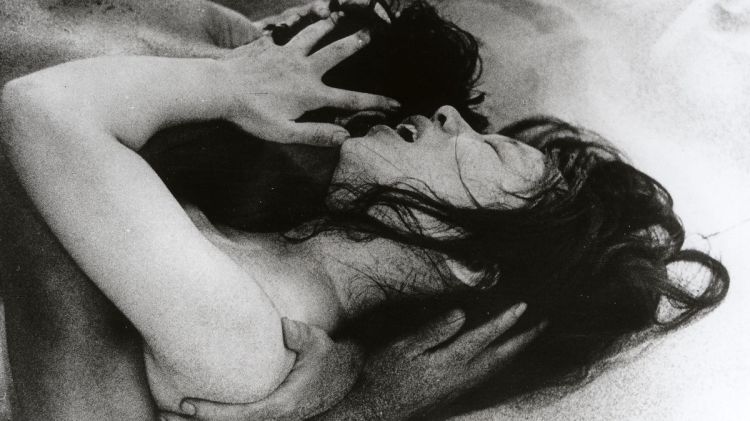
Like Rossen, Hiroshi Teshigahara is another director with an air of ‘could-have-been’ to him. Teshigahara made undisputable masterpieces – Woman in the Dunes, The Face of Another – but then he went quiet. The reason? Simply put, he didn’t want or need success; in the aftermath of Oscar nominations and Arthouse success, he turned to the Sogetsu Ikebana School, his family’s famed flower arranging school, and other artistic pursuits.
Of course, if you’re going to retire after any film, Woman in the Dunes might as well be it. The film is a haunting, existential meditation on life, time, and everything in between. Through this film, Teshigahara achieved immortality, but it also was hugely important for bashing open doors in the West, proving the artistic brilliance of Japanese cinema beyond Ozu, Kurosawa and Mizoguchi.
Looking at Teshigahara’s later works, you never quite get the same brilliance. Rikyu, for example, is an interesting but undercooked work, filled with his signature visual flair and philosophical musings but lacking the depth and coherence of his earlier films.
It’s hard to categorise Teshigahara as one of the best Japanese filmmakers, he only made three important films, but there was a brief moment in 1964 when the world held its breath, wondering if they’d just witnessed the ascension of the next Kurosawa. At least we still have the Dunes.

Charlie Kaufman
United States of America | 1958 – – | American Independent
It seems like everyone goes through a Charlie Kaufman phase. Whether watching The Eternal Sunshine of the Spotless Mind or going-full insanity with Synecdoche, New York, Kaufman has made a huge dent in our psyche. The guy gets pop meta-surrealism in a way nobody ever has before. His work with Michel Gondry and Spike Lee is amazing, and he is one of the few screenwriters who smashed that debut film.
Synecdoche, New York, holds a special place in my heart. It’s unforgettable, it’s true artistry, and it’s, you know, the best fucking film of the 21st century. Sorry to tell you if you think otherwise. He’s followed the film up with two very good, but not as perfect, films, but his entire directorial career has been filled with missed opportunities and snubs. He seems to attract bad opportunists like a cow pat gets flies. It’s irritating being a Kaufman fan, waiting for his next film so optimistically, reading all the negative production news. Oh, he’s been linked to a new project? Yeah, I’ll believe it’ll get made when I see it. Then he releases a movie, and you think, “Hey, that was great; surely that’ll open doors for him.” Nope!
Kaufman is treated like some C-grade director, but he has an A-talent. One day the world will wake up to his brilliance. If his name were attached as director to those Jonze and Gondry films, we’d consider him the greatest American director alongside PTA. But we don’t.
He is currently tenuously linked to a film project with Ryan Gosling. I don’t ask for much, but please, let’s get this film made before Charlie, Ryan, and I all die.

Alan Parker
United Kingdom | 1944 – 2020 | British & American Cinema
Alan Parker was a real chameleon, with such a delicate touch you could almost call him an invisible director. Of course, someone with his filmography simply can’t be a talented director. Look at his body of work, and you’ll see a litter of great movies from the 70s to the 00s. The guy thrived in a post-New Hollywood world, jumping from genre to genre, the sole Brit in an American town.
Parker has the catalogue to rival most of his contemporaries, but he’s rarely as talked about. Why is that? The simple answer would be that we only really talk about influential or idiosyncratic directors; Parker had unique aspects – his music use, tackling controversial subjects, etc. Still, he was much more of a journeyman than David Lynch. Despite being great and often hailed as near-masterpieces, his films are rarely in the top 10 of any year.
In my opinion, his best work is The Wall, Midnight Express and Mississippi Burning. All great films, all influential, but none of them fit neatly into their year’s top 10. So Parker’s undervalued on this site, essentially. He is the perfect example of a director who, although talented, is often disregarded in favour of his more unique colleagues.
If you’ve never watched a Parker film, you should give them a shot; he has at least 7 or 8 really good movies.

Richard Brooks
United States of America | 1912 – 1992 | Classic Hollywood
I’ve always thought Richard Brooks was underrated. The guy fought the good fight for his whole career, never resting on his laurels. In 1977, were he and Robert Aldrich the only ‘classic Hollywood’ directors still doing passable work? Brooks broke his teeth on social commentary sort of films, and that’s where he made his mark, but he’s best known for the simmering Cat on a Hot Tin Roof or the enflamed Elmar Gantry.
I have a soft spot for those 1950s directors who never quite ascended to the big-time, but you could always tell apart. Aldrich, Siegel, Brooks. Brooks was arguably more successful than those two in the 50s, but I’d claim none of his best films was made in that decade, unlike the others; instead, his best work was made from a period between 1958 – 1977, of course, there are plenty of duds in between those years, but the guy had a phenomenal period of success.
Yet, Brooks is practically unknown nowadays, even to ardent cinephiles. Siegel and Aldrich have their cults, but where is Brooks’? He was one of the first classic directors to start incorporating European styles into his films, best seen in In Cold Blood, but another great example is The Happy Ending. Not a good movie, but a curious film that captures that late-60s ennui in an almost Antonioni-way.
When Brooks made his last film in 1985, he was the last of a dead species, he didn’t enjoy the sort of New Hollywood success Aldrich did, but I’d argue there’s still something in his post-1960s work to be scrutinised and looked at by academics. Brooks was a major figure in film history and specifically a crucial piece in the tapestry of 50s cinema, so that’s why I’ve added his profile.
Final
So why have I made this post? The profiles are just as discoverable as all the others on the site. I suppose I want to make a case for why they should be on here and ultimately explain why others might not. Writing 3 paragraph summaries of directors can be fun, but it can also be draining to avoid leaning too hard into personal opinion. This post allows me to let my feelings flow on that matter. I think I’ll post one of these for every five profiles I make. If you’re astute, you’ll know I’ve already made four more than the five on here, so I’ll plan to make one for those after the next director (Blake Edwards.)
 Bronze Screen Dream