

Before you get too inflamed, we should probably make it clear that there are no ‘bad’ David Lynch films – Well, if I’m honest, Dune is bad, but it’s not terrible. Regardless that’s the only one of his movies that I feel you can unequivocally say is poor. Every other one has its merits. Some are impenetrable, dizzying and mystifying works that might not be approachable initially but often reward multiple viewings.
Suffice it to say almost any ranking will be different. Number 8 here, Wild at Heart, is often considered by some his best movie. Mulholland Drive, often called the best movie ever, is in 4th place. Lynch’s work is so adored and consistently brilliant that almost any order works.
We’ve not included Twin Peaks or Lynch’s shorts, not because they’re not excellent but because it’s hard to measure their quality against one another. What Did Jack Do? is fun, but is it better than Dune? Probably… but… So instead, we ranked just his feature films.
Audiences want another Lynch film, and it seems like whenever he’s spotted out in public, cinephiles start to whisper that it’s him scouting for locations or him in pre-production. So many rumours have come and gone that I no longer listen to these rumours. But I still hope we’ll get an 11th film for this list. We’ve ranked all his movies in celebration of the 18th greatest director ever.

10. Dune (1984)
If you’re looking for a bland and overstuffed film, then behold: Dune. Concocted with the best intentions, only to be left half-baked in the merciless desert of Arrakis, the film is an ambitious yet failed attempt to translate Frank Herbert’s seminal novel to the big screen. Propped up on a shaky narrative structure, its story meanders through unconvincing plot points like a lost Fremen in a sandstorm.
The abundance of characters, each seemingly more one-dimensional than the last, produces a flat tableau that struggles to impart the intricate dynamics of Herbert’s universe. Despite Lynch’s notorious style of mining the subconscious for bizarrely brilliant visuals, Dune is frustratingly devoid of such creativity, instead succumbing to special effects that seem more at home in a tacky 80s music video than a cinematic epic.
Paul Atreides, the novel’s complicated and layered protagonist, is turned into an uninspiring messiah figure, painted with the broadest strokes. The supporting cast, as talented as they might be, appear equally stranded in this creative wasteland, delivering performances that range from forgettable to regrettable; even Max von Sydow seems lost amidst the confusion.
As for the sound design, it, too, is a catastrophic misfire. While iconic in its own right, the score feels woefully out of place. And then there’s the narration… All told, Dune is a misstep of cosmic proportions.
9. Inland Empire (2006)
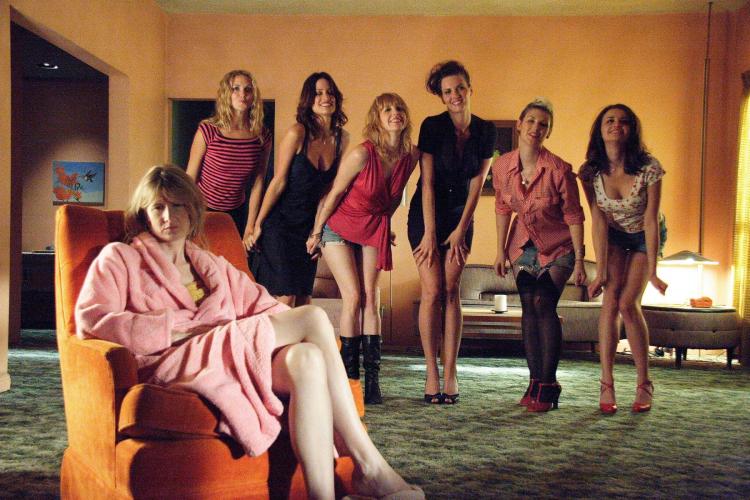
Inland Empire is like a fever dream – disorienting, disconcerting, and decidedly difficult to follow. While the film boasts Lynch’s signature non-linear storytelling and mind-bending visuals, the overall impression it leaves is more confusing than compelling. Its sprawling, indulgent three-hour run time will test even the most ardent-Lynch fan.
Laura Dern, ever the consummate professional, delivers a performance that almost rescues the film from its convoluted plot. Playing Nikki Grace/Susan Blue, she descends into Hollywood’s bizarre, fractured reality with the utmost commitment, navigating through the narrative’s daunting labyrinth with a palpable sense of fear and confusion. However, the exceptional performance is mired in a narrative morass far too cryptic for its own good.
It’s like a jam session for Lynch, experimenting and improvising with different ideas and techniques. There’s something to be admired about the courage to explore the form so unreservedly, but the end result is more dizzying than dazzling.
The decision to shoot digitally gives the film a dreamlike quality. Still, it comes at a cost, with the film often appearing grainy and lacking in the aesthetic polish typically associated with Lynch’s work.
Inland Empire is Lynch at his most self-indulgent. It presents a feverish puddle of ideas that, while provocative, feel muddled and unrefined. It’s a journey down the rabbit hole, but one that leads to a warren of confusion rather than enlightenment. Lynch enthusiasts may find something to admire in its audacity, but it’s a difficult film for casual viewers to appreciate.
8. Wild at Heart (1990)
Wild at Heart presents an engaging blend of romance and violence; all wrapped up in a road trip movie that certainly doesn’t shy away from the macabre. The chemistry between Nicolas Cage and Laura Dern is palpable, with both actors delivering committed performances. As Sailor Ripley, Cage exudes a wild, Elvis-esque charisma, while Dern’s Lula Fortune offers a perfect foil with her fiery, unabashed vulnerability. Together, they navigate through the film’s series of bizarre events, their characters’ romance providing a strong emotional anchor amidst the chaos.
While the narrative bristles with Lynch’s signature surrealism, it sometimes detracts from the story’s central romance, causing a disconnect that can be jarring. Bizarre episodes and characters come and go without explanation, turning the narrative into an intriguing but confusing delirium. It’s classic Lynch but not always conducive to the coherent story one might expect from a road trip movie.
Visually, the film delivers arresting images that stick in your mind. Lynch’s lens captures America’s underbelly with a sense of dread and romanticism, resulting in a memorable, if occasionally overwhelming, aesthetic experience. It’s a sight to behold, but it sometimes feels like style takes precedence over substance.
7. Twin Peaks: Fire Walk with Me (1992)
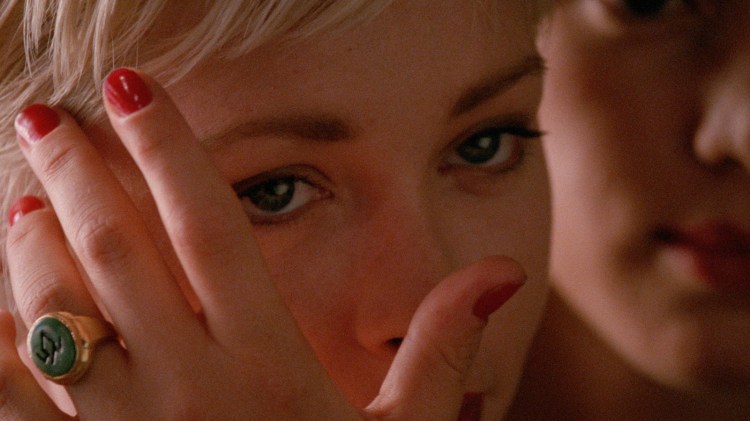
If Twin Peaks was David Lynch at his most palatable, then Twin Peaks: Fire Walk with Me sees the enigmatic director doubling down on his unique brand of eccentricity. A prequel to the iconic television series, the film delves into the dark and tragic life of Laura Palmer, peeling back layers of mystery to reveal the haunting reality beneath. While the film’s heavier tone and surreal elements might prove a divisive departure from the TV series, they are undeniably quintessential Lynch.
Sheryl Lee delivers a powerful performance as Laura Palmer, embodying the teenage homecoming queen’s inner torment and terror with raw intensity. Her portrayal of Laura is nothing short of heartbreaking, serving as the tragic centre of a narrative that explores the dark undercurrents of seemingly idyllic small-town America.
The film’s plot, however, can be as confounding as one of Agent Cooper’s dreams. It weaves a nonlinear narrative that feels more like a string of loosely connected dream sequences than a cohesive storyline. It demands from its audience unwavering attention and a willingness to dive deep into the rabbit hole of Lynch’s complex symbolism.
The beautiful yet eerie ambience of Twin Peaks is captured with a hauntingly surreal quality, contributing to an overwhelming sense of dread that pervades the film. Angelo Badalamenti’s score only intensifies this atmosphere, with its melancholic melodies echoing the tragic fate of Laura Palmer.
6. Eraserhead (1977)
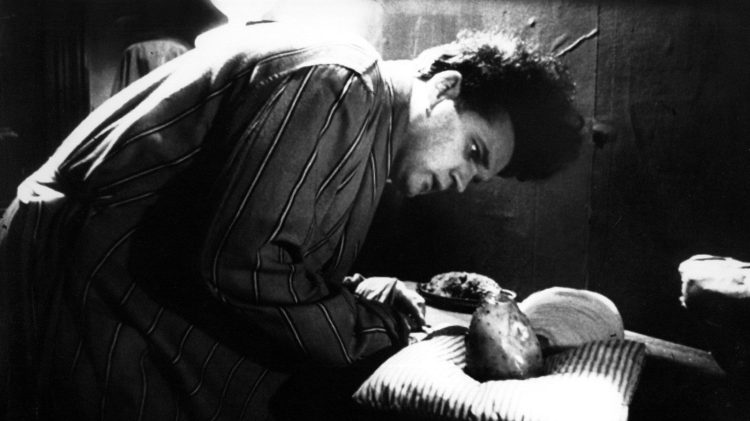
David Lynch’s debut feature film, Eraserhead, stands as an unflinching exploration of the subconscious, with all of its anxieties and dread. An exemplification of the term ‘Lynchian,’ the film’s blending of the mundane and the bizarre results in a hauntingly surreal experience that cements Lynch’s mastery of the uncanny.
The film follows the peculiar journey of Henry Spencer, a man grappling with the realities of sudden parenthood under the most surreal circumstances. Jack Nance’s performance as the anxiety-ridden Henry is commendable, infusing the character with a palpable sense of unease and isolation that anchors the film’s surreal narrative.
Despite its minimal plot, Eraserhead creates an engrossing, dreamlike atmosphere, creating a sense of unease that lingers long after the credits roll. It’s not an easy watch, but for those who surrender to its perplexing vision, it’s an unforgettable experience.
The stark black-and-white cinematography enhances the film’s dreamlike aesthetic, with each frame serving as a canvas for Lynch’s nightmarish imagination. The film’s visual style creates a unique, familiar, and disorientingly alien landscape from the cramped, cluttered interiors to the oppressively industrial exteriors.
5. Lost Highway (1997)
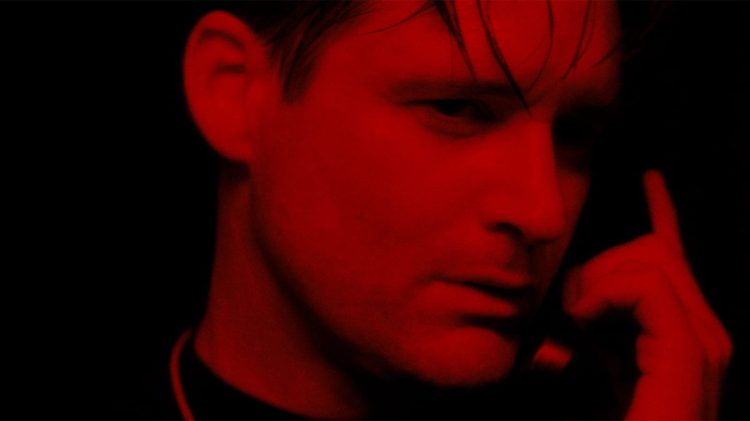
Lost Highway is a compelling enigma which lingers in the mind. Blurring the lines between reality and fantasy, identity and desire, the film is a testament to Lynch’s skill at spinning narratives that draw viewers into a state of unnerving fascination.
The film’s plot, as elusive as it may be, revolves around the intertwined destinies of Fred Madison, a jazz musician accused of murdering his wife, and Pete Dayton, a young mechanic with no memory of his past. Both characters, portrayed by Bill Pullman and Balthazar Getty, respectively, deliver intense performances that only add to the film’s gripping sense of dread and confusion.
The film’s distinct atmosphere of unease is achieved through a blend of haunting visuals and a disturbingly atmospheric score. Cinematographer Peter Deming’s work on the film deserves special mention. The film’s visual landscape oscillates between Fred’s world’s moody, noir-like ambience and Pete’s bright, seemingly normal life, reflecting the dual narrative that drives the film.

4. Mulholland Drive (2001)
A controversial placement, I know. Mulholland Drive is an intricate jigsaw puzzle, a dreamlike exploration of Hollywood’s glamour and decay. This enigmatic movie is instantly memorable and rewards multiple viewings.
The film follows the intertwined stories of Betty, an aspiring actress portrayed with an innocent charm by Naomi Watts, and Rita, an amnesiac played by Laura Harring. Their search for Rita’s identity serves as the central plot, around which swirls a host of other intriguing narratives and characters. The story’s complexity is mirrored in the layered performances, with Watts, in particular, delivering a standout act that seamlessly shifts from naivety to dread.
Mulholland Drive thrives in its ambiguity, the narrative unfolding like a dream that straddles the line between nightmare and fantasy. Despite its cryptic illusiveness, it maintains a gripping tension throughout.
Lynch’s eye for detail and atmosphere paints a vivid picture of Los Angeles – both the glitzy facade and the grim reality. It’s a love letter and critique to the city of angels, exploring its allure and the dark underbelly with equal vigour. It’s a quintessential Lynch film that dares to challenge the conventions of narrative, presenting a dreamlike world that continues to captivate and mystify viewers to this day.

3. Blue Velvet (1986)
Lynch’s subversive take on the American small-town idyll is a haunting exploration of the sinister underbelly beneath the surface of suburban normality. Blue Velvet is deeply unsettling yet perfectly put together, exploring themes of innocence, corruption, and desire with an unflinching gaze.
The story revolves around college student Jeffrey Beaumont, portrayed by Kyle MacLachlan, whose discovery of a severed human ear leads him on a dangerous journey into his town’s dark heart. MacLachlan’s performance is balanced and nuanced, his character’s transformation from naive curiosity to horrified understanding serving as the film’s emotional core.
The supporting cast, including Laura Dern, Dennis Hopper, and Isabella Rossellini, deliver stellar performances that only enhance the film’s unsettling atmosphere. In particular, Hopper’s portrayal of the sadistic Frank Booth is both terrifying and compelling.
Blue Velvet benefits from its striking visual aesthetic, where the beauty of suburban life contrasts starkly with the darkness lurking beneath. Every frame is perfectly conducted – a blend of the mundane and the horrifying that has since become his trademark. The use of colour, particularly the iconic blue velvet, adds a layer of visual symbolism that enhances the film’s emotional impact.
2. The Straight Story (1999)
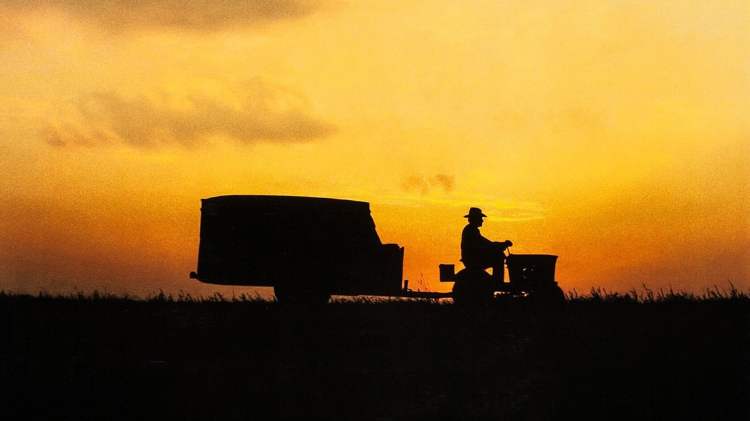
Not your typical Lynchian tale, The Straight Story is a warm and touching tale that finds beauty in simplicity. The film’s gentle narrative tells the real-life story of Alvin Straight, an elderly man who embarked on a six-month journey across the American Midwest on a lawnmower to reconcile with his estranged brother. Richard Farnsworth’s portrayal of Alvin is wonderfully sincere.
Despite its simple plot, it’s rich with emotion and humanity. Its exploration of themes such as family, ageing, and redemption is deeply touching, aided by the superb performances of the cast. Sissy Spacek deserves special mention for her role as Alvin’s mentally challenged daughter Rose, bringing a sense of vulnerability that further enhances the film’s emotional impact.
The sweeping landscapes of the American Midwest are captured with a painterly beauty that complements the film’s gentle narrative. It showcases a different facet of Lynch’s filmmaking, proving that he is as capable of crafting heartfelt, straightforward narratives as he is of creating intricate, surrealistic dreamscapes.
1. The Elephant Man (1980)
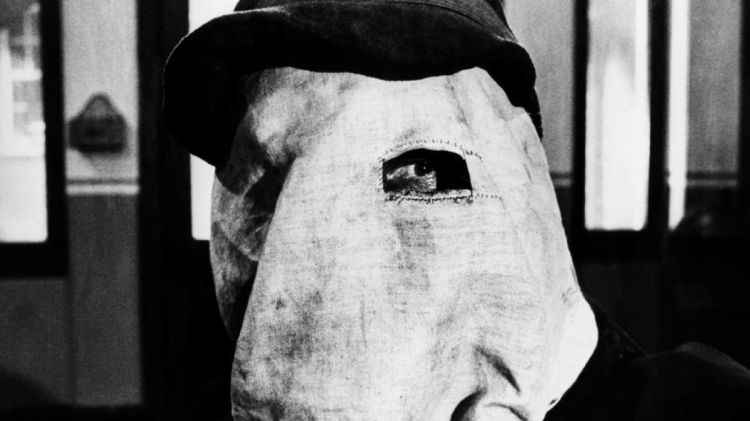
The Elephant Man remains one of Lynch’s most critically acclaimed works, a deeply affecting film that balances its heartrending narrative with standout performances and evocative black-and-white visuals.
John Hurt’s performance as Joseph Merrick, the titular ‘Elephant Man,’ is exceptional. His portrayal of the character’s physical and emotional suffering and his inherent gentleness and dignity makes for a deeply affecting viewing experience. Anthony Hopkins also shines as Dr Frederick Treves, who sees past Merrick’s physical deformities to recognise his humanity.
Despite its period setting, the film’s themes remain relevant today, resonating with contemporary audiences through its exploration of acceptance and the inherent worth of every individual. Visually, the film is striking. Lynch’s decision to shoot in black and white makes the film timeless while heightening its intensity. The film’s aesthetic evokes the stark contrast between the grimy, industrial backdrop and the characters’ deeply human struggles, enhancing the narrative’s emotional depth.
The Elephant Man is a masterpiece, a deeply moving work about the human spirit. With its evocative storytelling, unforgettable performances, and powerful thematic exploration, it is the pinnacle of David Lynch’s remarkable filmography.
 Bronze Screen Dream