

When Sofia Coppola was first introduced to most movie-goers in The Godfather III, I think it’s safe to say it wasn’t love at first sight. Her performance in the film continues to be regarded as one of the worst in a major movie. I don’t necessarily agree with that, but against Pacino et al., she’s clearly the weak link.
However, working with her father must have taught her something, as she’s been able to craft a steady career since her 1999 debut, The Virgin Suicides. Coppola has plenty of critics, but she also has a steady stream of followers who adore her aesthetic and moviemaking style.
Personally, I find her filmography to be spotty. Lost In Translation is so far beyond the rest of her work that it’s incredible, but that doesn’t mean that she doesn’t occasionally share glimpses of her talent elsewhere.
Later this year, we’re due to see the premier of her newest film, her first since 2020, Priscilla, about Elvis Presley’s wife. The movie sounds like classic Coppola material, a chance to reexplore frequently trodden territory with the feminine gaze.
We’re ranking all 7 of her released feature films to celebrate this upcoming flick. Not, technically, if you are a Coppola devotee, you might claim that A Very Murray Christmas should feature here. But as it’s a TV special, we’re deciding to forego it, besides it’s not very good.
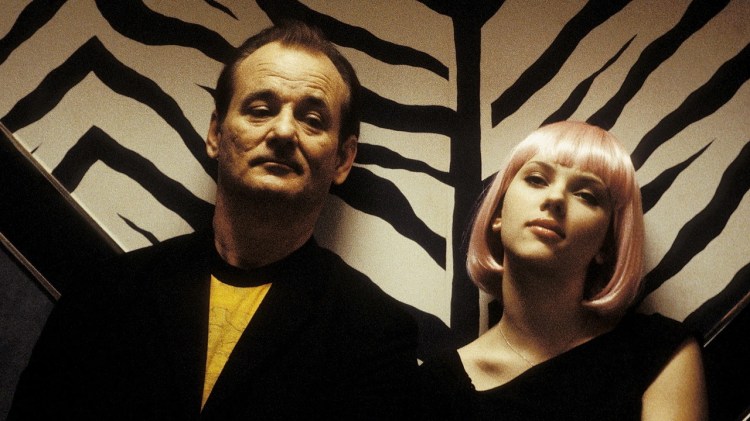
1. Lost in Translation
At the pinnacle of our list is Sofia Coppola’s sophomore feature, Lost in Translation. This film explores isolation, connection, and the fleeting moments that define our lives.
Bill Murray and Scarlett Johansson deliver exquisite performances as Bob and Charlotte, two souls adrift in a foreign land. Their chemistry, which oscillates between platonic comfort and romantic tension, elevates the film from a simple narrative to a profound contemplation of human connection. Murray is a revelation, so different from his typical comedic persona, while Johansson, in one of her breakout roles, matches him beat for beat.
Coppola’s filmography often highlights the existential angst underlying opulence, but never as poignantly as it does here. The film leverages Tokyo’s neon glitz as a constant juxtaposition to the characters’ internal solitude, creating a stark visual representation of emotional dissonance.
The script, written by Coppola, finds a perfect balance between levity and profundity. The dialogues are minimalist, allowing for the actors’ performances and the beautifully crafted silence to convey the narrative’s emotional depth. The film resonates long beyond its final frames.
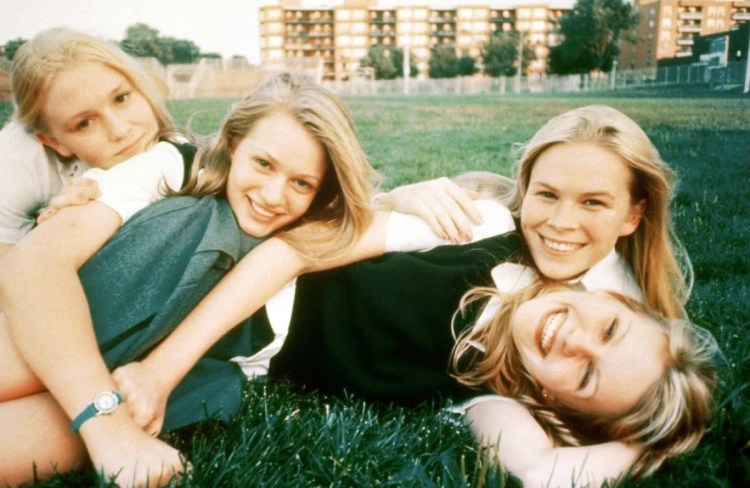
2. The Virgin Suicides
Sofia Coppola’s directorial debut, The Virgin Suicides, ensnares viewers in an ethereal, haunting exploration of adolescence, innocence, and mortality. Based on Jeffrey Eugenides’s novel of the same name, the film focuses on the tragic trajectory of the Lisbon sisters, five teenage girls living in 1970s suburban America. Their dreamlike presence and tragic end form the enigma that drives the narrative told through the voyeuristic lens of the neighborhood boys, who remain forever obsessed with the enigmatic sisters.
Coppola’s atmospheric visuals, dreamlike sequences, and nostalgic palette are beautiful. Her unique stylings paint a beautiful yet suffocating world that mirrors the Lisbon sisters’ lives, giving the film an almost hypnotic quality. The ethereal score by French electronic duo Air further underscores the film’s melancholic mood.
The ensemble cast, led by a young Kirsten Dunst, brings depth to this complex narrative. Dunst’s performance as the charismatic and doomed Lux Lisbon is particularly captivating, oscillating between girlish innocence and world-weary resignation.
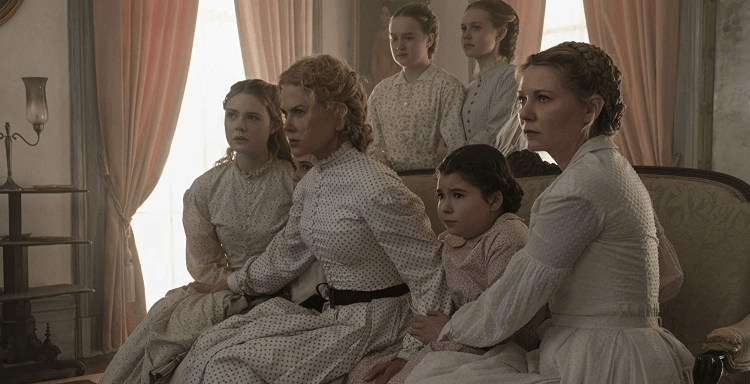
3. The Beguiled
Sofia Coppola’s atmospheric southern gothic drama, The Beguiled, takes third place. This movie delves into the simmering tensions and sexual power dynamics within a secluded all-female boarding school during the American Civil War.
The film is a remake of the 1971 Don Siegel film of the same name, but Coppola’s nuanced touch makes it more than a frame-for-frame redo. It pivots away from the male gaze that dominated the original and reinterprets the narrative through a distinctly female lens. The result is a provocative exploration of repressed desires and the dangerous allure of the unknown.
Coppola excels at creating a potent sense of place, and The Beguiled is no exception. The film’s Southern Gothic atmosphere is palpable, enhanced by its verdant yet claustrophobic setting. The film boasts an outstanding ensemble cast, with Nicole Kidman, Kirsten Dunst, and Elle Fanning offering exceptional performances. However, it’s Colin Farrell, as the wounded Union soldier, who truly shines, expertly traversing a challenging character arc that oscillates between charm and menace.
While The Beguiled may not have the same emotional depth as Lost in Translation or The Virgin Suicides, its exploration of female agency, suppressed sexuality, and the fine line between civility and savagery make it a captivating watch.
4. On The Rocks
Next is On The Rocks, a charming and whimsical exploration of father-daughter relationships and marital uncertainty. It signals a departure from Coppola’s more solemn themes, trading in melancholic introspection for a more light-hearted tone.
Bill Murray reunites with Coppola, starring as Felix, a charismatic bon vivant and father to Laura, played by Rashida Jones. The duo embarks on a playful adventure across New York City, instigating delightful father-daughter escapades as they investigate Laura’s suspicious husband. Murray’s charm and Jones’s authenticity infuse the film with a lively yet heartwarming spirit.
Coppola’s signature touch lies in her ability to make the city a character, and On the Rocks is no exception. New York City is a vibrant backdrop, its dynamic spirit perfectly contrasting with Laura’s stagnation. The film feels like Coppola’s love letter to the city, with its bustling streets, iconic landmarks, and nocturnal energy. It might not pack the emotional punch of its predecessors, but it’s still an endearing fun watch.

5. Somewhere
Landing in the middle of our ranking is Coppola’s introspective drama Somewhere, a slow-burning meditation on fame, loneliness, and fatherhood. This film is a quiet portrayal of Hollywood ennui that is both poignant and restrained in its narrative approach.
Somewhere unfolds the story of Johnny Marco (Stephen Dorff), a Hollywood actor wallowing in existential despair, until his world is upended by the arrival of his 11-year-old daughter, Cleo (Elle Fanning). The father-daughter dynamic forms the heart of the film, and Dorff and Fanning’s performances lend an aura of authenticity to their characters.
The narrative unfolds slowly, punctuated by long takes and minimalist dialogue, allowing viewers to soak in the characters’ shifting emotional landscapes. Coppola’s keen eye for detail and Harris Savides’s languid cinematography evoke a melancholy charm. The film’s unhurried pace and deliberate silences can drag on occasion, but it’s still interesting.
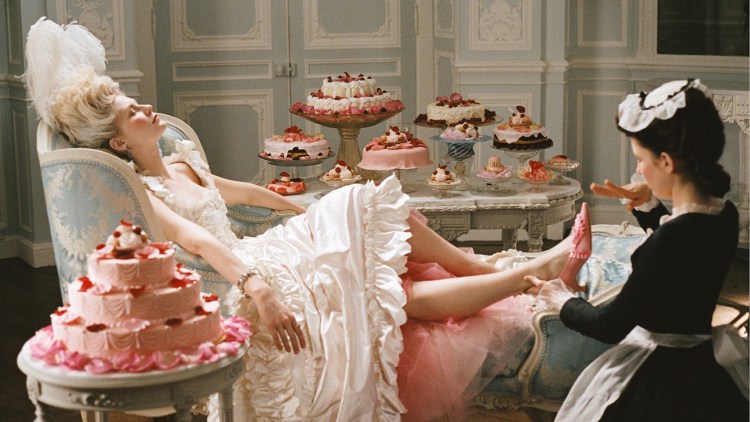
6. Marie Antoinette
In the penultimate spot, we find Marie Antoinette, Coppola’s daring and anachronistic take on the infamous French queen. It’s a visually sumptuous feast, a departure from historical accuracy, preferring an exuberant, decadent exploration of excess and isolation.
Kirsten Dunst stars as the young queen, portraying her transformation from a naive teenager to a symbol of royal extravagance with nuance and sensitivity. The cast, including Jason Schwartzman as Louis XVI and Rip Torn as Louis XV, delivers commendable performances, adding depth to the otherwise frothy narrative.
Coppola’s take on Marie Antoinette’s life is distinctive, lacing the 18th-century narrative with a decidedly modern sensibility. The film is replete with pop music, playful montages, and vibrant costumes, reflecting the youthful abandon of its titular character. This unorthodox approach offers a refreshing perspective but can feel discordant at times.
The luscious cinematography and the lavish costume design make “Marie Antoinette” a treat for the eyes, even if its narrative depth doesn’t quite match its visual grandeur. Its overindulgent aesthetics and limited character arcs make the film fairly polarising.
7. The Bling Ring
Rounding off our ranking is The Bling Ring, a film that chronicles the real-life exploits of a group of fame-obsessed teenagers who burglarized the homes of Hollywood celebrities. It’s a satire on the culture of celebrity obsession and materialism that, while insightful, falls short of its potential.
The film boasts a young, energetic cast, including Emma Watson, who departs from her typecast to play the narcissistic Nicki. The performances are solid across the board, convincingly capturing the superficial vanity and naiveté of the characters. But that doesn’t make them any less irritating.
Coppola adopts a more stylistic approach to her storytelling in The Bling Ring. The narrative is fast-paced, with quick cuts and flashy montages that echo the characters’ hedonistic lifestyle. Unfortunately, the story lacks the emotional depth and nuance in Coppola’s earlier works, resulting in one-dimensional characters. The film critiques celebrity culture and the pursuit of fame, but its exploration often feels shallow and surface-level at best.
 Bronze Screen Dream