

Wes Anderson is one of the most famous, creative, and original voices in Hollywood right now. He is one of those rare filmmakers whose every frame is identifiable his. Ever since his rise from the indie scene in the late 90s, he has continually put out films that have thrilled his fans and made his critics increasingly irritated.
You see, Anderson’s originality might be the thing that makes him stand out from the crowd, but it is also the thing that seems to grate critics so much. His stylised approach with symmetrical framing, meticulous set design, and carefully curated colour palettes is often criticised for making his films unnecessarily whimsical.
Similarly, there are those that think his films lack emotional depth, are too repetitious of themes (dysfunctional families, nostalgia, isolation) and are too self-indulgent and reliant on quirky characters. Yet it is often these same qualities which make people love his work.
Anderson is a curious director whose best and worst films share a lot of qualities, it often feels like the difference between his weakest and strongest films is so minute, but in this minutiae, he tells his story so differently.
He’s one of the most celebrated filmmakers in the world and was an integral voice in the development of many people’s love of film (Mine included). Still, many made be intimidated by his large aesthetic-driven films and are unsure which films to watch and which to avoid. So we’ve made this list ranking every film ever made by Wes Anderson to help new film buffs and celebrate the release of his newest film Asteroid City.

The Grand Budapest Hotel
The Grand Budapest Hotel is a 2014 comedy-drama film directed by Wes Anderson. The film is a narrative within a narrative, telling the story of a hotel concierge named Gustave H, who befriends a young lobby boy named Zero Moustafa in a fictional European country during the interwar period.
It was a huge success for Anderson, earning 9 Oscar nominations (winning 4) and being a box office success. The film’s main story is about Gustave H, the concierge of the Grand Budapest Hotel, who is accused of murdering a wealthy dowager, Madame D, who bequeaths him a valuable painting. With the help of Zero, Gustave attempts to prove his innocence while evading the police and the dead woman’s vengeful son.
The Grand Budapest Hotel is a quintessential Wes Anderson film characterised by its detailed production design, eccentric characters, and a mix of melancholy and humour. Everything Anderson’s films are sometimes referred to as using in excess is used perfectly here. It’s a truly incredible film and Andersons’ greatest-ever effort.

Fantastic Mr. Fox
Wes Anderson made his first steps into animation with Fantastic Mr Fox, released in 2009, a stop-motion animated comedy. Based on Roald Dahl’s children’s novel of the same name, the film tells the story of a cunning fox who steals food from three mean and wealthy farmers.
The film follows Mr. Fox, a former thief who promises his wife he’ll lead an honest life when they start a family. However, he can’t resist his old habits and hatches a plan to steal from three local farmers, Boggis, Bunce, and Bean. His actions put his family and the whole animal community in danger, forcing them to band together to outwit the farmers.
Fantastic Mr. Fox is a charming and visually stunning film that showcases Anderson’s distinctive style in a new medium. The film’s stop-motion animation is meticulously crafted, and its simple story is filled with wit and humour. It’s charming, unique, and filled with excellent voice performances from George Clooney, Meryl Streep, and others. It was unarguably one of the best-animated films of the 21st century.
Moonrise Kingdom
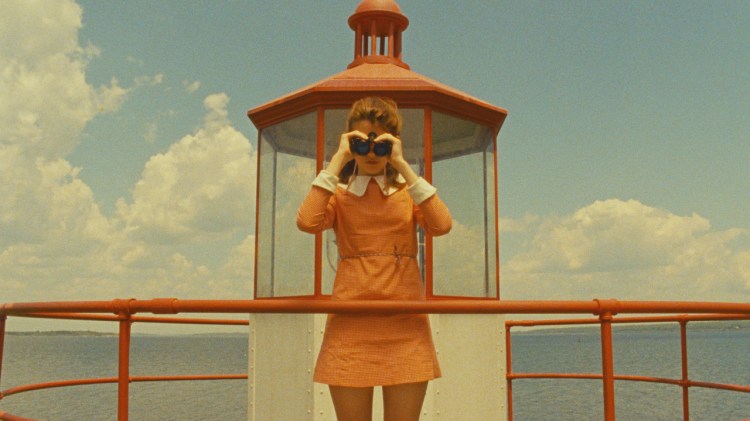
Between Fantastic Mr Fox and The Grand Budapest Hotel, Anderson made Moonrise Kingdom, which tells the story of two twelve-year-olds who fall in love and decide to run away together, causing a local search party to try and find them. It’s one of his most heartfelt and emotionally resonant films.
The film is set on an island in New England in the summer of 1965. Sam, an orphan and a Khaki Scout, and Suzy, a troubled girl who loves fantasy books, form a secret pact and run away together into the wilderness. As a violent storm approaches, a group of quirky adults mobilises to find them.
Moonrise Kingdom is a tender, whimsical exploration of young love and adolescent rebellion. The film is simple yet engaging, and its characters are eccentric yet relatable. It balances Anderson’s quirks well. It’s young leads, Jared Gilman and Kara Hayward, and both are very impressive here.

The Royal Tenenbaums
The Royal Tenenbaums was Anderson’s breakout film, establishing him as a major director in 2001. The comedy-drama tells the story of the dysfunctional Tenenbaum family, whose patriarch, Royal, attempts to reconnect with his estranged family by falsely claiming he is terminally ill. It’s an iconic film, representing Anderson’s first peak.
The film follows the lives of the Tenenbaum family, composed of Royal and his wife, Etheline, and their three gifted children—Chas, Margot, and Richie—who experience great success in their youth but struggle with personal problems in adulthood. When Royal fakes terminal illness to move back into the family home, the family is forced to confront their past and their complex relationships with one another.
The Royal Tenenbaums is a quirky and poignant exploration of family dynamics, failure, and redemption. The film’s narrative is complex yet engaging, and its characters are deeply flawed yet sympathetic. It’s filled with great performances throughout its ensemble cast and is a really great film, which established Anderson’s reputation for creating complex, character-driven narratives with a unique visual style.
Isle of Dogs
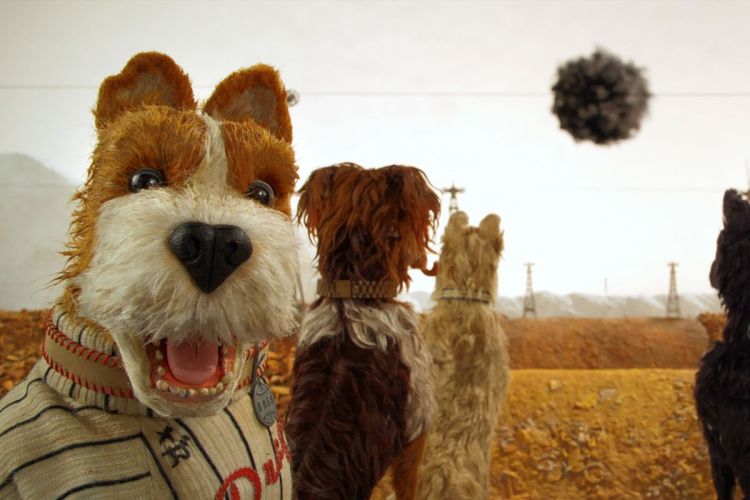
Returning to stop-motion animation, Anderson made Isle of Dogs in 2018, a sci-fi comedy-drama which tells the story of a young boy who goes in search of his dog after all the canine pets of Megasaki City are exiled to a vast garbage dump called Trash Island.
The film is set in a dystopian near-future Japan where a dog-flu virus leads the authoritarian mayor to banish all dogs to Trash Island. When 12-year-old Atari sets off alone in a miniature Junior-Turbo Prop and flies across the river in search of his bodyguard-dog, Spots, a pack of newly-found mongrel friends embarks on an epic journey that will decide the fate and future of the entire Prefecture.
Isle of Dogs is a visually stunning and emotionally resonant film that showcases Anderson’s distinctive style in the medium of stop-motion animation. The film’s narrative is complex yet engaging, and its human and canine characters are endearing.

Rushmore
Rushmore is the film which really got Anderson’s career going. It started his long-standing collaborations with Jason Schwartzman and Bill Murray and is a charming comedy-drama about an eccentric teenager named Max Fischer, his friendship with rich industrialist Herman Blume, and their mutual love for elementary school teacher Rosemary Cross.
The film follows Max Fischer, a student at the prestigious Rushmore Academy, who is both one of the worst students academically and one of the most involved in extracurricular activities. When Max becomes infatuated with Rosemary Cross, a widowed teacher at the school, he befriends Herman Blume, a wealthy businessman and father of two of his classmates, who also falls for Rosemary, leading to a love triangle.
It’s a quirky and poignant exploration of adolescence, ambition, and unrequited love. It’s bolstered by strong acting performances, a detached aesthetic and dark humour. Despite coming 6th in this list, it is generally seen as one of Anderson’s greatest films, and rightfully so. The only reason it’s not higher here is because it feels like the idiosyncrasies it was lauded for upon release feel no longer as fresh.
Bottle Rocket
Everyone’s gotta start somewhere, and Anderson started with a film about three friends who plan a series of heists that go comically wrong. This crime comedy was his directorial debut and introduced many themes and styles that would define his later films. It was released to mixed reviews but has since gained a cult following.
The film follows friends Anthony, Dignan, and Bob, who plan a series of ill-conceived heists, including robbing a bookstore and a cold storage facility. Their plans go awry due to their lack of experience and personal conflicts, leading to a series of comedic and dramatic situations.
Like the films following it, Bottle Rocket is a quirky and engaging exploration of friendship, ambition, and the absurdity of crime. It’s not as complicated as his later films but still features distinctive Anderson quirks, like eccentric, endearing characters, themes of disillusionment and his classic visual aesthetic. However, it’s got some uneven pacing and isn’t as well put together as his best works.
The French Dispatch
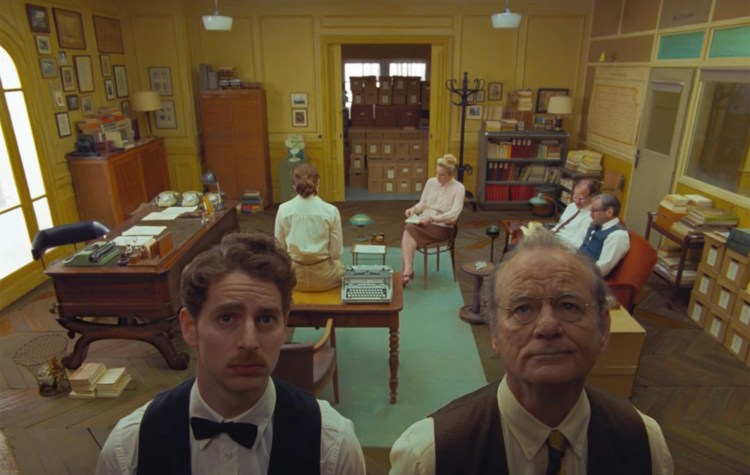
One of Andersons’ newest releases is The French Dispatch. This 2021 comedy-drama functions as a love letter to journalists set in an outpost of an American newspaper in a fictional 20th-century French city and brings to life a collection of stories published in “The French Dispatch” magazine.
The film is composed of a series of vignettes that bring to life various articles from the final issue of an American magazine published in a fictional French city. The stories range from a chronicle of the student revolution a portrait of an incarcerated artist, and a chef who gets involved in a murder case.
It’s visually very impressive and as narratively complex as most of Anderson’s work in the past decade. It’s a beautiful showcase of his authorial talents and ability to cohesively tell interconnected stories. It’s got a strong ensemble cast, yet, its episodic structure does drag at times. While it might not be one of his best films, it’s certainly not weak.
Asteroid City
Anderson’s most recent film is 2023’s Asteroid City. The film is set in a Southwestern American desert in 1955 and features a star-studded cast, including Tom Hanks, Scarlett Johansson, and many more.
The film is set in a tiny town – Asteroid City – consisting of a motel, a garage, and rows of small white cabins. A meteorite landed there 5,000 years ago, and the resulting bright orange crater is the site of a government observatory. This town is now hosting a “Junior Stargazers and Space Cadets Convention”, inviting scientifically brilliant high-school students to show off their inventions.
Asteroid City is a visually stunning film that showcases Anderson’s distinctive style. The film’s narrative structure, which involves a series of interconnected stories, is charming and done very well, as is the case with most of Anderson’s handling of complex narratives. The film’s strengths lie in its unique visual style, engaging storytelling, and memorable performances by its star-studded cast. However, not all of the film’s stories connect, and the film lacks any real emotional depth to hold onto. It’s Anderson’s most distinctly ‘Wes Anderson’ film. Whether that’s a good or bad thing depends on if his style grates on you or not.

The Darjeeling Limited
In between The Royal Tennenbaums and Fantastic Mr Fox, Wes Anderson experienced something of a doldrums where he tried to tell small character stories in a small scale with large backgrounds. One of these is The Darjeeling Limited which tells the story of three estranged brothers who reunite for a train trip across India.
This film is considered a lesser-known work in Anderson’s filmography. It’s generally considered by many as Anderson’s weakest effort. The film follows brothers Francis, Peter, and Jack, who have not spoken to each other since their father’s funeral a year ago. Francis, the eldest, plans a train voyage across India, hoping to reunite and bond with his brothers.
It’s a visually stunning film which is overloaded with Anderson’s distinctive style as it explores themes of family, grief, and the struggle to connect with others. However, its characters are never fully developed, its narrative is uneven, and it is perhaps the best example of Anderson’s struggle to create emotionally resonant filmmaking.
The Life Aquatic with Steve Zissou
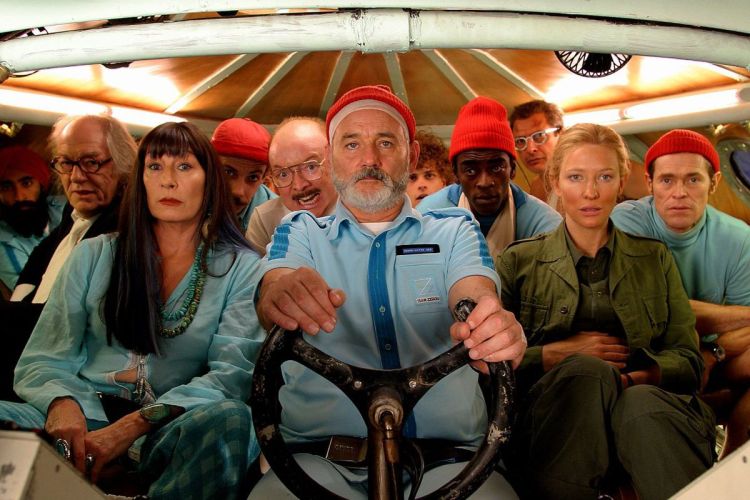
Sinking to the bottom of the list is The Life Aquatic with Steve Zissou, a 2004 comedy-drama. The film tells the story of oceanographer Steve Zissou, who sets out to exact revenge on the “jaguar shark” that ate his partner Esteban. It’s Darjeeling Limited’s brother during Anderson’s doldrum era and is perhaps his most divisive work.
The film follows Steve Zissou, an eccentric oceanographer determined to document his revenge mission on the jaguar shark. Along the way, he deals with a crew on the brink of mutiny, a journalist who may or may not be his son, and a pregnant reporter who has a crush on him.
It’s a visually impressive film with a rich narrative structure and memorable lead actors. It’s got an interesting premise, but its characters are never fully developed, and the plot of the film is uneven, leading the film to plod along. Some consider it Anderson’s best film, yet I feel it’s just another example of Anderson’s style getting in the way of storytelling.
Conclusion
Listen. The Life Aquatic in last place will be controversial. There will be those who think placing such a film at the bottom is stupid. And quite frankly, I’ve found it hard to figure out which of these films are ‘worst.’ It feels like his filmography can be split into two groups his best (The Grand Budapest Hotel-Rushmore) and his less stellar efforts (Bottle Rocket-The Life Aquatic). Honestly, you could place any of the films in the first group at the top of the list and any of the films in the second group at the bottom. The difference between placements can often come down to minor factors.
He has been an incredibly consistent artist for decades, wielding the star pull that few directors have ever held. Yes, critics have a point. Anderson films’ quirkiness can drag at times, yet, imagine an Anderson film without that sense of placement. It’d be so odd. And frankly, no one does it like him. Many copycat filmmakers have tried to copy his style since his arrival, but none have really succeeded in making an ‘Anderson’ film. Even when they’ve ended up making a good film (Like Taika Waititi with Hunt for the Wilder People or Alex Ross Perry with Listen Up Philip), they end up lacking that distinct Anderson quirk.
So as far as I’m concerned, I don’t need him to ‘grow’ as an artist and change. I enjoy the romps into his worlds. Even if his last two efforts haven’t wowed me, I still believe they are close to doing so. With a few tweaks and twerks, Anderson might be cooking up something great.
 Bronze Screen Dream