
George Lucas is one of the most divisive filmmakers around, which is weird because his public persona is about as amiable as you can imagine. Lucas seems to have simultaneously made and ruined generations of childhoods, from those wide-eyed youths who first witnessed the new dawn of a cinematic era with A New Hope to those poor nerds who slept outside the cinema waiting for The Phantom Menace.
Lucas is entangled in current pop culture. He is at the centre of the most annoying aspect of modern pop culture, fandoms. Lucas, with his friend Steven Spielberg, is largely responsible for creating the blockbuster era, which has reigned supreme into the digital age. He amped up the commercialism of the medium and expanded a movie’s reach beyond the vendor’s stand.
Yet, Lucas didn’t start with these intentions, and ironically the birth of Star Wars and corporate fandom is linked to his attempt to work outside Hollywood and away from the controlling studios. Lucas was essentially one of the first major indie directors; American Graffiti was made for under $1 million.
Lucas has only directed six features. He only directed 4 of the 9 total films of the Star Wars saga. So there isn’t much to rank here, but let’s take a look at the six films he did direct and order them from best to worst to try to understand the full scope of his talents.

Star Wars / A New Hope
Star Wars (Later renamed A New Hope) stands out as George Lucas’ definitive masterpiece and one of the most influential films of the 20th century. It was a complete departure from his previous efforts and was a sweeping space opera that set the benchmark for blockbuster cinema, forever transforming the film industry.
When Star Wars hit the big screens in 1977, it was nothing short of a cultural phenomenon. Lucas was seen as a visionary, redefining cinema by marrying old-school storytelling with avant-garde special effects, made possible by Lucasfilm’s Industrial Light and Magic.
We all know the plot at this point – set in a galaxy far, far away… young desert farm boy Luke Skywalker… to rescue Princess Leia from the clutches of the evil Darth Vader… Guided by the enigmatic Obi-Wan Kenobi, Luke delves deep into the mystic ‘Force’… ultimately leading a successful rebellion against the despotic Galactic Empire. – You get it.
The film merges Lucas’ love of pulpy serials, mythology, westerns and classic motifs such as good versus evil into a perfect thrilling film, accompanied by perhaps the greatest score of all time by John Williams. It has some clunky dialogue and flat performances but is still endearing. It’s lost some of its original charm over the years, but the core to it remains as strong as ever. The film’s visuals, world-building and charisma are undeniable.

American Graffiti
American Graffiti, released in 1973, is George Lucas’ second directorial effort, following his debut with THX 1138. It’s a nostalgic look at the early 60s, filled with music, cars, and youthful energy. It is about as different to Star Wars as you can imagine, lacking the epic scale of the franchise or the special effects. Instead, it is a small-scale slice of Americana. It’s nostalgic, charming, funny and perfectly captured the zeitgeist of a bygone era.
The plot follows a group of teenagers on their last night before heading off to college. Through their adventures and conversations, the film explores themes of friendship, change, and the fear of what lies ahead. It presents a slice of life from a time when rock ‘n’ roll was young and the promise of life was infinite.
American Graffiti is a beautifully woven coming-of-age tapestry of interlocking narratives – an American I Vitelloni. The film’s strength lies in its distinct and relatable characters, bringing a sense of authenticity to the narrative. The film’s soundtrack, filled with hits from the era, helps reinforce the movie’s perfect ambience.

Star Wars: Episode III – Revenge of the Sith
George Lucas’ Star Wars: Episode III – Revenge of the Sith is the final instalment of the prequel trilogy, released in 2005. Like all the prequels, it has a mixed reception. Some lauded it for its action and tragedy, while others lamented its dialogue. Overall, I think Revenge of the Sith is a good film, it’s not the equal of Empire or New Hope, but it’s arguably on the same level as Return of the Jedi.
In Revenge of the Sith, Lucas portrays Anakin Skywalker’s emotional turmoil, his struggle between the light and dark side of the Force, and the tragic series of events that lead him to become Darth Vader. The film also explores Emperor Palpatine’s political machinations, highlighting the Republic’s fall and the Galactic Empire’s rise, setting the stage for the original trilogy.
Despite the lingering issues of dialogue and pacing, as seen in the other members of the prequel trilogy, Revenge of the Sith still offers engaging storytelling and compelling character arcs. Anakin’s tragic downfall and the emotionally intense finale stand out as the movie’s high points. The visual effects and action sequences, particularly the lightsaber duels, are exceptional and display Lucas’ innovative approach to filmmaking.
THX 1138
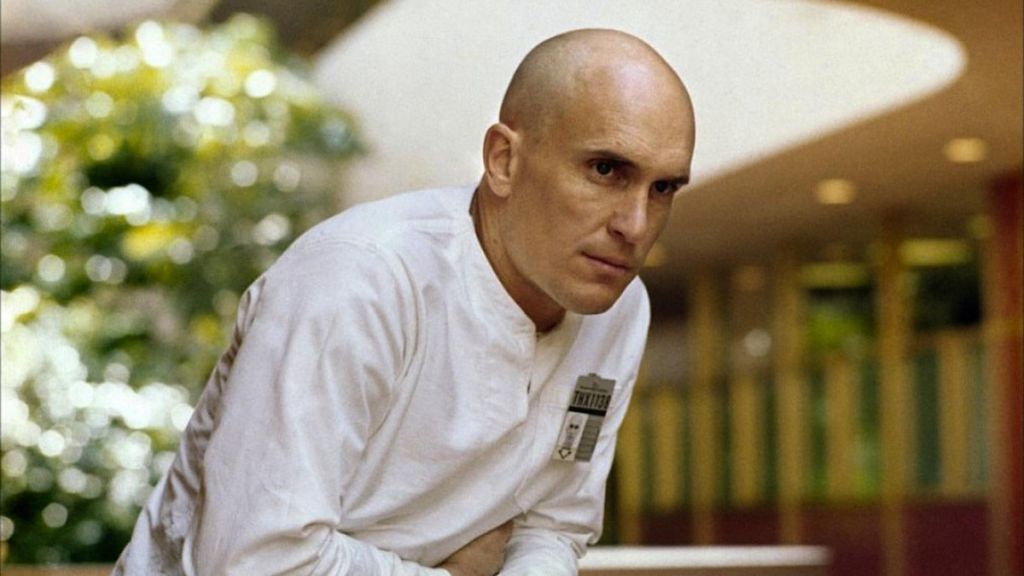
THX 1138, George Lucas’ directorial debut, released in 1971, stands in stark contrast to the rest of his filmography. It is a dystopian sci-fi film that presents a bleak and unsettling vision of the future, making it a unique addition to Lucas’ oeuvre.
The film was born from Lucas’ student film project at the University of Southern California and was his first exploration of science fiction. Although it was a commercial and critical failure upon release, THX 1138 has gained cult status. However, some credit for this has to be attributed to it being a Lucas sci-fi effort before Star Wars existed.
The plot revolves around THX 1138, a factory worker living in a dystopian future where the state suppresses emotions and individuality. As THX begins questioning his existence and defying the state’s laws, he embarks on a quest for freedom.
Despite its minimalistic production design and sparse dialogue, THX 1138 boasts a bold narrative and a highly stylised aesthetic. Lucas presents a critique of consumerism, government control, and dehumanisation in society. His direction is marked by a distinct use of sound design and visual storytelling, which would later become signature traits in his work.
While THX 1138 is not a film for everyone, with its slow pace and abstract narrative, it is a testament to Lucas’ artistic vision and boldness. Its unique take on dystopia set the stage for many other films in the genre, such as Blade Runner and The Matrix.

Star Wars: Episode II – Attack of the Clones
The fifth entry on this list is George Lucas’ Star Wars: Episode II – Attack of the Clones, released in 2002 as part of the prequel trilogy. While the film boasts remarkable visuals and grand-scale storytelling, it suffers from an uneven narrative and problematic character development.
Attack of the Clones is the middle chapter of Lucas’ prequel trilogy that aimed to provide a comprehensive backstory to the original Star Wars saga. It continues the story of Anakin Skywalker, focusing on his growing relationship with Padmé Amidala and his gradual descent towards the dark side of the Force.
The narrative follows Anakin and Padmé’s romance alongside the brewing political tension leading to the infamous Clone Wars. The film lays the groundwork for Anakin’s ultimate transformation into Darth Vader, with Lucas exploring themes of love, fear, and the corrupting power of ambition. While the film’s visual and action sequences are impressive, it’s marred by weak dialogue, a lacklustre romance plot and abysmal character development. It might be fondly remembered by fans of the prequels, but I find little redeemable here.

Star Wars: Episode I – The Phantom Menace
Last on this list is Star Wars: Episode I – The Phantom Menace, Lucas’ first foray back into the Star Wars universe after a 16-year hiatus. Released in 1999, it marked the beginning of the prequel trilogy, but it has often been criticised for its over-reliance on CGI, narrative missteps, and questionable character choices.
With The Phantom Menace, Lucas aimed to expand the Star Wars lore by exploring the events that led to the original trilogy. The film delves into the early life of Anakin Skywalker, the political intrigue of the Galactic Republic, and the rise of the Sith. The plot centres around the discovery of young Anakin Skywalker, his initiation into the world of Jedi, and the political events that set the stage for the rise of the Empire.
Despite the grandeur of its premise and some memorable moments (like the Podrace and the Duel of the Fates), the film was widely critiqued for its overuse of CGI, flat characters, and convoluted narrative. Quite honestly, it’s a mess, there are some good ideas here, but they’re generally hidden by Jar Jar Binks and other ridiculous elements.
Conclusion
George Lucas’s career took a path you wouldn’t necessarily have expected initially. In the beginning, he was a young Californian dreamer who loved experimental films and loathed the controlling studio system. He ultimately conquered the studios with Star Wars, but in many ways, he became one of them, creating weak films for commercial appeal.
His prequel trilogy has a loud bunch of supporters nowadays who celebrate it despite its flaws, and that’s fine. I grew up with them too. But it’s sad that Lucas never made another American Graffiti, that his interest in filmmaking went away from directing, because it ultimately feels like he never made the most out of his talent.
Which is weird to think about, considering the most famous cinematic series is his child. Lucas always spoke of making small indie experimental films in his retirement. I like to think that’s what he’s doing now, making weird medium-pushing works which might never see the light of day, but at least they would show that Lucas never lost that edge to him, which seemed to vanish with the unparalleled success of Star Wars.
Perhaps we’ll get to see those films one day.
 Bronze Screen Dream