

The French love him, your grandma laughs at him, and your parents sneer at him. Jerry Lewis‘ name has been a dividing point for film fans for decades, ever since Godard dared to say, “Jerry Lewis is the only American director who has made progressive films.”
Lewis passed in 2017, almost 40 years since his last directorial effort. He was, of course, a famous, celebrated comedian who has been copied by so many comedians that, at this point, his style is ubiquitous with the idea of being ‘funny.’ However, he wasn’t just a comedian. He was also a genuinely talented auteur with a visual eye and a unique approach to the medium.
Of course, in spite of his talents, he wasn’t always the most consistent director. His filmography is littered with gems and disasters in almost equal fashion. We’ve made this list to help you determine what Lewis movies are worth watching. This list starts with his best film and ends with his worst and includes every Jerry Lewis-directed film except The Day the Clown Cried, the unreleased film which could be screened in 2024.
The Ladies Man
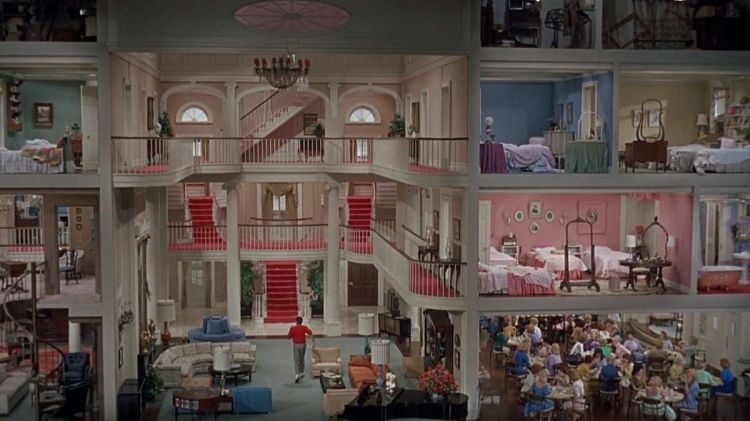
Beginning the list with an exceptional entry, 1961’s The Ladies Man is Jerry Lewis’ definitive masterpiece and remains his most meticulously crafted film. This film’s plot centres around Herbert H. Heebert, played by Lewis himself, who swears off women after a romantic setback and inadvertently becomes the caretaker of a women’s boarding house.
Coming right after the success of his first directed film, The Bellboy, The Ladies Man indicates a more sophisticated style and deepened sense of control over his comedic vision. Lewis’ performance is both hilarious and tender, creating an unforgettable comedic character. The film features an unforgettable massive, multistory set – an apartment building – which is visually stunning, immersive and provides an engaging backdrop for Lewis’ antics, including several memorable gags, such as the impromptu dance routine and interactions with the boarding house residents.
The comedic timing in the film is impeccable, a testament to Lewis’ mastery as a comedian and director. Lewis’ physical comedy, matched with the well-scripted lines, leaves a lasting impact. While Lewis would go on to make other good films, he’d never make a film quite like this.

The Patsy
The Patsy, another highlight in Jerry Lewis’ filmography, tells the story of a bellboy suddenly chosen to replace a recently deceased comedian. This film is an introspective commentary on fame, show business and Lewis’ experiences within the entertainment industry.
Released in the mid-1960s, The Patsy came during a transition phase for Lewis, where he was trying to break free from his well-known slapstick image. The film follows the process of moulding a nobody into a star, and Lewis deftly navigates this journey with his usual humour and surprising emotional depth. The training sequences are particularly notable for their innovative comedic scenarios.
The Patsy displays a balance of comedy and melancholy that enhances the film’s complexity, setting it apart from many of Lewis’ earlier, more straightforward comedic works. Its reflective nature makes it a poignant and vital entry in Lewis’ filmography, representing a unique blend of humour and pathos that only Lewis could pull off.
The Nutty Professor
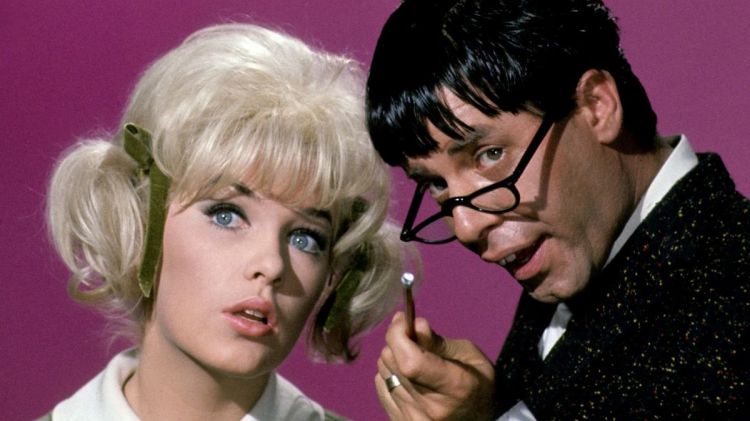
Perhaps the most famous film directed by Jerry Lewis, The Nutty Professor, is a comedic take on the classic Jekyll and Hyde story, with Lewis’ character, a socially awkward scientist, creating a potion that transforms him into a suave and confident ladies’ man.
Situated in the golden period of Lewis’ directorial career, The Nutty Professor was received well and is regarded as one of the finest examples of Lewis’ dual performance capabilities. The two characters he played, Julius Kelp and Buddy Love, allowed Lewis to show his range as a comedic actor, oscillating between the awkward and the charismatic with ease.
While some find Buddy Love’s abrasive personality off-putting, the film’s satire of superficial charm over substance has been appreciated. Its critique of societal obsession with appearances remains relevant. The enduring popularity of The Nutty Professor confirms its status as one of Lewis’ essential films.
The Family Jewels
The Family Jewels presents Lewis in seven different roles as the potential guardians of a rich orphan girl. The film served as another platform for Lewis to showcase his acting versatility.
The story follows the young heiress as she spends time with each of her eccentric uncles, providing Lewis with the opportunity to explore different comedic personas. Each character is distinct and memorable, showcasing Lewis’ talent for comedy and transformation. The film’s pacing can be uneven, with some sections more successful than others, but the sheer range of Lewis’ performances make it a standout.

The Bellboy
The Bellboy, Lewis’ directorial debut, is a series of comedic vignettes set in a luxury hotel in Miami. Lewis plays the titular character, whose silent, bumbling antics cause chaos wherever he goes.
The Bellboy marked Lewis’ initiation into directorship, proving his capability to the world. With no distinct narrative, Lewis relied heavily on visual gags and his comedic persona to carry the film. The film’s episodic nature allows for an array of hilarious situations and gags.
This minimalistic approach, a departure from narrative-driven comedy, showcases Lewis’ understanding of comedy’s universality, a recurring theme in his work. The film’s silent comedy style pays homage to earlier eras of film, drawing comparisons to comedians like Charlie Chaplin and Buster Keaton.

Smorgasbord
Also known as “Cracking Up”, Smorgasbord features Jerry Lewis as Warren Nefron, a man so unlucky that even his suicide attempts fail, after seeking help from a psychiatrist, a series of comedic vignettes unfold, demonstrating the character’s calamitous life.
Released after the relatively commercial successfully Hardly Working, Lewis hoped to continue his directorial comeback with Smorgasbord. However, the film didn’t meet the same level of success and was released directly on cable television in the United States, marking a low point in Lewis’ directorial career.
The plot of Smorgasbord is a classic vehicle for Lewis’ slapstick humour and a return to his style of comedic vignettes, reminiscent of his earlier films like The Bellboy. The film enables Lewis to play out numerous comedic scenarios, often focusing on the character’s comically unfortunate life circumstances. The film does feel disjointed at moments with elements of uneven pacing, but Lewis’ commitment to physical comedy shines through, and his performance is a highlight amidst the film’s shortcomings.
Three on a Couch
Three on a Couch stars Lewis as a successful artist engaged to a psychiatrist who has no time for their relationship due to her commitment to her patients. Lewis then decides to impersonate the kind of man each of her patients needs to help them so he and his fiancé can finally get married.
The film was released at an interesting time in Lewis’ career when he was still commercially popular, but the times were changing, and this was his attempt to maintain relevance. However, it only received middling reviews at the time.
The plot provides a setup for Lewis to create a series of comedic situations through his impersonations. The film’s exploration of psychiatry, albeit comedic, was also somewhat ahead of its time. However, the film relies too much on the impersonation gimmick lacking any narrative cohesion or focus.

The Errand Boy
The Errand Boy sees Lewis as an inept errand boy working in a motion picture studio, causing chaos at every turn. It’s a loving, if chaotic, tribute to the behind-the-scenes world of filmmaking.
Following the success of The Bellboy, The Errand Boy gave Lewis another chance to play a comedic, near-silent character in a series of loosely connected skits. The film reflects Lewis’ love for Hollywood and its machinations. The film’s strength lies in its comedic set pieces, with the ‘boardroom pantomime’ scene standing out as a classic. However, it lacks a strong central narrative.
Despite its flaws, The Errand Boy remains essential to Lewis’ filmography. Its portrayal of a bygone era of Hollywood production is charming, and its best moments showcase Lewis at his comedic best.
The Big Mouth
The Big Mouth follows the story of a mild-mannered man, played by Lewis, who gets caught up in a criminal plot after being mistaken for a look-alike gangster. It’s one of Lewis’ later directorial efforts, which sees him grappling with his comedic identity amidst changing cinematic trends. The film started the decline of Lewis’ career; while he has the occasional gem past this point, his trajectory was only going down.
The film has a convoluted plot involving diamonds, gangsters, and mistaken identities. Some of the individual comedic set pieces are well-executed, and Lewis’ performance is commendable, demonstrating his usual flair for physical comedy and slapstick. However, seeing Lewis again rely upon the impersonation gimmick gets tiring.
Despite some funny moments, The Big Mouth suffers from an over-complicated plot and inconsistent pacing. It’s not among Lewis’ best works but still holds moments of interest for fans of his signature comedic style.
Which Way To The Front?
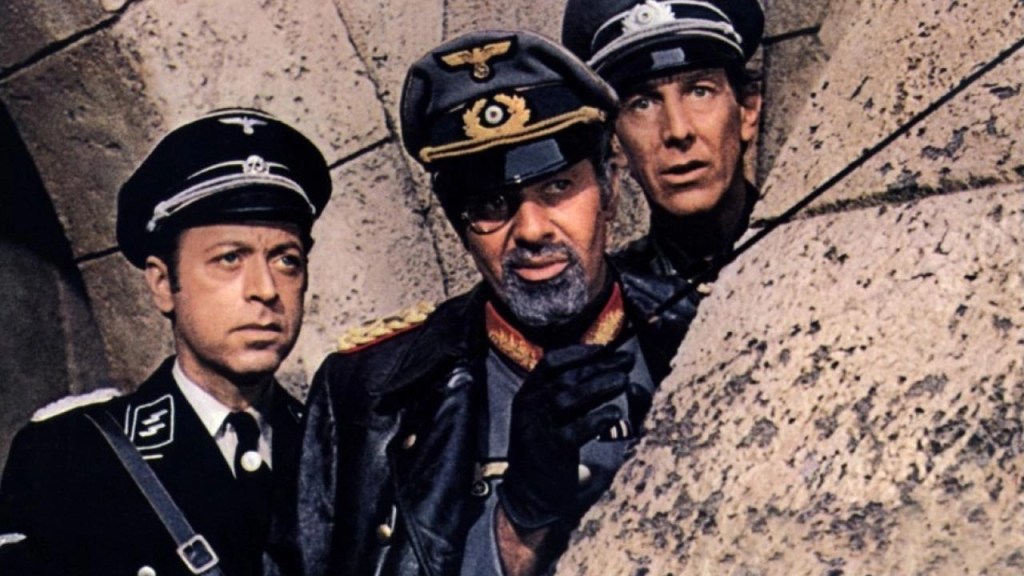
In Which Way to the Front? Lewis plays a wealthy man who, after being rejected by the army, forms his own platoon to fight in WWII. He also impersonates a Nazi general in an attempt to end the war. This was one of Lewis’ later directorial ventures, released when his star waned. By the 1970s, the cinematic landscape had shifted significantly, and Lewis struggled to find his footing.
The plot’s premise allows for some amusing scenarios as Lewis’ character tries to balance his multiple roles, yet it’s an inconsistent film, and the gags don’t always land. The humour sometimes feels forced, and the narrative doesn’t hold together as well as it could.
One More Time
One More Time is a comedy about the misadventures of two musician brothers, played by Peter Lawford and Sammy Davis Jr. Lewis only appears in a cameo role in this film.
This film is unique in Lewis’ filmography as it’s the only one he co-directed but did not star in; it’s also the only ‘sequel’ in his catalogue, although it isn’t a sequel to his films, but instead to 1968’s Salt and Pepper directed by Richard Donner. The film is a series of comedic scenarios involving the brothers’ attempts to navigate the music industry. While the film has some decent gags, Lewis’ comedic presences absence is apparent.

Hardly Working
Hardly Working, Lewis’ comeback film after a long hiatus, features him as an out-of-work circus clown trying to find stable employment. It marks Lewis’ attempt to reignite his directorial career. Returning after a long period away from directing, Hardly Working was reasonably well met at the box office, but honestly, it’s a crap film.
The film revisits many of Lewis’ trademark comedic scenarios, with his character bumbling through various jobs. There are moments of the old Lewis charm, but they’re few and far between. The movie suffers from a weak plot and lacklustre comedic set pieces. It’s not particularly memorable. Lewis is less reliant on physical comedy here, instead focusing on situational comedy, which doesn’t work.
Conclusion
From The Bellboy to Smorgasbord, Lewis’ films are filled with a unique creative vision. His unique comedic style and penchant for visual gags have left a lasting legacy on comedy.
Lewis’s films are a study of a performer’s evolution, his attempts to adapt to changing times, and his unyielding dedication to his craft. Whether creating hilarious havoc as The Ladies Man or experimenting with dual characters in The Nutty Professor, Lewis brought his distinct comedic sensibility to all his directorial endeavours.
Lewis only directed 12 features, which isn’t bad, but it’s not too much to dig into. If you’ve caught the Lewis bug from this article, we’ve also ranked all the films he’s acted in below.
- The King of Comedy (1982)
- The Ladies Man (1961)
- Arizona Dream (1993)
- Artists and Models (1955)
- The Patsy (1964)
- The Nutty Professor (1963)
- Hollywood or Bust (1956)
- The Family Jewels (1965)
- The Bellboy (1960)
- The Caddy (1953)
- Boeing Boeing (1965)
- The Stooge (1952)
- Smorgasbord (1983)
- Who’s Minding the Store? (1963)
- Scared Stiff (1953)
- Funny Bones (1995)
- Rock-a-Bye Baby (1958)
- My Friend Irma (1949)
- The Geisha Boy (1958)
- Don’t Give Up the Ship (1959)
- The Disorderly Orderly (1964)
- Living It Up (1954)
- You’re Never Too Young (1955)
- Three on a Couch (1966)
- Sailor Beware (1952)
- The Errand Boy (1961)
- Pardners (1956)
- The Big Mouth (1967)
- The Delicate Delinquent (1957)
- Money from Home (1953)
- Hook, Line and Sinker (1969)
- Cinderfella (1960)
- Jumping Jacks (1952)
- That’s My Boy (1951)
- It’s Only Money (1962)
- Way… Way Out (1966)
- The Trust (2016)
- Visit to a Small Planet (1960)
- 3 Ring Circus (1954)
- The Sad Sack (1957)
- My Friend Irma Goes West (1950)
- At War with the Army (1950)
- Max Rose (2013)
- Which Way to the Front? (1970)
- Don’t Raise the Bridge, Lower the River (1968)
- Hardly Working (1980)
- Par où t’es rentré ? On t’a pas vu sortir (1984)
- Slapstick (Of Another Kind) (1982)
You can’t really talk about Jerry Lewis’ work without talking about The Day the Clown Cried, a movie so infamous that it is a piece of Hollywood folklore at this point. A copy of the film, which was long thought missing or incomplete, was donated to the Library of Congress under the stipulation that it wouldn’t be screened before 2024. So all eyes are on the future awaiting this film’s ‘release.’
Will Clown live up to the infamy it holds? Can it possibly be as bad or as great as they say? Will it even be available to the public? I don’t know. But I’m looking forward to watching what is one of Hollywood’s most perversive secrets.
 Bronze Screen Dream